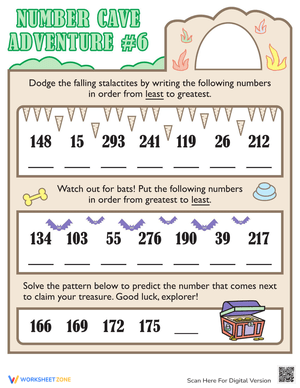
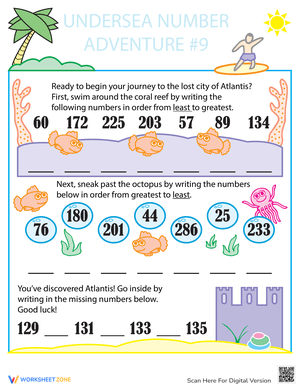
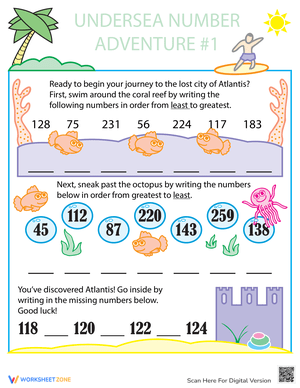
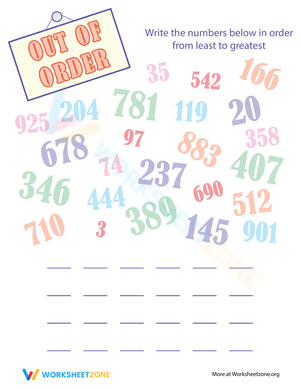
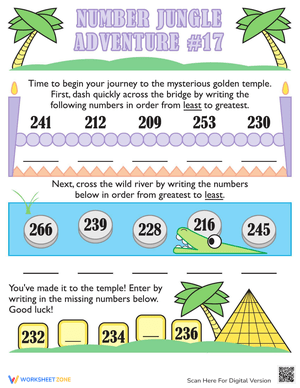
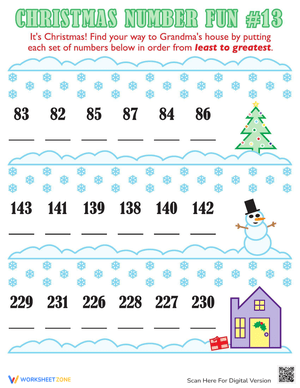
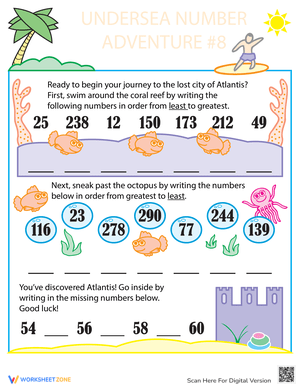
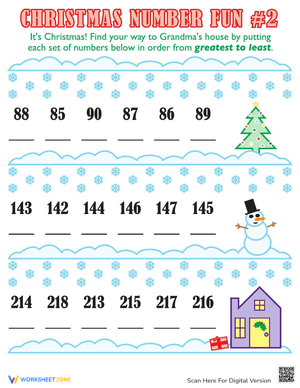
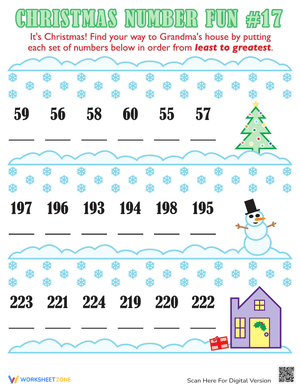
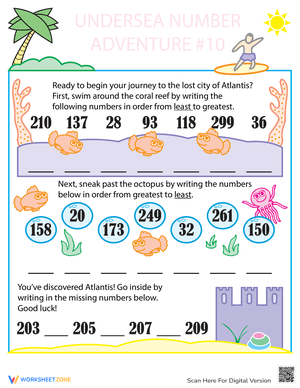
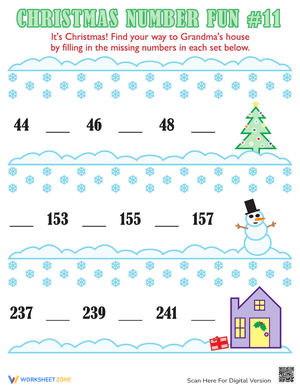
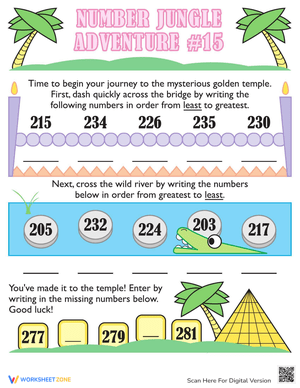
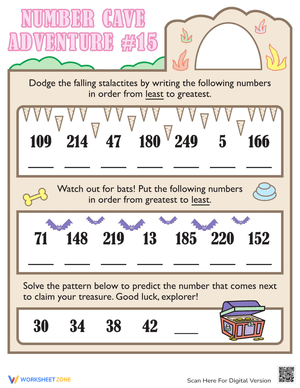
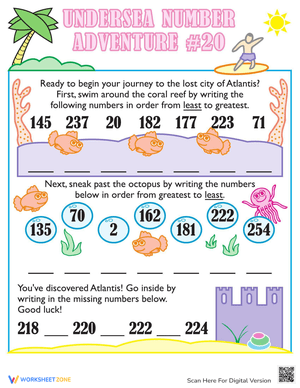
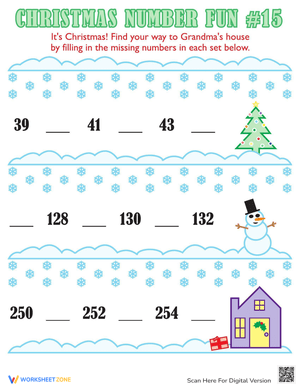
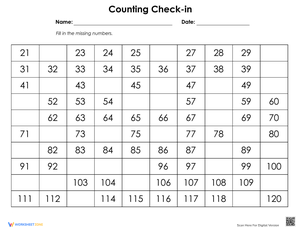
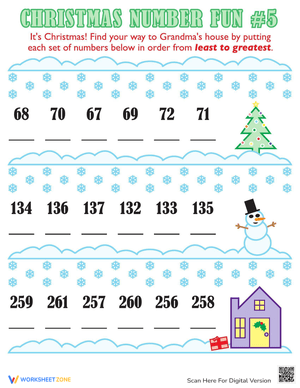
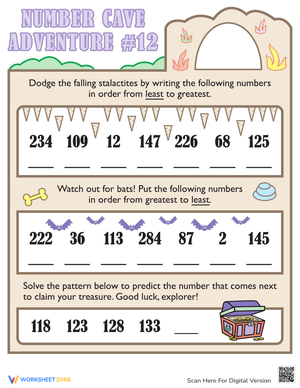
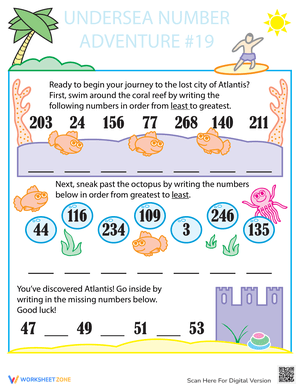
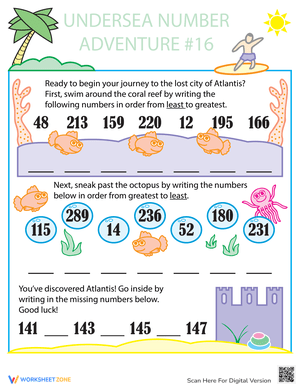
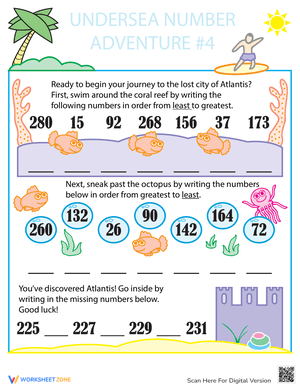
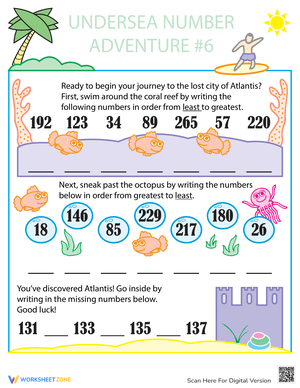
These ordering three digit numbers worksheets give second-grade teachers a structured set of practice activities built around the one skill that trips up students most reliably at this level: knowing where to look first. Each worksheet targets the left-to-right comparison logic students need to internalize before place value work at third grade becomes significantly more complex.
What Each Worksheet Has Students Do
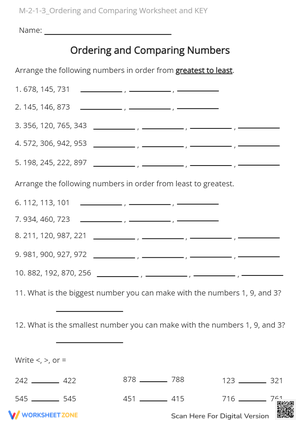
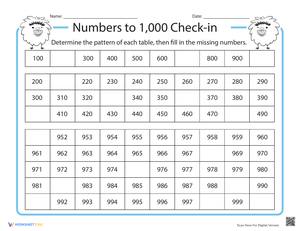
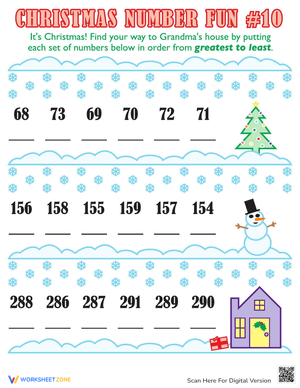
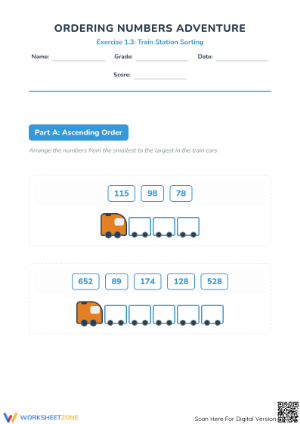
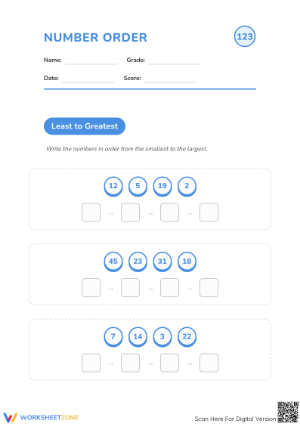
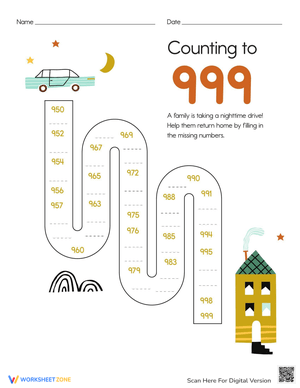
The set covers the full range of ordering tasks that appear in second-grade math instruction. Students arrange groups of three-digit numbers from least to greatest and from greatest to least — both directions matter, because students who only practice one direction often treat the other as a genuinely different operation rather than a reversal. Additional worksheets have students plot numbers on open number lines, which makes the magnitude relationship visible rather than abstract. Others present partially completed sequences where students identify the pattern and fill in the missing values, a format that builds skip-counting fluency alongside ordering. Cut-and-paste worksheets give students a chance to physically manipulate number cards before committing to an order, which slows down impulsive answers in a productive way.
The number sets across the worksheets are deliberately varied. Some groups share hundreds digits and require students to push into the tens place. Others share both hundreds and tens digits, forcing comparison down to the ones place. A few worksheets mix number sets where the answer is apparent from the hundreds digit alone, which helps build processing speed before harder comparisons arrive.
Standard Alignment
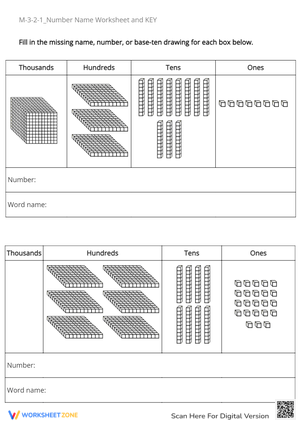
These worksheets align to CCSS 2.NBT.A.4, which requires students to compare two three-digit numbers based on place value and to use the symbols >, =, and <. Ordering extends this standard by requiring students to apply the same comparison logic across a set of numbers rather than a pair, making it a natural instructional follow-up to direct comparison work. In most second-grade scope-and-sequence documents, ordering three-digit numbers appears in the second or third quarter, after students have worked with number representations and before they move into addition and subtraction with regrouping — where strong place value understanding becomes load-bearing.
Fitting These Worksheets Into the Teaching Week
The most effective placement for ordering three digit numbers worksheets in a weekly routine is the first ten minutes of math after a concept has been introduced — not during initial instruction, but the following day, when students think they understand and the gaps become visible. That second-day moment surfaces a lot more than Friday review does, because it catches misconceptions before they harden into habit.
Several worksheets in this set work well as exit tickets. Three numbers, a direction (least to greatest or greatest to least), a blank line — completed in under five minutes. The resulting stack tells you immediately which students are still inverting the comparison direction, which ones are ordering correctly but working slowly (a sign the procedure isn't automatic yet), and which ones are ready for harder number sets. The cut-and-paste worksheets are better suited to a math center rotation, where students can work through the physical sorting before moving to written tasks. Laminating those pages and pairing them with dry-erase markers extends their use across multiple groups.
Mistakes Students Make That These Worksheets Help You Catch
The most persistent error at this level is rightward comparison — students scan toward the larger-looking digits rather than beginning at the hundreds place. A student who correctly orders 700, 400, 200 will sometimes place 389 above 412 because "89 is more than 12." This error doesn't indicate a misunderstanding of place value in isolation; it usually indicates that the ordering procedure hasn't yet overwritten students' intuitions about number size. The worksheets include enough same-hundreds sets to surface this error quickly.
A second pattern worth watching: students who correctly order three numbers will sometimes lose track when the set grows to five or six. They order the first two correctly, add the third correctly, and then insert the fourth in the wrong position because they're comparing it only to the number it's adjacent to rather than to the full sequence. This is a working-memory issue as much as a math issue, and it shows up in student work as sequences that are locally consistent but globally wrong — 312, 347, 356, 329, 401, for instance. Encouraging students to cross off numbers as they place them, or to underline the hundreds digit in each number before beginning, reduces this error substantially.
Frequently Asked Questions
At what point in second grade should these worksheets be introduced?
After students can reliably read and write three-digit numbers and have been introduced to place value comparison using pairs of numbers. Ordering is harder than comparing two numbers, so it works best as a second instructional step — usually four to six weeks into the place value unit, depending on pacing.
How is ordering different from comparing, and should I teach them together?
Comparing asks students to evaluate two numbers and record the relationship with a symbol. Ordering asks them to apply that comparison repeatedly across a set and arrange the results in a sequence. Most students benefit from solid comparison practice first, then ordering — teaching both simultaneously tends to create confusion about what the task is asking, not about the math itself.
What do I do when a student keeps getting the direction wrong (least to greatest vs. greatest to least)?
Have the student underline the direction words before beginning each worksheet and restate the task aloud. Students who consistently reverse directions are usually not misunderstanding place value — they're not reading the prompt carefully. A brief verbal confirmation before they write their first number is enough to break the habit for most students within a week or two.
Can these worksheets be used for review at the start of third grade?
Yes. Third-grade students who struggled with place value at the end of second grade often benefit from revisiting three-digit ordering before moving into four-digit work. The worksheets function equally well as diagnostic tools — a short set at the beginning of the year shows quickly which students need targeted review before the grade-level content accelerates.













 Interactive Worksheet Maker
 Quiz Maker
 Word Search Maker
 Crossword Puzzle Maker
 Word Scramble Generator
 Sentence Scramble Generator
 Handwriting Worksheet Generator
 Name Tracing Generator
 Fill In The Blank Generator