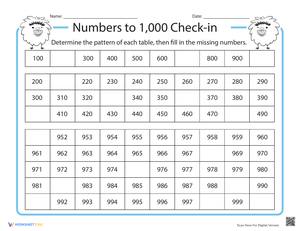
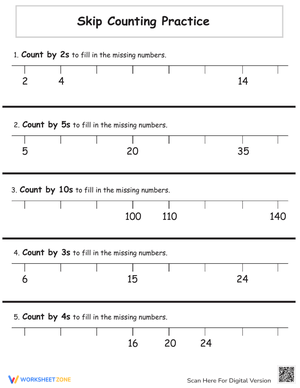
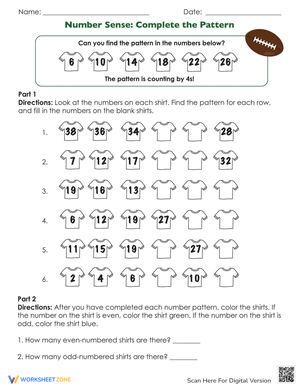
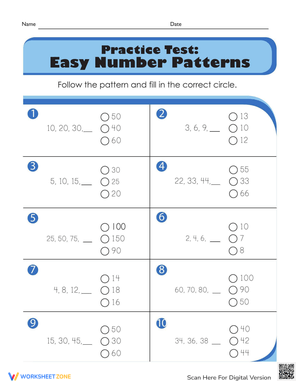
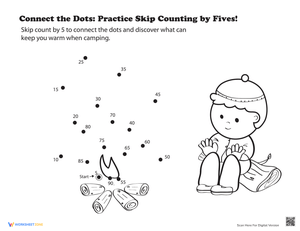
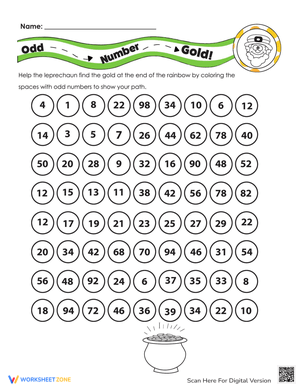
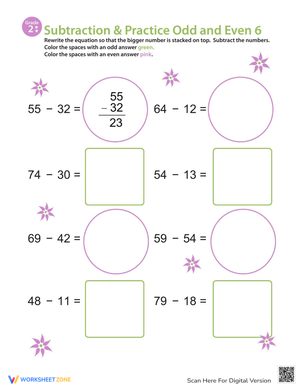
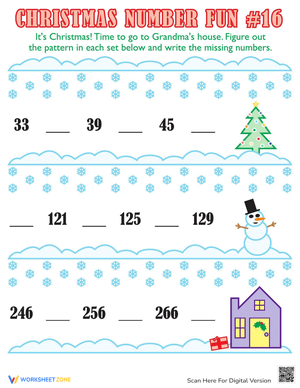
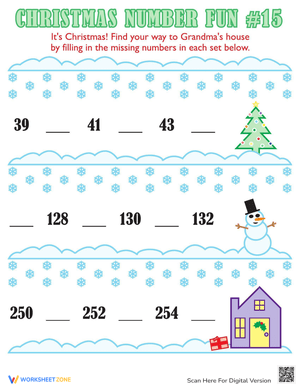
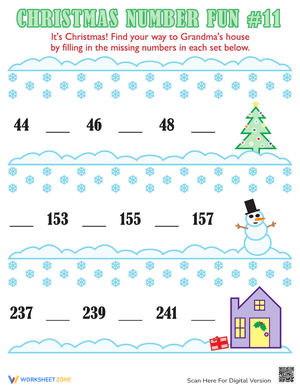
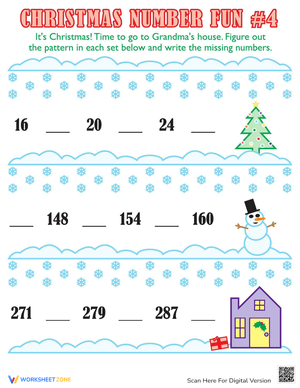
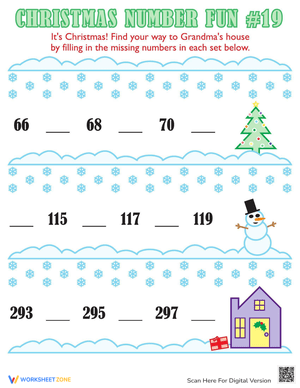
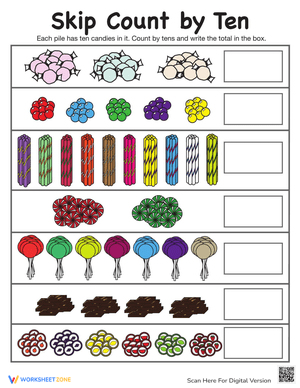
These patterns in three digit numbers worksheets give 2nd and 3rd grade teachers a structured, ready-to-use set of practice tools for one of the trickiest conceptual pivots in early elementary math: the moment when students stop treating numbers as isolated quantities and start seeing the relationships between digits. Each worksheet targets a specific pattern type — skip counting by 5s, 10s, 25s, or 100s; place value shifts within hundreds; and both increasing and decreasing sequences — so teachers can assign exactly what a class needs rather than working through a uniform progression that moves too fast for some students and too slowly for others.
The Specific Skills Targeted Across the Set
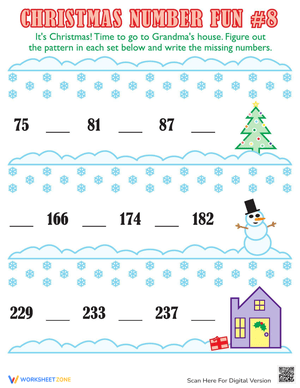
The core work in each worksheet is sequence completion: students analyze a partial string of three-digit numbers, identify the rule governing the change, and fill in the missing terms. That sounds simple, but the skill splits into several distinct sub-competencies that students need to build separately before they integrate naturally.
- Skip counting by 10s and 100s within the 100–999 range, including sequences that cross hundred-boundaries — the jump from 290 to 300, or 680 to 700, where the hundreds digit rolls over and students who rely on column-by-column counting instead of mental-math rules reliably stumble.
- Skip counting by 5s and 25s, which demands finer place value tracking and surface patterns students haven't yet internalized the way they have multiples of 10.
- Single-digit shifts — sequences like 312, 412, 512, 612 where only the hundreds place changes, isolating the effect of adding 100 and making the structure of the base-ten system visible in a way that abstract explanations rarely do.
- Decreasing sequences, which address a genuine gap: many students who handle increasing patterns confidently freeze when the direction reverses, because their mental model of "pattern" defaults to growth.
- Error detection, where a completed sequence contains one incorrect term and students must identify it, explain why it breaks the rule, and write the correction — the highest-demand task in the set.
Standard Alignment
These worksheets align directly with CCSS.Math.Content.2.NBT.B.2, which requires students to count within 1,000 and skip-count by 5s, 10s, and 100s. They also support CCSS.Math.Content.2.NBT.B.8, the standard that asks students to mentally add or subtract 10 or 100 from any number between 100 and 900. In classroom terms, 2.NBT.B.8 is the destination — the fluency goal — and these worksheets are the route. Students who can reliably complete a skip-by-10s sequence are demonstrating exactly the mental flexibility that standard describes. The error-detection tasks push into the territory of mathematical reasoning that also threads through the Standards for Mathematical Practice, particularly MP3 (constructing viable arguments) and MP6 (attending to precision).
Smart Ways to Work These Worksheets Into Your Weekly Lesson Plan
The worksheets function well as warm-up tools at the start of a math block. A single sequence strip — five to six numbers with two gaps — takes about eight minutes and gives you immediate formative data before you move into direct instruction. That front-loaded check tells you whether the class is ready for the day's new content or whether you need to pull back and reteach before moving on.
For guided practice, the error-detection worksheet works better in pairs than individually. Have students take turns arguing their case to a partner before writing anything down. The student who has to explain why 340, 350, 360, 375, 380 is wrong — and not just circle it — is doing more mathematical reasoning than the student who simply fills blanks in isolation. That verbalization step is worth the extra minutes, particularly for students whose written work looks correct but whose explanations reveal a shakier understanding than the answers suggest.
On Fridays, the simpler skip-counting worksheets serve well as independent review after a week of instruction — low stakes, quick to complete, and easy to grade in the moment so students get feedback before the concept sits untouched over the weekend.
Mistakes Students Make That These Worksheets Help You Catch
The most common and persistent error appears at hundred-boundaries. A student who correctly extends 560, 570, 580, 590 will frequently write 5100 instead of 600 — applying a digit-appending logic rather than treating the number as a unified quantity. This is not a careless mistake; it reflects an underlying place value model in which the hundreds digit and the tens digit are separate columns that don't interact. The error-detection worksheets surface this misconception directly, because students have to articulate why a term is wrong, which forces them to confront the logic they've been applying implicitly.
A second predictable error involves decreasing patterns that cross a hundred-boundary in the other direction. Students extend 830, 820, 810 correctly, then write 8100 or 790 where you'd expect 800 — the uncertain moment when the tens column resets to zero and the hundreds digit must decrease. Both errors point to the same root issue: the student is treating the three digits as independent slots rather than reading the number holistically. Once you know to watch for it, you'll see it in a striking share of papers.
Frequently Asked Questions
Are these worksheets appropriate for 2nd grade, 3rd grade, or both?
Both. In 2nd grade, students are first encountering three-digit numbers and building place value understanding, so the skip-by-10s and skip-by-100s worksheets fit naturally into the core unit. In 3rd grade, the same worksheets work as review and fluency reinforcement, and the harder sequences — skip-by-25s, decreasing patterns, error detection — support the mental math demands that appear later in 3rd grade multi-digit addition and subtraction.
How do I teach students to find the rule before filling in the blanks?
A reliable three-step process: subtract the first term from the second to find the difference, check whether that difference holds between the second and third terms, then decide if the sequence is increasing or decreasing. The verification step matters — students who skip it will commit to a wrong rule based on just two data points and fill in the rest of the sequence incorrectly. Teaching this as a fixed habit early prevents a lot of downstream errors.
What if students are skipping ahead in the sequence instead of finding the rule?
Some students, especially those with strong memorized skip-counting sequences, will recognize "these are multiples of 25" and complete the worksheet from memory rather than by analyzing the digits. That works until the sequence starts at a non-standard entry point (like 137, 162, 187) where memory alone fails. The less predictable starting points on the harder worksheets shift students toward genuine rule-finding rather than pattern recall.













 Interactive Worksheet Maker
 Quiz Maker
 Word Search Maker
 Crossword Puzzle Maker
 Word Scramble Generator
 Sentence Scramble Generator
 Handwriting Worksheet Generator
 Name Tracing Generator
 Fill In The Blank Generator