


























Views
Downloads


Printable Comparing Numbers Worksheet | Grade 2 Math
Paste this activity's link or code into your existing LMS (Google Classroom, Canvas, Teams, Schoology, Moodle, etc.).
Students can open and work on the activity right away, with no student login required.
You'll still be able to track student progress and results from your teacher account.
Mastering Number Comparison
This worksheet provides focused, essential practice for second-grade students learning to compare three-digit numbers. Through a series of clear and structured problems, learners will build fluency and confidence in using the greater than (>), less than (<), and equal to (=) symbols. The clean layout and direct tasks ensure that students can concentrate on the core mathematical skill of determining numerical value and relationships, a foundational concept for all future math learning.
At a Glance
- Grade: 2 · Subject: Math
- Standard:
CCSS.MATH.CONTENT.2.NBT.A.4— Compare two three-digit numbers using >, =, and < symbols.- Skill Focus: Comparing Numbers (>, <, =)
- Format: 3 pages · 60 problems · Answer key included · PDF
- Best For: Independent practice, homework, or assessment
- Time: 15–25 minutes
What's Inside
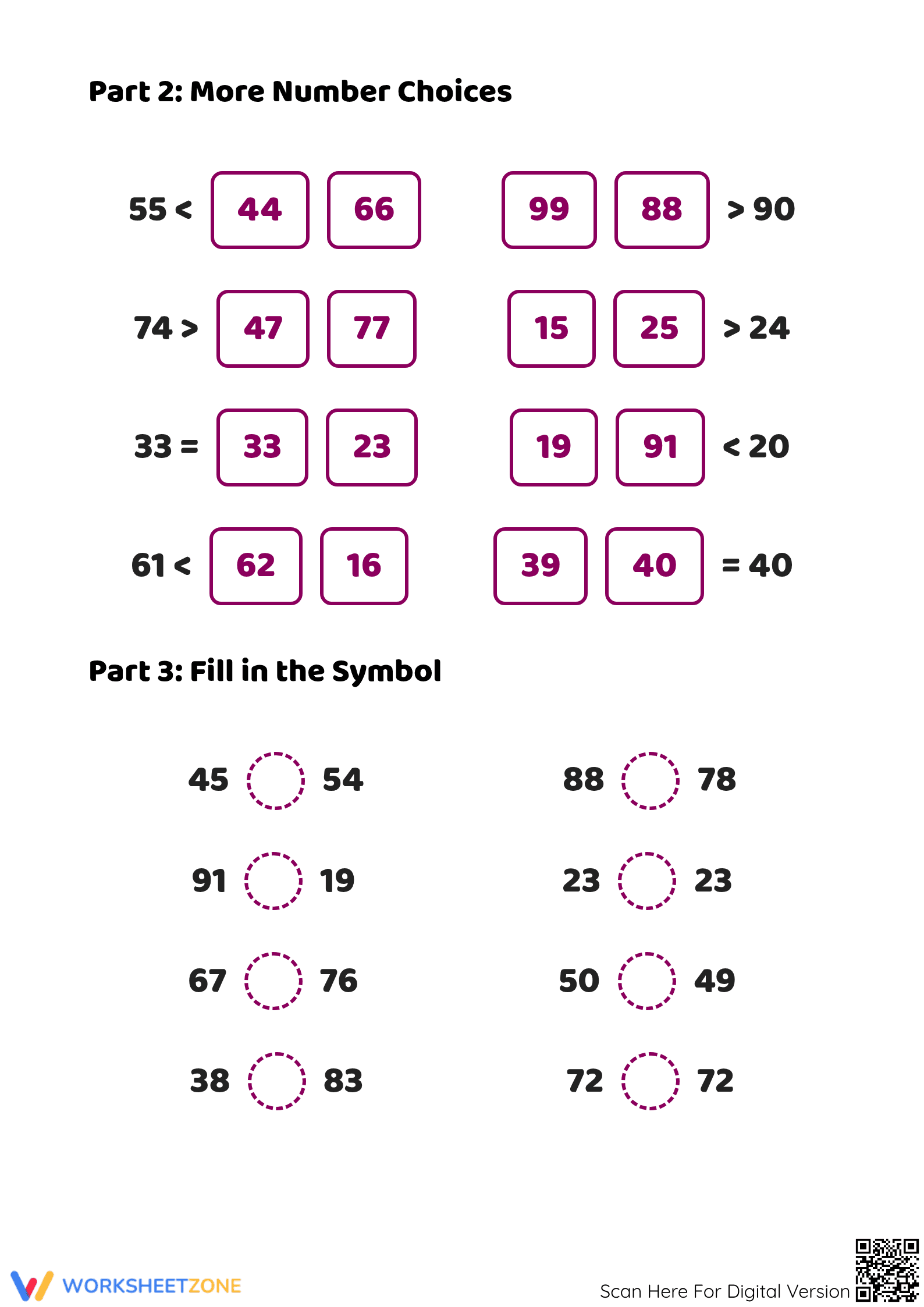
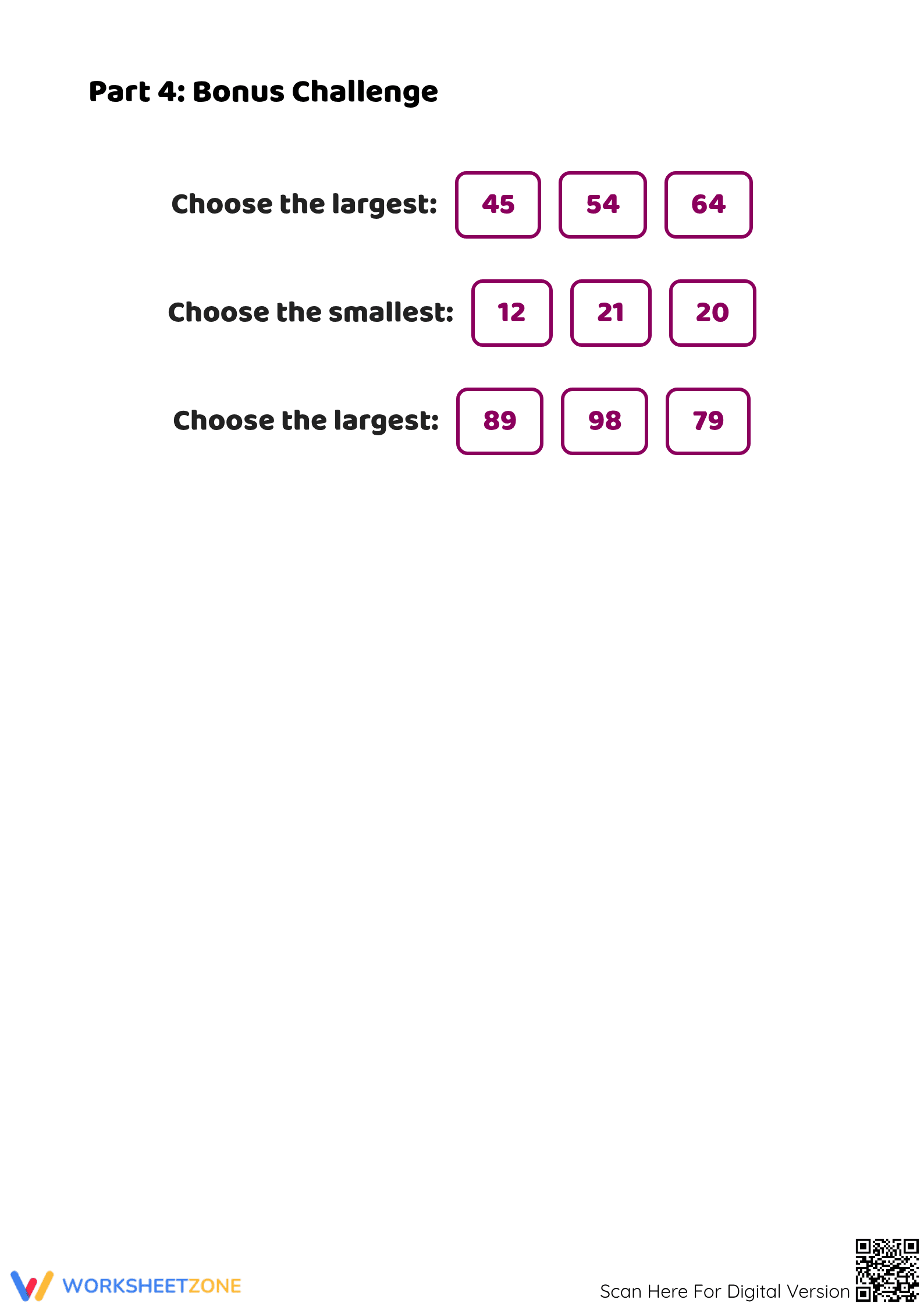
This resource contains a three-page worksheet with a total of 60 number comparison problems. Each page presents 20 questions, giving students ample opportunity for practice. The problems involve comparing pairs of two- and three-digit numbers, requiring students to correctly place the >, <, or = symbol between them. A complete, easy-to-use answer key is provided on a separate page, allowing for quick grading by teachers or self-correction by students. The file is delivered as a high-quality, printable PDF ready for immediate classroom use.
A Progression of Skill
The worksheet facilitates a gradual release of responsibility, from guided practice to independent mastery.
- Guided Practice: The first page (20 problems) allows teacher modeling of comparing hundreds, tens, and ones.
- Supported Practice: The second page (20 problems) is for partner work, encouraging verbalization and internalizing the comparison process.
- Independent Practice: The final page (20 problems) serves as a check for understanding, ideal for assessment, homework, or math centers.
Standards Alignment
This worksheet is directly aligned with the following Common Core State Standard for Grade 2 Mathematics:
CCSS.MATH.CONTENT.2.NBT.A.4: Compare two three-digit numbers based on meanings of the hundreds, tens, and ones digits, using >, =, and < symbols to record the results of comparisons.
By completing this activity, students will demonstrate mastery of this key standard for number sense and operations in base ten. The standard code can be copied directly into lesson plans or curriculum mapping tools.
How to Use It
This versatile worksheet can be integrated into your math block in several ways. Use it as an independent practice activity after a direct instruction lesson on place value and number comparison. It also functions perfectly as a homework assignment to reinforce the skill at home. For a formative assessment, have students complete the third page independently to quickly gauge their understanding. Observe which students are consistently accurate and which may need re-teaching on place value concepts. Most students should be able to complete one page in about 5-8 minutes.
Who It's For
This resource is designed primarily for second-grade students learning or practicing number comparison. It also suits third-grade students needing a review of foundational place value skills, or advanced first-grade students as a challenging extension. It pairs well with hands-on activities like base-ten blocks.
Developing strong number sense is critical. This worksheet, aligned to CCSS.MATH.CONTENT.2.NBT.A.4, offers focused practice to solidify number comparison skills. Structured practice builds procedural fluency, essential for complex problem-solving. With 60 problems, students internalize comparing numbers by place value, preparing them for addition, subtraction, and number line concepts. Its repetitive structure fosters automaticity, directly supporting growth in the Number & Operations in Base Ten domain.


