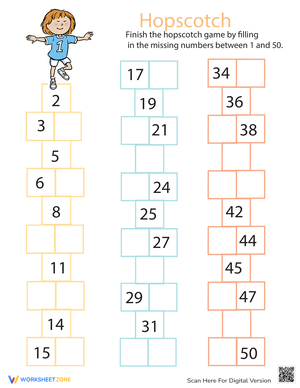
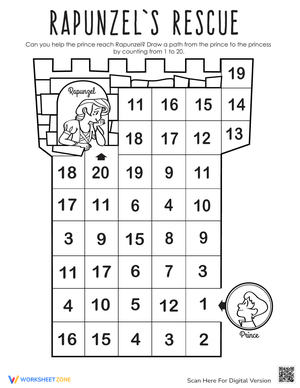
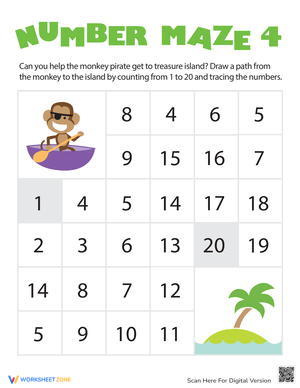
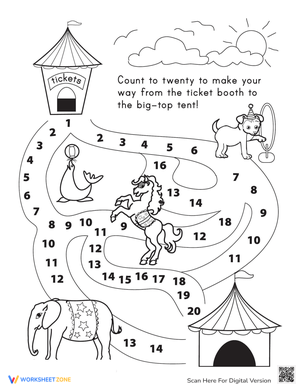
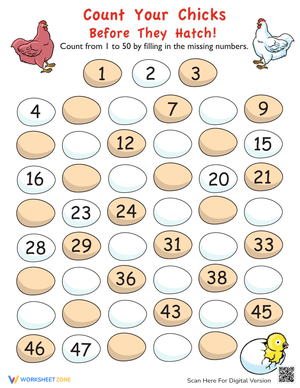
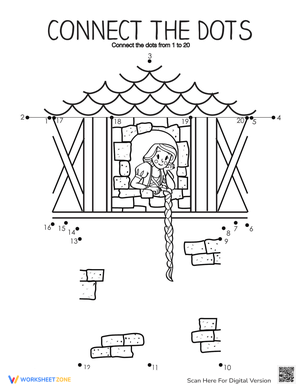
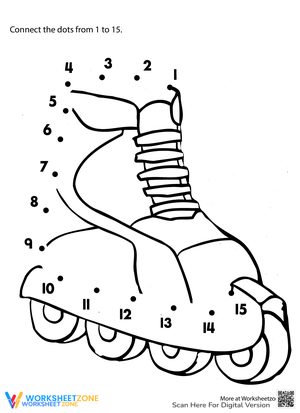
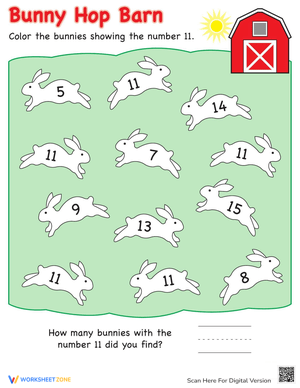
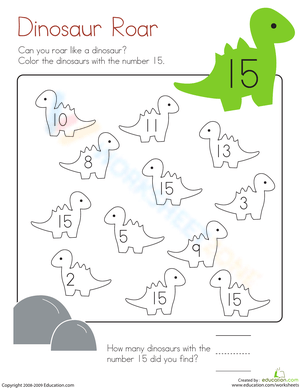
These identifying numbers 11–20 worksheets give kindergarten teachers a focused set of practice tools for the stretch of numeracy instruction where students most commonly stall. Each worksheet targets a specific skill — tracing and writing double-digit numerals, counting and matching quantities, identifying a target number in a field of distractors — so teachers can assign exactly what a student needs rather than working through a general review packet.
Why Teen Numbers Demand Dedicated Practice
The jump from single digits to teen numbers is harder than it looks on a scope-and-sequence chart. Part of the problem is linguistic: "eleven" and "twelve" contain no audible hint of ten, while "fourteen" and "thirteen" reverse the order of the digits — students hear the four before the ten, so they write 41 instead of 14. That reversal error is one of the most consistent patterns we see in early kindergarten math work, and it persists well past the point where a teacher thinks it has been corrected. The other part of the problem is conceptual. A child who has been counting individual objects since preschool must now accept that ten objects can be treated as one unit, with leftover ones counted separately. Without that grouping idea, 17 and 18 are just arbitrary symbols. Repeated, structured encounters with teen number representations — across ten frames, numerals, and written words — are what eventually makes the concept stick.
Skills Covered Across the Set
The worksheets address several distinct skills that teachers typically need to assess and practice separately:
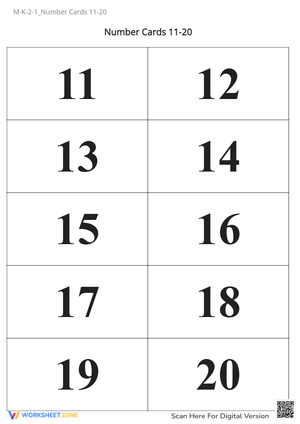
- Numeral tracing and independent writing: Students trace large dotted numerals and then write them in blank spaces. The emphasis here is on correct digit formation for both the 1 and the ones digit — a student who forms a backward 3 in 13 needs different feedback than one who writes the digits in the wrong order.
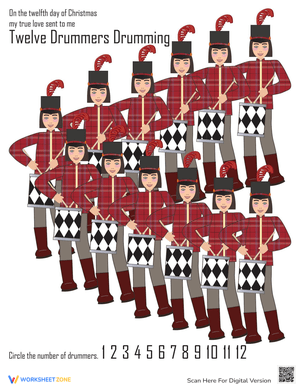
- Count-and-identify matching: Groups of illustrated objects appear beside several numeral choices. Students count the objects and circle or connect the correct number. This separates cardinality from numeral recognition, which is worth assessing independently.
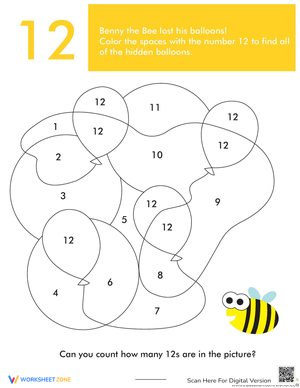
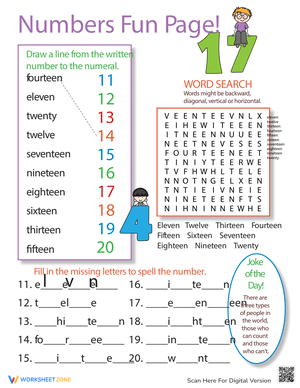
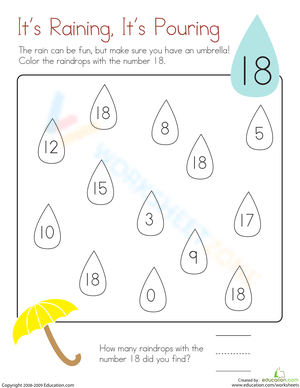
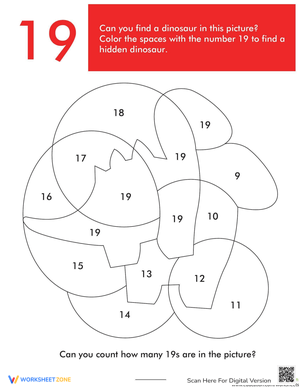
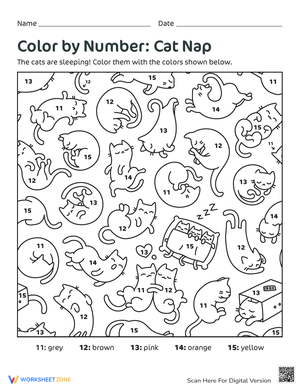
- Number search and visual discrimination: Students scan a grid to find and mark a target number — say, 16 — among similarly shaped distractors like 61, 19, and 15. This format catches students who are guessing by shape rather than reading the numeral carefully.
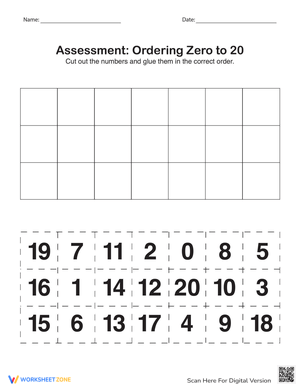
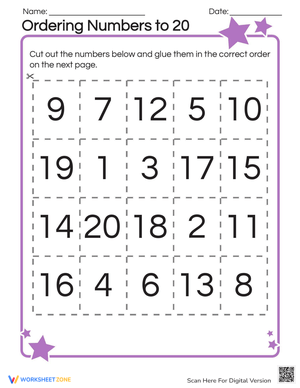
- Cut-and-paste sequencing: Students cut out numerals or quantity representations and arrange them in correct order. The physical manipulation slows students down in a productive way and reveals sequencing gaps that pencil work can mask.
- Ten-frame interpretation: Students read a partially filled double ten frame and write the number it shows. This directly builds the "ten and some more" understanding that underlies place value.
Standard Alignment
The core standard for this set is K.CC.A.3, which requires kindergartners to write numbers from 0 to 20 and represent a number of objects with a written numeral — the direct target of the tracing, writing, and count-and-match worksheets. K.CC.B.5, counting to answer "how many?" for up to 20 objects, is addressed through the object-counting exercises across several worksheets. The ten-frame interpretation work also builds toward K.NBT.A.1, which asks students to compose and decompose numbers 11 to 19 as ten ones and additional ones — the foundational place-value idea that the ten-frame format makes visual. Together these three standards map directly to the skills these worksheets practice, which makes the set useful as both formative practice and documentation of standards coverage during the counting-and-cardinality unit.
How to Fold These Worksheets Into Your Week
The most efficient slot for these is morning work — the ten minutes while students settle in and you handle attendance. Because the formats stay predictable, students can get started without instructions, and you can circulate quickly to spot who is still reversing digits or who needs a number line on their desk. Assigning one worksheet per morning through the teen-number unit gives you a low-stakes daily glimpse at individual progress before any formal assessment.
Math centers are the other natural home for this set. While you pull a small group for targeted work with ten frames and counters, a second group runs through a count-and-match or number search worksheet independently or with a partner. One effective modification: slide a worksheet into a dry-erase pocket sleeve so partners can take turns marking answers with a dry-erase marker, wipe it clean, and repeat — which stretches one worksheet across multiple uses and adds a bit of game-like pacing to what would otherwise be solo pencil work.
Mistakes Students Make That These Worksheets Help You Catch
Digit reversal — writing 41 for 14 or 31 for 13 — is the most common error, and it is rooted in the spoken word, not carelessness. When students hear "fourteen," many write the sounds in order: four, then teen. Explicitly naming this pattern ("the teen word always starts with a 1 on the left") and then having students trace the correct form on a worksheet directly after the explanation produces faster correction than either approach alone.
A second error that shows up often in count-and-match work is off-by-one counting when students have more than twelve objects to count. Students lose track of their place in a scattered arrangement and either recount some objects or skip others. The worksheets that use organized rows or ten-frame arrangements largely eliminate this, which is worth noting: if a student gets scattered-array problems wrong but organized-array problems right, the issue is counting strategy, not numeral knowledge.
A third pattern worth watching: students who correctly identify 11 through 15 but treat 16 through 19 as a separate, harder category. The boundary usually falls wherever whole-group instruction slowed down or where a student was absent. Running the number search worksheet — which requires students to process all the teens at once — reliably surfaces this gap.
Frequently Asked Questions
Are these worksheets appropriate for pre-K students?
The tracing and count-and-match formats work well for pre-K students showing early numeracy readiness, particularly those who have solid one-to-one correspondence through 10. The number search and sequencing worksheets assume more numeral familiarity and work better as kindergarten-level practice or as a pre-K extension for students who are well ahead of grade-level benchmarks.
What do I do when a student keeps reversing teen numbers even after repeated practice?
First, check whether the reversal is consistent (always 41 for 14) or random. Consistent reversals usually come from the linguistic issue described above and respond well to a physical anchor: have the student hold up both hands, point to the left hand, and say "the one always lives on this side." Pair that with the tracing worksheet immediately after. Random reversals across different numbers suggest the student is still treating teen numerals as arbitrary shapes rather than reading them — at that point, back up to ten-frame building before returning to the written work.
How many worksheets should I assign per week during the teen number unit?
Most kindergarten teachers find three to four worksheets per week sustainable during the unit — enough for daily practice without turning the concept into something students dread. One worksheet used as a Monday warm-up, two or three distributed across math center rotations, and an occasional Friday review worksheet covers the spaced repetition that helps teen numbers move from effortful recognition to automatic recall.













 Interactive Worksheet Maker
 Quiz Maker
 Word Search Maker
 Crossword Puzzle Maker
 Word Scramble Generator
 Sentence Scramble Generator
 Handwriting Worksheet Generator
 Name Tracing Generator
 Fill In The Blank Generator