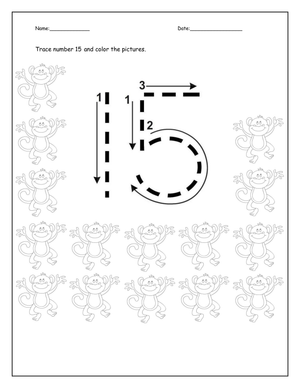
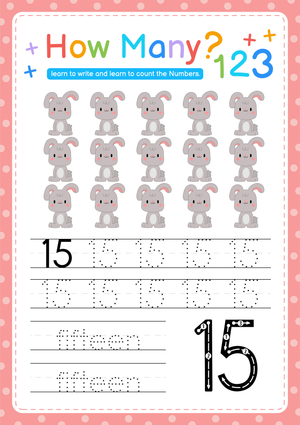
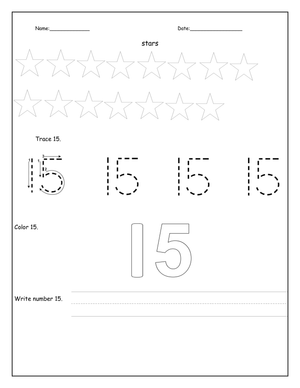
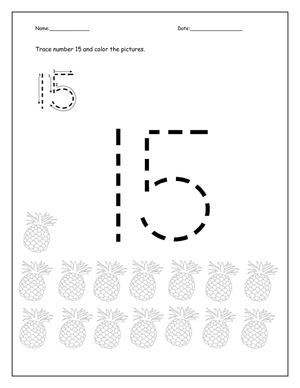
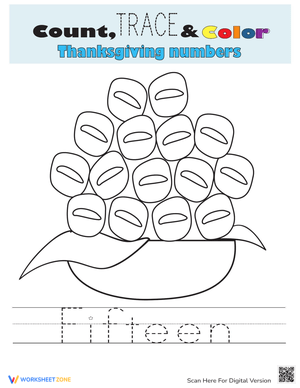
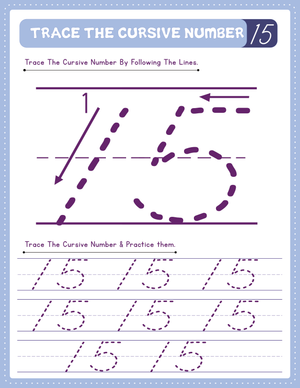
Helping your little one learn the number 15 at home should feel like a warm bonding moment rather than another item on a long to-do list. Many parents quietly worry about whether they are teaching counting the right way, especially when a child stumbles over teen numbers. The right number 15 worksheets can lift that pressure off your shoulders by giving you a clear, gentle path your child can follow with a smile.
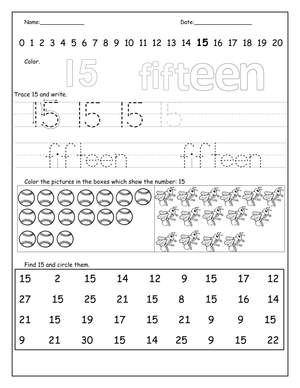
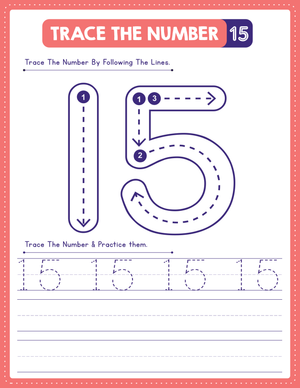
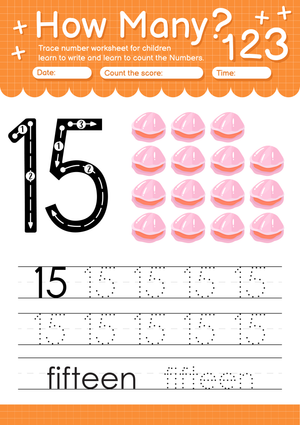
Each printable activity is designed to build confidence in tiny, manageable steps. Your child begins by tracing the digit, moves on to counting groups of fifteen objects, and finishes by writing the numeral on their own. This progression mirrors the way classroom counting practice is structured, so your child quietly gains skills that match what teachers expect for kindergarten and first grade.
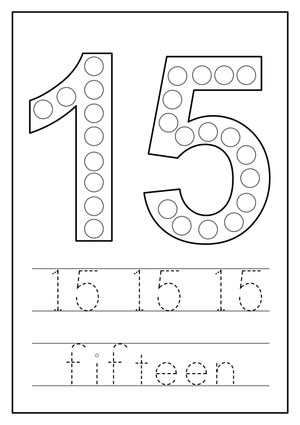
The visual design also matters more than parents often realize. Cheerful illustrations, color-by-number pages, and dot-to-dot puzzles turn quiet practice into something that feels like play. When fifteen apples, butterflies, or stars appear on the page, your child counts naturally instead of feeling tested. These printable pages let parents, teachers, and students share a relaxed moment around the kitchen table while real learning unfolds.
These resources also act as a small window into your child's school day. By watching which questions on the worksheet feel easy and which need a second try, you gain quiet insight into how your young learner thinks about teen numbers. You can pair these pages with simple home activities, like sorting fifteen crayons or counting fifteen jumps. For more home-friendly ideas, browse our guide to counting activities for preschoolers, written by educators at Worksheetzone.
Print a few pages tonight, sit beside your child, and celebrate every small win along the way. With patient practice and the right number 15 worksheets, your young mathematician will move from cautious counting to proud independence in no time.
Frequently Asked Questions
Question 1: What age group benefits most from number 15 worksheets?
Number 15 worksheets are a strong fit for children between ages four and six, which usually covers preschool, kindergarten, and the start of first grade. At this stage, students are learning to recognize, count, trace, and write teen numbers with confidence. The pages from Worksheetzone offer gentle progression, allowing your child to begin with simple tracing and gradually move toward independent writing and counting tasks at home or in the classroom.
Question 2: How do these worksheets help my child understand teen numbers?
Teen numbers like fifteen often confuse young learners because the spoken word does not match the written digits in an obvious way. These printable activities tackle that gap by combining visual counting, tens-and-ones grouping, and direct numeral practice on a single PDF page. Your child sees fifteen objects, breaks them into a group of ten plus five, and writes the digit, which builds a strong mental picture and lasting number sense.
Question 3: What is the best way to use number 15 worksheets at home?
Sit beside your child during practice and treat the worksheet as a shared activity rather than a quiet task. Read each instruction aloud, count objects together, and offer warm encouragement after every correct answer. If your child hesitates, point to a similar example you already finished. Short ten-minute sessions a few times each week tend to work better than long, tiring blocks of practice for young learners just building number 15 worksheets habits.
Question 4: Can teachers use these printable pages in the classroom?
Yes, teachers and homeschool parents can comfortably weave these pages into a structured lesson plan or a math center rotation. The clean layout, age-appropriate font, and varied question types make them easy to assign as morning work, small-group review, or take-home practice. Worksheetzone designs each printable so educators can support different learning paces in one classroom while still keeping every student engaged with meaningful counting work.













 Interactive Worksheet Maker
 Quiz Maker
 Word Search Maker
 Crossword Puzzle Maker
 Word Scramble Generator
 Sentence Scramble Generator
 Handwriting Worksheet Generator
 Name Tracing Generator
 Fill In The Blank Generator