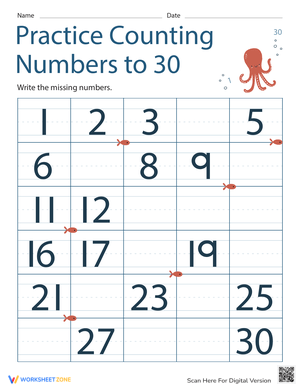
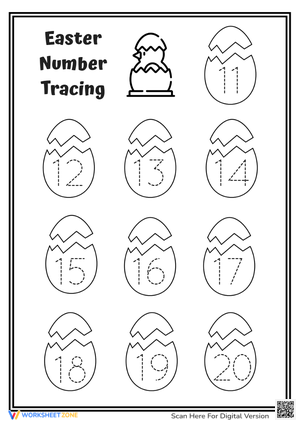
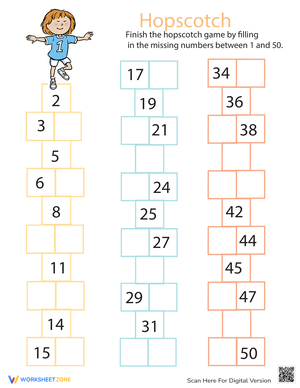
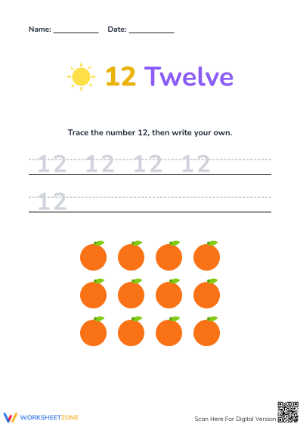
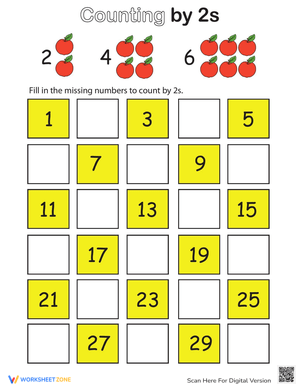
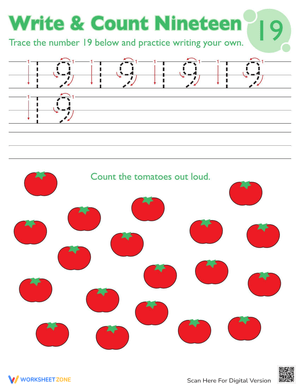
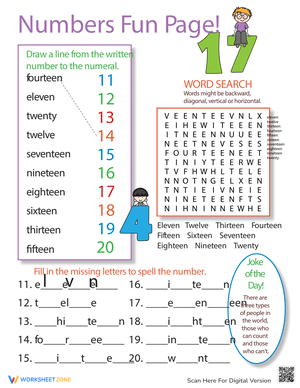
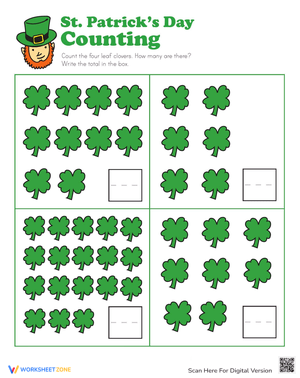
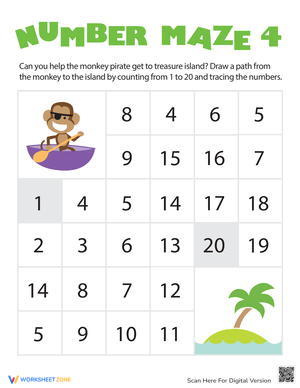
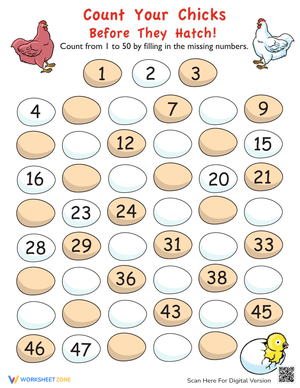
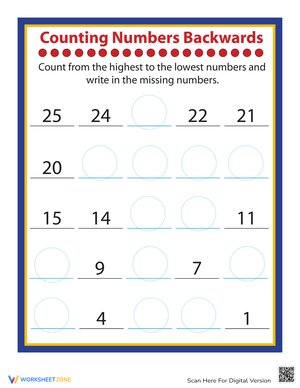
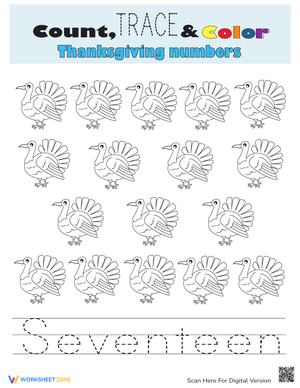
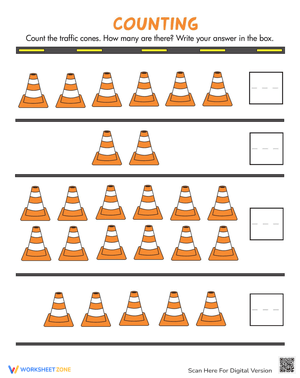
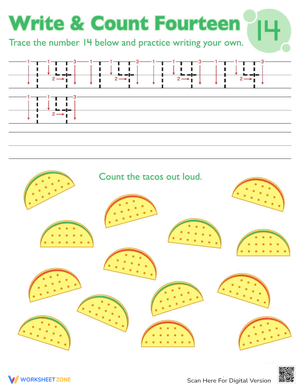
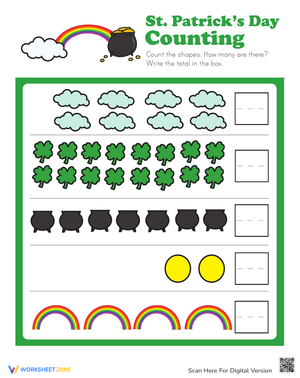
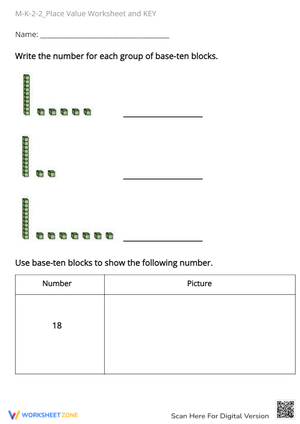
These writing numbers 11–20 worksheets give kindergarten and first-grade teachers a structured way to address one of the trickiest gaps in early numeracy — the point where single-digit fluency breaks down and students meet numbers that behave differently from everything they've learned so far. Each worksheet targets a specific combination of numeral formation, quantity recognition, and place value connection, so practice isn't just repetition for its own sake.
Why Teen Numbers Stall Students Who Already Know 1–10
The numbers 11 through 20 carry a linguistic trap that most adults have long forgotten. "Eleven" and "twelve" give no structural clues — a child who has learned that "fourteen" contains something called four has no such foothold with "eleven." Even the numbers 13 through 19, which do end in "teen," name the units first and the tens second, which is the reverse of how they appear on the page. The result is predictable: students write 71 for 17, or 31 for 13, not because they're careless but because the spoken number and the written number point in different directions. These worksheets make that directional conflict visible and give students enough practice to override it.
There's also a spatial component that gets overlooked. Writing a two-digit number requires a student to place two symbols side by side at consistent size and spacing — a demand that genuinely strains fine motor control in five- and six-year-olds. When the motor effort is high, cognitive resources drop, and the conceptual work suffers. Reducing the motor uncertainty through guided stroke practice frees students to actually think about what the number means.
What's Inside the Set
The worksheets cover numbers 11 through 20, with dedicated practice for each numeral. Across the set, students work with these specific formats:
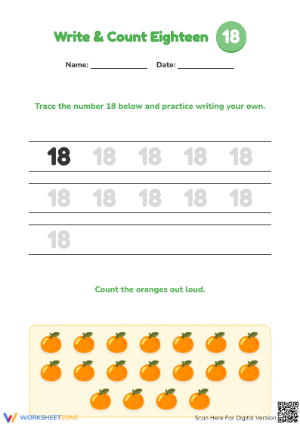
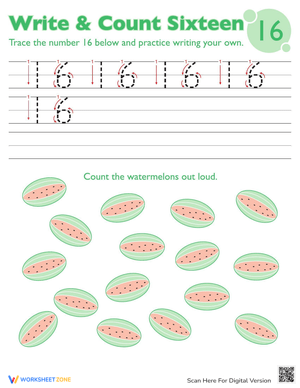
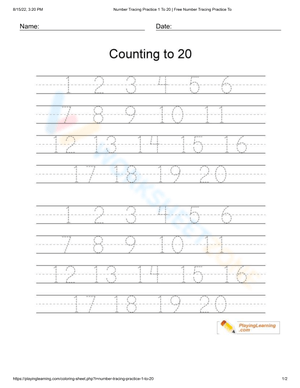
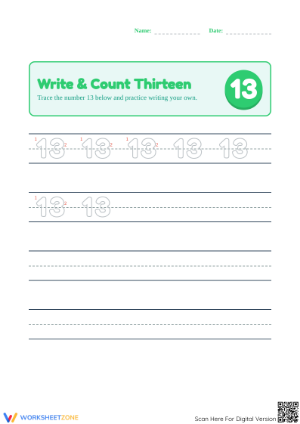
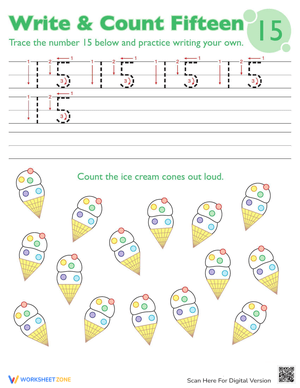
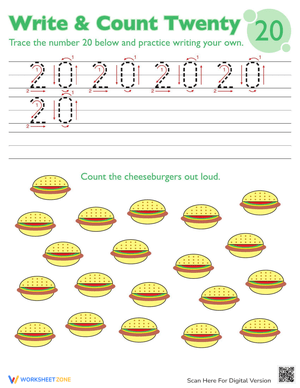
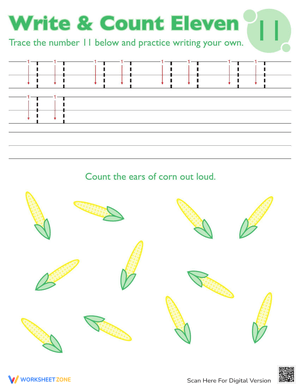
- Stroke-guided tracing with directional arrows showing start position and movement — the "1" in every teen number begins at the top and travels straight down before the second digit is formed
- Fading support sequences that move from fully dotted numerals to lightly dotted lines to blank writing lines, so independence is built gradually rather than assumed
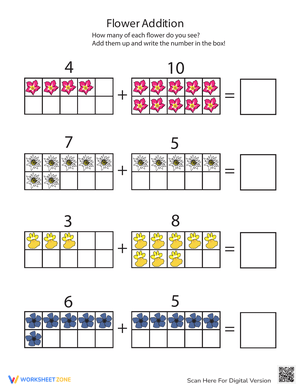
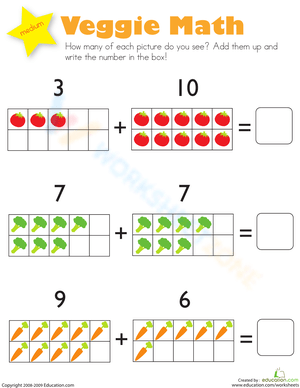
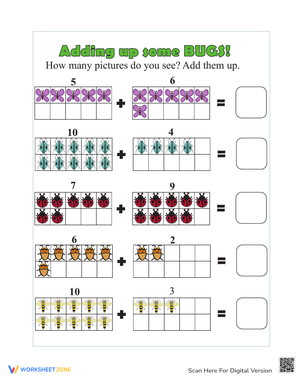
- Ten-frame representations paired with each numeral, letting students see the full group of ten plus the remaining units before they write the symbol
- Number word integration — students read and write "fourteen" and "fourteen" side by side, which matters for ELL students and early readers building vocabulary alongside math skills
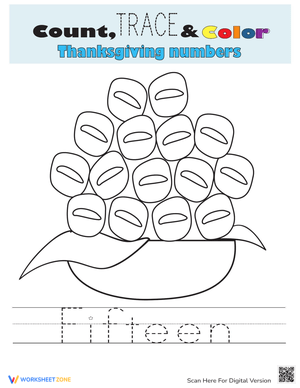
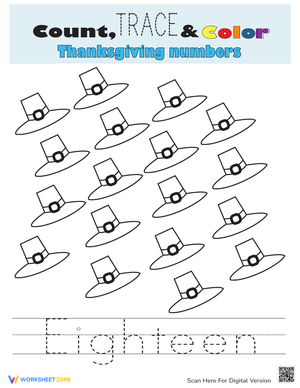
- Count-and-write tasks where students count a pictured quantity and record the matching numeral without a tracing prompt
Standard Alignment
These worksheets align primarily with CCSS.MATH.CONTENT.K.CC.A.3, which requires students to write numbers from 0 to 20 and represent a number of objects with a written numeral. The ten-frame items also support CCSS.MATH.CONTENT.K.NBT.A.1, which addresses composing and decomposing numbers from 11 to 19 as ten ones and some further ones — the conceptual underpinning that makes teen number writing meaningful rather than mechanical. In classroom terms, these standards typically land in the second and third quarters of kindergarten, after counting to 20 is established and before double-digit addition is introduced.
Integrating These Worksheets Into Your Lesson Plans
The most reliable entry point is the guided math block. While you work at the table with a small group using physical ten-frames and counters, three or four other students can work independently on the corresponding worksheet — tracing the numeral for whatever number you introduced that day. The parallel structure keeps everyone anchored to the same concept without requiring you to split your attention constantly.
A specific routine that works well: before students write the number 14 on their worksheet, have them build 14 on a double ten-frame with plastic counters — ten in the top row, four in the bottom. They look at what they built, then look at the numeral, then trace it. That sequence — build, see, write — costs about 90 seconds per number and measurably reduces reversals, because students are connecting the symbol to a quantity they constructed themselves rather than copying an abstract shape.
For the dry-erase version: slide each worksheet into a plastic sleeve and let students use a thin dry-erase marker for initial tracing. The novelty holds attention, and easy erasure lowers the frustration threshold for students whose motor control isn't yet consistent. Once a student can write the number correctly three times in a row on the sleeve, the paper version becomes the accountability copy — something to collect, date, and keep in a progress folder.
Frequently Asked Questions
What should students already know before working on these worksheets?
Students should be able to write numbers 0–10 legibly, count to 20 by rote, and demonstrate one-to-one correspondence when counting objects up to at least 10. A student who can't yet hold a pencil with reasonable control will find the tracing items frustrating; for those students, the dry-erase or finger-tracing approach described above bridges that gap.
What's the correct stroke sequence for the most commonly confused teen numbers?
For all teen numbers, the digit 1 comes first: top to bottom, straight line. For the second digit in 13 — a number that generates a lot of reversals — students form two open curves starting from the top right, both opening to the left. The error to watch for is students starting the 3 from the bottom, which produces a shape that looks closer to a backwards E. For 12, the 2 begins with a curve at the upper right, swings left and down, then crosses with a flat stroke at the baseline. Posting a stroke-order reference card near the writing area reduces the frequency of ingrained errors.
How do these worksheets fit into a math center rotation?
In a four-center rotation, these worksheets work well at an independent writing station paired with a small basket of counters and a double ten-frame. Students build the number, then write it. Centers typically run 12–15 minutes in kindergarten, which is enough time for a student to work through two or three numbers in the set without fatigue. Laminated worksheets in dry-erase sleeves allow the same materials to be reused across rotations without reprinting.
Do the worksheets include number words alongside the numerals?
Yes. Each worksheet pairs the numeral with its written word — "seventeen," "eighteen," and so on. For English language learners in particular, hearing the word, reading the word, and writing the word in the same session builds the vocabulary connection that purely symbolic practice skips. It also surfaces a secondary challenge: students often recognize that "fifteen" contains "five" but can't yet explain why, which opens a useful brief conversation about how English names numbers.













 Interactive Worksheet Maker
 Quiz Maker
 Word Search Maker
 Crossword Puzzle Maker
 Word Scramble Generator
 Sentence Scramble Generator
 Handwriting Worksheet Generator
 Name Tracing Generator
 Fill In The Blank Generator