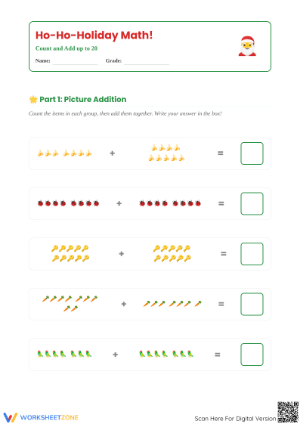
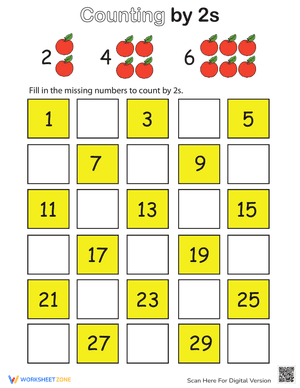
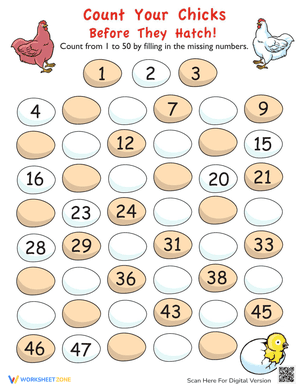
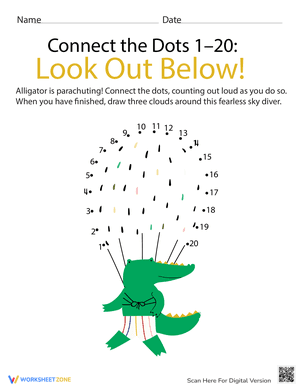
These counting numbers 11 20 printable worksheets give kindergarten teachers a structured way to address one of early math's most stubborn sticking points: the teen number range that students can recite in sequence long before they actually understand what those numbers mean. Each worksheet targets a specific skill — numeral writing, ten-frame reading, object counting, or word-to-numeral matching — so teachers can assign them deliberately rather than in bulk.
Why Teen Numbers Trip Students Up (and What These Worksheets Address)
English does something quietly damaging to kindergartners learning to count past ten. Languages like Mandarin and Korean name teen numbers in ways that expose their structure — "ten-three" for thirteen, "ten-seven" for seventeen — while English buries it. "Eleven" and "twelve" carry no trace of ten. "Thirteen" and "fifteen" invert the expected order. Students who have clean, confident command of 1–10 hit this range and stall. What looks like a counting gap is often a language gap. These worksheets work directly against that confusion by pairing every numeral with a ten-frame that makes the base-ten architecture visible — one full frame of ten, then the extras off to the side.
The digit-reversal problem compounds this. A student who writes "31" when she means 13 isn't being careless; she's writing the sounds in the order she hears them — three, then teen. The worksheets include directional tracing with clear starting points precisely because muscle memory practice, done consistently, interrupts that phonologically driven error pattern before it fossilizes.
Skills Covered Across the Set
- Numeral tracing and independent writing — dotted-line models guide pencil formation for each number 11 through 20, with arrows that establish correct stroke sequence before students write on their own.
- Ten-frame interpretation — students read partially filled double frames and record the total, building the habit of identifying the complete group of ten without recounting it from one.
- One-to-one correspondence with objects — worksheets ask students to cross out, color, or mark objects as they count, which physically slows the count and eliminates the skipping and double-counting that free oral counting allows.
- Number-word recognition — matching tasks connect the numeral, the written word, and a set of objects as three linked representations of the same quantity.
- Sequencing and missing-number tasks — students fill gaps in number tracks and order scrambled numerals, shifting from passive recognition toward flexible number sense.
Standard Alignment
These worksheets align to two kindergarten Common Core standards. K.CC.A.3 requires students to write numbers 0–20 and represent a number of objects with a written numeral; the tracing and independent writing worksheets address this directly. K.NBT.A.1 asks students to understand that teen numbers are composed of ten ones and one, two, three, four, five, six, seven, eight, or nine additional ones — the ten-frame format is the most classroom-efficient way to build that understanding because it makes the composition visible without requiring students to already know place value language. Teachers working in states that use alternate standards frameworks will find the same skill targets described in nearly identical terms under early number and operations strands at the kindergarten level.
Fitting These Worksheets Into Actual Classroom Time
The most effective placement is right after a concrete manipulative activity, not instead of one. Students who have just built 14 with a full ten-frame of counters and four more read the printed ten-frame on the worksheet as a picture of something real rather than an abstract diagram. Even five minutes with snap cubes before the pencil comes out changes the quality of what students write. That transition from concrete to representational is the gradual release that makes these worksheets instructionally sound rather than just busy work.
Within the weekly schedule, tracing and writing worksheets work well Monday and Tuesday when fine motor focus is fresh. Ten-frame and counting worksheets fit naturally into the Wednesday and Thursday math center rotation. The word-matching and sequencing tasks hold up well on Fridays as a low-stakes review — they're completion-friendly for the 10 minutes before lunch or the tail end of morning meeting. Teachers running small-group instruction can use a single worksheet as the table task for the group not working with them, since each one is self-contained enough to run without verbal prompting once students know the format.
Mistakes Students Make That These Worksheets Help You Catch
The most revealing error isn't the digit reversal — it's the student who counts a ten-frame correctly when the dots are arranged in the standard pattern but freezes or miscounts when one dot is slightly offset. That student is counting individual dots every time rather than subitizing the group of ten. The ten-frame worksheets surface this quickly because the frames use consistent layouts; if a student's answers are correct on the standard frames but erratic on any variation, the problem is visual anchoring rather than counting skill.
A second pattern worth watching: students who correctly count a group of 17 objects on the page but write "7" as their answer. They found the "extra ones" and stopped. They recognized that teen numbers have a small digit in them and wrote that part. This is a numeral-construction problem distinct from a counting problem, and it responds well to the color-coding technique — having students circle the first ten objects in one color and the remainder in another before writing the number, so the two-digit structure is visually present on the page when they go to write it.
Frequently Asked Questions
Are these worksheets appropriate for pre-K students?
The tracing and object-counting worksheets work in pre-K with some scaffolding — verbal number-naming support and smaller counting sets help. The ten-frame and word-matching tasks are designed for students who already have stable 1–10 counting and are better suited to kindergarten or early first grade.
How many worksheets should I assign at once?
One worksheet per session is usually enough. Assigning several at once doesn't deepen learning — it extends seat time. A single focused worksheet followed by a quick verbal check or manipulative activity gives more information about where each student actually is.
What do I do when a student keeps reversing digits even after repeated tracing practice?
Tracing helps with motor memory, but reversal is often a visual processing habit that tracing alone won't fix. Try having the student build the number with magnetic digits or number cards before writing it, so the correct spatial arrangement is present in front of them when the pencil touches paper. If the reversal persists past the first few months of first grade, that's worth flagging for further evaluation.
















 Interactive Worksheet Maker
 Quiz Maker
 Word Search Maker
 Crossword Puzzle Maker
 Word Scramble Generator
 Sentence Scramble Generator
 Handwriting Worksheet Generator
 Name Tracing Generator
 Fill In The Blank Generator