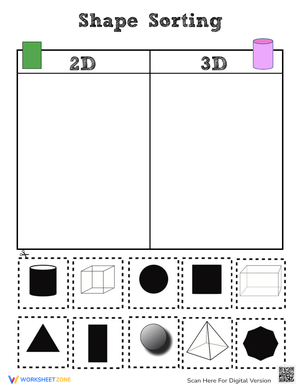
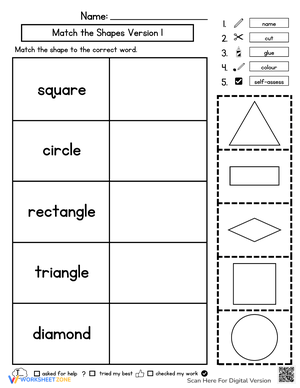
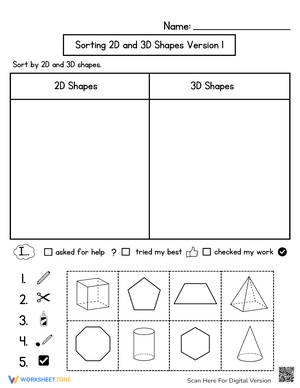
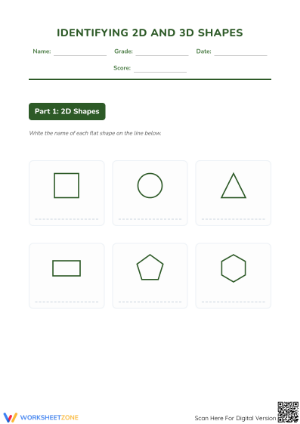
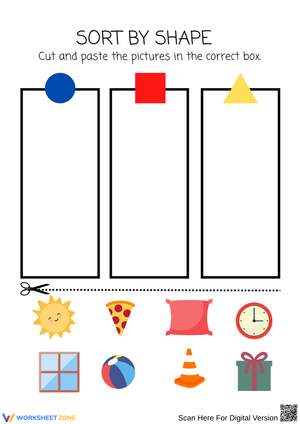
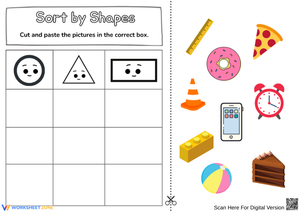
Shape sorting is one of the first ways young learners practice mathematical reasoning without needing to read or write numbers yet. When a kindergartner separates a pile of pattern block cutouts into triangles and squares, they are already comparing attributes, testing rules, and justifying their choices out loud. Sorting shapes worksheets give teachers a repeatable, low-prep way to capture that thinking on paper so it can be reviewed, scored, or sent home for extra practice.
For US classrooms, this work is not just a filler activity between calendar time and recess math. It builds directly toward the geometry and measurement expectations that kindergarten and first-grade students are expected to meet before moving into more formal shape study in second grade.
How Sorting Connects to Kindergarten Standards
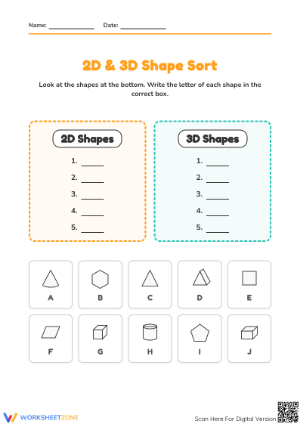
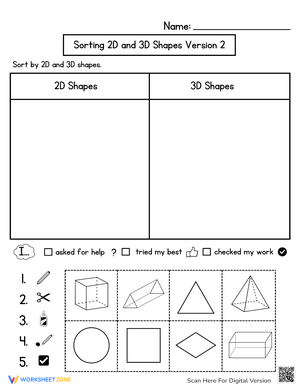
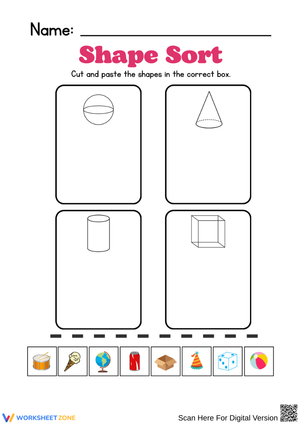
Two standards drive most of the sorting shapes worksheets you will find for early elementary grades. CCSS.MATH.CONTENT.K.MD.B.3 asks students to classify objects into given categories, count how many objects fall into each category, and then sort those categories by count. CCSS.MATH.CONTENT.K.G.B.4 goes a step further, requiring students to analyze and compare two- and three-dimensional shapes of different sizes and orientations, using language about sides, vertices, and other attributes.
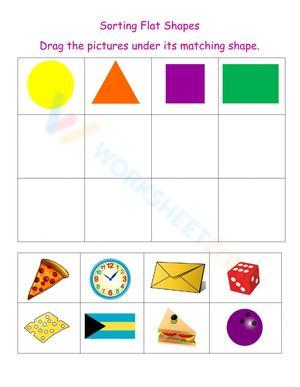
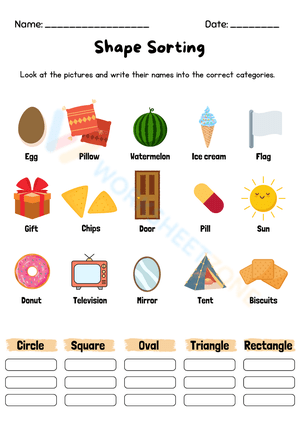
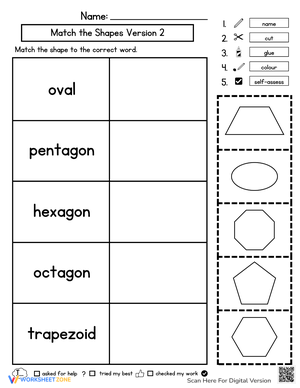
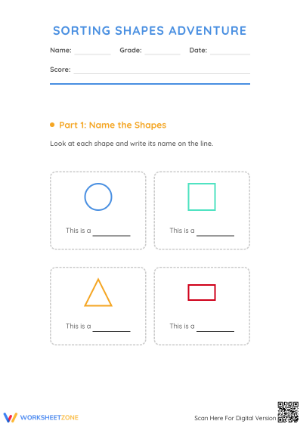
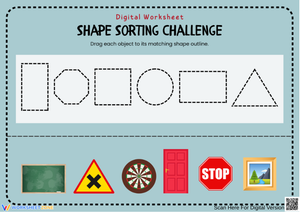
Most published sorting shapes worksheet sets begin with only four shapes: triangle, rectangle, square, and circle. Narrowing the field this way is not arbitrary. It keeps the cognitive load on the sorting rule itself, such as number of sides, rather than on recognizing an unfamiliar shape name, which matters for students who are still building basic geometry vocabulary.
Single-Attribute Sorts vs Two-Attribute Sorts
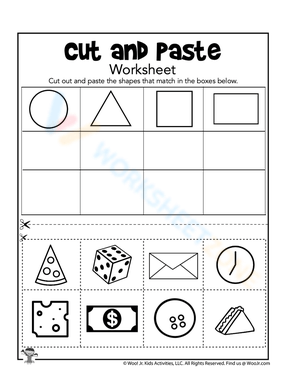
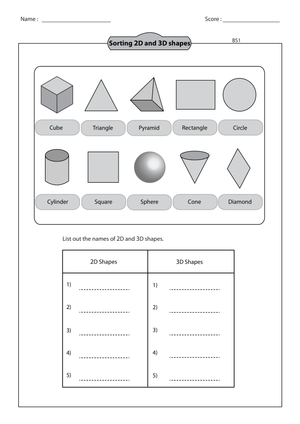
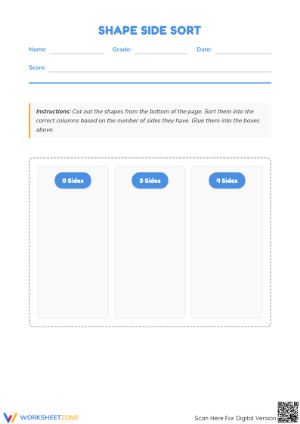
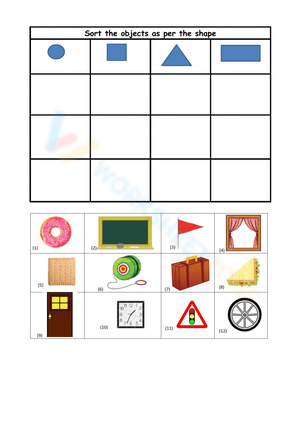
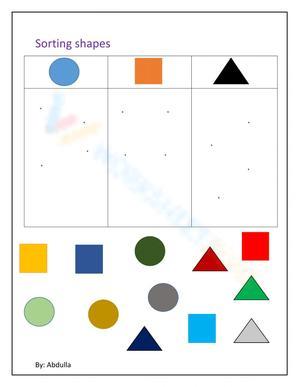
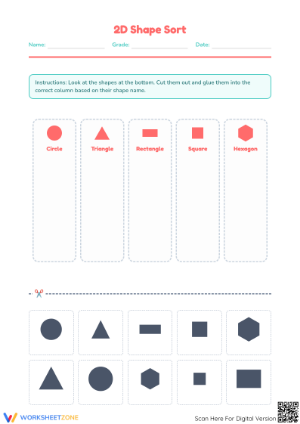
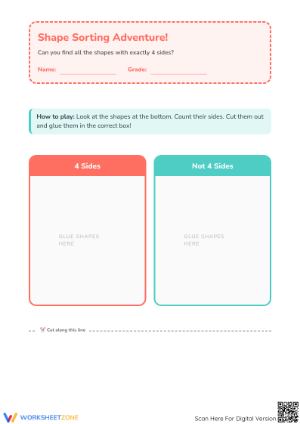
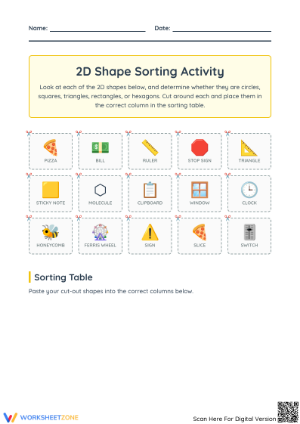
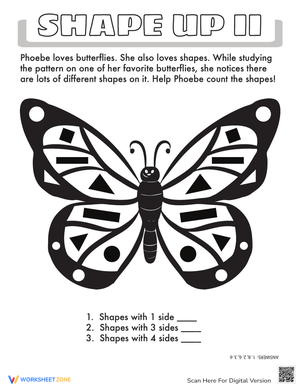
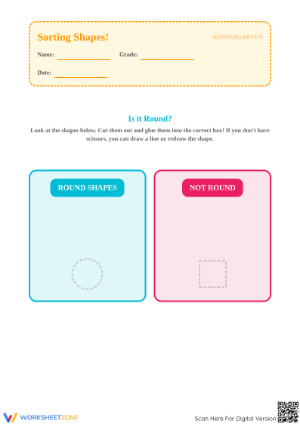
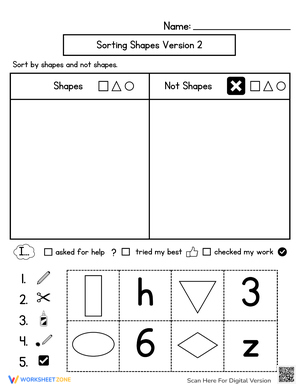
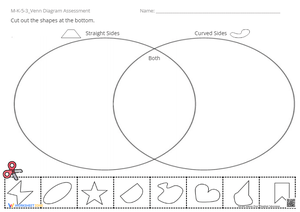
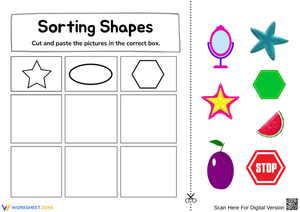
Kindergarten sorting shapes worksheets typically ask students to sort by one attribute at a time, most often shape name or number of sides. A student might circle all the triangles in red and all the squares in blue, or cut and glue shapes into two labeled columns.
First-grade worksheets usually raise the bar by asking for two-attribute sorts, such as shape plus color or shape plus size. A student might need to find every large triangle, ignoring small triangles and large squares. This shift matters for lesson planning because it changes both the worksheet design and the questions a teacher asks during a mini-lesson. Framing the task as color first, then shape, or the reverse, helps students see that sorting rules can stack.
Teacher Tips
A few small adjustments can make sorting shapes worksheets more useful across a range of learners in the same classroom.
- Laminate a class set of the same worksheet so students can sort with dry-erase markers before doing the cut-and-glue version, which lowers the stakes for a first attempt.
- Pre-cut the shape strips for students who need extra support with scissors, so the math task is not blocked by a motor skill gap.
- Use the same worksheet format across several weeks with different attributes, such as sides one week and size the next, so students focus on the new skill instead of relearning the page layout.
- Collect completed worksheets as a quick formative check before a small-group pull, since a single sort tells you a lot about whether a student is ready for two-attribute work.
- Read shape names aloud for students who cannot yet decode the printed labels, keeping the assessment focused on shape sense rather than reading ability.
Frequently Asked Questions
1. What grade level are sorting shapes worksheets designed for?
Most sorting shapes worksheets are built for Pre-K through first grade, with kindergarten as the primary target since CCSS.MATH.CONTENT.K.G.B.4 and CCSS.MATH.CONTENT.K.MD.B.3 both address shape classification directly.
2. How do sorting shapes worksheets align with kindergarten math standards?
They give students practice with the exact skills named in CCSS.MATH.CONTENT.K.G.B.4, comparing shapes by sides and vertices, and CCSS.MATH.CONTENT.K.MD.B.3, classifying and counting objects by category.
3. What is the difference between sorting by one attribute and sorting by two attributes?
Single-attribute sorting asks students to group shapes by one rule, such as shape name. Two-attribute sorting, common in first grade, asks students to apply two rules at once, such as shape and size together.
4. How can teachers use sorting shapes worksheets for small-group intervention?
Use a completed worksheet as a quick check to see which students still confuse shape names or attributes, then pull those students for a short manipulative-based lesson before returning to a fresh worksheet.
5. What manipulatives pair well with sorting shapes worksheets?
Pattern blocks, foam shapes, and attribute blocks work well because students can physically test a sorting rule before recording it on paper, which supports students who need concrete practice first.













 Interactive Worksheet Maker
 Quiz Maker
 Word Search Maker
 Crossword Puzzle Maker
 Word Scramble Generator
 Sentence Scramble Generator
 Handwriting Worksheet Generator
 Name Tracing Generator
 Fill In The Blank Generator