


























Views
Downloads

Printable Sorting Shapes Worksheet | Grade K-2 Geometry
Paste this activity's link or code into your existing LMS (Google Classroom, Canvas, Teams, Schoology, Moodle, etc.).
Students can open and work on the activity right away, with no student login required.
You'll still be able to track student progress and results from your teacher account.
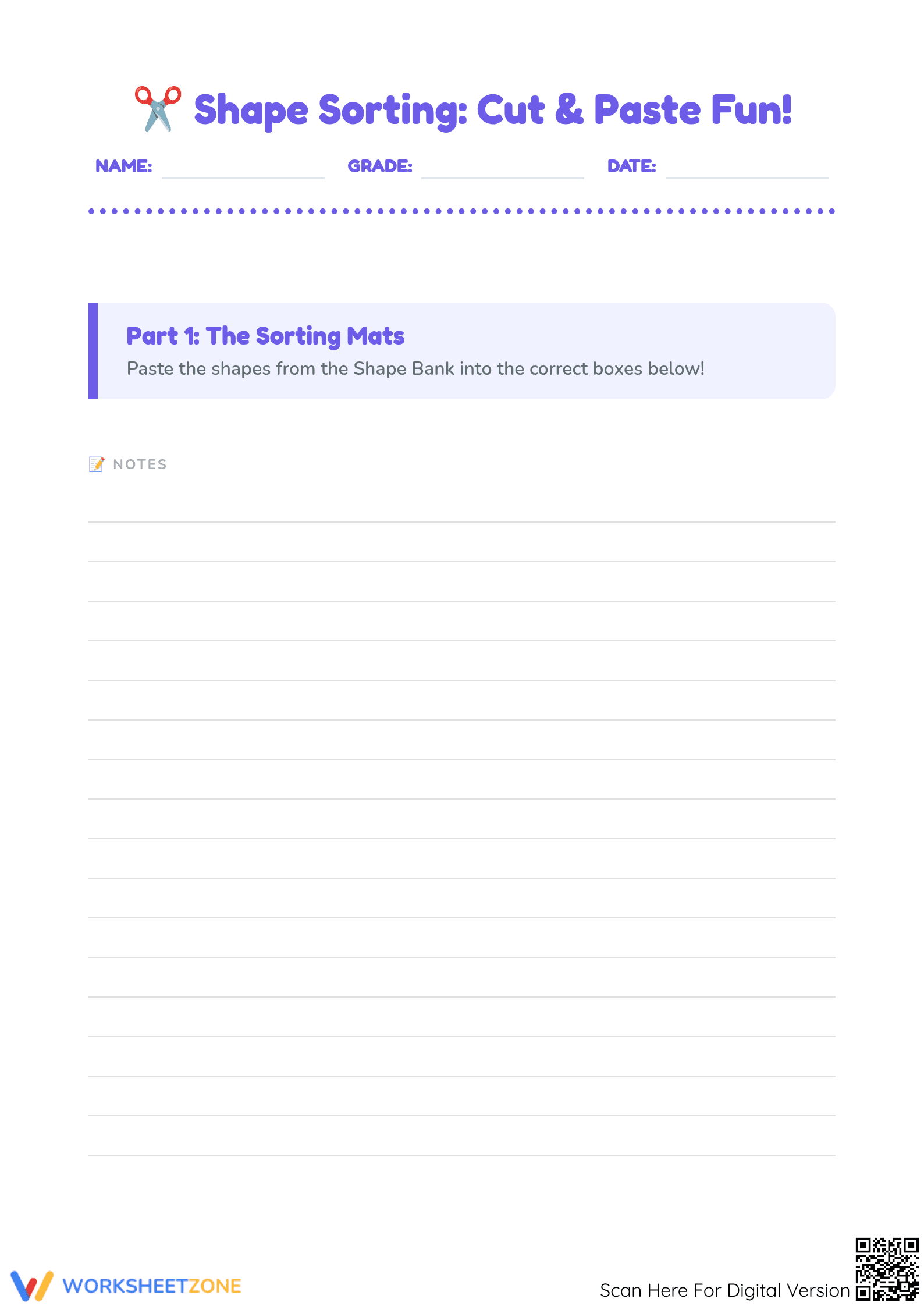
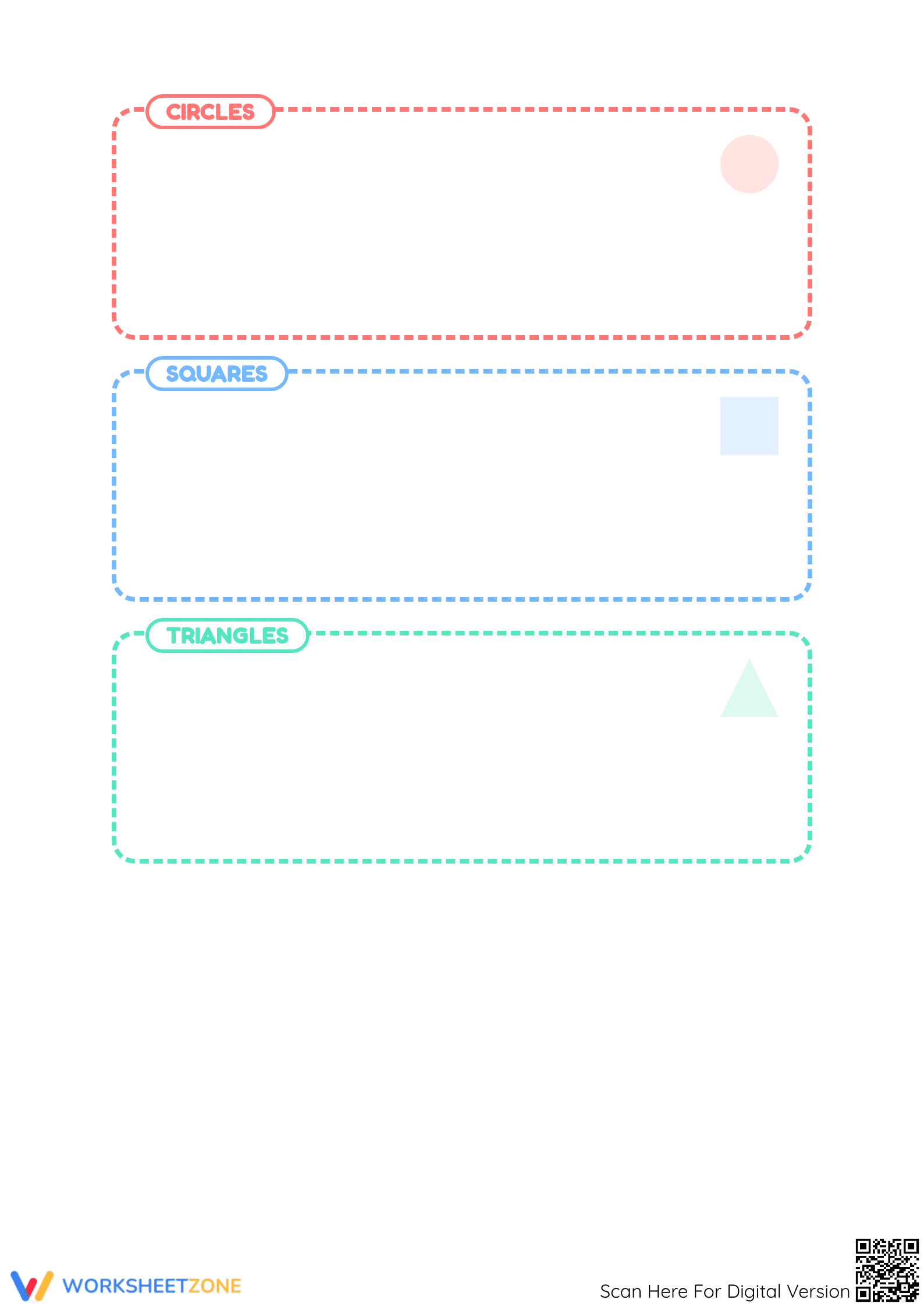
This printable Sorting Shapes worksheet provides a complete hands-on activity for early learners to master geometric classification. By engaging in a tactile cut-and-paste process, students identify and categorize circles, squares, and triangles into dedicated sorting mats. This resource ensures students build the foundational spatial reasoning skills required for advanced geometry topics in later elementary grades.
At a Glance
- Grade: K–2 · Subject: Math
- Standard:
CCSS.MATH.CONTENT.K.G.B.4— Analyze and compare shapes by their attributes to identify and sort them- Skill Focus: Shape identification and classification
- Format: 3 pages · 12 problems · Answer key included · PDF
- Best For: Geometry centers and early math skills
- Time: 15–20 minutes
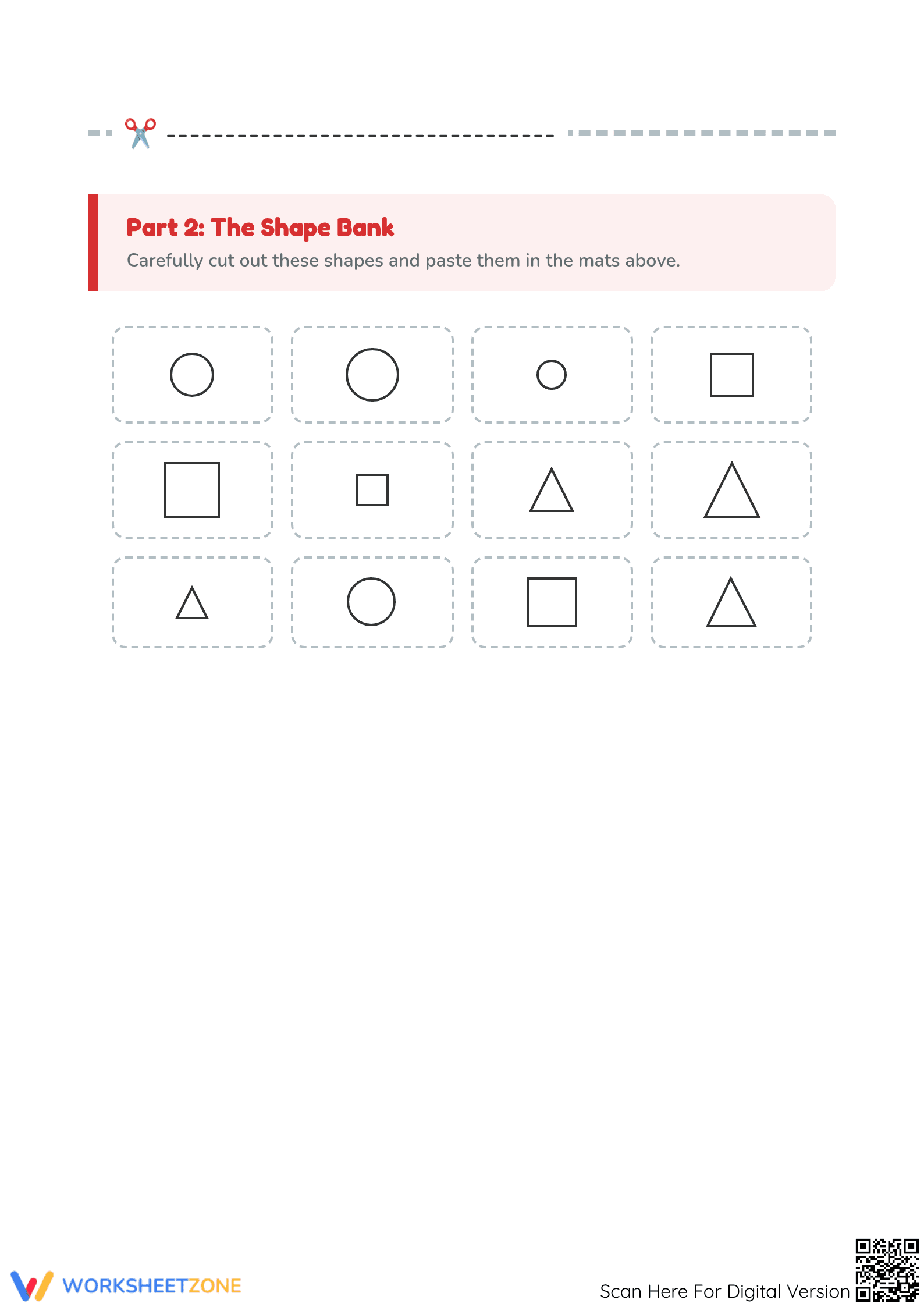
This comprehensive 3-page PDF package provides all needed for a successful sorting lesson. It includes a structured title area and notes section, three distinct sorting mats for circles, squares, and triangles (each with a visual anchor), and a Shape Bank with 12 clean, easy-to-cut shape icons, ensuring a manageable task for small hands.
Implementing this activity is efficient for busy educators. Simply print copies, distribute with scissors and glue for immediate sorting, and review with the included answer key for instant feedback. Total teacher prep time is under two minutes, ideal for emergency sub plans.
The primary focus is CCSS.MATH.CONTENT.K.G.B.4, which requires students to analyze and compare two-dimensional shapes in different sizes and orientations. By requiring students to physically move shapes into specific categories, this worksheet reinforces the understanding of defining attributes versus non-defining attributes. This standard code can be copied directly into lesson plans, IEP goals, or district curriculum mapping tools to ensure full compliance with national mathematics frameworks.
This resource is perfect for independent practice in a geometry lesson. Use it after introducing basic shapes to assess understanding of properties. Observe students identifying rotated or varied-size shapes for formative assessment. It also suits quiet morning work or targeted support.
This worksheet is designed for Kindergarten, Grade 1, and Grade 2 students who are building their geometric vocabulary. The clear visual cues and simplified layout make it accessible for English Language Learners and students with IEPs. For higher-level learners, teachers can pair this resource with a local environment shape hunt where students find real-world examples of circles, squares, and triangles before completing the paper-based task.
Research emphasizes that tactile engagement and sorting tasks are critical for developing cognitive schemas in early childhood mathematics. This worksheet aligns with evidence-based practices, requiring physical manipulations that solidify mental models of geometric figures. The use of CCSS.MATH.CONTENT.K.G.B.4 promotes active analysis of shape properties, moving students toward automaticity in shape identification through categorizing 12 distinct items. Educational data indicates that students mastering these foundational classification skills show significantly higher proficiency in complex spatial reasoning tasks by fourth grade. This resource provides a structured, research-backed pathway to bridge abstract geometric concepts and concrete student understanding.


