


























Views
Downloads

Printable 2D Shape Sorting Worksheet | Grade K-1 Aligned
Paste this activity's link or code into your existing LMS (Google Classroom, Canvas, Teams, Schoology, Moodle, etc.).
Students can open and work on the activity right away, with no student login required.
You'll still be able to track student progress and results from your teacher account.
This 2D shape sorting worksheet provides a hands-on approach for early learners to master geometry basics. By cutting, identifying, and pasting various geometric figures, students build the foundational spatial reasoning skills required for more complex mathematical concepts. This activity ensures that children move beyond simple recognition toward active classification of shapes based on their essential attributes.
At a Glance
- Grade: Kindergarten · Subject: Math
- Standard:
K.G.B.4— Analyze and compare two-dimensional shapes in different sizes and orientations.- Skill Focus: Identifying and sorting circles, squares, triangles, and rectangles.
- Format: 3 pages · 16 problems · Cut and paste activity · PDF
- Best For: Independent math centers and geometry introductory lessons.
- Time: 15–20 minutes
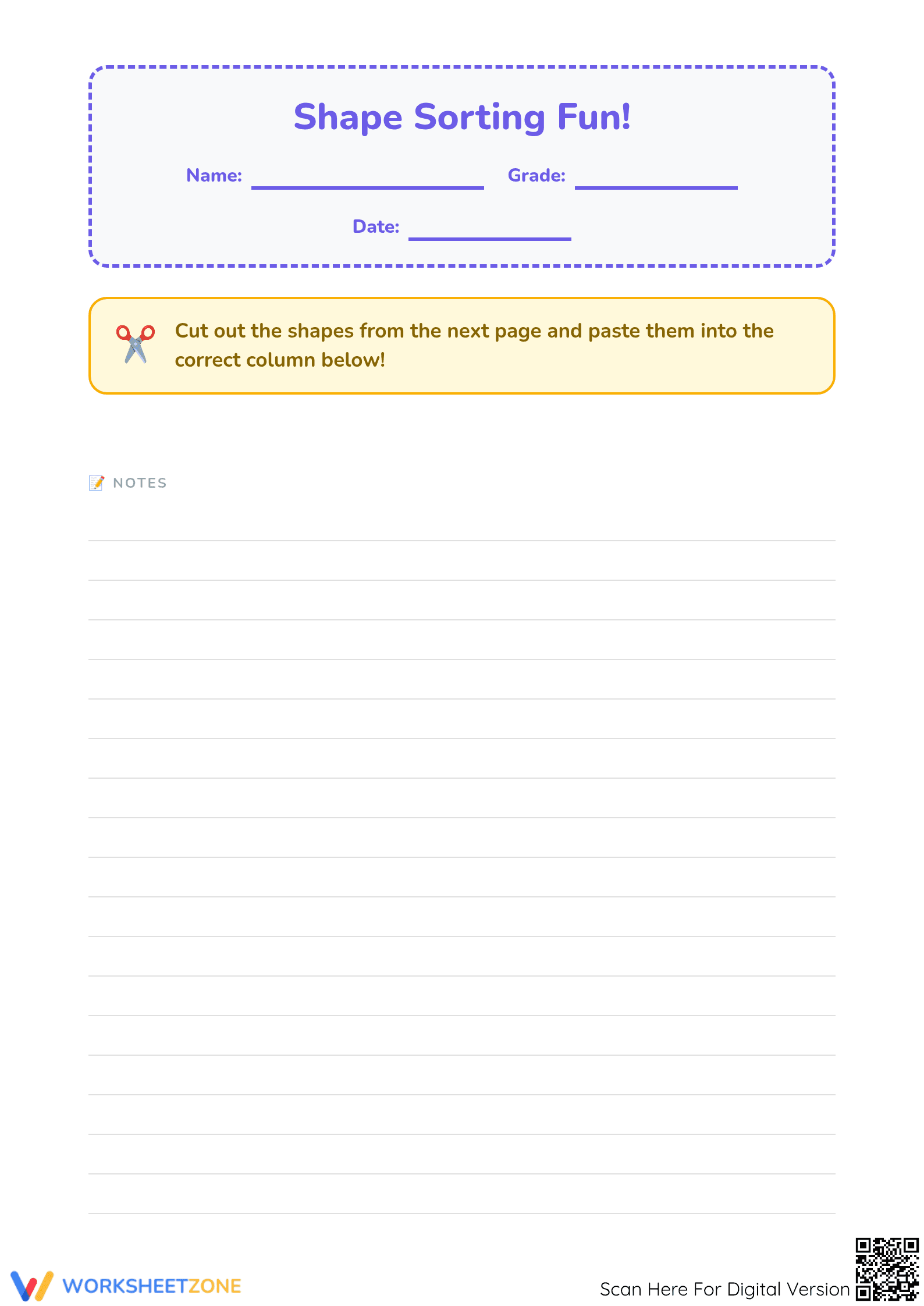
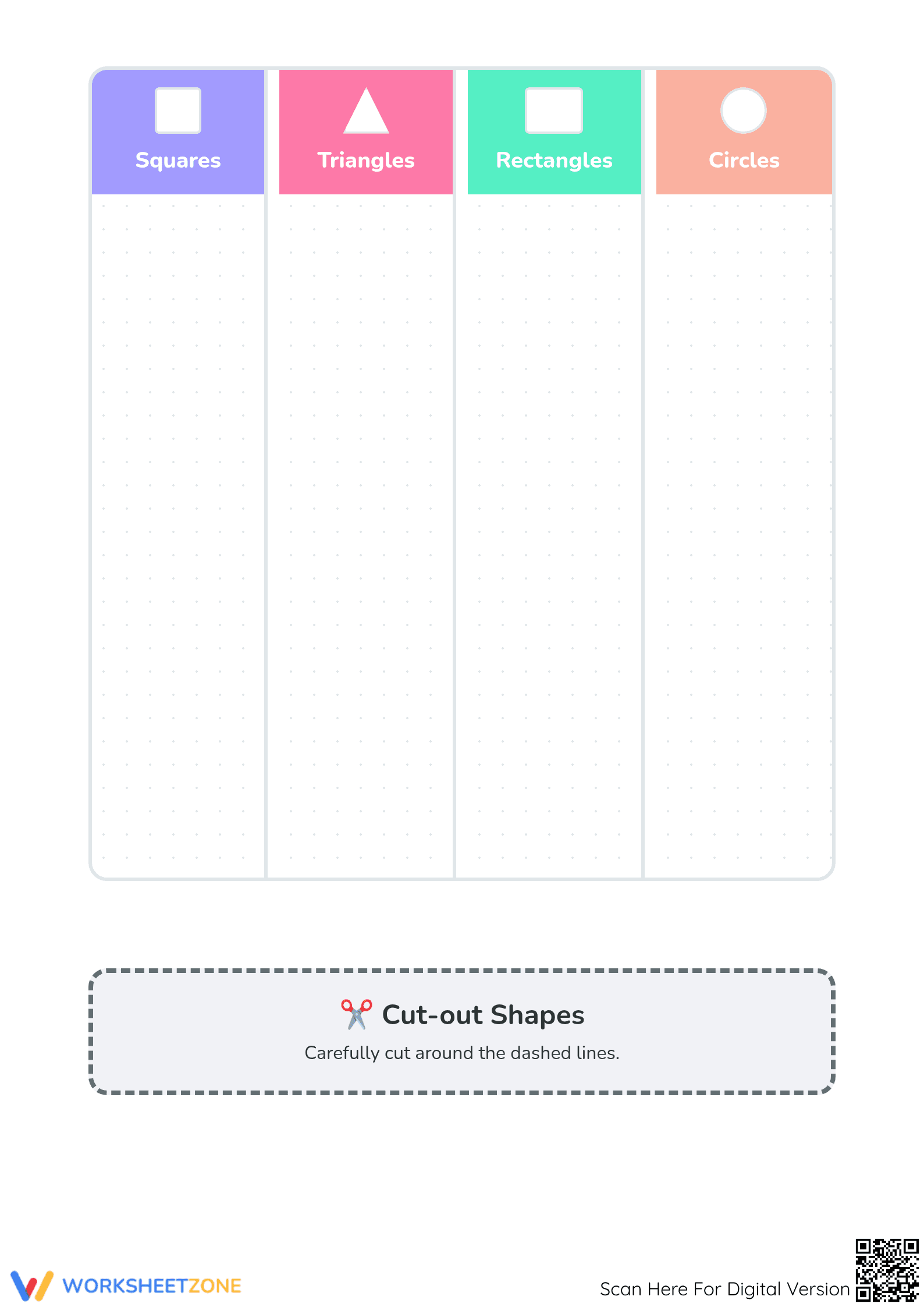
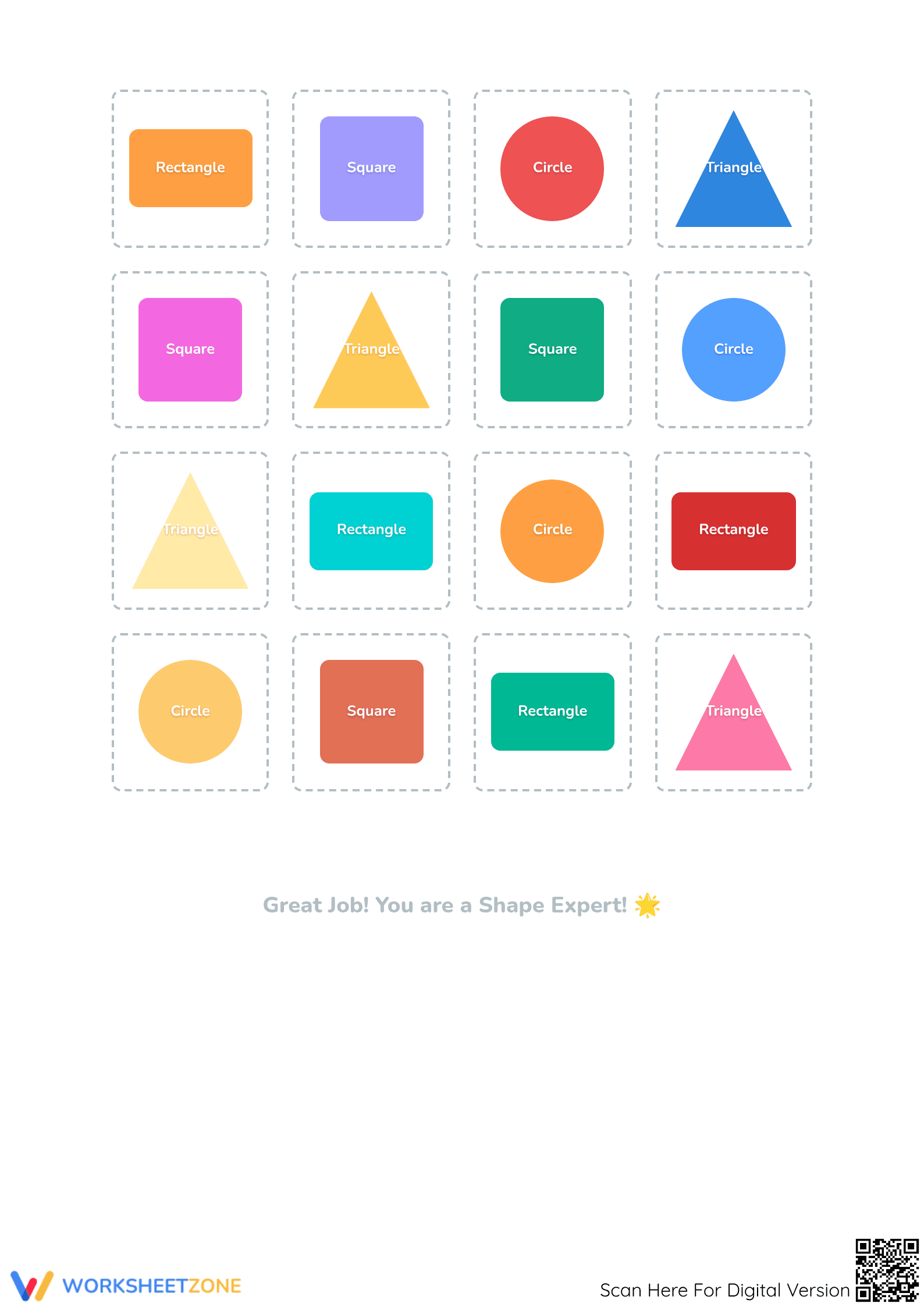
Inside this three-page PDF, you will find a dedicated title page with a notes section for teacher observations or student reflections. The second page features a clean, four-column sorting mat labeled with both the shape name and a visual icon for support. The final page contains 16 unique shape tiles, including varied sizes and colors of circles, squares, rectangles, and triangles, providing ample practice for small-group or whole-class instruction.
Zero-Prep Workflow
- Print (1 minute): Select the double-sided or single-sided print option for the three pages to ensure every student has a sorting mat and a shape sheet.
- Distribute (1 minute): Provide each student with the printed pages, a pair of safety scissors, and a glue stick to begin the tactile learning process.
- Review (5 minutes): Walk around the room as students sort their 16 shapes, using the visual cues on the mat to provide immediate corrective feedback.
This resource is specifically aligned to CCSS.MATH.CONTENT.K.G.B.4, which requires students to analyze and compare two-dimensional shapes. The activity pushes students to recognize that a triangle is still a triangle regardless of its color, size, or orientation. This standard code can be copied directly into lesson plans, IEP goals, or district curriculum mapping tools to ensure instructional compliance.
For the best results, use this worksheet as a formative assessment during your geometry unit. It works exceptionally well in a small-group rotation where the teacher can observe a student's ability to distinguish between a square and a rectangle based on side length. Alternatively, assign it as a morning work activity to reinforce shape recognition in a low-stakes, engaging format that develops fine motor skills through cutting.
This worksheet is designed for Kindergarten and Grade 1 students who are beginning to explore formal geometry. It includes visual scaffolds, such as shape icons in the column headers, to support English Language Learners and students with processing needs. Pair this activity with a physical set of pattern blocks or a read-aloud about shapes to create a comprehensive, multi-sensory math lesson for your early childhood classroom.
Research from the RAND AIRS 2024 report emphasizes that tactile, manipulative-based learning is critical for developing spatial visualization in Kindergarten students. By engaging in the physical act of sorting 16 different 2D shapes, students internalize the defining characteristics of circles, squares, triangles, and rectangles. This specific worksheet aligns with the K.G.B.4 standard by presenting shapes in various orientations and sizes, which prevents the common misconception that shapes only exist in "perfect" or standard positions. The inclusion of 16 distinct tasks allows for multiple trials, which Fisher & Frey (2014) identify as a key component of the gradual release of responsibility. As a classroom-ready tool, it minimizes transition times and maximizes instructional minutes, providing a high-utility assessment of shape classification that can be easily integrated into any standard-aligned math curriculum or individualized education program.


