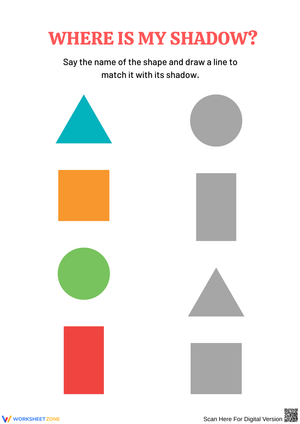
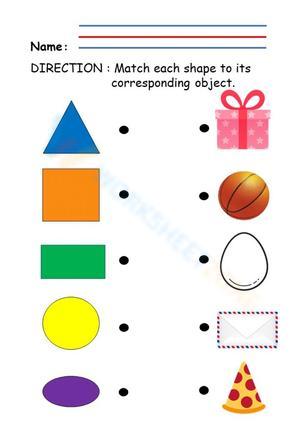
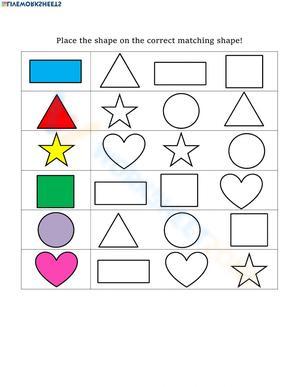
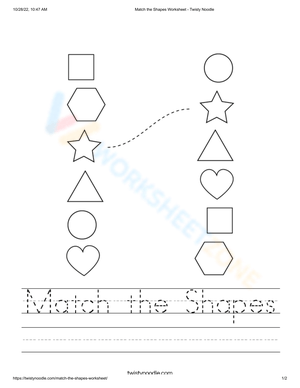
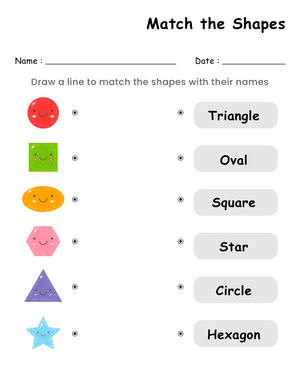
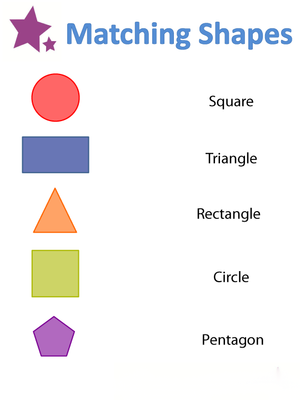
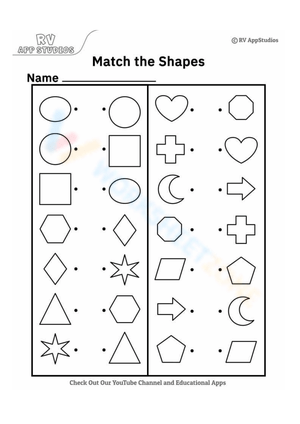
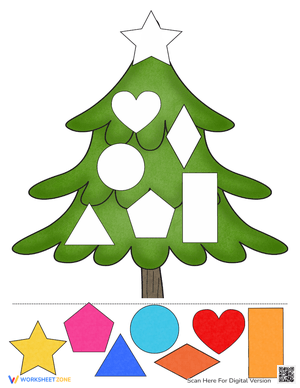
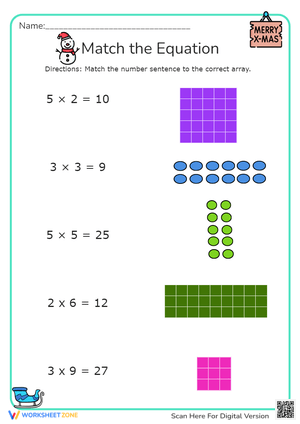
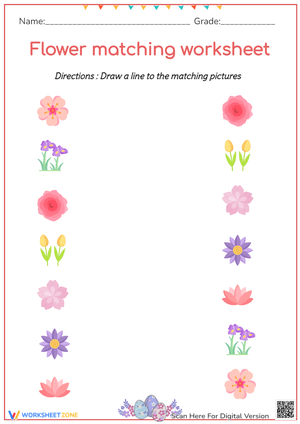
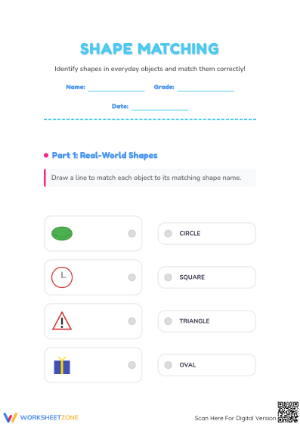
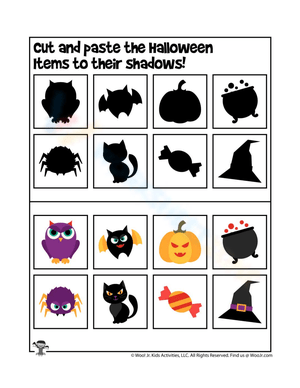
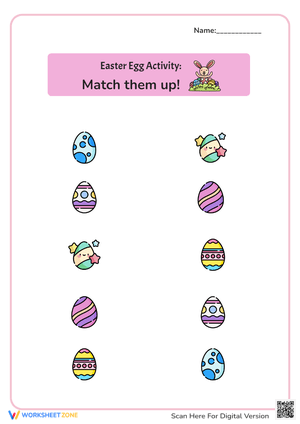
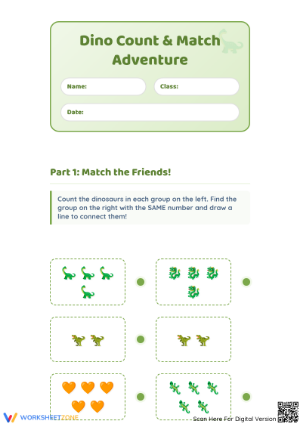
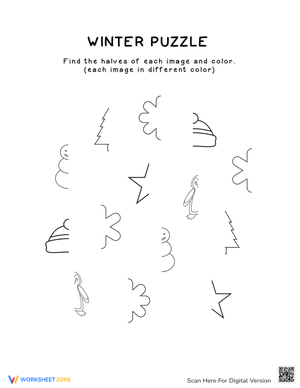
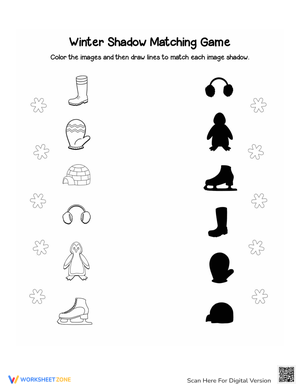
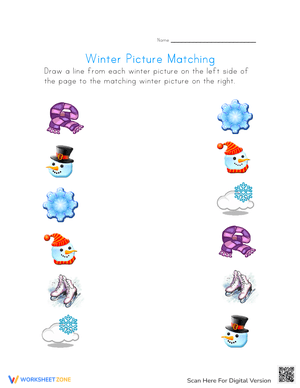
Matching shapes worksheets ask a young student to look at a target shape, then find its match among a row of similar-looking options. That sounds simple, but the skill underneath it is not. A student has to hold a mental picture of a triangle steady while a rotated, shrunken, or stretched version of that same triangle sits three inches away disguised as something else. For pre-K and kindergarten teachers, that is the whole point: matching activities build the visual discrimination a child needs before shape names, shape attributes, or shape composition make any sense.
Most classrooms introduce matching shapes worksheets during the first geometry unit of the year, often alongside pattern block play or shape sorting bins. The worksheet format gives teachers something a manipulative tin cannot: a paper record of which students can already generalize a shape across size and orientation, and which ones are still matching by color, position, or guesswork.
How Matching Shapes Worksheets Align with CCSS K.G.A.2 and K.G.A.3
CCSS K.G.A.2 requires kindergartners to correctly name shapes regardless of their orientation or overall size. That single sentence is the reason matching worksheets exist as a category. A worksheet that shows a large square, a tiny tilted square, and a rotated rectangle in the same row is directly rehearsing the orientation-and-size flexibility that K.G.A.2 demands. If a student can only recognize a triangle when it is sitting flat on its base, that student has not yet met the standard, even if they can say the word triangle correctly most of the time.
CCSS K.G.A.3 pushes the skill further by asking students to classify shapes as two-dimensional or three-dimensional. Many matching worksheets build this distinction in without stating it outright, pairing flat shapes with flat shapes and keeping solid shapes in a separate matching set. Teachers who want to make that classification explicit can add a simple sorting step after the matching page: two piles, flat and solid, sorted from whatever the student just matched.
The instructional sequence matters more than most people assume. Shape matching is typically introduced in pre-K and reinforced through kindergarten before students move into shape composition under K.G.B.5 and K.G.B.6, where they combine simple shapes to form larger ones. Skipping straight to composition without solid matching skills tends to produce students who can build a picture from shape pieces but cannot reliably name or sort the pieces they just used, which shows up later as shaky vocabulary during geometry discussions.
Differentiating Shape Matching for Struggling Learners
Students who struggle with visual discrimination often need the matching task broken into smaller decisions before they are ready for a full worksheet row. Start by covering all but two shapes on a page and asking a simple same-or-different question. Once a student can answer that reliably, uncover a third shape and ask them to point to the one that matches the target. Building the row one shape at a time keeps the working-memory load low for students who lose track when four or five options are visible at once.
For students who need more support than paper allows, pair the worksheet with a physical shape in hand. Let the student hold a wooden triangle and trace its sides while scanning the worksheet for a match. The physical reference point reduces guessing and gives the teacher a chance to watch how the student is actually comparing shapes, not just whether they land on the right answer.
On the other end, students who finish matching worksheets quickly and correctly are ready for an extension question: ask them to explain, in their own words, why two shapes match even though one looks smaller or is turned sideways. That verbal explanation is a strong informal check for whether the student has internalized the size-and-orientation flexibility that K.G.A.2 asks for, rather than just pattern-matching visually.
Pairing Worksheets with Hands-On Manipulatives
Matching shapes worksheets are strongest when they are not the only geometry activity a student sees that week. Pattern blocks, shape tiles, and geoboards give students a three-dimensional, movable version of the same discrimination task a worksheet presents on paper. A student who struggles to match shapes on a page often does much better when they can physically rotate a shape tile to see that it still counts as the same shape.
A simple weekly rhythm works for many classrooms: introduce a shape family with manipulatives on day one, reinforce with a matching worksheet on day two, and use a second matching worksheet later in the week as a quick check on retention. That repetition, spread across a few days rather than crammed into one sitting, tends to stick better for four- and five-year-olds than a single long practice session.
Classroom Implementation
Introduce matching shapes worksheets in a whole-group setting the first time a shape family appears, walking through one row together so students see the target shape, hear its name, and watch the teacher think aloud about why one option matches and another does not. After that first modeled row, release students to finish the page independently while the teacher circulates.
For special education and intervention groups, matching worksheets are useful as a low-stakes entry point into geometry vocabulary. Because the task does not require a student to produce a shape name out loud, it lets a teacher assess recognition separately from expressive language, which is especially helpful for English language learners and students working on speech goals.
According to the Common Core State Standards Initiative, kindergarten geometry standard K.G.A.2 requires students to correctly name shapes regardless of their orientation or overall size, a skill matching-shapes worksheets directly rehearse before students move into shape composition work in K.G.B.5-6.
Frequently Asked Questions
1. What grade level are matching shapes worksheets best suited for?
Matching shapes worksheets are most commonly used in pre-K and kindergarten classrooms, with additional use in grade 1 intervention and special education groups for students who need extra visual discrimination practice before moving into shape composition or comparison tasks.
2. How do matching shapes worksheets align with kindergarten geometry standards?
They directly support CCSS K.G.A.2, which asks students to name shapes regardless of orientation or size, and CCSS K.G.A.3, which asks students to classify shapes as flat or solid. Many worksheets also lay groundwork for the attribute comparisons found in K.G.B.4.
3. How can teachers differentiate shape matching for struggling learners?
Break the row down into a simple same-or-different comparison between two shapes before introducing a full set of options, pair the worksheet with a physical shape the student can hold and rotate, and use a two-column tracker to identify which students need small-group follow-up.
4. How often should shape matching be practiced before moving to shape composition?
Most classrooms reinforce matching across several weeks of pre-K and the early part of kindergarten, checking independence through quick formative worksheets before introducing shape composition tasks under K.G.B.5 and K.G.B.6, where students combine shapes to build larger figures.













 Interactive Worksheet Maker
 Quiz Maker
 Word Search Maker
 Crossword Puzzle Maker
 Word Scramble Generator
 Sentence Scramble Generator
 Handwriting Worksheet Generator
 Name Tracing Generator
 Fill In The Blank Generator