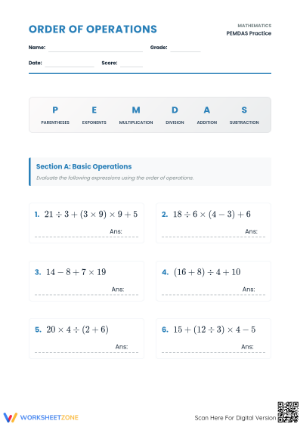
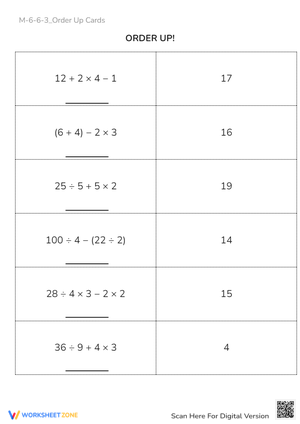
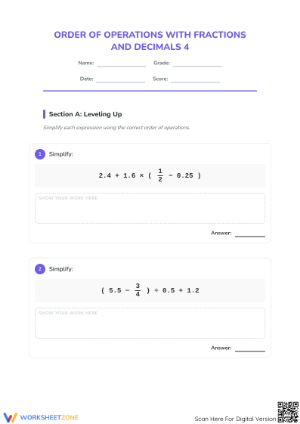
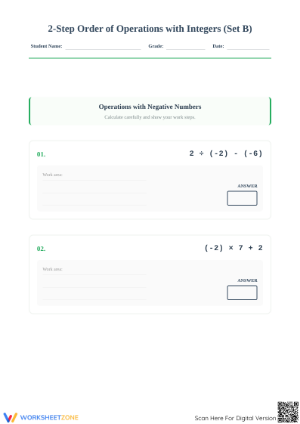
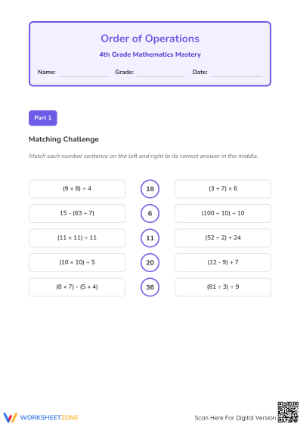
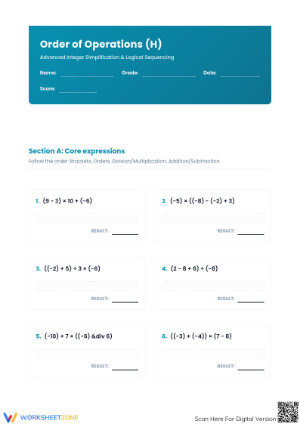
These order of operations worksheets give 5th and 6th grade teachers a structured set of printables for one of the most reliably mishandled skills in upper elementary math — the point where students discover that the sequence of operations matters and that their instinct to work left to right will betray them almost immediately.
What Each Page Asks Students to Do
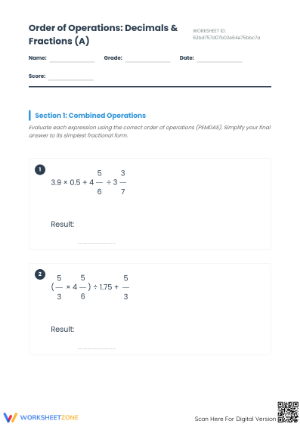
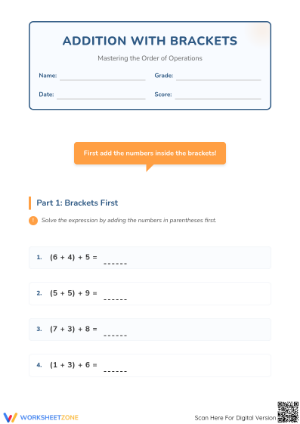
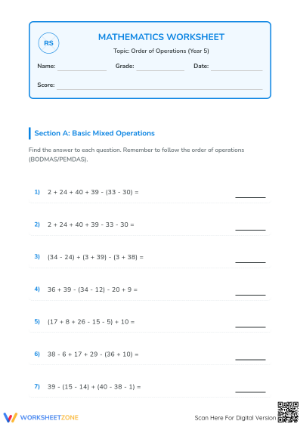
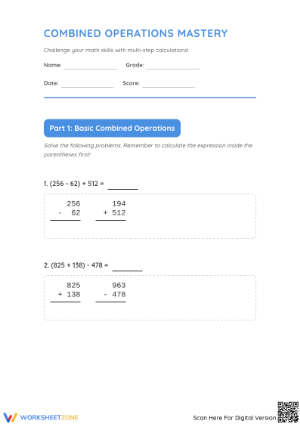
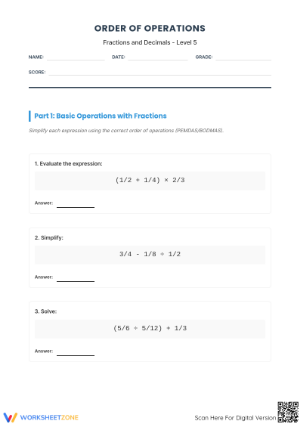
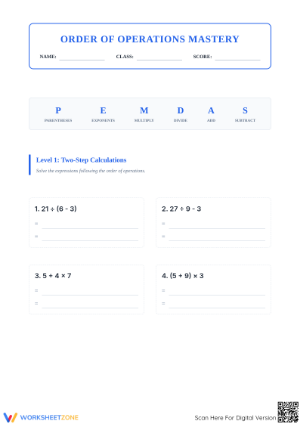
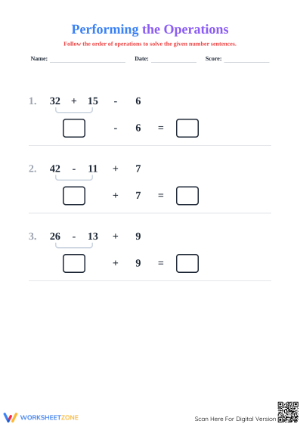
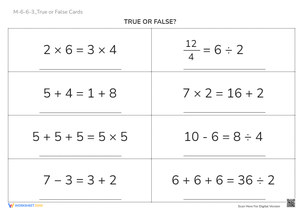
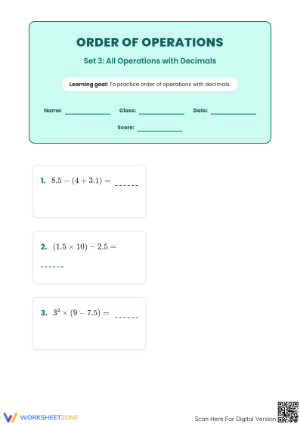
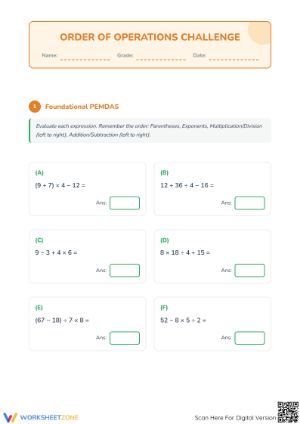
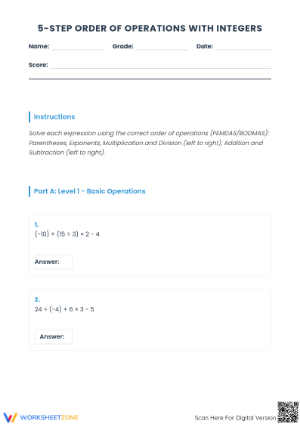
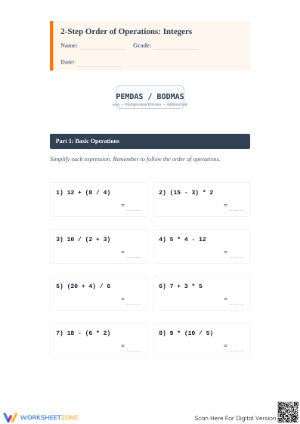
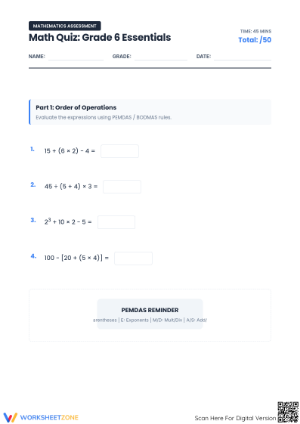
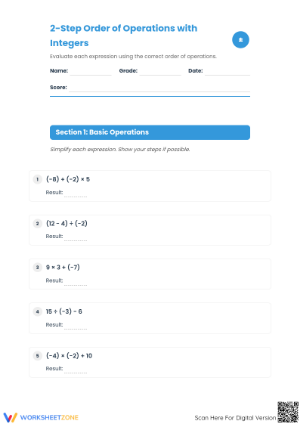
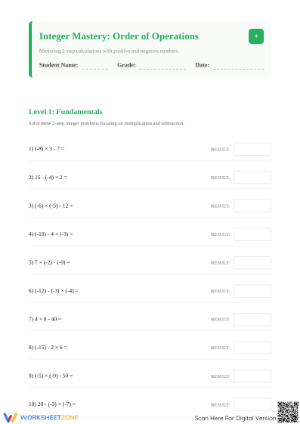
The collection moves through a deliberate progression. Early pages limit expressions to two or three operations without grouping symbols, so students build the hierarchy before they have to think about parentheses. Mid-level pages introduce parentheses and brackets, then nested groupings. The upper end of the set includes whole-number exponents, which is where 6th graders typically hit their first real friction point. Each page asks students to evaluate, rewrite intermediate steps, and show the simplified expression at each stage — not just circle a final answer.
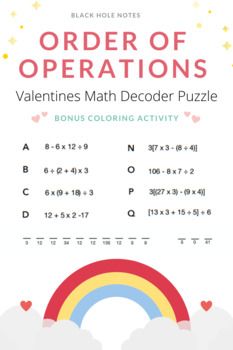
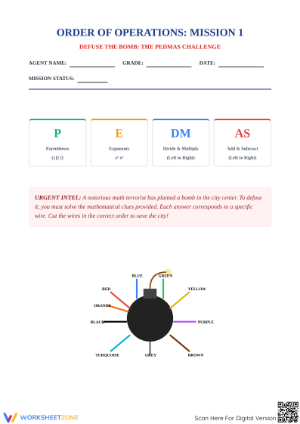
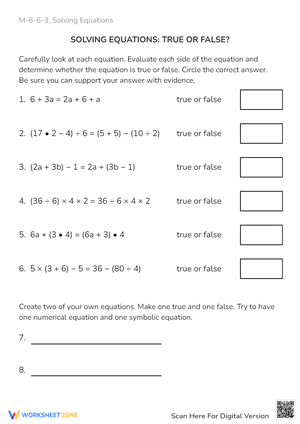
Beyond standard evaluation practice, the set includes error analysis pages where students examine worked solutions containing a deliberate mistake, identify the exact step where the calculation went wrong, and solve the expression correctly. These pages do more than reinforce the rules; they ask students to hold two things in mind simultaneously — the correct procedure and the logic of why someone else's shortcut failed. A separate group of puzzle formats uses the self-checking structure of riddles: solve correctly and the punchline decodes; solve incorrectly and the answer is nonsense, which students notice on their own.
The PEMDAS / GEMS Split and Why It Matters
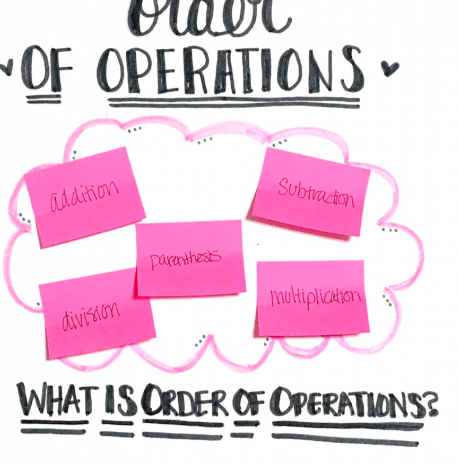
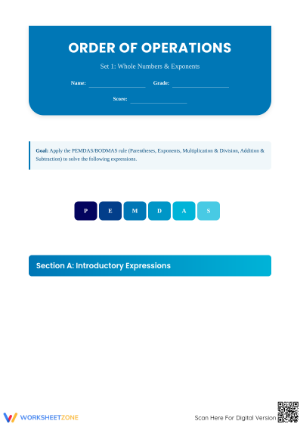
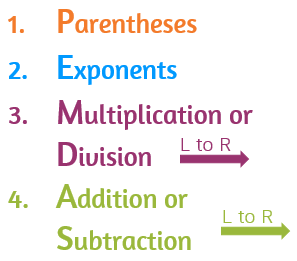
PEMDAS has been the default mnemonic in American classrooms for decades, and it works well enough until a student encounters an expression like 12 ÷ 4 × 3. The linear spelling of the acronym convinces many students that multiplication is categorically senior to division — so they multiply first, get 4, and are confident they're right. This is probably the single most common order of operations error in 5th grade work, and PEMDAS is at least partly responsible for it.
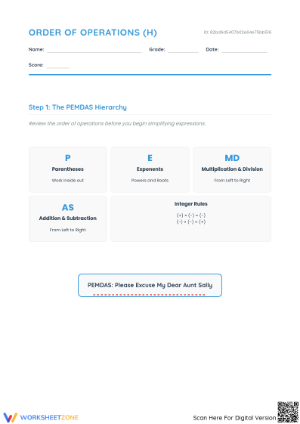
GEMS — Groupings, Exponents, Multiplication/Division, Subtraction/Addition — addresses this directly by grouping the co-equal pairs. Multiplication and division share a tier; addition and subtraction share a tier. Students still need to understand left-to-right evaluation within each tier, but the structure of the acronym stops implying a rank that doesn't exist. The worksheets in this set are available in both frameworks, with the reference guide at the top of each visual-support page formatted to whichever acronym you use. If your school is mid-transition between the two, it's worth running the GEMS pages in class while keeping PEMDAS materials available for students who learned it that way in 4th grade.
Where These Fit in the Instructional Week
The single-operation-tier pages work well as Monday warm-ups in the first week of instruction — four or five expressions on half a sheet, completed in the 8–10 minutes after morning meeting before the lesson begins. The visual guide pages, which include a step-by-step checklist students mark off as they work, are better suited to guided practice during the lesson itself, where you can watch for students who check a box without actually performing the step.
Error analysis pages are most effective mid-unit, after students feel some initial confidence. Placing them too early means students don't yet have the grounding to diagnose the mistake; placing them too late and they become too easy to feel instructive. The puzzle pages earn their place as end-of-week independent work or early-finisher material — they're genuinely engaging for most students, and the self-correcting format means you're not chasing down five different wrong answers to a single riddle.
A Note on Step-by-Step Recording
One classroom technique that dramatically reduces careless errors: require students to rewrite the entire expression at each step, underlining only the operation they are about to evaluate. The expression narrows line by line — a visual funnel — and students can scan backward to confirm they haven't dropped a term or miscopied a number. Students who skip this and try to hold intermediate values in their head are the ones who arrive at a wrong answer and cannot find where it went wrong. The visual guide worksheets in this set are formatted with vertical space specifically to support this multi-step recording habit, rather than cramming three steps into a single line.
Standards Placement
The 5th grade pages address CCSS.MATH.CONTENT.5.OA.A.1, which asks students to use parentheses, brackets, and braces in numerical expressions and evaluate expressions that include these grouping symbols. That standard represents the first time students are formally expected to interpret nested structure in an expression — it's genuinely new cognitive territory, not just a refinement of 4th grade arithmetic.
The 6th grade pages extend into CCSS.MATH.CONTENT.6.EE.A.2.C, which adds whole-number exponents and variable substitution to the mix. Evaluating an expression like 3x² + 4 when x = 5 requires students to hold the order of operations in place while also substituting correctly — two things that feel automatic individually but collide in interesting ways for students who are still building fluency with either one.
Adjusting for the Range of Learners
Students who freeze when they see a long expression with three sets of grouping symbols often do better starting with a page that uses only parentheses — one type of grouping symbol — before introducing brackets. The progression in this set is designed to allow that; you can hand a student the parentheses-only pages while the rest of the class works with nested brackets, without it reading as a remedial assignment. Conversely, students who sprint through the standard pages can move directly to expressions requiring exponent evaluation and variable substitution, which appear at the top tier of the 6th grade materials.
Frequently Asked Questions
1. What answer key format is included?
Each download includes a key that shows the step-by-step simplification, not just final answers. For the error analysis pages specifically, the key identifies both the error type and the corrected steps, which makes it easier to give targeted feedback rather than just marking something wrong.
2. Can these pages be used for students who learned PEMDAS in a previous grade?
Yes. The pages are labeled by acronym at the reference guide header, so students can use the framework they know. The underlying math is identical — the difference is only in how the mnemonic groups the operations. If a student is solid with PEMDAS and correctly handles the left-to-right rule for multiplication/division, there's no reason to require a framework switch.
3. At what point in the unit do the exponent pages make sense?
Exponents belong after students are consistently correct on expressions involving only the four operations with grouping symbols — typically 6th grade, aligned to 6.EE.A.2.C. Introducing exponents too early, before the grouping-symbol logic is stable, tends to produce students who evaluate 2 + 3² as 5² because they haven't yet separated "simplify the grouping first" from "evaluate the exponent first." Spending a solid week on parentheses and brackets before adding exponent expressions prevents most of that confusion.













 Interactive Worksheet Maker
 Quiz Maker
 Word Search Maker
 Crossword Puzzle Maker
 Word Scramble Generator
 Sentence Scramble Generator
 Handwriting Worksheet Generator
 Name Tracing Generator
 Fill In The Blank Generator