These kindergarten others science printable worksheets cover the foundational science concepts that don't slot neatly into life, earth, or physical science units — the five senses, early lab tools, basic safety rules, simple observation habits, and sorting tasks. They're built for the reality of kindergarten science instruction, where students need explicit vocabulary and structured practice before hands-on experiments can go anywhere useful.
The Specific Skills Targeted
The resources fall into four core areas. Five senses worksheets ask students to match objects to the sense used to explore them — pairing a drawing of a bell with an ear, or a lemon with a mouth — sort items by which sense applies, and label simple diagrams. This is the entry point for data collection. Kids can't record observations if they haven't been taught what "using your senses" actually means in practice.
Tool-identification worksheets ask students to name each instrument (magnifying glass, balance scale, eyedropper, thermometer), match it to its function, and select the right tool for a described task. Every tool included is one a standard kindergarten classroom actually has on hand, not a piece of equipment that only appears in photographs.
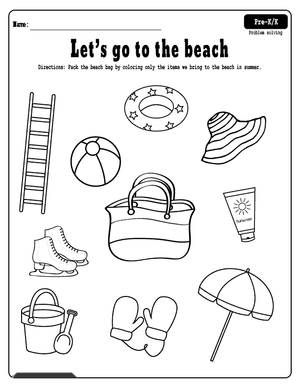
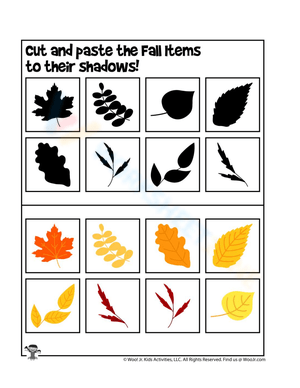
Safety worksheets ask students to sort images of lab behaviors into safe and unsafe, then trace or write the key rules the class has already established. Classification worksheets group objects by size, texture, color, and weight. A few of them layer two attributes — sort by texture, then count each group — which builds a natural connection to early number sense.
Student Mistakes Worth Anticipating Before the Lesson
The five senses activities generate a specific, recurring error: students mark two senses for the same object. Shown a picture of a flower, a child correctly identifies smell — and also marks sight, because they can obviously see the flower too. The student isn't wrong about the science; both observations are accurate. What breaks down is task interpretation. Preview this by explaining that the question asks which sense gives the most information about that object, not which senses are working at all.
On tool-identification worksheets, students routinely confuse the thermometer and the ruler. Both are long, thin instruments with markings along the side. A student who can verbally explain that a thermometer measures temperature will still circle the ruler on the printed task, because the visual similarity overrides the conceptual knowledge. Holding both tools next to each other and asking what's the same, what's different, before the worksheet goes out prevents this from becoming a persistent mix-up.
Texture-sorting trips up students who haven't had enough tactile contact with the target materials. A child may mark a picture of sandstone as "smooth" because it looks smooth in the image. For this reason, texture-classification worksheets work better after students have handled the actual objects — the worksheet then confirms what they already know from touch rather than asking them to infer from an image.
Fitting These Worksheets Into Your Science Block
The most productive structure is a predict-then-record sequence. Students complete a worksheet — a sink-or-float prediction sheet, for instance — before any experiment begins. They circle their guesses and draw what they expect to happen. After testing, they return to the same worksheet and mark what actually occurred. The gap between prediction and result drives the conversation. Students who guessed wrong are often more engaged than those who guessed right, because they want to understand why.
For tool-identification worksheets, pairing the paper task with a "tool of the week" center setup makes vocabulary stick faster. The featured instrument sits in the science center alongside items students can examine with it — fabric swatches, leaves, and coins during magnifying glass week; a set of classroom objects for the balance scale. Students who have spent ten minutes using the real tool absorb the worksheet vocabulary in a fraction of the time it takes students who see it cold.
These kindergarten others science printable worksheets also function as quick formative checks in the final minutes before transitions. A sorting worksheet takes most five-year-olds three to four minutes to complete, and the finished work tells the teacher at a glance whether the morning's science discussion produced understanding or just compliance — more diagnostic information than any whole-group question could provide.
Standard Alignment
The sorting and classifying worksheets connect directly to the NGSS science and engineering practice of Analyzing and Interpreting Data (SEP 4), which at the kindergarten level takes the form of sorting objects by observable properties and identifying patterns. The five senses content supports Planning and Carrying Out Investigations (SEP 3) at its earliest stage — establishing that the senses are the instruments students use to gather evidence before any formal data recording begins.
NGSS distributes these foundational practices across all its kindergarten disciplinary core ideas — K-PS2, K-LS1, K-ESS2 — rather than isolating them in a single unit. A student who can't yet name a magnifying glass or distinguish the sense of touch from the sense of sight arrives at any of those units without the working vocabulary the tasks assume. These worksheets address that prerequisite understanding before it becomes a gap that slows down the rest of the year's science work.
Adapting the Resources for Different Levels of Learners
Students who need more support handle the five senses matching tasks better after the teacher has sorted a small set of picture cards with them first. The worksheet then functions as confirmation of a decision they already made with guidance, rather than a cold abstract task. For sorting worksheets, providing the actual objects alongside the printed task removes the inferential step that causes errors for students who are still building visual-to-concept connections.
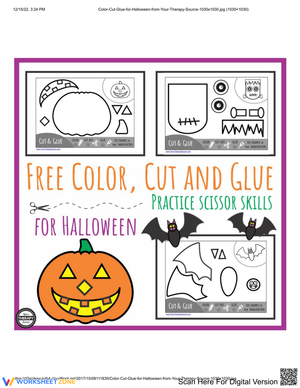
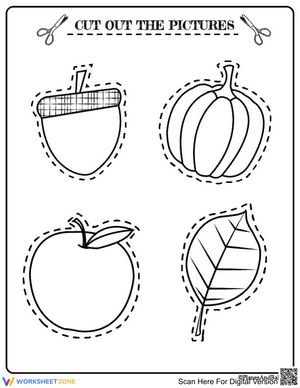
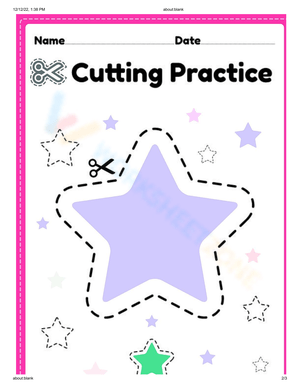
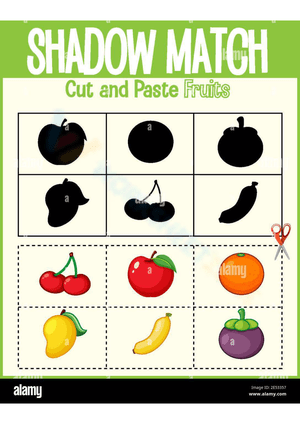
The kindergarten others science printable worksheets in this set are image-driven and require circling, drawing, or cutting rather than sentence writing, which keeps them accessible for students who are still developing print fluency and for English learners who would otherwise need significant language support just to understand the task.
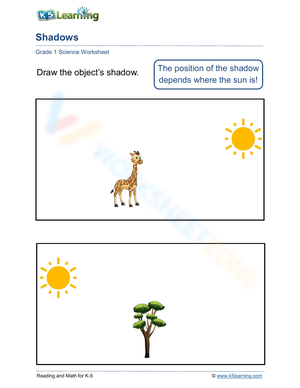
Students working above grade level can extend any sorting worksheet by dictating or writing the rule that explains their classification. "These all float" or "These are all rough" shifts the task from recognition into early scientific reasoning — the student moves from sorting to justifying, which is a genuinely different cognitive demand and a meaningful stretch at this age.
Frequently Asked Questions
Do these worksheets need to accompany a hands-on activity, or can they stand on their own?
Both approaches work, but pairing with a physical activity produces better retention. Used alone, each worksheet introduces vocabulary and sets a conceptual frame. Paired with a hands-on task, it gives students a structure for prediction before the experiment and a recording tool during or after. Either way, a brief whole-group preview — look at the worksheet together for two minutes before independent work — prevents most of the task-confusion errors that show up in finished student work.
When in the school year should I use the lab safety worksheets?
Before the first experiment. In kindergarten, lab safety means three or four clear, repeatable rules: wash hands after touching materials, never taste unknown substances, keep goggles on if the class uses them. Use the safety worksheets in the first two weeks as part of establishing science routines, then bring them back after a long break or before any new type of investigation. Students who reviewed the rules on paper in September still need a verbal reminder in November — but the worksheet gives them a visual anchor that makes the reminder faster and more concrete.
How do the inquiry-focused worksheets introduce the scientific method at this age?
The inquiry worksheets use a three-part format: predict, test, record. Students draw or circle what they expect before the experiment, carry out the activity, and then return to mark what actually happened. That sequence — commit to a guess before testing, check it after — is the core scientific habit that the kindergarten others science printable worksheets build across the set. Writing a formal hypothesis is years away. What matters at five is that students treat prediction as part of the process rather than an optional step they skip to get to the fun part.












 Interactive Worksheet Maker
 Quiz Maker
 Word Search Maker
 Crossword Puzzle Maker
 Word Scramble Generator
 Sentence Scramble Generator
 Handwriting Worksheet Generator
 Name Tracing Generator
 Fill In The Blank Generator