




























Views
Downloads
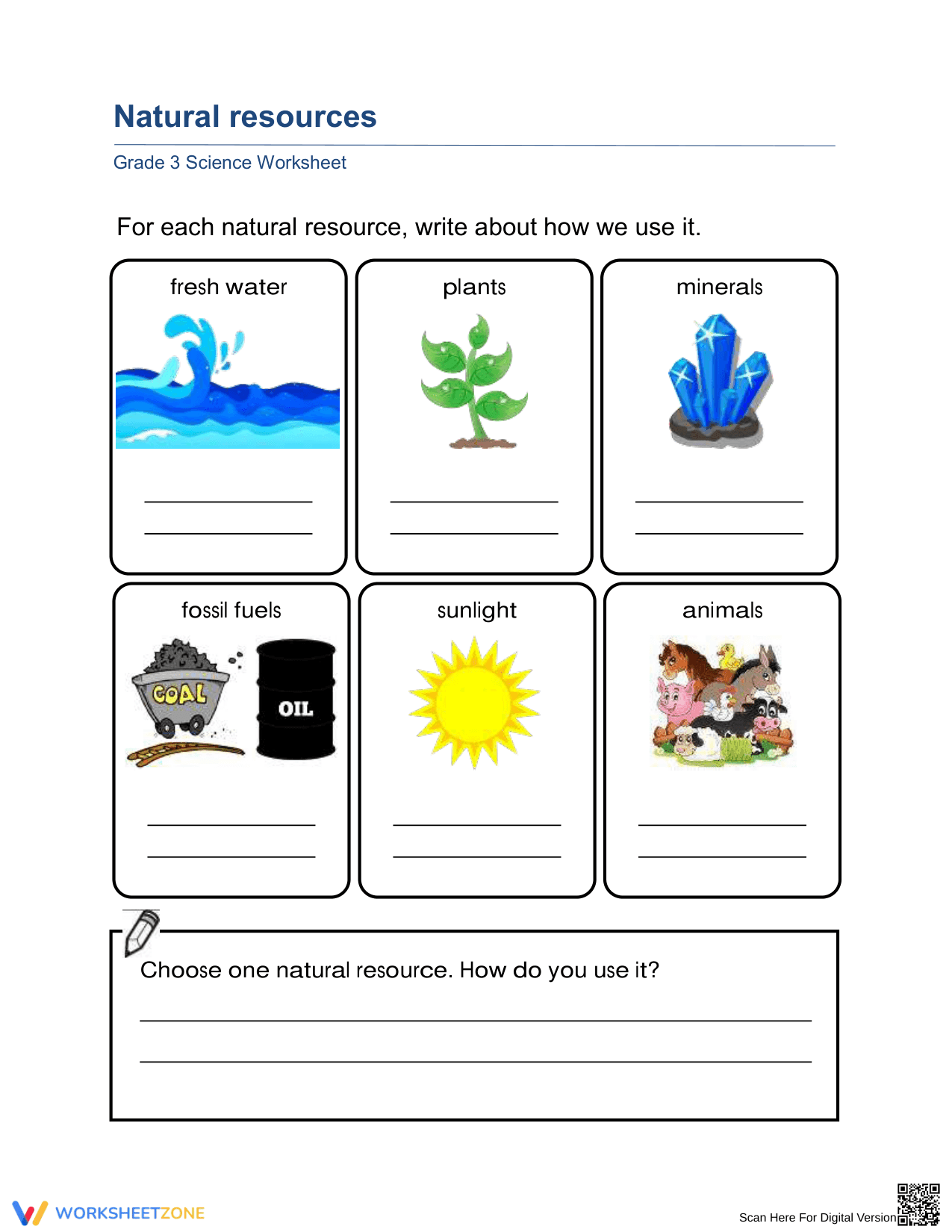

Grade 3 Natural Resources — Printable No-Prep Worksheet

Paste this activity's link or code into your existing LMS (Google Classroom, Canvas, Teams, Schoology, Moodle, etc.).
Students can open and work on the activity right away, with no student login required.
You'll still be able to track student progress and results from your teacher account.
This Grade 3 Science worksheet helps students bridge the gap between Earth's raw materials and everyday items. By identifying the practical applications of six key resources—including fossil fuels and sunlight—learners develop a foundational understanding of human-environment interaction. This resource ensures students can articulate how natural materials sustain our modern lives through structured writing prompts.
At a Glance
- Grade: 3 · Subject: Science
- Standard:
4-ESS3-1— Obtain and combine information to describe energy and fuels from natural resources- Skill Focus: Natural resource application
- Format: 1 page · 7 tasks · Answer key included · PDF
- Best For: Independent practice and science journals
- Time: 15–20 minutes
What's Inside
This single-page PDF features six dedicated workspace modules, each focused on a specific natural resource: fresh water, plants, minerals, fossil fuels, sunlight, and animals. Each module includes a high-quality visual anchor and a labeled prompt for students to describe practical uses. A concluding synthesis task requires students to select one resource and provide a more detailed personal reflection on its utility, reinforcing the concept of sustainability.
Zero-Prep Workflow
- Print: Generate the single-sheet PDF in less than 30 seconds for immediate use.
- Distribute: Use during your Earth Science unit or as a supplemental activity for early finishers; no additional textbooks are required.
- Review: Check student responses using the included answer key to quickly assess mastery in under two minutes.
Standards Alignment
This worksheet is aligned with 4-ESS3-1, which requires students to obtain and combine information to describe that energy and fuels are derived from natural resources and their uses affect the environment. While focused on Grade 3 introductory concepts, it builds the necessary vocabulary and categorization skills required for upper elementary science. This standard code can be copied directly into lesson plans, IEP goals, or district curriculum mapping tools.
How to Use It
Use this worksheet as a formative assessment after a direct instruction lesson on Earth's systems. It serves as an excellent ticket-out-the-door to verify that students can differentiate between biotic resources like plants and abiotic resources like minerals. Teachers should observe whether students can provide specific examples rather than vague generalizations. Expect most 3rd-grade students to complete the primary modules and the synthesis prompt in approximately 20 minutes.
Who It's For
This resource is ideal for Grade 3 general education classrooms, but it is also highly effective for ESL students who benefit from the clear visual supports provided for each vocabulary term. It can be naturally paired with an anchor chart depicting renewable versus non-renewable energy sources or a short passage about sustainability. The open-ended nature of the writing prompts allows for easy differentiation by adjusting sentence-length expectations.
This Grade 3 science resource on natural resources is strategically designed to align with the 4-ESS3-1 standard, focusing on the plain-English skill of describing how raw materials from the Earth are utilized in human society. According to the RAND AIRS 2024 report on elementary instructional materials, the integration of visual anchors with structured writing tasks significantly improves knowledge retention in Earth Science domains for younger learners. By requiring students to articulate the connection between a resource like fossil fuels and its practical application, this worksheet moves beyond simple identification into the domain of conceptual explanation. The format supports the development of academic vocabulary while providing teachers with a clear artifact of student understanding. This synthesis of visual literacy and informational writing prepares students for more complex environmental science topics in subsequent grades, ensuring they have a firm grasp of the fundamental ways human life relies on natural systems.


