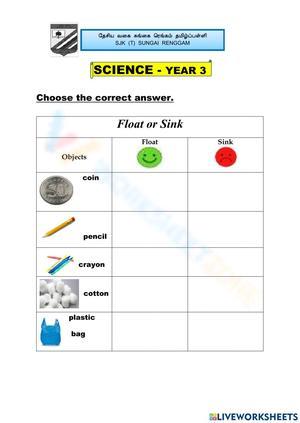
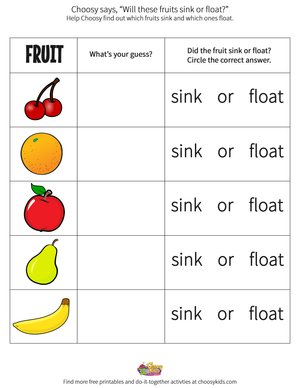
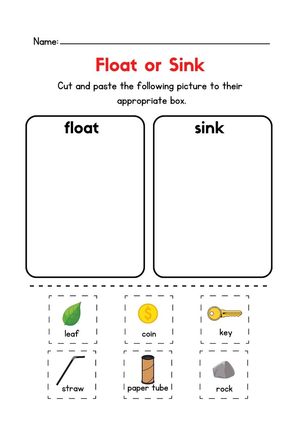
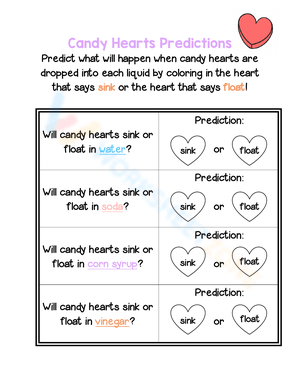
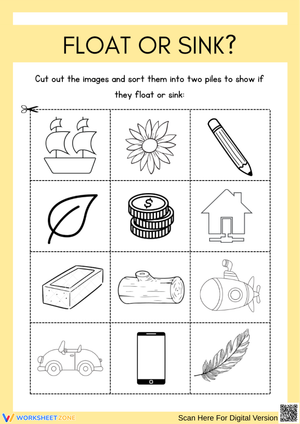
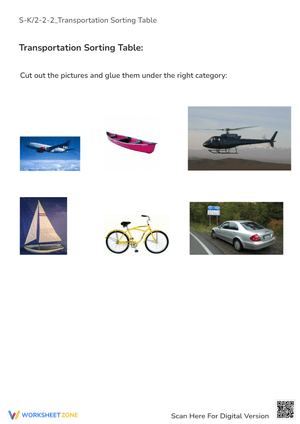
These forces motion and machines worksheets for kindergarten keep the science concrete — students sort push-and-pull pictures, match objects to how they move, and trace vocabulary words that appear in every classroom demo. The set stays image-heavy because five-year-olds build science understanding through observation and action, not through reading definitions. Each worksheet wraps up in one center rotation or in the few minutes following a quick floor demonstration.
The Specific Skills Targeted
Every worksheet in the set addresses a concept that kindergarten science standards flag for this domain, kept at the grain size students can actually handle.
- Push or pull identification: Students look at a picture — a child pushing a cart, someone pulling a rope — and circle which action they see. The response is one word, which keeps it accessible without reading support.
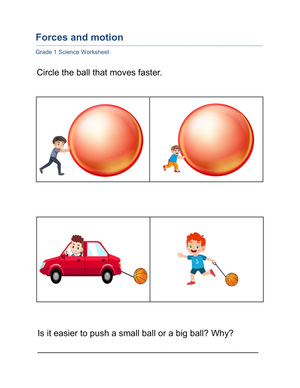
- Fast and slow comparison: Children mark which object in a pair moves faster, or color pictures that show slow motion. This builds the vocabulary before teachers formalize it on a class anchor chart.
- Roll or slide sorting: Students decide how an object — a ball, a book, a block — moves across a flat surface. This one trips students up more than teachers expect, and knowing that in advance helps.
- Start and stop picture sequences: Short image sequences help students identify what causes motion to begin and what makes it end. A hand pushing is a start; a wall blocking is a stop.
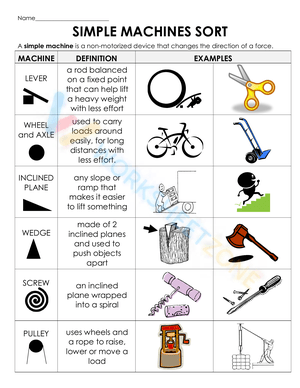
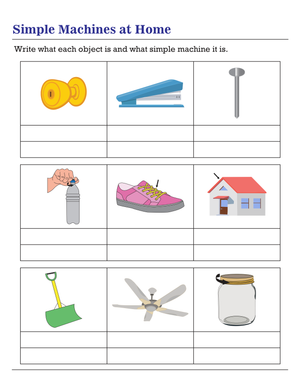
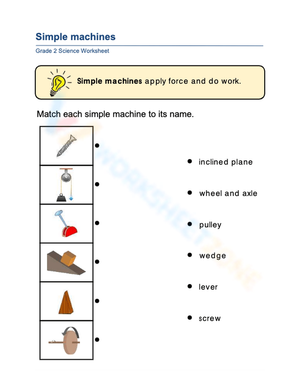
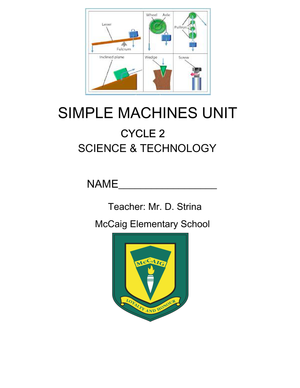
- Simple machine picture matching: Students connect a real-world object — a slide, a wagon, a seesaw — to a short phrase describing what it does. The goal is recognition, not classification.
- Vocabulary tracing: Words like push, pull, fast, slow, roll, and slide appear on each worksheet as a tracing activity. Writing the word once, right after acting it out, helps the vocabulary stick.
How to Work These Worksheets Into Your Science Block
The strongest use of forces motion and machines worksheets for kindergarten is right after a five-minute floor demo — not before, and not cold. When a student has just watched a ball roll down a ramp and a block slide across tile, the worksheet becomes a way to name what just happened rather than a task to decode. The physical action is the lesson; the worksheet organizes the memory.
For centers, set a small "motion basket" at the station — a ball, a block, a toy car with working wheels, and a length of string. Students who get stuck on a question can pick up the object and try the action before marking their answer. That low-prep addition removes most mid-center confusion without pulling a teacher away from small-group work.
Morning tubs and sub-day packets are also solid placements for these worksheets. Because tasks rely on pictures and one-word or one-circle responses, a substitute can run them without specialized science background. Teachers who revisit the same vocabulary across several worksheets over the course of a week find that students recall the words more reliably than when they encounter them once and move on — spaced exposure at this age matters more than a single deep lesson.
Student Errors Worth Watching For Before the Lesson Ends
The push-and-pull distinction is where errors cluster most predictably. Students who understand the concept physically — they can push a chair and pull a wagon without confusion — will still mark "push" for a picture of someone carrying a heavy box. The effort and the forward movement register as a push, even though the hands are underneath the object rather than behind it. When reviewing those worksheets, ask the student to mime what the hands in the picture are doing. That oral prompt usually resolves the error faster than re-explaining the definition.
Roll-versus-slide is the second consistent sticking point. Students attend to the shape of the object rather than the motion it makes across a surface, so a round object reads as "roll" regardless of what the picture actually shows. A brief reminder that both the shape and the surface determine the answer helps, but expect to see this error persist into the second week of the unit. It is a sign students are applying a reasonable shortcut — shape predicts motion most of the time — not a sign they missed the concept entirely.
Standard Alignment
These worksheets address K-PS2-1 (NGSS), which asks kindergarten students to plan and carry out investigations comparing the effects of different pushes and pulls on an object's motion. At this grade level, "investigation" means close observation and sorting — exactly what the push-pull and roll-slide worksheets reinforce. They also connect to K-PS2-2, which focuses on analyzing whether a design solution changes an object's speed or direction through a push or pull. The simple machines worksheets fit there: students look at how a slide or wheel changes how easily something moves, then mark what they observe. Neither standard carries formal assessment in kindergarten, but the vocabulary and foundational thinking built here matters when students revisit force and motion in second grade.
Adjusting Each Worksheet for the Full Range of Kindergartners
Kindergarten classrooms routinely hold students who are two or three developmental levels apart. The sorting and circling tasks work without reading skills, so most students can attempt them independently. The adjustments come in the level of language and motor support surrounding the task, not in changing the science itself.
- For students still developing fine motor control: Replace pencil-circling with bingo daubers or sticky dot stickers. The science response stays the same; only the motor demand shifts.
- For English language learners: Preteach the six core words — push, pull, fast, slow, roll, slide — using gestures before the worksheet comes out. A student who connects "pull" to pulling their own chair closer can match that memory to the picture on the worksheet.
- For students who finish early: Ask them to flip the worksheet and draw their own example of each vocabulary word. That converts a recognition task into a generative one without requiring a separate handout.
- For students who freeze at a dense picture field: Fold the worksheet so only two answer choices are visible at a time. Narrowing the visual field is a low-effort adjustment that keeps the science task in focus rather than the format.
Frequently Asked Questions
Can these worksheets run without a science kit or special materials?
Yes. A ball, a block, and a toy car cover most of the demonstrations that pair with forces motion and machines worksheets for kindergarten. A small ramp helps — prop a hardcover book against a stack of others. None of this requires ordering materials in advance, and most of it is already in the classroom.
How many worksheets should a teacher plan for one force and motion unit?
A kindergarten unit typically runs two to three weeks. One worksheet every other day is a manageable pace — roughly six to nine across the unit. Using two different push-and-pull worksheets at separate points, rather than one once and moving on, builds more durable recall through repetition on the same concept with slightly varied pictures.
Are simple machines appropriate for kindergarten, or should they wait until first grade?
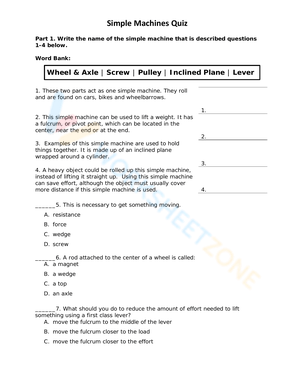
At kindergarten level, simple machines belong at the picture-recognition level — students identify a slide, a wheel, or a seesaw and describe what it does in their own words. The forces motion and machines worksheets for kindergarten that address this topic stay at that level rather than asking students to name machine types or define technical vocabulary. If a worksheet includes terms like "inclined plane" or "lever fulcrum," it belongs in a later grade.
What is the best time of day to use these worksheets?
Right after the science demonstration block, when the hands-on observation is still fresh. Morning work on the day after a demo is also effective — students spend the night with the memory of the physical activity, and the worksheet reconnects them to the vocabulary the next morning. Using these worksheets as a cold introduction, before students have done anything physical with the concept, is the one arrangement that consistently produces confused responses.












 Interactive Worksheet Maker
 Quiz Maker
 Word Search Maker
 Crossword Puzzle Maker
 Word Scramble Generator
 Sentence Scramble Generator
 Handwriting Worksheet Generator
 Name Tracing Generator
 Fill In The Blank Generator