




























Views
Downloads

Grade 1 Aesthetic Handwriting — Printable No-Prep Worksheet

Paste this activity's link or code into your existing LMS (Google Classroom, Canvas, Teams, Schoology, Moodle, etc.).
Students can open and work on the activity right away, with no student login required.
You'll still be able to track student progress and results from your teacher account.
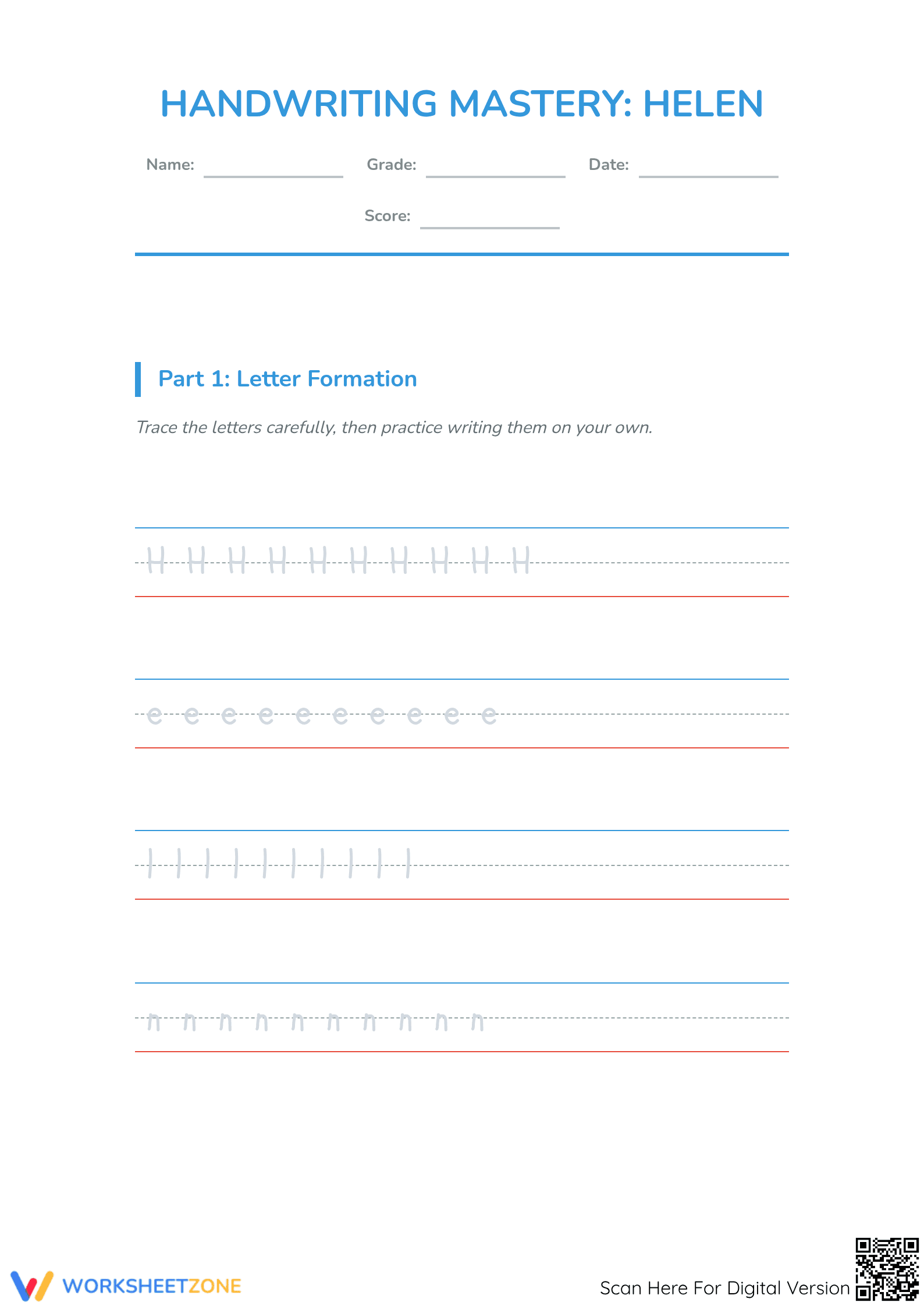
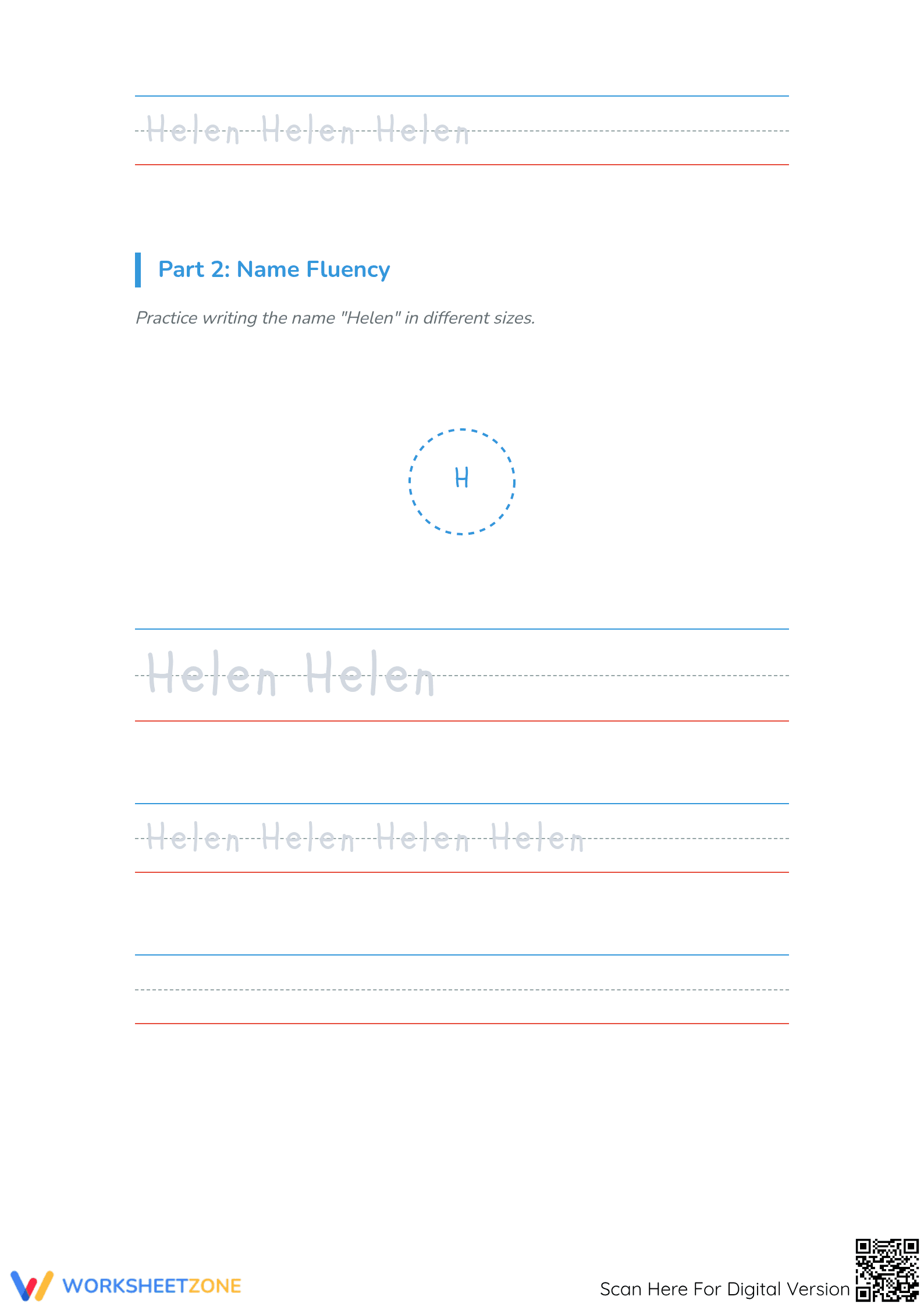
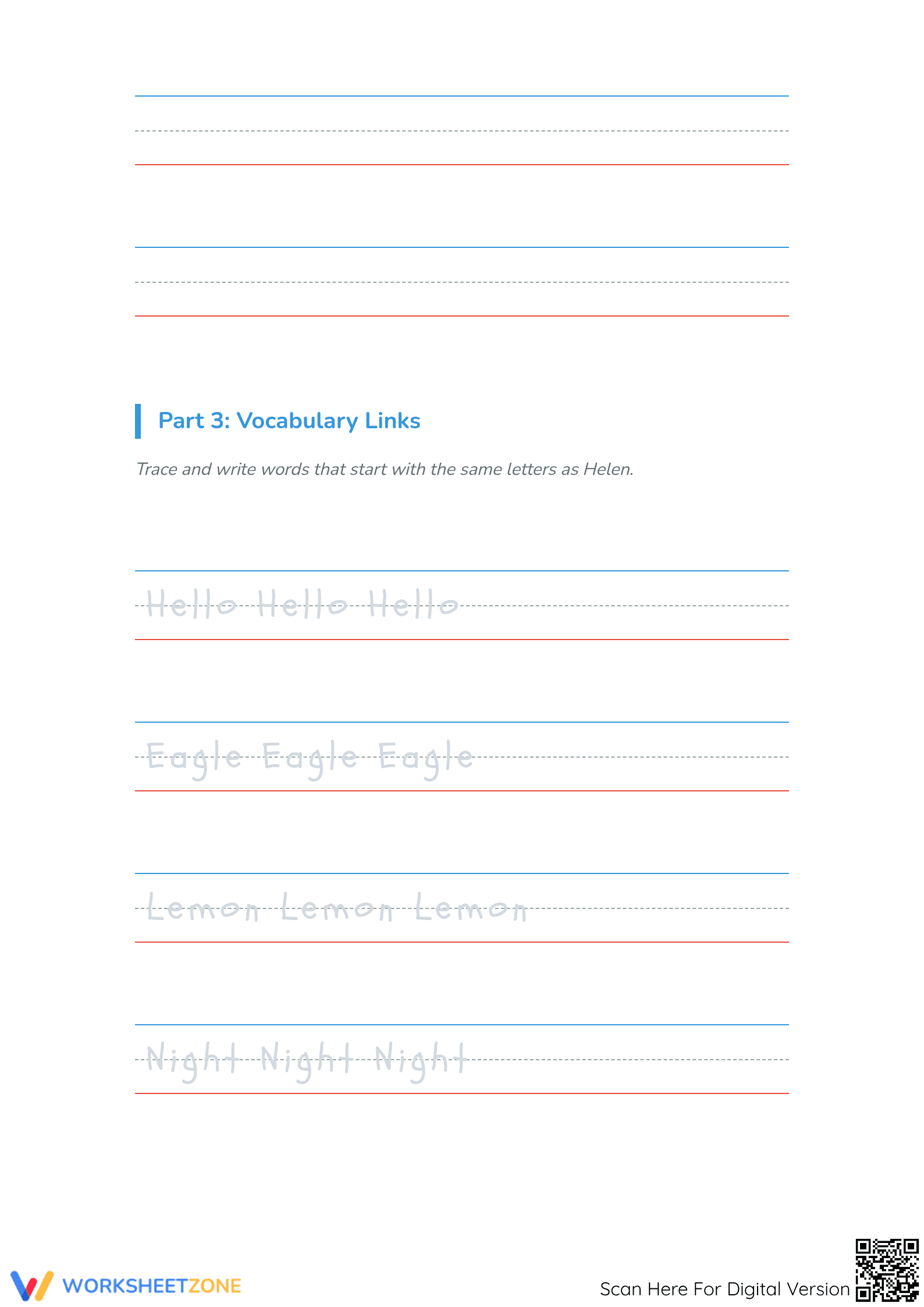
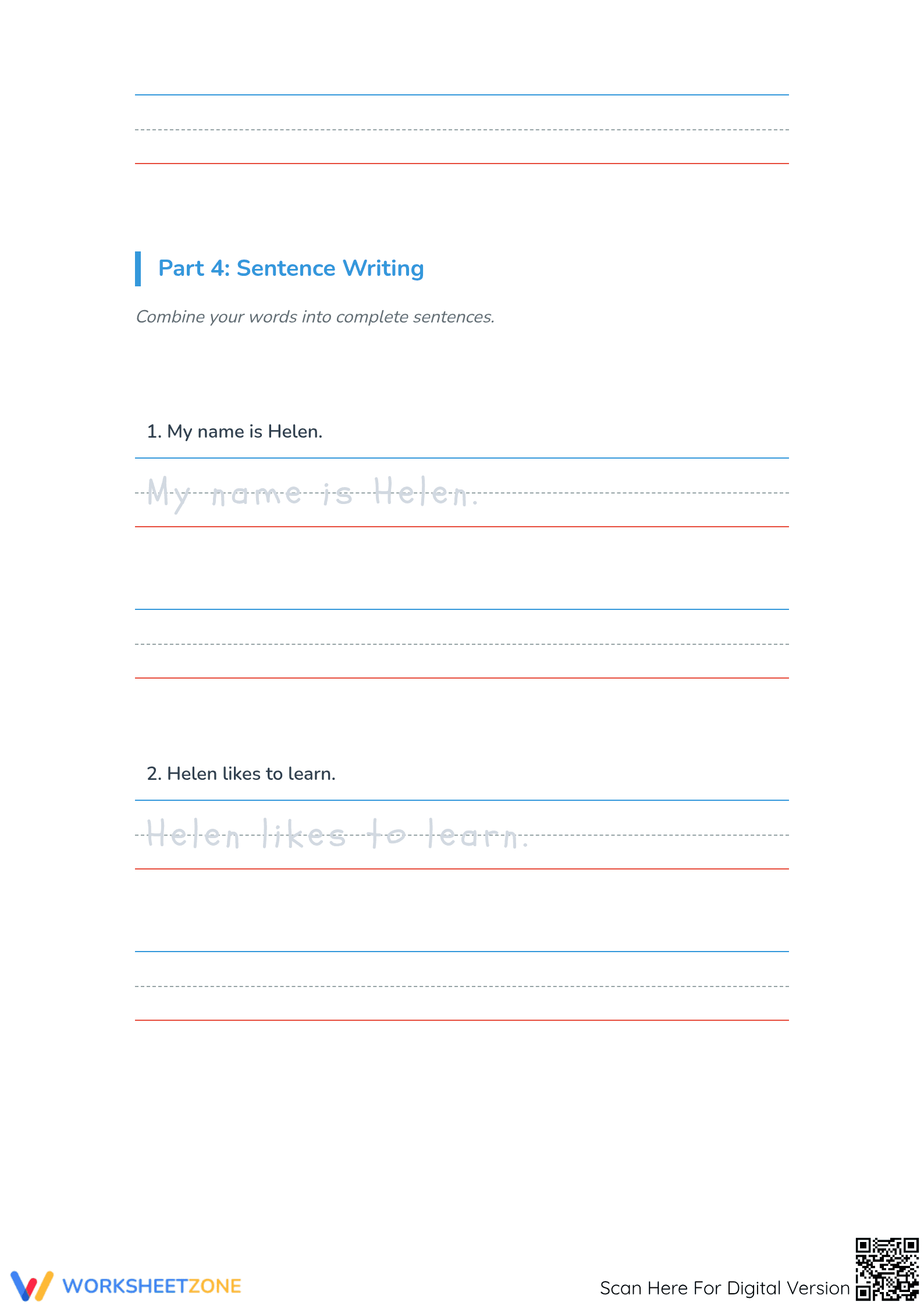
This aesthetic handwriting worksheet helps students develop neat, legible printing through structured tracing and independent practice. By focusing on consistent letter formation, spacing, and alignment, learners build the fine motor control necessary for fluent writing. The clear layout provides immediate visual models to guide student progress.
At a Glance
- Grade: 1 · Subject: English
- Standard:
CCSS.ELA-LITERACY.L.1.1.A— Print all upper- and lowercase letters- Skill Focus: Aesthetic Handwriting and Tracing
- Format: 1 page · 30 tasks · No answer key needed · PDF
- Best For: Independent practice and centers
- Time: 15–20 minutes
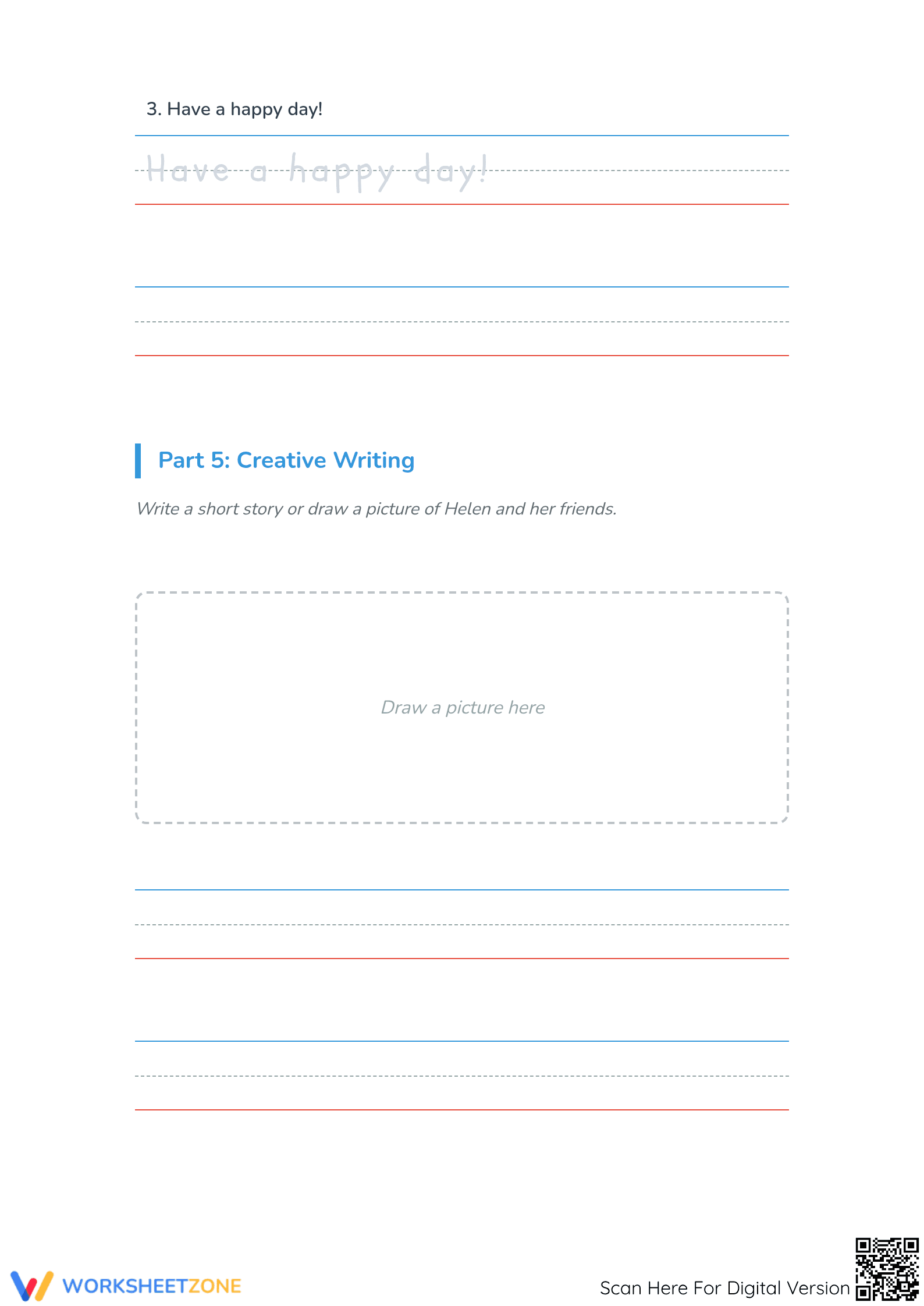
This single-page resource features 30 distinct tracing and writing tasks designed to refine penmanship. The page includes a complete uppercase and lowercase alphabet reference, numbers zero through nine, and common punctuation symbols. Students observe a writing sample, trace faded letters to build muscle memory, and practice independently. A challenge section features a classic pangram and varied font styles (regular, italics, bold) to expand their stylistic repertoire.
Zero-Prep Workflow
Designed for immediate classroom implementation with no teacher preparation required.
- Print (1 minute): Download the PDF and print. The black-and-white design ensures crisp reproduction.
- Distribute (1 minute): Hand out during morning work or literacy centers.
- Review (0 minutes): Students self-correct by comparing freehand attempts to reference models.
With total prep time under two minutes, this serves as an excellent sub plan or daily warm-up.
Standards Alignment
This practice sheet is directly aligned with CCSS.ELA-LITERACY.L.1.1.A, which requires students to print all upper- and lowercase letters accurately. It also supports foundational writing fluency by encouraging proper grip and stroke sequence. Both standard codes can be copied directly into lesson plans, IEP goals, or district curriculum mapping tools.
How to Use It
Deploy this worksheet during morning arrival to establish a quiet, focused classroom environment before direct instruction begins. It also functions perfectly as a dedicated literacy center station where students can work at their own pace. As a formative assessment observation tip, watch students as they trace the letters to ensure they are starting their strokes from the top down rather than the bottom up. Expected completion time ranges from 15 to 20 minutes, depending on the student's fine motor development.
Who It's For
This resource is primarily designed for first-grade students mastering their basic printing skills, but it is equally valuable for older students seeking to improve their handwriting legibility or develop an aesthetic printing style. For differentiation, teachers can provide pencil grips or slanted writing boards for students needing occupational therapy support. Pair this worksheet with a visual alphabet anchor chart displayed at the front of the room to reinforce proper letter orientation.
Developing automaticity in handwriting is a critical component of early literacy that directly impacts written composition. When students achieve fluency in printing, as outlined in CCSS.ELA-LITERACY.L.1.1.A (Print all upper- and lowercase letters), cognitive resources are freed from the mechanics of letter formation and redirected toward higher-order tasks. According to Fisher & Frey (2014), explicit instruction and repeated practice in foundational skills are essential for transferring those skills into long-term memory. This aesthetic handwriting worksheet provides the structured practice necessary to build crucial muscle memory. By integrating tracing with independent application, the resource ensures students internalize correct stroke sequences, ultimately fostering greater confidence and stamina in their writing.


