


























1 / 4
0
Views
0
Downloads



0.0
0
Save
0 Likes
Share
Explore the 5 Elements of Fiction
0 Views
0 Downloads
Paste this activity's link or code into your existing LMS (Google Classroom, Canvas, Teams, Schoology, Moodle, etc.).
Students can open and work on the activity right away, with no student login required.
You'll still be able to track student progress and results from your teacher account.
Information
Description
What It Is:
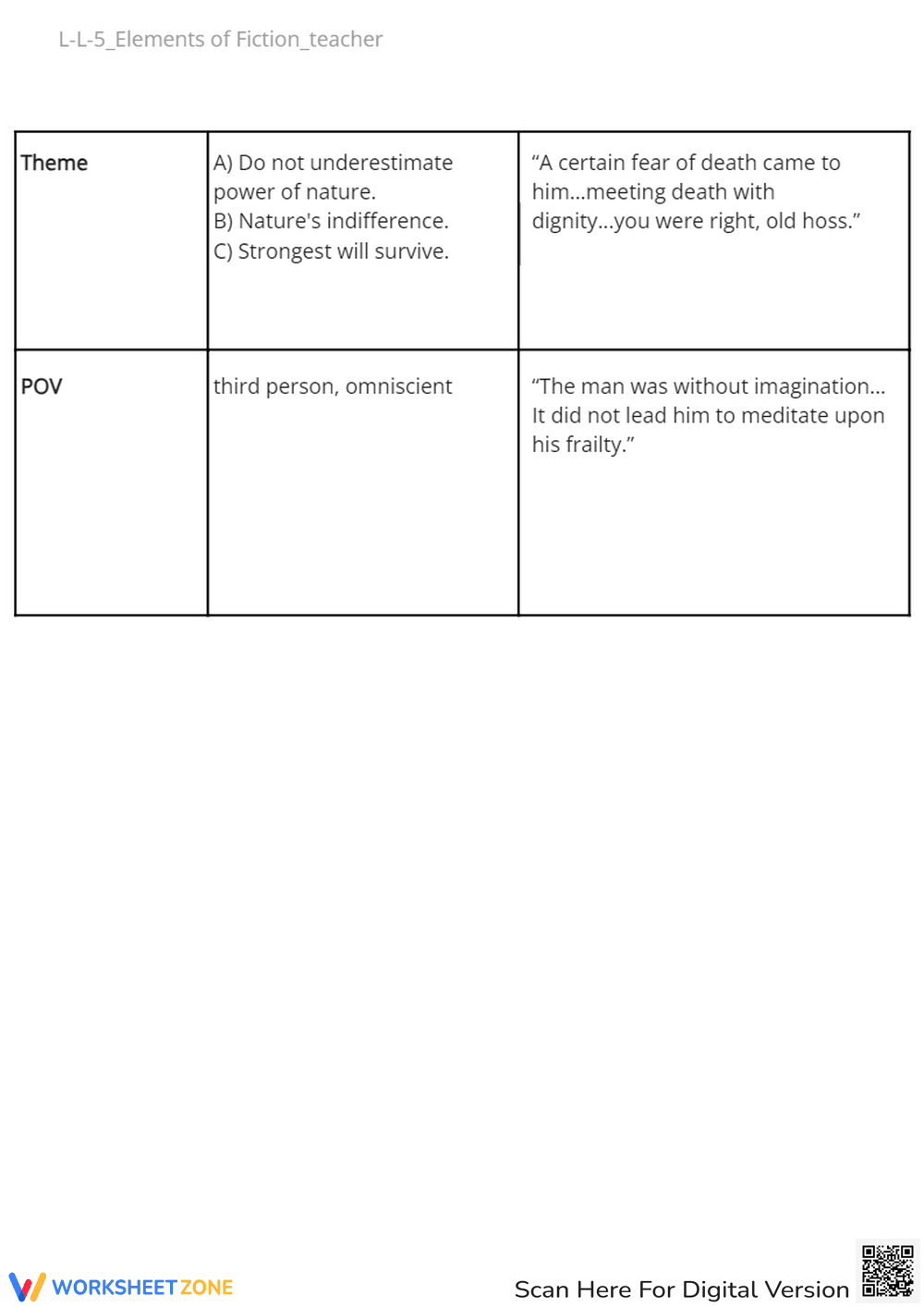
This is an educational worksheet designed to analyze the elements of fiction in Jack London's short story 'To Build a Fire.' The worksheet features a table with two columns: 'Elements' and 'Evidence.' The 'Elements' column lists elements of fiction such as Setting (Where and When), Characters (Main and Supporting), and Plot (Conflict, Turning Points, Climax, and Resolution). The 'Evidence' column provides corresponding textual evidence from the story for each element.
Grade Level Suitability:
This worksheet is suitable for grades 9-12. The complexity of the story and the required analytical skills are appropriate for high school students. It requires students to understand literary elements and provide textual support, making it ideal for literature or English Language Arts classes.
Why Use It:
This worksheet helps students identify and understand key elements of fiction within a specific literary work. It encourages close reading skills, textual analysis, and the ability to connect literary elements to their representation in the text. It also aids in comprehension of the story's plot, character development, and themes.
How to Use It:
Students should read 'To Build a Fire' by Jack London. Then, using the worksheet, they should identify the elements of fiction listed in the left column and find specific quotes or passages from the story that support each element. Students should write these quotes or passages in the 'Evidence' column.
Target Users:
The target users for this worksheet are high school students studying literature or English Language Arts, particularly those analyzing short stories and literary elements. It is also useful for teachers looking for structured activities to enhance comprehension and analytical skills related to fiction.
This is an educational worksheet designed to analyze the elements of fiction in Jack London's short story 'To Build a Fire.' The worksheet features a table with two columns: 'Elements' and 'Evidence.' The 'Elements' column lists elements of fiction such as Setting (Where and When), Characters (Main and Supporting), and Plot (Conflict, Turning Points, Climax, and Resolution). The 'Evidence' column provides corresponding textual evidence from the story for each element.
Grade Level Suitability:
This worksheet is suitable for grades 9-12. The complexity of the story and the required analytical skills are appropriate for high school students. It requires students to understand literary elements and provide textual support, making it ideal for literature or English Language Arts classes.
Why Use It:
This worksheet helps students identify and understand key elements of fiction within a specific literary work. It encourages close reading skills, textual analysis, and the ability to connect literary elements to their representation in the text. It also aids in comprehension of the story's plot, character development, and themes.
How to Use It:
Students should read 'To Build a Fire' by Jack London. Then, using the worksheet, they should identify the elements of fiction listed in the left column and find specific quotes or passages from the story that support each element. Students should write these quotes or passages in the 'Evidence' column.
Target Users:
The target users for this worksheet are high school students studying literature or English Language Arts, particularly those analyzing short stories and literary elements. It is also useful for teachers looking for structured activities to enhance comprehension and analytical skills related to fiction.


