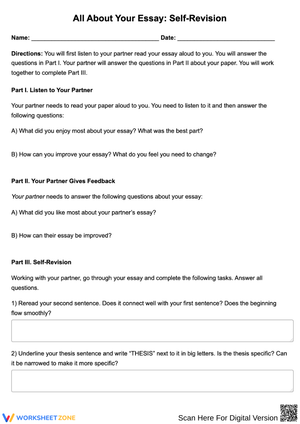
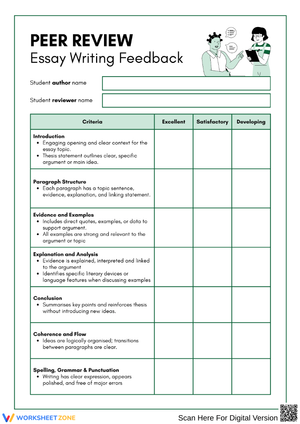
These 9th grade argument writing printable worksheets address the sharpest skill gap in freshman ELA: the move from persuasive writing, where personal opinion drives the case, to formal argumentation built on evidence, logic, and the honest acknowledgment of competing views. Each worksheet isolates one component of argument structure — claim construction, evidence evaluation, counterclaim framing, academic register — so teachers can assign exactly what a class needs at any point in a writing unit without restarting from the beginning. A class ready to practice rebuttals but still fumbling with signal phrases picks up mid-set; a class that has never formally studied the difference between a claim and an opinion starts at the first worksheet.
The Specific Skills Targeted
The set moves through the structural anatomy of a formal argument, with each worksheet giving students focused, repeatable practice on one piece before they're asked to assemble everything into a full draft. Skills include:
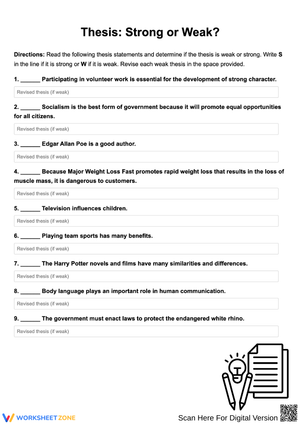
- Distinguishing debatable claims from statements of opinion or fact
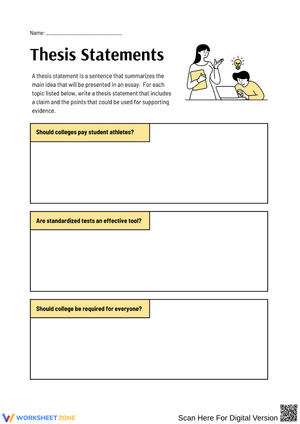
- Narrowing a broad topic into a specific, arguable thesis
- Evaluating and ranking evidence by relevance to a particular claim — not just to the general topic
- Introducing sources with signal phrases and following quotations with explanation sentences that connect back to the claim
- Drafting counterclaim acknowledgment sentences and rebuttal responses
- Revising informal register: removing contractions, first-person opinion flags, and second-person address
- Selecting transitions that signal the actual logical relationship between ideas — "Consequently," "In contrast," and "Furthermore" each do different work
Where the Real Teaching Starts: Claim vs. Opinion
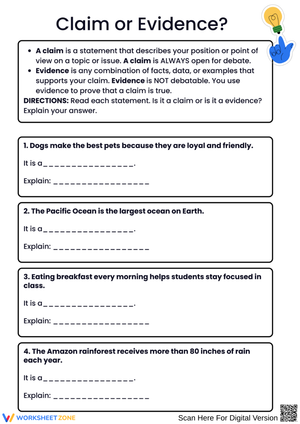
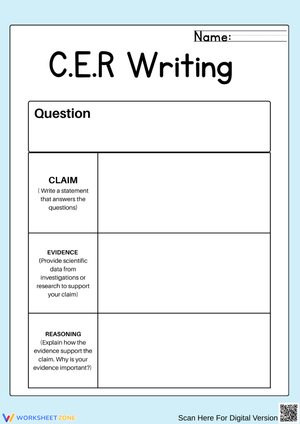
The foundational challenge for 9th graders isn't essay structure — it's understanding that a claim is not the same thing as a preference. A student who writes "I think social media is bad for teenagers" has stated a position but not written a claim. A claim makes an assertion that demands proof: "Adolescent social media use is associated with measurable increases in social comparison and anxiety." The distance between those two sentences is the intellectual leap this set is built to close.
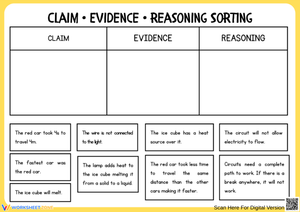
Sorting activities accomplish this faster than direct instruction. When students place "I like year-round school" beside "Districts operating on a year-round calendar show lower summer learning loss in early literacy scores," the contrast does the explaining. That structure — reading both versions, categorizing them, and then writing their own debatable claims — runs through several worksheets and gives students a portable test they can apply independently: Can this statement be disproved with evidence? If not, it's not a claim.
Evidence Integration and the Counterclaim
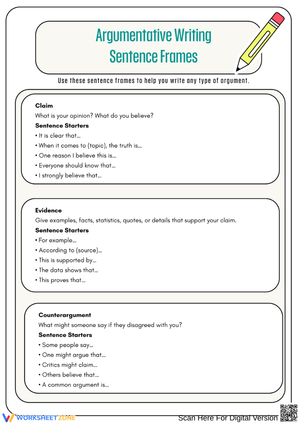
The most visible problem in freshman argument writing is the dropped quotation — sometimes called a plop-quote — where a sentence from a source lands in the middle of a paragraph with no introduction and no explanation following it. The paragraph reads as though the student ran out of their own words and inserted someone else's. Worksheets focused on evidence integration give students an introduce-cite-explain framework and a menu of signal phrases to practice before they encounter a full research essay. "The study found that..." and "According to researchers at..." are mechanical starting points, but they build the habit of framing evidence that eventually develops into genuine analytical voice.
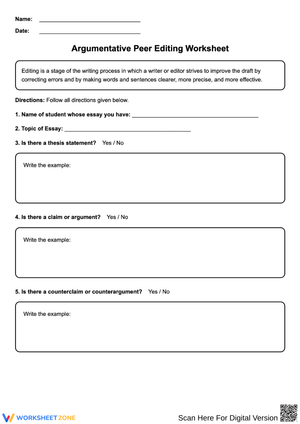
The counterclaim work is where 9th graders resist the hardest. The instinct is to protect their own argument — naming the opposing view feels like weakening it. Several worksheets work against that instinct directly: students read paired arguments, identify the strongest objection to each, and then draft an acknowledgment sentence before pivoting to a rebuttal. Phrases like "While it is true that..." or "Proponents of the opposing view often note..." give students exact language for a move that feels counterintuitive until they've practiced it four or five times and watched their writing become more credible, not less.
Lesson-Planning Approaches Worth Trying
The first 8–10 minutes of class are the clearest opening. A single worksheet on claim identification or transition word selection gives students something to do immediately and surfaces confusion before a teacher has committed 30 minutes to a lesson built on assumptions about what students already know. These low-stakes entry points mean that by the time a major essay is due, students have practiced each discrete skill multiple times without it feeling like test prep.
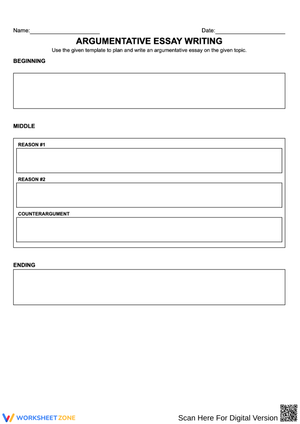
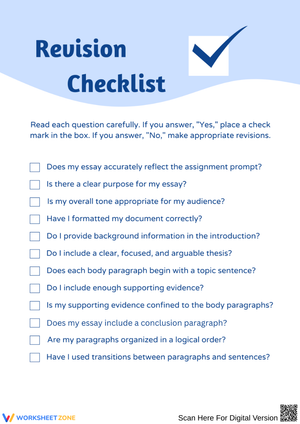
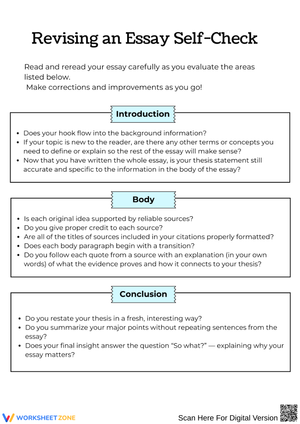
For teachers running a full writing workshop, 9th grade argument writing printable worksheets work best as pre-writing stations rather than follow-up activities. Students complete a claim-building worksheet before brainstorming, an evidence-ranking sheet before outlining, and a counterclaim frame before drafting. By the time they open a blank document, the organizational logic of the essay is already resolved. What remains is writing in full sentences — a much smaller problem than facing an empty page with no structural foundation at all.
One classroom activity worth building in: give students a pool of ten facts and quotations related to a prompt and ask them to select only four they would actually use, then write a sentence justifying each choice. Students regularly discover that some evidence, while interesting, doesn't support their specific claim — it supports a different one. That realization — that relevance is always defined by the claim, not just the topic — rarely happens without a structured task forcing the decision, and it sticks.
Errors Students Make That Are Worth Addressing Before the Draft
The most persistent error isn't structural — it's tonal. Even after direct instruction on formal register, a significant number of freshmen submit paragraphs that open with "You might think that..." or close with "As you can see..." The second-person address is deeply ingrained from middle school persuasive writing, where speaking directly to the reader was encouraged and rewarded. Worksheets that ask students to underline every instance of "you" and rewrite those sentences in third person make the problem visible in a way that end-of-essay rubric feedback does not.
The other recurring issue is the all-purpose transition. "Furthermore" appears three times in a paragraph where one idea contradicts the previous rather than extends it. Students learn a list of elevated transition words without learning what logical relationship each one signals. One worksheet addresses this directly: students match each transition word to its function — addition, contrast, cause-and-effect, concession — before selecting the appropriate word for each provided sentence. That function-first sequence sticks better than handing students a synonym chart and hoping they'll infer when to use "conversely" versus "consequently."
Standard Alignment
The 9th grade argument writing printable worksheets in this set align directly with CCSS.ELA-LITERACY.W.9-10.1, which governs written argument at the 9th and 10th grade level. The standard breaks into five sub-components — introducing precise, knowledgeable claims; distinguishing claims from counterclaims and organizing them logically; developing claims with fair and relevant evidence; maintaining formal style; and providing a conclusion that follows from the argument — and the set addresses each one in a separate worksheet rather than asking students to handle all five at once. Teachers pacing a first-semester argument unit can assign individual worksheets as formative checks at each sub-standard, which makes it easier to pinpoint exactly which skill is blocking progress before a final essay assessment arrives. W.9-10.1a and W.9-10.1b — counterclaim framing and evidence integration, respectively — are historically where freshman writing falls shortest on standardized rubrics, and those two areas receive the most instructional time in this set.
Frequently Asked Questions
What's the difference between persuasive writing and argument writing at the 9th grade level?
Persuasive writing relies on emotional appeals, the writer's voice, and shared values to convince a reader. Argument writing requires objective evidence, logical reasoning, and a formal acknowledgment of opposing views. The distinction matters in the classroom because persuasive strategies that worked in middle school — rhetorical questions, emotional anecdotes, first-person urgency — actively undermine the credibility of a formal argument. Students need explicit instruction on why those tools no longer serve them at this level, not just a new list of rules to follow.
How do I get students to stop dropping quotations into paragraphs without context?
Show students a paragraph containing a naked quotation and ask them to identify what's missing before and after it. Most students can spot the problem in someone else's writing even when they produce the same error themselves. Pairing that diagnostic step with practice on the introduce-cite-explain structure — three or four quotations per worksheet before students touch their own drafts — closes the gap faster than corrective comments on a graded paper that's already been returned.
Which argument prompts tend to work best for 14- and 15-year-olds who aren't yet invested in the task?
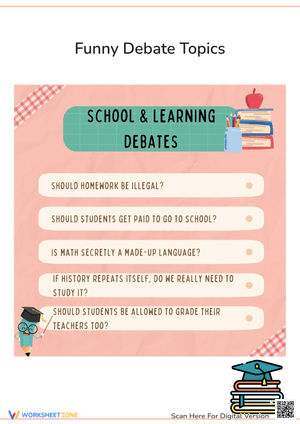
Prompts rooted in decisions that directly affect their daily lives generate the most genuine investment. School start times and sleep research, social media access policies, and whether required high school courses reflect actual career preparation all produce instinctive reactions that can be redirected toward evidence-based argument. The tension between what students feel and what the data shows turns out to be an instructional asset — it motivates source-finding in a way that an abstract prompt about policy or history rarely does.
How do these worksheets work when students have very different readiness levels in the same class?
The discrete-skill format of 9th grade argument writing printable worksheets makes differentiation more manageable than a single long essay assignment does. Students who need more foundational support work through claim-building and evidence-selection worksheets with shorter passages and tighter frames; students ready for greater complexity tackle the same tasks with open-ended outlines and a higher expectation for developed reasoning. The counterclaim and rebuttal worksheets especially lend themselves to parallel use — the core task stays the same across the room, but how fully each student is expected to extend their thinking adjusts without requiring an entirely separate set of materials.












 Interactive Worksheet Maker
 Quiz Maker
 Word Search Maker
 Crossword Puzzle Maker
 Word Scramble Generator
 Sentence Scramble Generator
 Handwriting Worksheet Generator
 Name Tracing Generator
 Fill In The Blank Generator