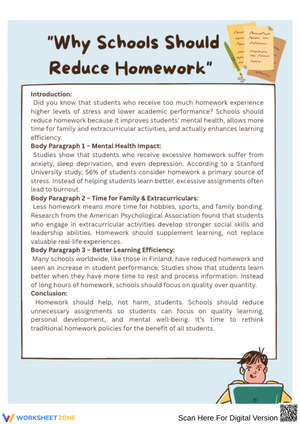
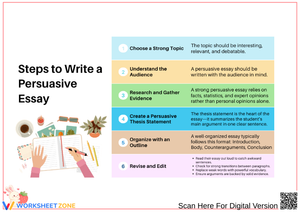
These 9th grade persuasive writing printable worksheets address the transition that trips up most freshmen: shifting from "I believe" middle school opinion writing to the evidence-anchored academic argumentation that high school English standards require. The set targets six distinct skill areas, each as a standalone worksheet that drops into a lesson without requiring teachers to rebuild a unit from scratch.
The Specific Skills Each Worksheet Builds
The worksheets cover the following areas, in roughly the order they appear during a typical writing unit:
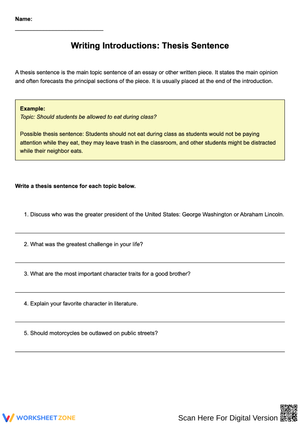
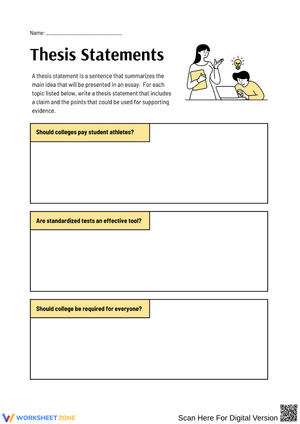
- Thesis construction — moving from a broad topic to a specific, debatable claim with a preview of supporting lines
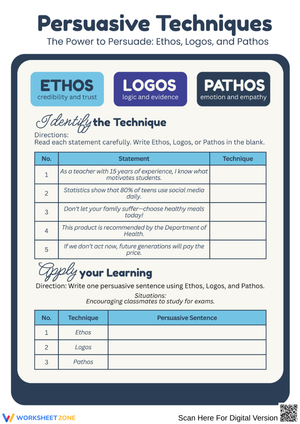
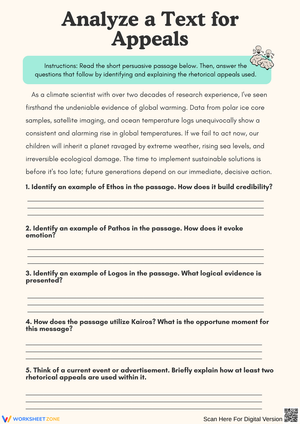
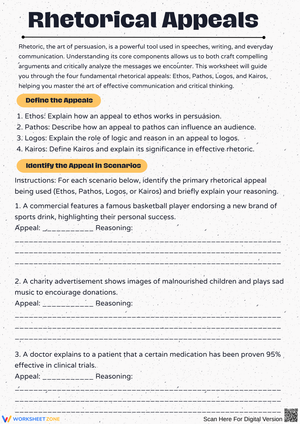
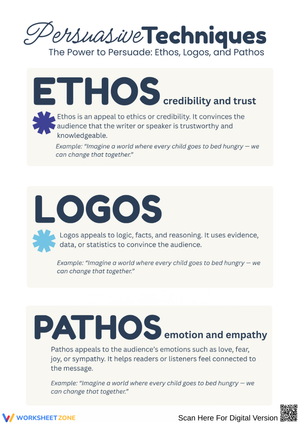
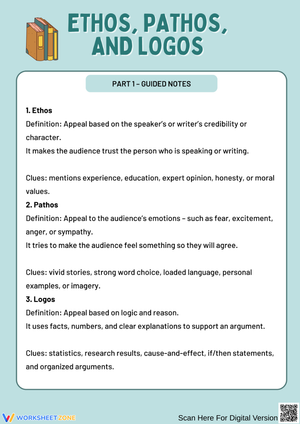
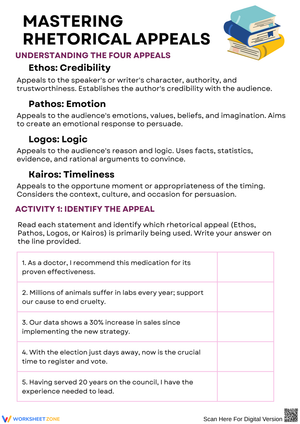
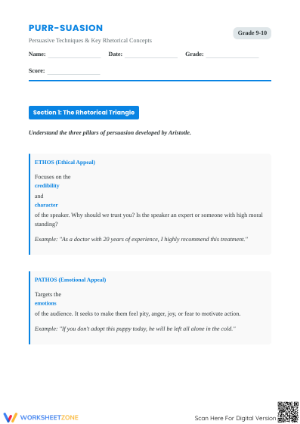
- Rhetorical appeals — analyzing and applying ethos, pathos, and logos separately before combining them in a synthesis task
- Evidence integration — the ICE method (Introduce, Cite, Explain) as a visible three-step structure for working with source material
- Counterclaim and rebuttal — two worksheets dedicated to acknowledging opposing views and responding with reasoning, not just acknowledgment
- Logical fallacy identification — recognizing and explaining eight common fallacy types in sample arguments before revising one
- Formal language revision — rewriting informal sentences in academic register, with space to add examples pulled from a student's own current draft
The thesis worksheet deserves extra attention because this is where the most common freshman error lives. Students arrive in 9th grade having been told to "state their opinion" — which produces sentences like "Social media has pros and cons." The worksheet walks them through a three-part frame: state a position on a genuinely debatable question, choose which side they are defending, and preview the three main reasons. Done correctly, students produce a thesis like "Social media platforms should be required to verify user age before granting access, because unverified accounts increase exposure to harmful content, undermine privacy law compliance, and distort advertising accountability." Students who fill it out correctly have a working thesis. Students who do not are easy to identify and re-teach before they build a full draft on a vague foundation.
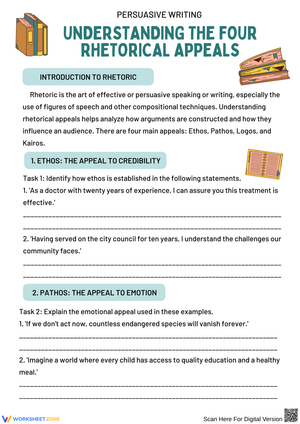
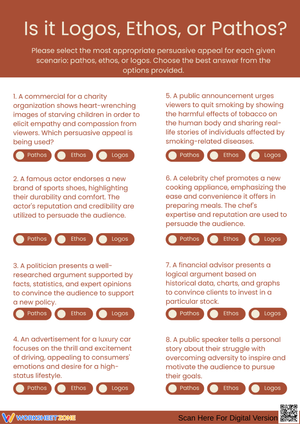
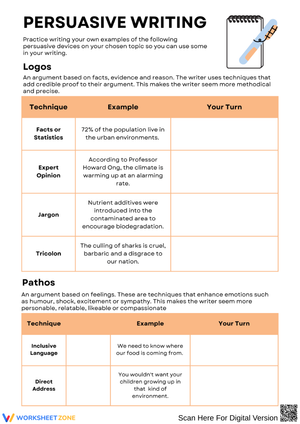
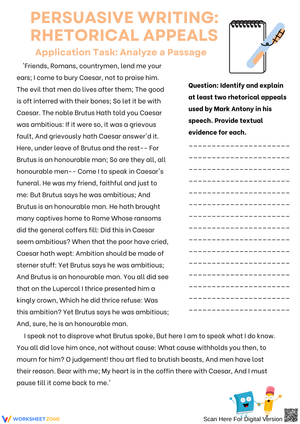
The rhetorical appeals worksheets address ethos, pathos, and logos in separate tasks before a synthesis worksheet asks students to incorporate all three into a single paragraph. Separating the appeals keeps cognitive load manageable and makes it far easier to catch when a student is mistaking emotional anecdote for logical evidence — a distinction that blurs quickly when all three are introduced at once.
Student Mistakes These Worksheets Help Teachers Catch Early
The counterclaim problem is subtler than it first appears in student drafts. Students learn the opener — "While some may argue..." — and use it correctly to introduce an opposing view. Then they stop. They write the concession without ever returning to defend their own position. The result is a body paragraph that appears to abandon the essay's argument entirely. The rebuttal worksheets address this by presenting six complete counterclaims and requiring a rebuttal for each, so students practice the full two-part move — concede, then push back with evidence or reasoning — before they encounter it inside a draft they care about.
Fallacy identification creates its own classroom complication once students learn the vocabulary. A student who has just learned what a straw man argument is will find straw men in their partner's essay, in the teacher's example, and in sentences that aren't straw men at all. The worksheet handles this by requiring students to explain, in their own words, exactly what makes each sample passage a fallacy — not just name it. That explanatory demand slows reflexive labeling and pushes students toward more careful critical analysis before they transfer the skill to their own writing.
Quote dropping is the evidence problem that surfaces in virtually every first draft. A student finds a strong statistic, copies it into the paragraph, and moves on — leaving the reader to determine what it means and why it matters. The ICE worksheet makes skipping the Explain step structurally impossible: the Explain cell is as large as the Cite cell, and the prompt asks students to complete the sentence "This evidence supports the claim that..." Doing this on a worksheet at least twice, with different topics, builds the habit before students encounter the same task under the pressure of a graded essay.
Where These Worksheets Fit in the Instructional Week
Distributing the worksheets across a three-to-four week writing unit produces better results than clustering them. The thesis worksheet belongs on day two or three, after students have settled on topics and done initial reading but before they have committed to a structure. The ICE worksheet fits midway through, when students are selecting evidence and inserting it into body paragraphs. The counterclaim and rebuttal worksheets work best after a rough draft exists — students who complete them with an actual argument in front of them write more responsive rebuttals than students who complete them in the abstract, before they know what they are actually defending.
These 9th grade persuasive writing printable worksheets also work well as targeted bell-ringers during the revision phase. A five-minute logical fallacy identification task at the start of class sets the critical-analysis mindset before students open their own drafts for editing. The formal language revision worksheet works the same way — a quick ten-sentence rewrite exercise shifts attention to word-level choices before students tackle a full document.
The reverse outlining technique pairs naturally with the graphic organizer worksheet. After a rough draft is complete, students fill in a blank organizer using only what they actually wrote — not what they intended to write. Gaps appear immediately: a third body paragraph with no cited evidence, a conclusion that restates the hook but drops the thesis, a counterclaim left without a rebuttal. Students discover these problems themselves, which is more instructive than most margin comments.
Standard Alignment
The core standard addressed is CCSS.ELA-LITERACY.W.9-10.1, which requires students to write arguments supporting claims in an analysis of substantive topics or texts, using valid reasoning and relevant, sufficient evidence. Each worksheet connects to a specific sub-standard: thesis work targets W.9-10.1a (precise claim, acknowledgment of alternate claims, clear organizational logic); evidence integration targets W.9-10.1b (developing claims with facts, definitions, examples, and analysis); formal language revision targets W.9-10.1d (formal style and objective tone). The rhetorical appeals and fallacy identification worksheets also support CCSS.ELA-LITERACY.RI.9-10.6, which asks students to determine an author's point of view or purpose and analyze how rhetoric is used to advance it.
W.9-10.1 marks the first time the formal standards explicitly distinguish argumentation from personal opinion writing — which is exactly why this content appears at 9th grade. Students' capacity for abstract reasoning about opposing positions develops enough around this point that counterclaim and rebuttal work is genuinely attainable rather than aspirational. Teachers who frame the unit as "harder opinion writing" tend to see weaker outcomes than those who name the shift directly: this is a different kind of writing, with different rules and different expectations for how evidence functions.
Adapting the Set for a Range of Writers in Your Room
For students still developing paragraph-level fluency, the counterclaim worksheet with provided sentence stems is the right starting point. The stems reduce the linguistic barrier enough that students can concentrate on the logical move — acknowledge the opposition, then refute it — rather than spending cognitive energy on how to begin the sentence. Once a student uses those stems reliably, the next step is removing them and asking for the same two-part move in the student's own language.
The formal language revision worksheet offers unusual flexibility across ability levels. Below-level writers complete the ten provided sentences. On-level writers complete those and then add two or three examples pulled from their own current draft. Advanced writers can reverse the task entirely: take three formally written sentences from their draft, rewrite them in informal register, then write a brief analysis identifying which specific word choices signal the register difference. That metalinguistic step goes well beyond what most 9th graders are asked to do, and the payoff tends to show up in essays as noticeably more deliberate word choice.
For students who freeze on open-ended thesis prompts, a two-step version of the thesis worksheet works: provide the topic and a pre-written position statement, and ask students only to write the supporting preview. When they do that reliably, the full worksheet — where they generate both the position and the preview — becomes far less daunting. These 9th grade persuasive writing printable worksheets are structured so each one stands alone, which makes it practical to assign different worksheets to different groups on the same day without building separate materials for each tier.
Frequently Asked Questions
What is the difference between persuasive and argumentative writing at this grade level?
The practical distinction matters more than the semantic one. Persuasive writing — the kind most students produce in 6th and 7th grade — permits heavy reliance on pathos and personal opinion. High school argumentation, as defined by CCSS W.9-10.1, requires credible external evidence, explicit engagement with opposing claims, and a consistently formal tone. A student who writes "This policy is wrong because it hurts people like my neighbor" is writing persuasively. A student who writes "Studies on housing displacement indicate this policy disproportionately affects low-income renters, undermining its stated goals" is arguing. These 9th grade persuasive writing printable worksheets address both modes, but the evidence integration and counterclaim work is where students actually make the transition from one to the other.
How do I stop students from dropping quotes without explanation?
Most students skip the explanation step because it feels redundant — they assume the meaning of a statistic is self-evident. The ICE worksheet addresses this by making the Explain step impossible to skip: the cell is the same size as the Cite cell, and the prompt requires students to complete the sentence "This evidence supports the claim that..." Doing this twice on a worksheet, with different source material, is usually enough to make the habit visible before students carry it into their own drafts. A useful in-class reinforcement during peer editing: ask the reader to draw an arrow from each cited passage to its explanation. Paragraphs where no arrow can be drawn show exactly where the quote was dropped and left to fend for itself.
Can these worksheets be used with different topics than the ones provided?
Yes. The analysis worksheets — fallacy identification and rhetorical appeals — work with any text a teacher brings in, whether that is a political speech, an opinion editorial, or a student-generated sample. The thesis, ICE, and counterclaim worksheets use a fill-in format that accepts any argument topic. Teachers routinely substitute locally relevant issues — phone policies, schedule changes, community decisions — because the argument structure being practiced does not shift with the topic. The worksheets transfer without any structural modification, and students tend to engage more deeply when the prompt affects their actual lives.












 Interactive Worksheet Maker
 Quiz Maker
 Word Search Maker
 Crossword Puzzle Maker
 Word Scramble Generator
 Sentence Scramble Generator
 Handwriting Worksheet Generator
 Name Tracing Generator
 Fill In The Blank Generator