These 9th grade narrative writing printable worksheets give ELA teachers a concrete entry point into freshman year's most demanding writing unit — the shift from the event-driven, summary-style storytelling students built in middle school toward the structurally controlled, emotionally aware narratives high school expects. Each worksheet isolates one technique so students are not simultaneously juggling pacing, sensory language, dialogue mechanics, and plot arc. That focused, one-skill-at-a-time practice is what moves a technique from understood to internalized.
What the Set Covers
The resources address the techniques that most distinguish competent freshman narrative writing from genuinely strong freshman narrative writing. The set covers six skill areas:
- Character development — worksheets that move students past physical description into competing desires, working through what a protagonist wants versus what stands in the way, externally and internally
- Sensory detail precision — exercises that replace generic placeholder language with specific, layered description chosen for its narrative function, not just its decorative presence
- Pacing — scene-versus-summary decision-making and sentence-length variation to control how readers experience time inside the story
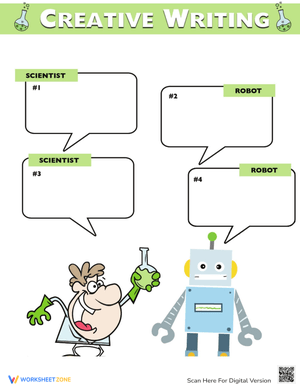
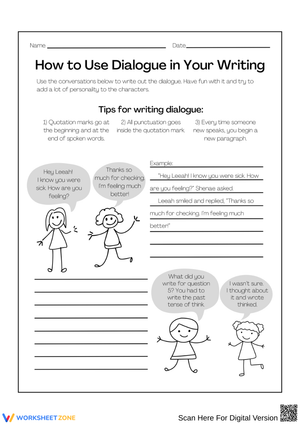
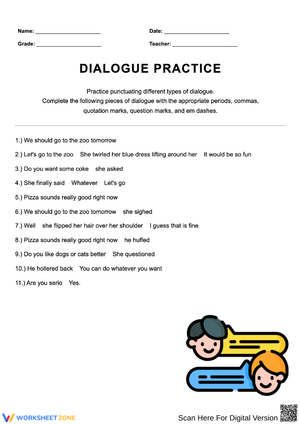
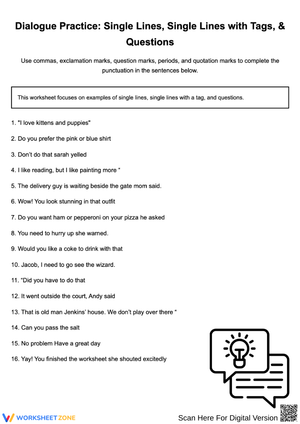
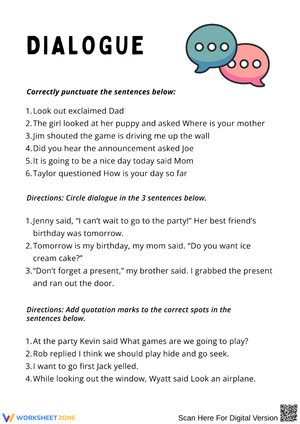
- Dialogue — separate worksheets for mechanical formatting and for writing purposeful subtext, since students consistently conflate those two tasks
- Plot structure — graphic organizers for mapping inciting incidents, complications, and resolution before drafting begins, which dramatically reduces the wandering middle
- Hook writing — opening sentence and paragraph exercises that establish early in the unit that the first draft is a starting point, not a finished product
The dialogue and pacing worksheets carry the most instructional weight at this grade. Students who can write a vivid scene often don't know when to use summary — and the reverse is equally common. Treating formatting and function separately in dialogue work produces something that a combined lesson rarely does: students who understand not just how dialogue is punctuated, but why a given exchange earns its place on the page.
Student Error Patterns Worth Anticipating
The most common structural error in ninth-grade narrative writing is misplaced pacing. Students spend 300 words describing a character waking up, walking to school, and noticing the weather — and then resolve the central conflict in two sentences. The climax, the moment the whole story exists to reach, gets the least space. When you mark that pattern and hand students a pacing worksheet that asks them to estimate word counts across story beats and compare those numbers to an intentional model, they almost always see it immediately.
Dialogue errors fall into two categories: mechanical and purposeful. The mechanical errors — comma placement before the closing quotation mark, attribution tag capitalization, new paragraph for each speaker — are teachable in a single class period. The purposeful errors are harder. Students write dialogue that exchanges information without revealing anything: "I heard there's a test today," said Marcus. "Yeah, it's going to be hard," said Dani. That exchange could be cut without changing the story. A well-designed dialogue worksheet gives students a scenario and asks them to write a conversation in which one character's secret is implied but never stated. That constraint forces students to understand what dialogue is actually for.
Sensory detail produces a third predictable problem. Students learn the five-senses framework and dutifully include one smell, one sound, and one visual description — distributed evenly, like checking boxes. The result reads like a checklist rather than a scene. The worksheets here ask students to choose a single sensory detail for a specific moment and explain why that detail serves the story. That analytical step interrupts the checkbox habit.
How to Build These Worksheets Into a Narrative Unit
The most reliable sequencing moves from micro-skills to full drafts. Open the unit with hook-writing worksheets in the first week — just the opening sentence or paragraph. Ask students to write five different versions of the same story opening and choose one. That exercise establishes that the first draft is not fixed, which matters enormously for freshman writers who often treat their opening line as settled the moment they write it. From there, move into character and plot structure work, then sensory detail and pacing, then dialogue. By the time students sit down to draft, they have practiced each component in isolation.
Flash fiction warm-ups work well as a parallel track throughout the unit. Give students a dedicated worksheet and ask them to write a complete, three-beat story in exactly 50 words — no more, no fewer. The word count constraint removes the option of filler. Students have to choose. After a week of daily 50-word stories, the precision carries into longer drafts in visible ways: fewer there was constructions, fewer adverbs, cleaner dialogue attributions. These 9th grade narrative writing printable worksheets pair naturally with that warm-up structure because students can apply the technique from the morning exercise directly to the worksheet's longer writing task.
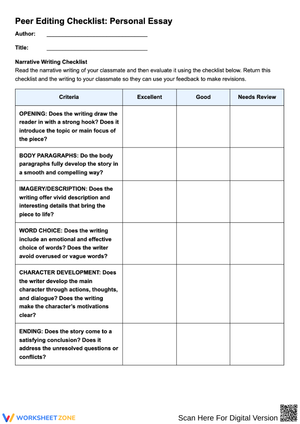
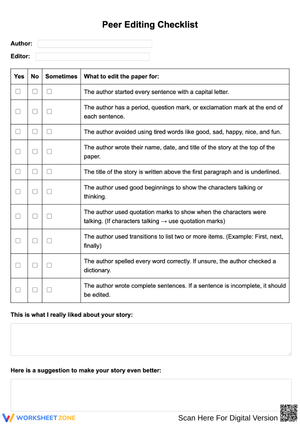
Peer review runs more efficiently when students use a structured worksheet rather than a blank comment sheet. A peer-review worksheet that asks reviewers to identify the inciting incident, circle three sensory details, and mark where the pacing slows produces far more specific feedback than "good but could be more detailed." Freshmen are not naturally calibrated for analytical peer response — the worksheet does the calibrating for them.
Standard Alignment
These resources align with CCSS.ELA-LITERACY.W.9-10.3, which governs narrative writing at the 9th and 10th grade band. The standard covers five sub-standards: (a) establishing a problem, situation, or observation and introducing a narrator or characters; (b) using narrative techniques including dialogue, pacing, description, reflection, and multiple plot lines; (c) sequencing events so that they build on one another; (d) using precise words, relevant descriptive details, and sensory language; and (e) providing a conclusion that reflects on the narrated experience.
In practice, sub-standards (b) and (d) generate the most instructional work. Students arrive with some familiarity with plot sequence — sub-standard (c) is familiar territory from middle school. But deliberate pacing, earned reflection, and the disciplined use of sensory detail are genuinely new expectations for most ninth graders. The worksheets concentrate the bulk of their practice there.
Differentiating the Set Across Ability Levels
Students who struggle with open-ended prompts benefit from worksheets that provide a story starter — a first sentence that establishes character and situation — and ask them to develop the next scene. That narrower entry point removes blank-page paralysis without reducing the skill demand. The task is still to write purposeful dialogue or make a pacing decision; the starting conditions are just more defined.
Students who are ready for more complexity do well with constraint-based variations: write the same scene from two different points of view, or compress a 200-word scene to 80 words without losing meaning. The worksheets that include a mentor text for analysis before the writing task give advanced students something to push against. Students who have already internalized basic plot arc can use the graphic organizer worksheets to map non-linear structures — starting in medias res, flashing back — rather than using them as basic pre-writing tools.
For English learners or students with IEPs addressing written expression, the dialogue-formatting worksheets are particularly useful because the conventions for punctuating dialogue are consistent and learnable within a class period. Mastering the mechanical layer frees up cognitive space for the harder work of voice and subtext.
Frequently Asked Questions
Do these worksheets work for personal narrative, or just fiction?
The techniques — pacing, sensory detail, dialogue, plot arc — apply equally to both modes. Most of the worksheets use fictional scenarios as their examples, but teachers adapt them for personal narrative units by swapping the prompts. A character profile worksheet works just as well when the "character" is the student writing about a formative experience. The 9th grade narrative writing printable worksheets in this set are not bound to one narrative mode.
How long does each worksheet typically take?
Micro-skill worksheets — hook writing, dialogue punctuation, sensory detail selection — typically run 20 to 30 minutes and fit cleanly inside a period alongside direct instruction. The plot structure graphic organizers and full scene-writing worksheets need a complete 50-minute period, sometimes with continuation time built into the following day. Planning for that variation prevents the frustration of cutting a student off mid-draft at the bell.
Can these be used for formative assessment rather than graded assignments?
They are more reliable as formative tools than a cold reading of a full draft. Because each worksheet isolates one skill, teachers get a clear picture of exactly where a student stands with that technique — not a blended score across six competencies at once. Collecting the dialogue worksheet and the pacing worksheet separately tells you whether a student's weak full draft is a structural problem or a language problem, which changes your next instructional move considerably. These 9th grade narrative writing printable worksheets make that diagnostic read much faster than a full essay review.












 Interactive Worksheet Maker
 Quiz Maker
 Word Search Maker
 Crossword Puzzle Maker
 Word Scramble Generator
 Sentence Scramble Generator
 Handwriting Worksheet Generator
 Name Tracing Generator
 Fill In The Blank Generator