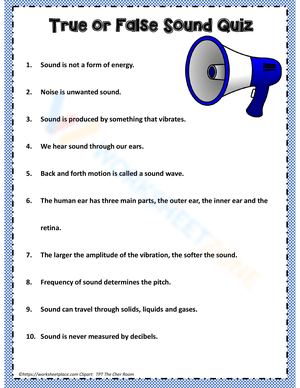
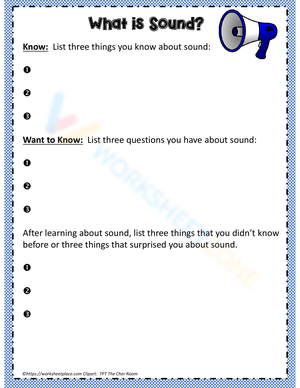
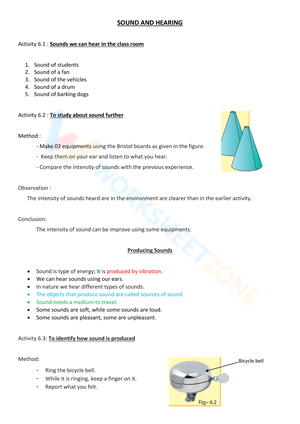
7th grade loud and soft sounds worksheets help students understand how sound energy works, how volume changes, and why some sounds are easier to hear than others. By middle school, learners are ready to move beyond simply identifying loud and quiet noises. They can begin exploring sound waves, vibration, amplitude, pitch, frequency, and how the human ear receives sound. These worksheets give students a clear way to review key ideas, apply vocabulary, and connect sound concepts to real-world examples.
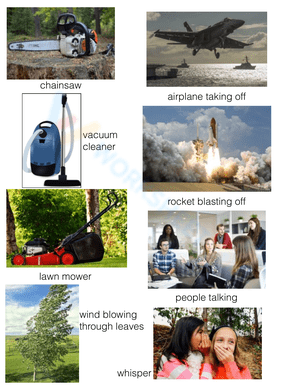
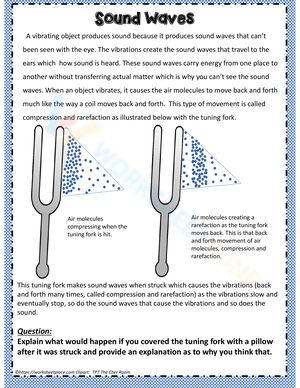
Sound can feel abstract because students cannot see it moving through the air. That is why structured practice is so useful. A worksheet may ask students to compare a whisper and a shout, explain why a drumbeat feels stronger than a soft tap, or identify how amplitude affects volume. These activities help students understand that loud sounds usually come from stronger vibrations, while soft sounds come from weaker vibrations. For teachers planning a full unit, this guide to 7th grade science topics can help connect sound lessons with broader middle school science concepts.
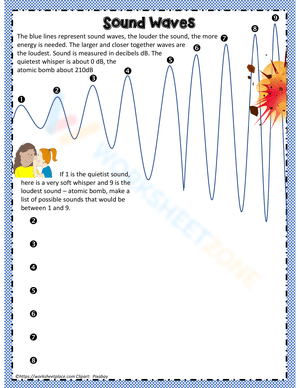
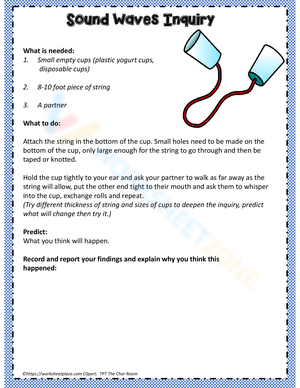
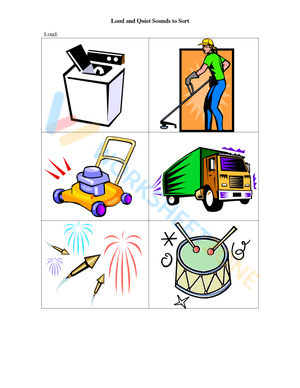
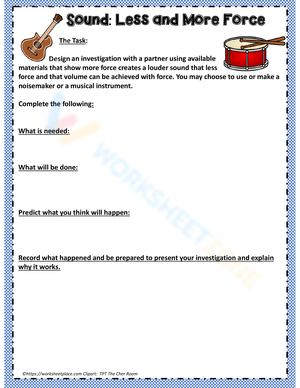
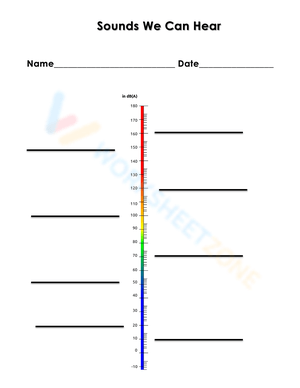
Worksheetzone’s 7th grade loud and soft sounds worksheets are designed to support both vocabulary practice and science reasoning. Students may label diagrams, answer short questions, compare sound sources, sort examples, or interpret simple wave illustrations. These tasks help learners build a stronger understanding of how sound travels and how different objects produce different levels of volume. Teachers can use the worksheets after a demonstration with tuning forks, rubber bands, speakers, drums, or everyday classroom objects to make the lesson more concrete.
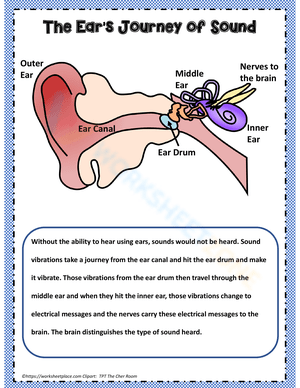
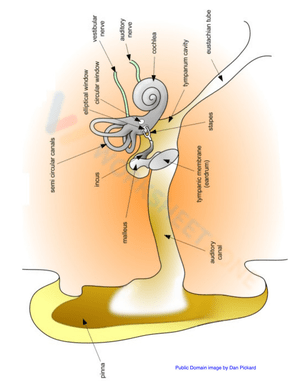
These printables also work well when paired with lessons about hearing and the human body. Students can study how sound waves enter the ear, travel through the ear canal, vibrate the eardrum, and move through tiny structures that help the brain interpret sound. To extend the topic, teachers can use an ear anatomy worksheet alongside sound activities. This helps students see that loud and soft sounds are not only physics concepts but also part of human biology.
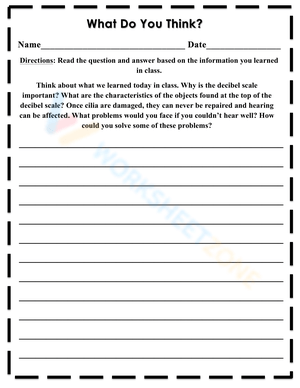
Teachers can use these worksheets as warm-ups, science centers, homework, exit tickets, review pages, or small-group support. They are especially helpful for checking whether students understand the difference between volume and pitch, a common area of confusion. With repeated practice, students become more confident explaining sound intensity, identifying examples of loud and soft sounds, and describing how sound energy connects to vibration. For middle school science classrooms, these worksheets offer a simple and effective way to make sound lessons clearer, more visual, and easier to remember.
Frequently Asked Questions
Question 1: What do students learn from 7th grade loud and soft sounds worksheets?
Students learn how loud and soft sounds are connected to vibration, amplitude, and sound energy. They also practice comparing sound sources, using science vocabulary, and explaining why some sounds are stronger or easier to hear than others.
Question 2: What is the difference between loudness and pitch?
Loudness describes how strong or soft a sound is, while pitch describes how high or low a sound is. Loudness is mainly related to amplitude, while pitch is related to frequency. Worksheets help students practice this difference through examples, diagrams, and short explanations.
Question 3: How can teachers use these worksheets in class?
Teachers can use them after sound demonstrations, during physical science units, as homework, as exit tickets, or as review before a quiz. They also work well with hands-on activities using drums, rubber bands, rulers, tuning forks, or speakers.
Question 4: Can these worksheets connect to human anatomy lessons?
Yes. Loud and soft sound lessons can connect naturally to ear anatomy. Students can learn how the ear receives sound waves and how different parts of the ear help send sound information to the brain.












 Interactive Worksheet Maker
 Quiz Maker
 Word Search Maker
 Crossword Puzzle Maker
 Word Scramble Generator
 Sentence Scramble Generator
 Handwriting Worksheet Generator
 Name Tracing Generator
 Fill In The Blank Generator