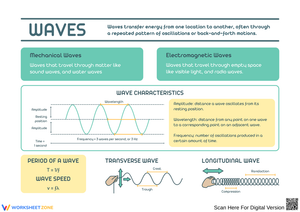
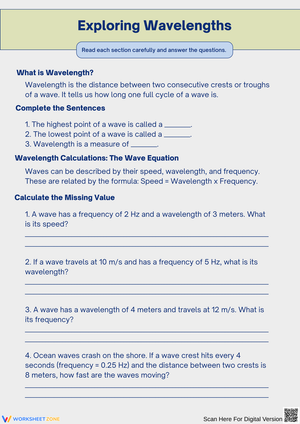
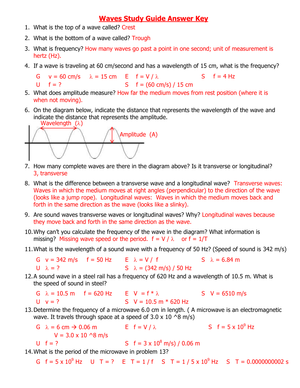
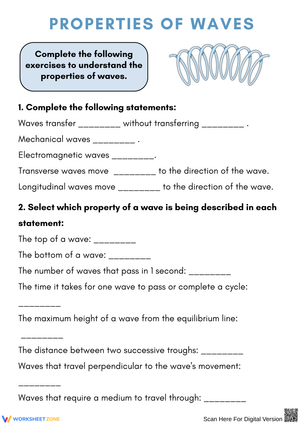
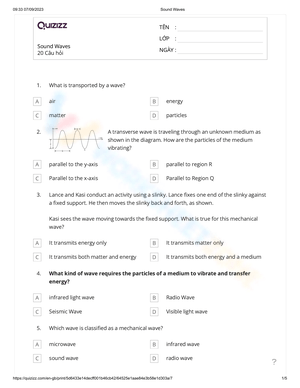
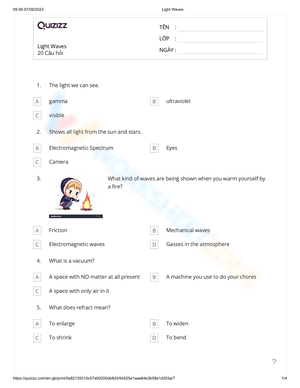
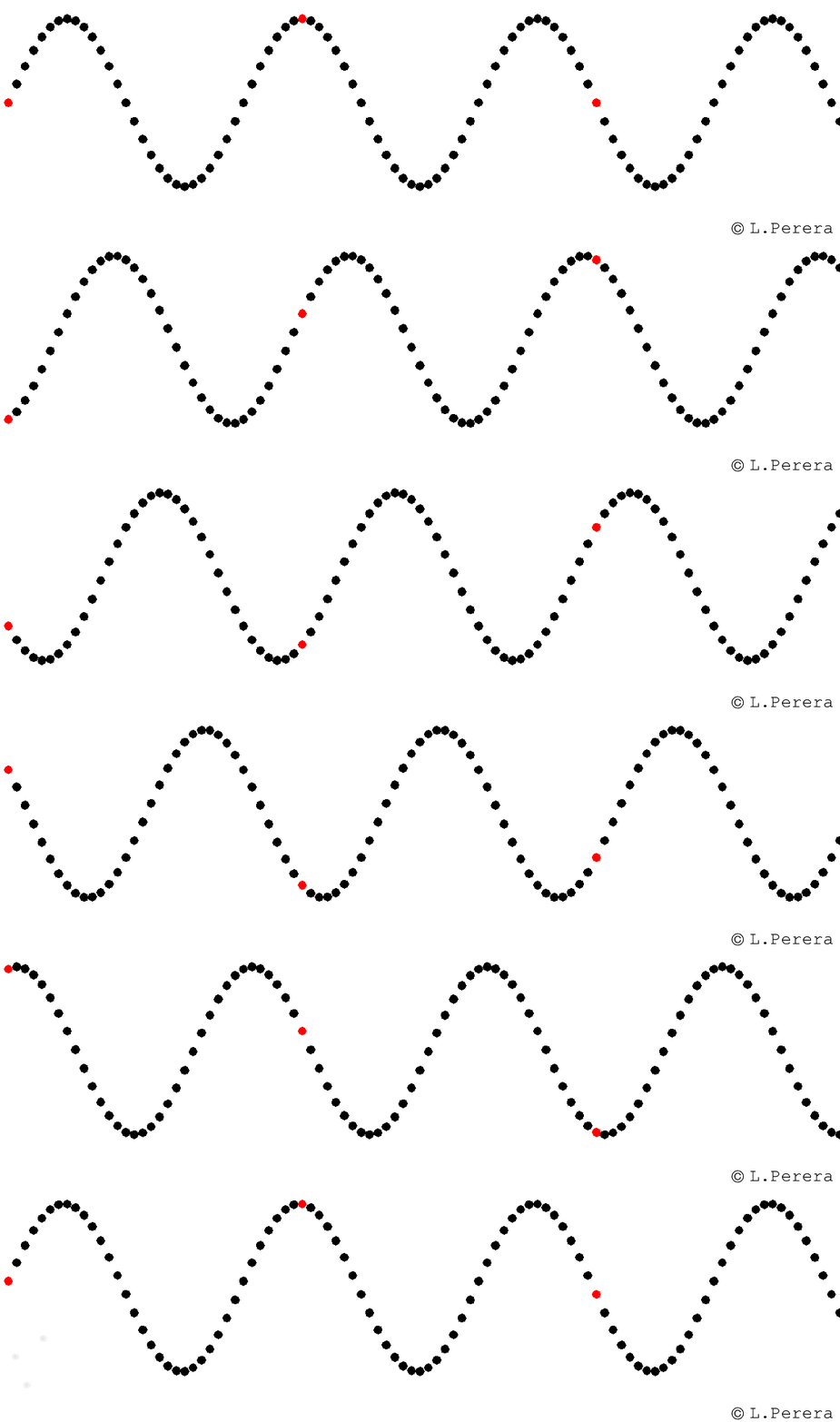
These 7th grade waves worksheets resources give science teachers something beyond a vocabulary fill-in — each worksheet puts students in front of labeled transverse wave diagrams, short written responses, and comparison tasks that move wave concepts from memorized definitions into applied thinking. The set covers both mechanical and electromagnetic waves, with sound and light woven throughout, making the materials useful across an entire unit rather than a single lesson.
The Specific Skills Each Worksheet Builds
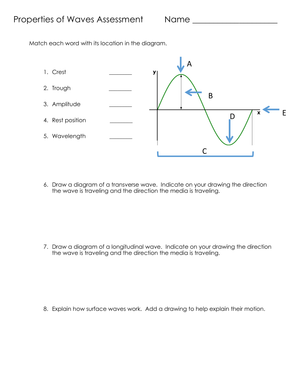
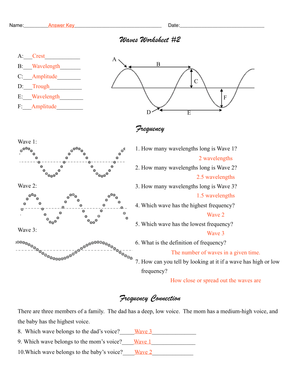
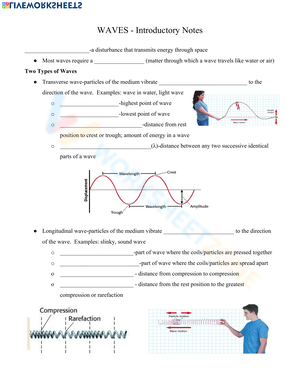
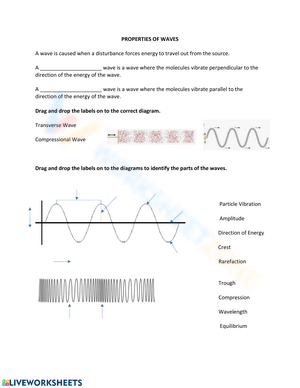
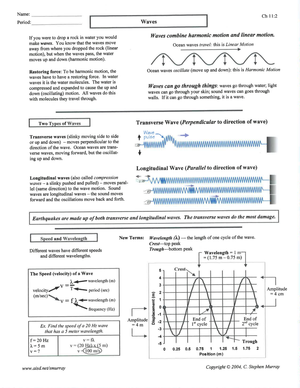
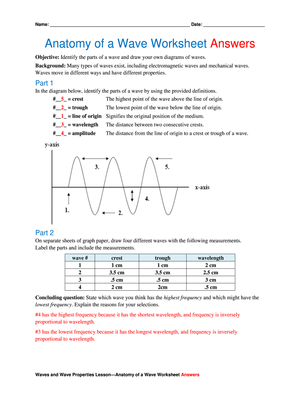
The worksheets cover the wave anatomy and concept work that most grade 7 science teachers need during a waves unit. Students begin by identifying crest, trough, amplitude, and wavelength on transverse wave diagrams, then move into questions asking them to reason about what happens when frequency increases or amplitude drops. That sequence is deliberate: labeling first, then interpreting, then explaining in writing.
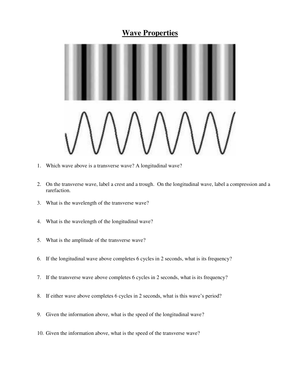
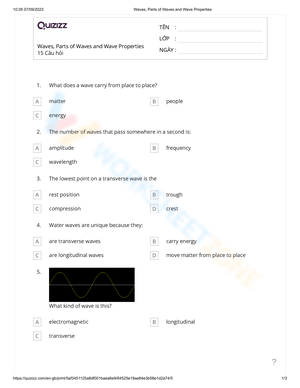
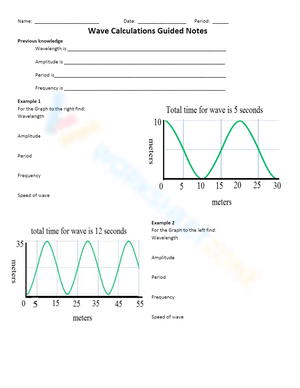
- Wave anatomy labeling: Students mark crest, trough, wavelength, and amplitude on provided wave images
- Frequency and amplitude comparisons: Students examine two diagrams side by side and identify which carries more energy or oscillates faster
- Energy transfer reasoning: Students explain in writing that waves move energy through a medium without permanently displacing matter
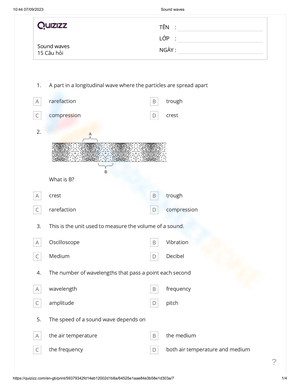
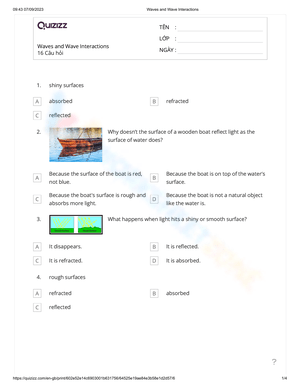
- Sound as a mechanical wave: Students identify examples of sound traveling through solids, liquids, and gases
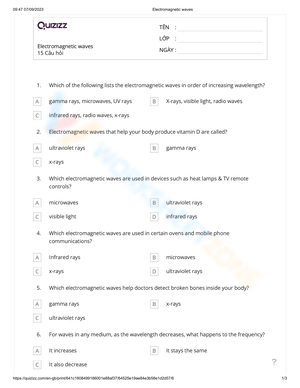
- Light as an electromagnetic wave: Students distinguish light from sound in terms of required medium
- Real-world application items: Students connect wave behavior to everyday situations — speakers, earthquakes, ocean surfaces
Several worksheets also include short written sections where students compare wave types or explain a wave's behavior in a specific context. Those items carry real diagnostic value: a student who labels a diagram accurately but cannot explain why a higher-amplitude wave carries more energy is pointing to a gap that diagram labeling alone will not close.
Student Misconceptions That Surface Every Time You Teach Waves
The amplitude measurement error appears in nearly every class. Students measure amplitude as the full vertical distance from trough to crest — the total wave height — rather than the distance from the rest position to either peak. It looks plausible on the diagram, and it doubles the correct value. Worksheets that ask students to draw a labeled bracket showing amplitude catch this error immediately, before it locks in as the wrong answer on a test.
The frequency-wavelength relationship is a second consistent problem. Students accept both definitions in isolation — frequency as cycles per second, wavelength as the length of one full cycle — then look at a diagram with more cycles packed in and say the wavelength is also larger. They are not forgetting definitions; they are failing to apply them comparatively. A worksheet item showing two wave diagrams side by side and asking which has the higher frequency requires students to use the definition rather than recite it.
The more foundational misconception is the idea that waves move matter. Many seventh graders have watched ripples spread across a pond and assumed the water itself traveled. They bring that image into class, then add wave vocabulary on top of it without replacing the underlying model. Short-answer items asking students to explain what a wave actually transports — and what stays in place — surface this confusion in writing, where it becomes visible in a way that class discussion rarely reveals.
Where These Worksheets Fit in a Science Class Week
The labeling worksheets work well as whole-class guided practice early in a unit. Project the wave image, work through amplitude and wavelength together, then release students to complete the labeling independently while you circulate. That takes about 10 to 12 minutes and gives you a live read on who needs to revisit the vocabulary before the class moves on.
For station work later in the unit, a sound-versus-light comparison worksheet pairs cleanly with a short tuning fork or light-source demonstration at an adjacent station. Students who complete the hands-on activity first tend to produce more specific written responses — they have something concrete to reference rather than relying on recall alone.
Monday warm-ups are another reliable slot. Pulling two or three targeted questions from a 7th grade waves worksheets resource and projecting them at the start of class gives students a low-stakes retrieval moment after a weekend gap. Wave diagrams work especially well here because students have something visual to anchor their thinking rather than staring at a blank prompt. Six to eight minutes before the formal lesson is enough time, and the return on that investment is real.
Sub plan use is also straightforward. Each worksheet includes enough visual support and clear item structure that students can work through it without teacher introduction, which makes these resources genuinely useful on coverage days.
Standard Alignment
These worksheets align with NGSS MS-PS4-1, which asks students to use mathematical representations to describe simple wave models and understand that amplitude is related to wave energy. They also support MS-PS4-2, which focuses on developing and using models to show that waves are reflected, absorbed, or transmitted through various materials. In classroom terms, these resources belong in the middle and later portions of a unit — placed after students have encountered wave anatomy through direct instruction or demonstration, and before formal summative assessment. They are consolidation tools, not cold introductions. Teachers building a 7th grade waves worksheets set into an NGSS-aligned unit will find the standards codes useful for lesson plan documentation and pacing alignment.
Adjusting the Worksheets for a Range of Learners
For students who need more structural support, the most effective single adjustment is to provide the wave diagram with the rest position already marked as a horizontal line before asking students to label amplitude. That one addition removes the visual ambiguity that causes many struggling students to give up on the diagram section entirely. It does not reduce the science demand; it removes the barrier preventing them from getting to the science.
For students who move quickly, the short-answer sections extend naturally. Ask them to sketch a second wave on the same diagram with a specified change — "Draw a wave with twice the amplitude but the same wavelength" — then explain in writing what changed about that wave's energy. That extension keeps the science demand high without requiring a separate printed resource.
The 7th grade waves worksheets format makes version control practical: print one version for the class and mark specific items as extension tasks or supported tasks on individual copies as needed. For students reading significantly below grade level, pairing the worksheet with a brief illustrated glossary — four or five key terms, each shown with a simple diagram — keeps the focus on scientific reasoning rather than vocabulary retrieval under time pressure.
Frequently Asked Questions
Do these worksheets cover longitudinal waves as well as transverse waves?
The primary focus is transverse waves, since that model gives students the clearest visual path into amplitude, wavelength, and frequency. Sound as a longitudinal wave appears in several worksheets through real-world examples and short written responses, but students are not asked to draw or label a compression diagram. That scope is appropriate for most NGSS-aligned grade 7 units, where the wave standard centers on model use rather than exhaustive wave classification.
Can these worksheets be used before direct instruction on waves?
These worksheets work best as practice and consolidation, not as an introduction. The labeling sections assume students have already seen a wave diagram and heard the key terms defined in context. Assigned before any instruction, the tasks produce guessing rather than retrieval. Place them after a lesson, a lab, or a demonstration where students have already built initial familiarity with the vocabulary and the idea that waves transfer energy.
How much class time does a typical worksheet require?
Most students finish the core items in 15 to 20 minutes when working independently. Worksheets with short-answer sections at the end can run closer to 25 minutes for students who write slowly. The diagram labeling is consistently the fastest portion; written explanation items are where pacing spreads out across the group. Budget toward the longer estimate if you plan to debrief as a class after students finish.












 Interactive Worksheet Maker
 Quiz Maker
 Word Search Maker
 Crossword Puzzle Maker
 Word Scramble Generator
 Sentence Scramble Generator
 Handwriting Worksheet Generator
 Name Tracing Generator
 Fill In The Blank Generator