


























1 / 2
0
Views
0
Downloads

0.0
0
Save
0 Likes
Share
Diagram of the Human Ear Worksheet
0 Views
0 Downloads
Paste this activity's link or code into your existing LMS (Google Classroom, Canvas, Teams, Schoology, Moodle, etc.).
Students can open and work on the activity right away, with no student login required.
You'll still be able to track student progress and results from your teacher account.
Information
Description
What It Is:
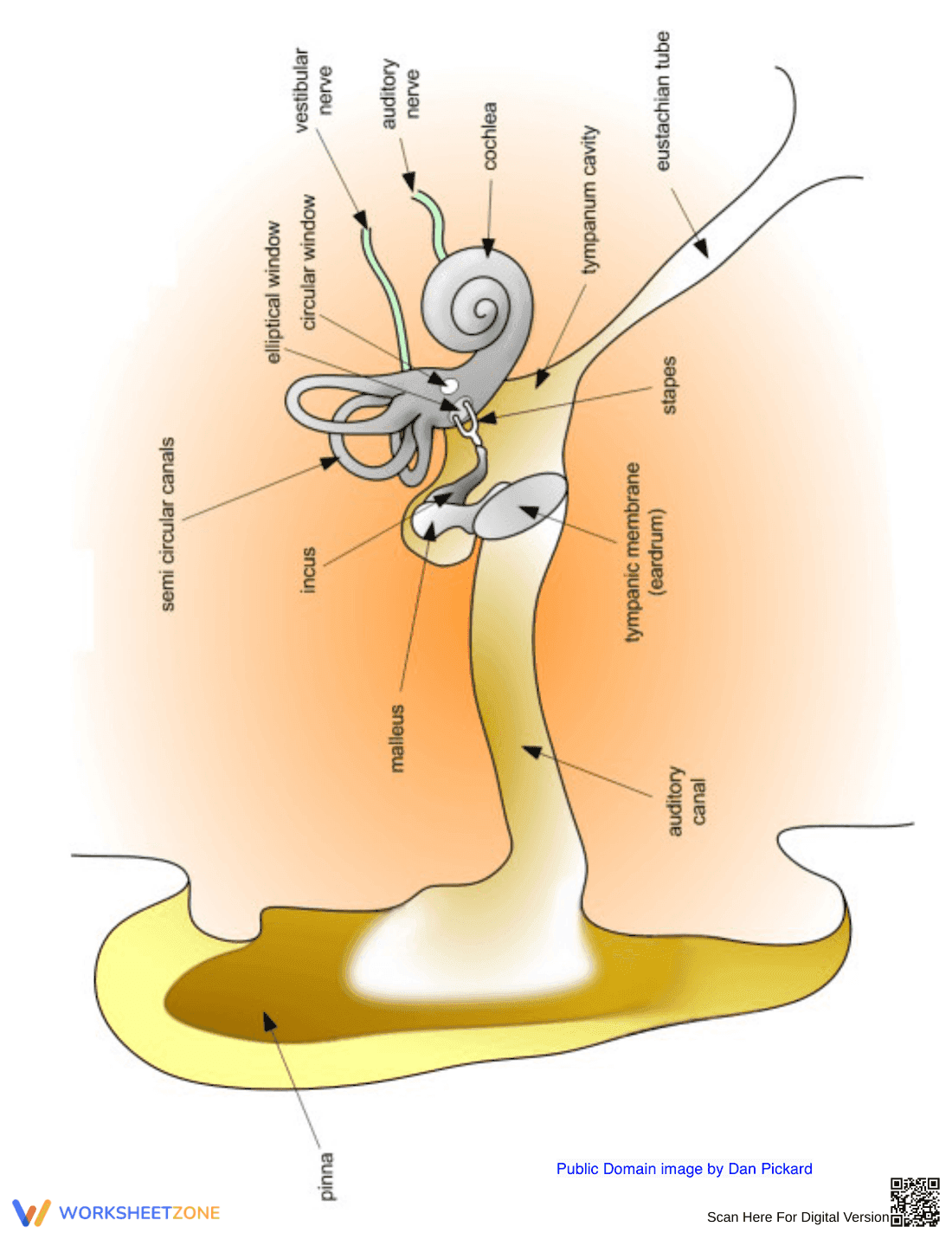
This is an educational diagram of the human ear. It illustrates the different parts of the ear including the pinna, auditory canal, tympanic membrane (eardrum), malleus, incus, stapes, semi-circular canals, elliptical window, circular window, vestibular nerve, auditory nerve, cochlea, tympanum cavity, and eustachian tube. The parts are labeled with arrows pointing to each structure.
Grade Level Suitability:
This worksheet is suitable for upper elementary (grades 4-5) through middle school (grades 6-8). It provides a visual representation of the ear's anatomy, appropriate for introducing or reinforcing concepts related to the human body and the sense of hearing. The labeled diagram allows for easy identification of the different parts.
Why Use It:
This worksheet helps students learn the different parts of the human ear and understand their relative locations. It promotes visual learning and can be used as a study aid or reference material for understanding the function of each part in the hearing process.
How to Use It:
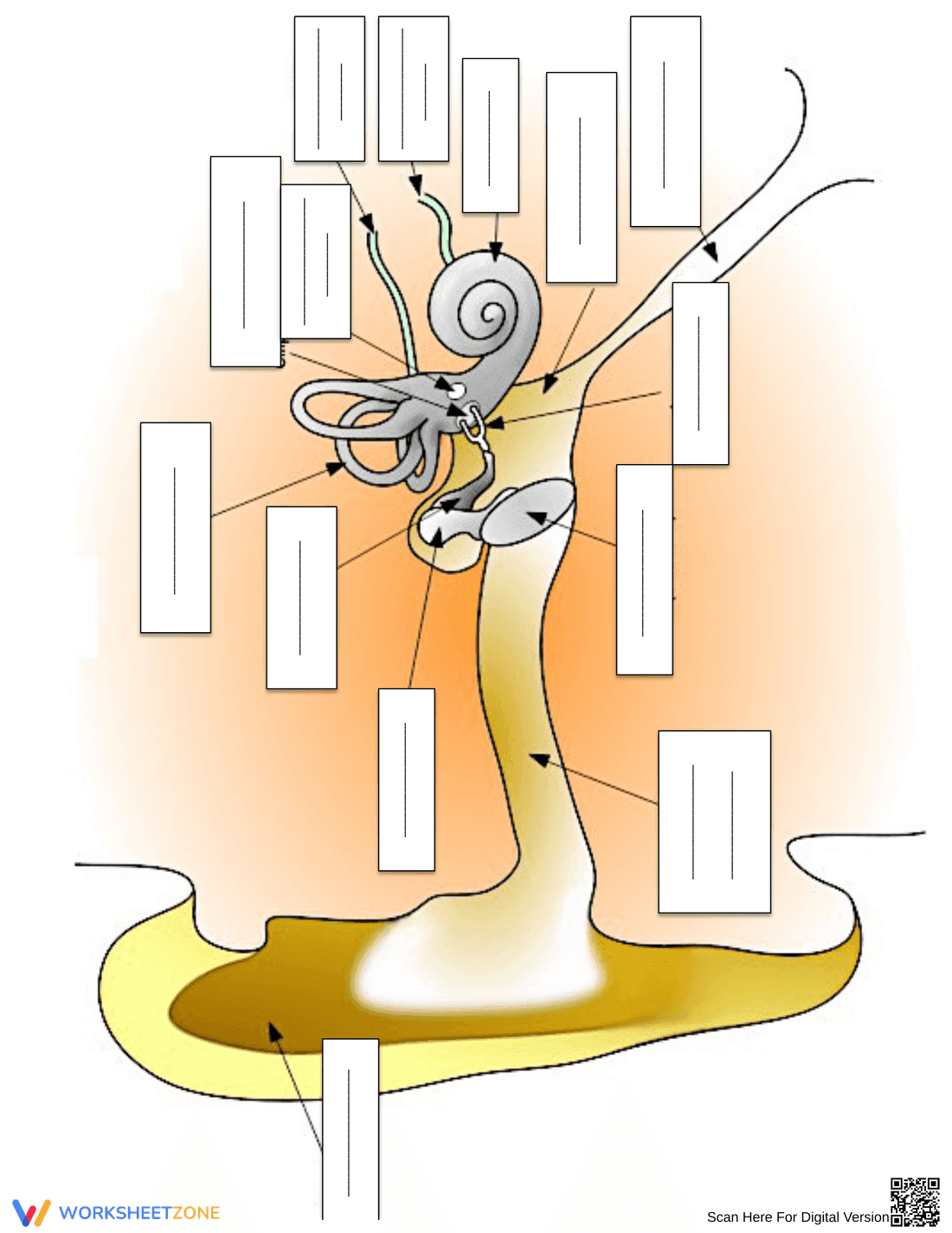
Use this diagram as a visual aid during a lesson about the human ear. Students can use it to identify and label the different parts of the ear. It can also be used as a review tool, or as a reference during a dissection of an animal ear (if available). Students could also be asked to describe the function of each labeled part.
Target Users:
The target users are students learning about human anatomy, specifically the ear and the sense of hearing. This is suitable for science teachers, homeschool educators, and students in grades 4-8.
This is an educational diagram of the human ear. It illustrates the different parts of the ear including the pinna, auditory canal, tympanic membrane (eardrum), malleus, incus, stapes, semi-circular canals, elliptical window, circular window, vestibular nerve, auditory nerve, cochlea, tympanum cavity, and eustachian tube. The parts are labeled with arrows pointing to each structure.
Grade Level Suitability:
This worksheet is suitable for upper elementary (grades 4-5) through middle school (grades 6-8). It provides a visual representation of the ear's anatomy, appropriate for introducing or reinforcing concepts related to the human body and the sense of hearing. The labeled diagram allows for easy identification of the different parts.
Why Use It:
This worksheet helps students learn the different parts of the human ear and understand their relative locations. It promotes visual learning and can be used as a study aid or reference material for understanding the function of each part in the hearing process.
How to Use It:
Use this diagram as a visual aid during a lesson about the human ear. Students can use it to identify and label the different parts of the ear. It can also be used as a review tool, or as a reference during a dissection of an animal ear (if available). Students could also be asked to describe the function of each labeled part.
Target Users:
The target users are students learning about human anatomy, specifically the ear and the sense of hearing. This is suitable for science teachers, homeschool educators, and students in grades 4-8.


