


























1 / 7
0
Views
0
Downloads

0.0
0
Save
0 Likes
Share
Learn Organelles in Eukaryotic Cells
0 Views
0 Downloads
Paste this activity's link or code into your existing LMS (Google Classroom, Canvas, Teams, Schoology, Moodle, etc.).
Students can open and work on the activity right away, with no student login required.
You'll still be able to track student progress and results from your teacher account.
Information
Description
What It Is:
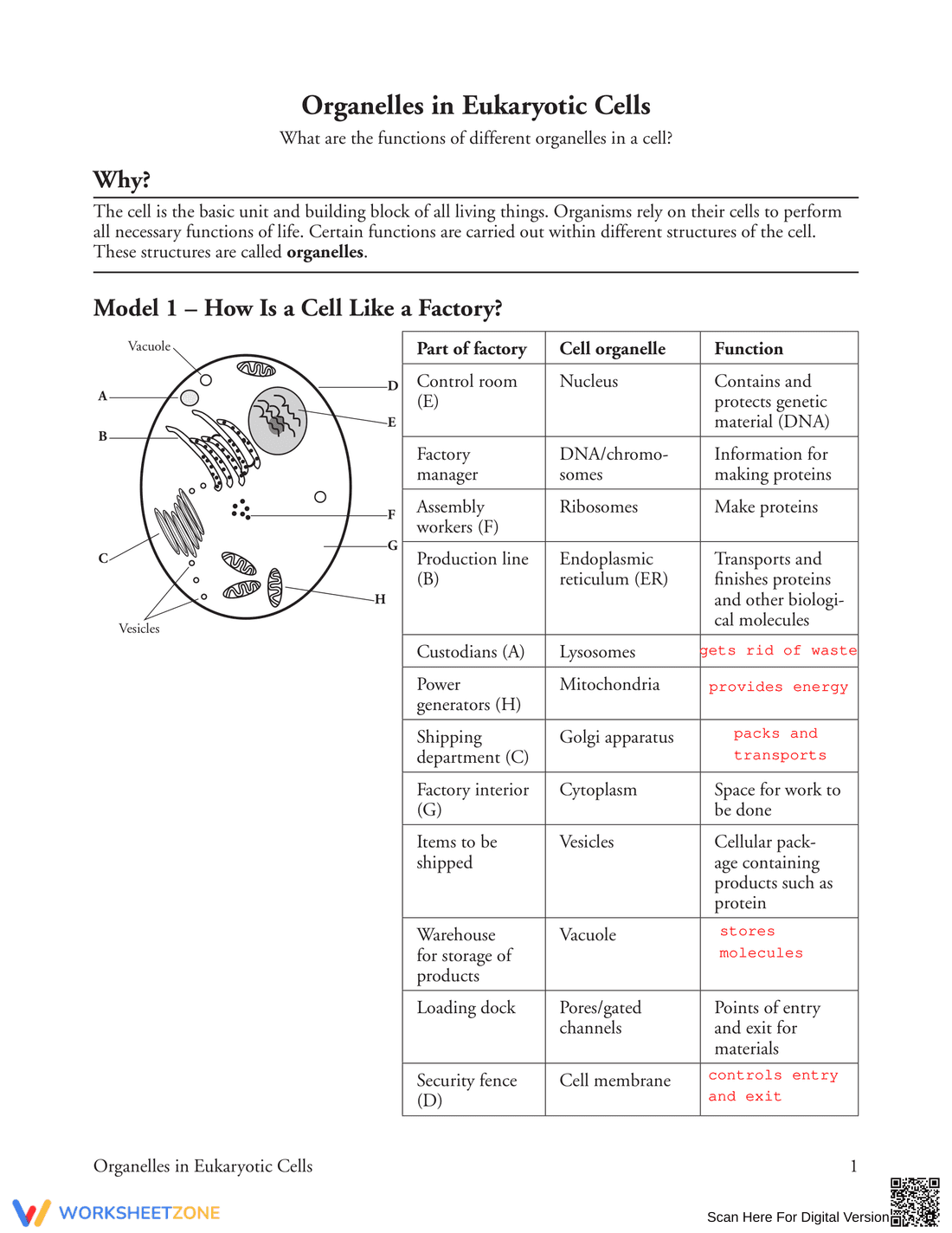
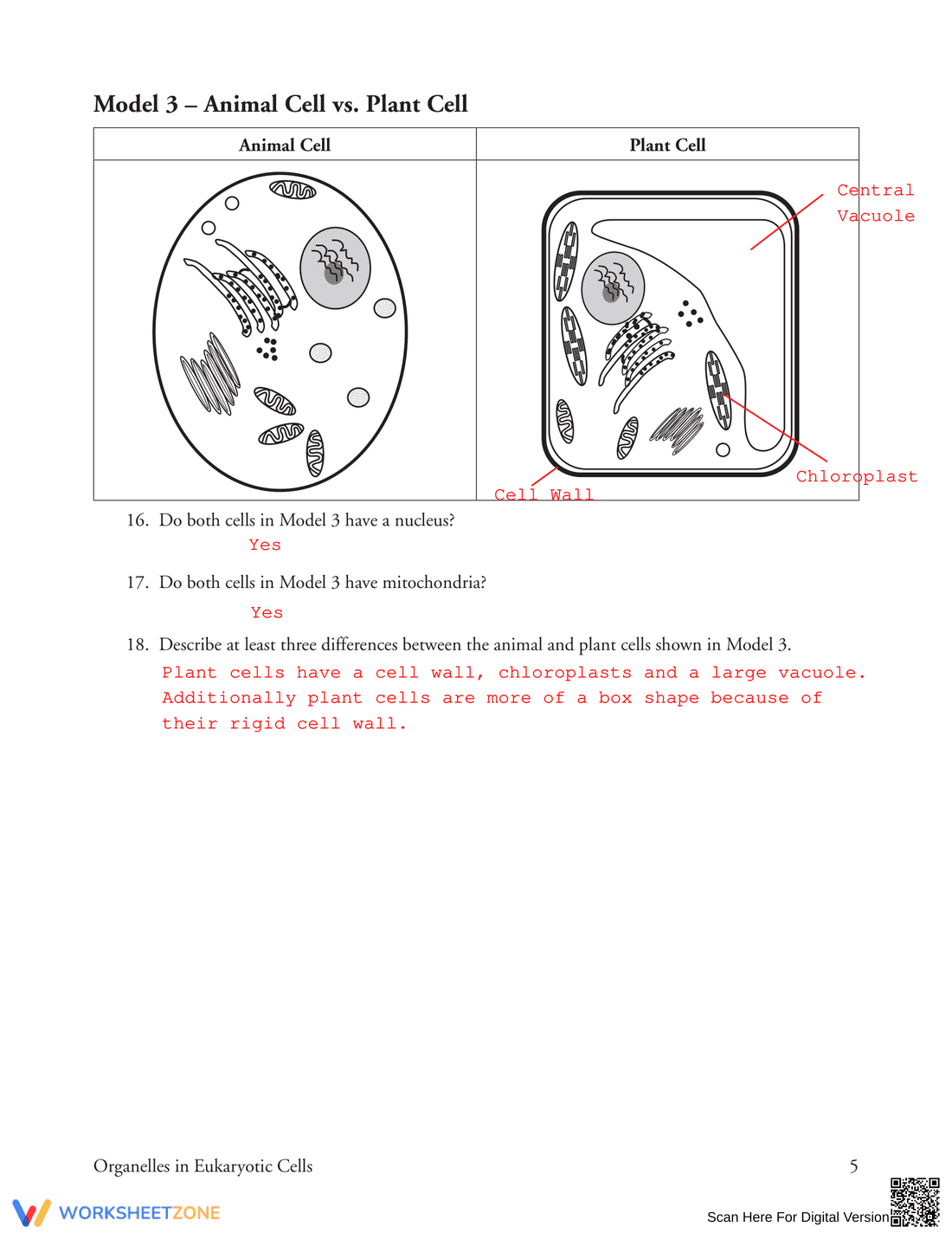
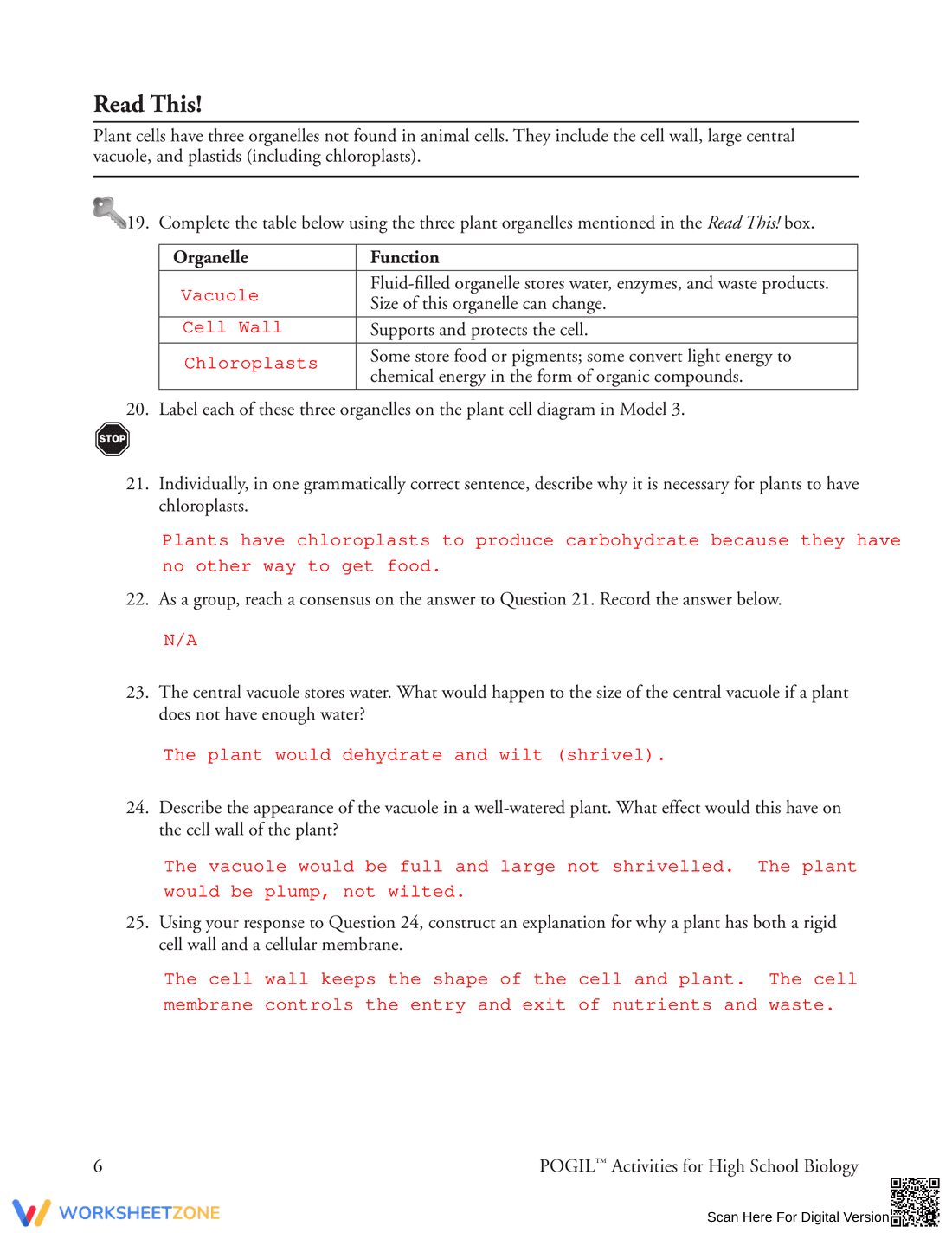
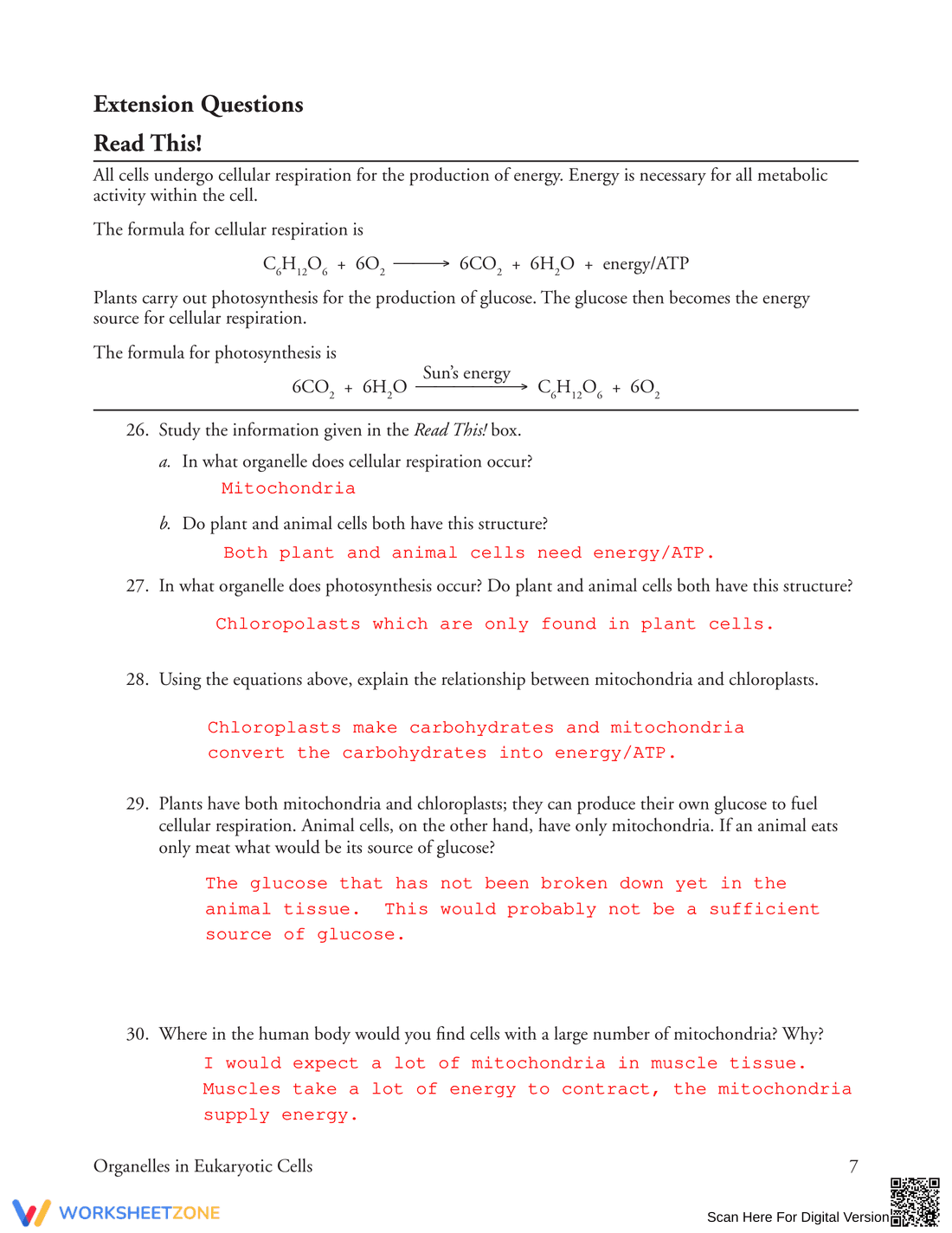
This is an educational worksheet about organelles in eukaryotic cells. It uses a factory analogy to explain the functions of different organelles. The worksheet includes a diagram of a cell with labeled organelles (A-H) and a table matching 'parts of a factory' to cell organelles and their functions. For example, the nucleus is compared to a control room and its function is to contain and protect genetic material (DNA). Other organelles include ribosomes, endoplasmic reticulum (ER), lysosomes, mitochondria, Golgi apparatus, cytoplasm, vesicles, vacuole, pores/gated channels and cell membrane.
Grade Level Suitability:
This worksheet is most suitable for middle school (grades 6-8) and early high school (grades 9-10) students. The content requires some prior understanding of basic cell biology concepts, making it appropriate for students who have already been introduced to cells and their functions.
Why Use It:
This worksheet helps students understand the functions of cell organelles by using a relatable factory analogy. It promotes visual learning through the diagram and reinforces understanding through the matching activity in the table. It helps students connect abstract biological concepts to real-world examples, improving comprehension and retention.
How to Use It:
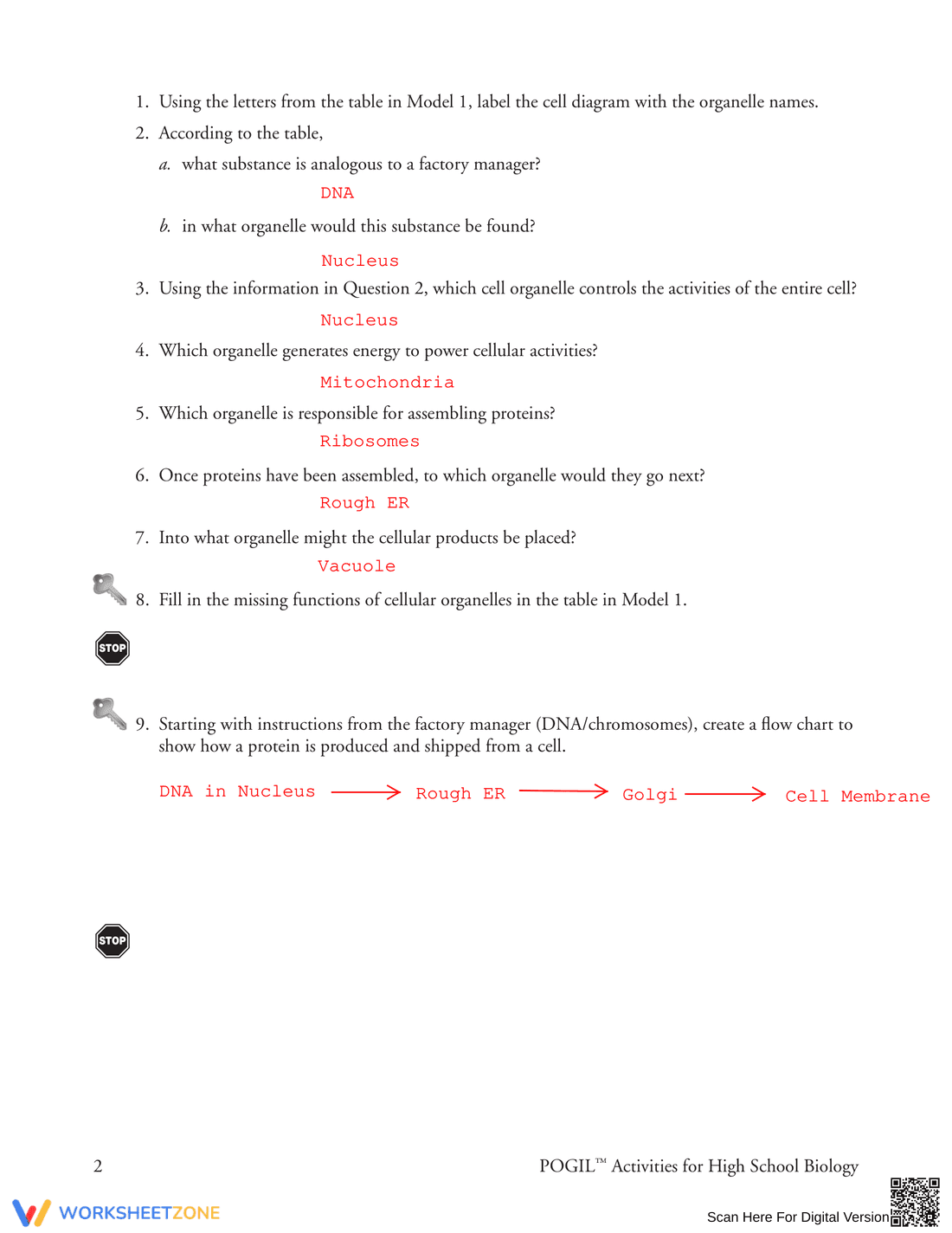
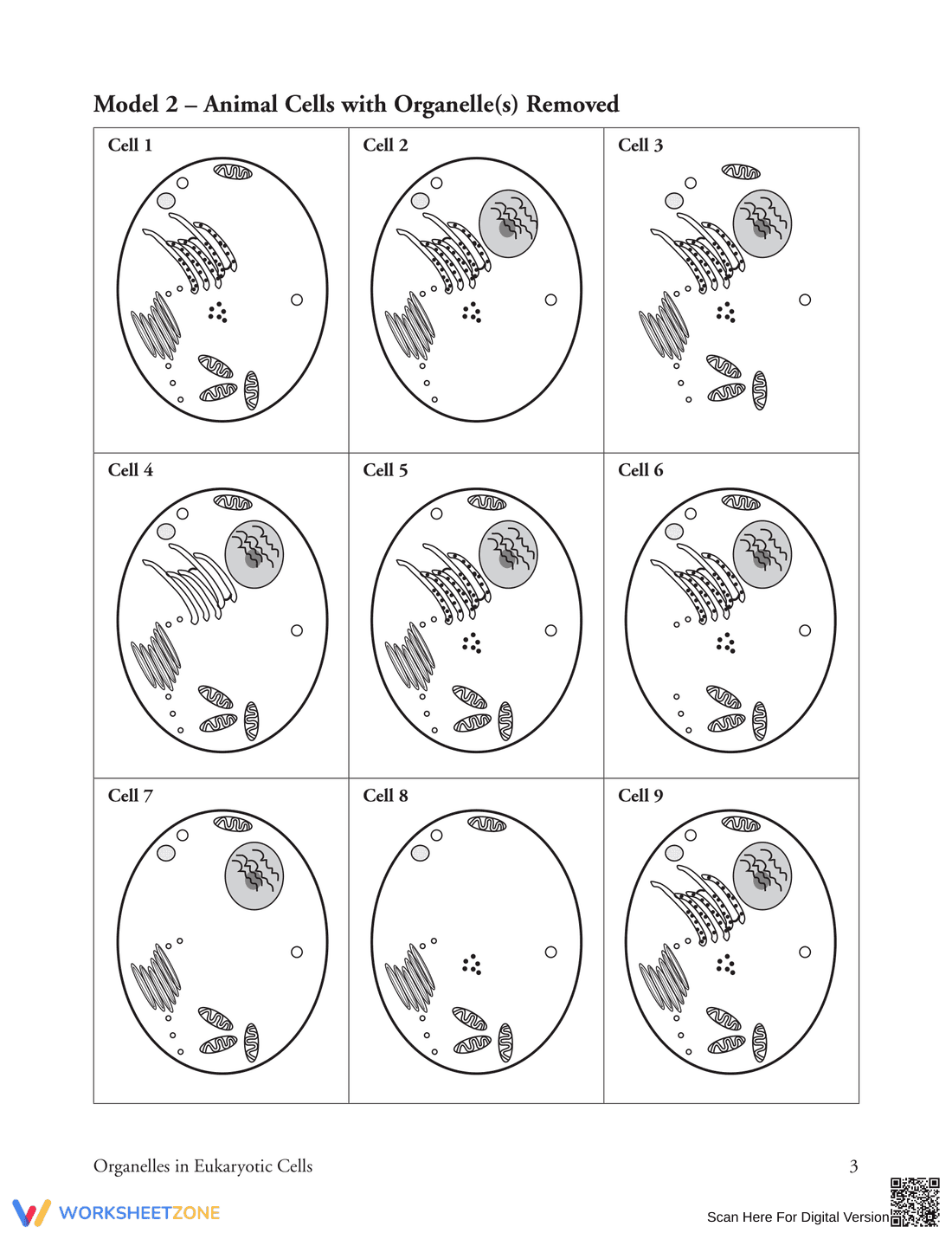
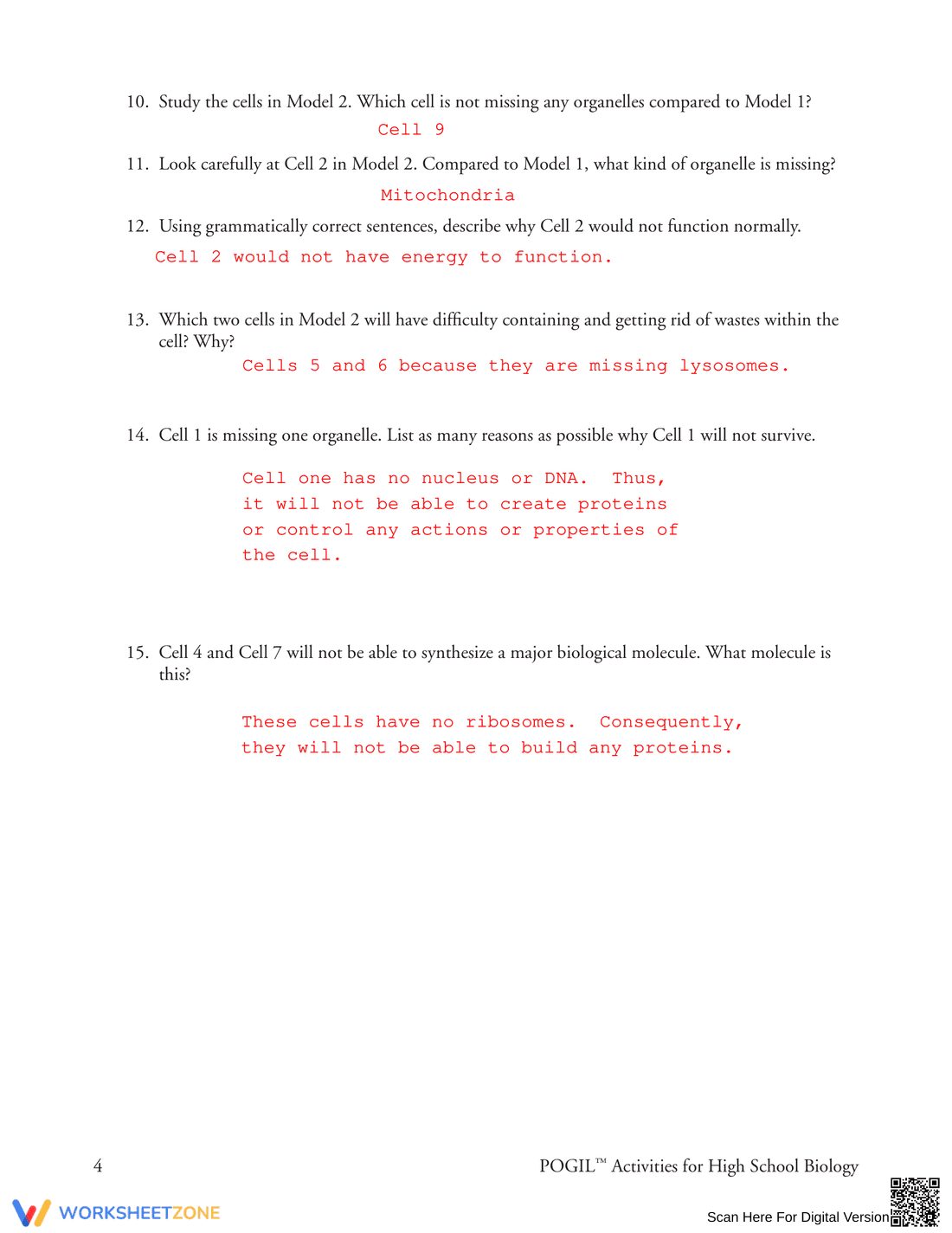
Students can use the diagram to identify and label the organelles. They can then use the table to understand the function of each organelle by relating it to its corresponding part in a factory. The worksheet can be used as an individual activity, a group project, or as part of a lesson on cell biology. Students can fill in missing information in the table or answer questions based on the diagram.
Target Users:
The target users are middle school and high school students learning about cell biology. It is also suitable for teachers who need a visual and engaging resource to teach the functions of cell organelles. Homeschooling parents could also use this worksheet as part of their science curriculum.
This is an educational worksheet about organelles in eukaryotic cells. It uses a factory analogy to explain the functions of different organelles. The worksheet includes a diagram of a cell with labeled organelles (A-H) and a table matching 'parts of a factory' to cell organelles and their functions. For example, the nucleus is compared to a control room and its function is to contain and protect genetic material (DNA). Other organelles include ribosomes, endoplasmic reticulum (ER), lysosomes, mitochondria, Golgi apparatus, cytoplasm, vesicles, vacuole, pores/gated channels and cell membrane.
Grade Level Suitability:
This worksheet is most suitable for middle school (grades 6-8) and early high school (grades 9-10) students. The content requires some prior understanding of basic cell biology concepts, making it appropriate for students who have already been introduced to cells and their functions.
Why Use It:
This worksheet helps students understand the functions of cell organelles by using a relatable factory analogy. It promotes visual learning through the diagram and reinforces understanding through the matching activity in the table. It helps students connect abstract biological concepts to real-world examples, improving comprehension and retention.
How to Use It:
Students can use the diagram to identify and label the organelles. They can then use the table to understand the function of each organelle by relating it to its corresponding part in a factory. The worksheet can be used as an individual activity, a group project, or as part of a lesson on cell biology. Students can fill in missing information in the table or answer questions based on the diagram.
Target Users:
The target users are middle school and high school students learning about cell biology. It is also suitable for teachers who need a visual and engaging resource to teach the functions of cell organelles. Homeschooling parents could also use this worksheet as part of their science curriculum.


