


























1 / 2
0
Views
0
Downloads

5.5
0
Save
0 Likes
Share
Identifying Types of Chemical Reactions
0 Views
0 Downloads
Paste this activity's link or code into your existing LMS (Google Classroom, Canvas, Teams, Schoology, Moodle, etc.).
Students can open and work on the activity right away, with no student login required.
You'll still be able to track student progress and results from your teacher account.
Information
Description
What It Is:
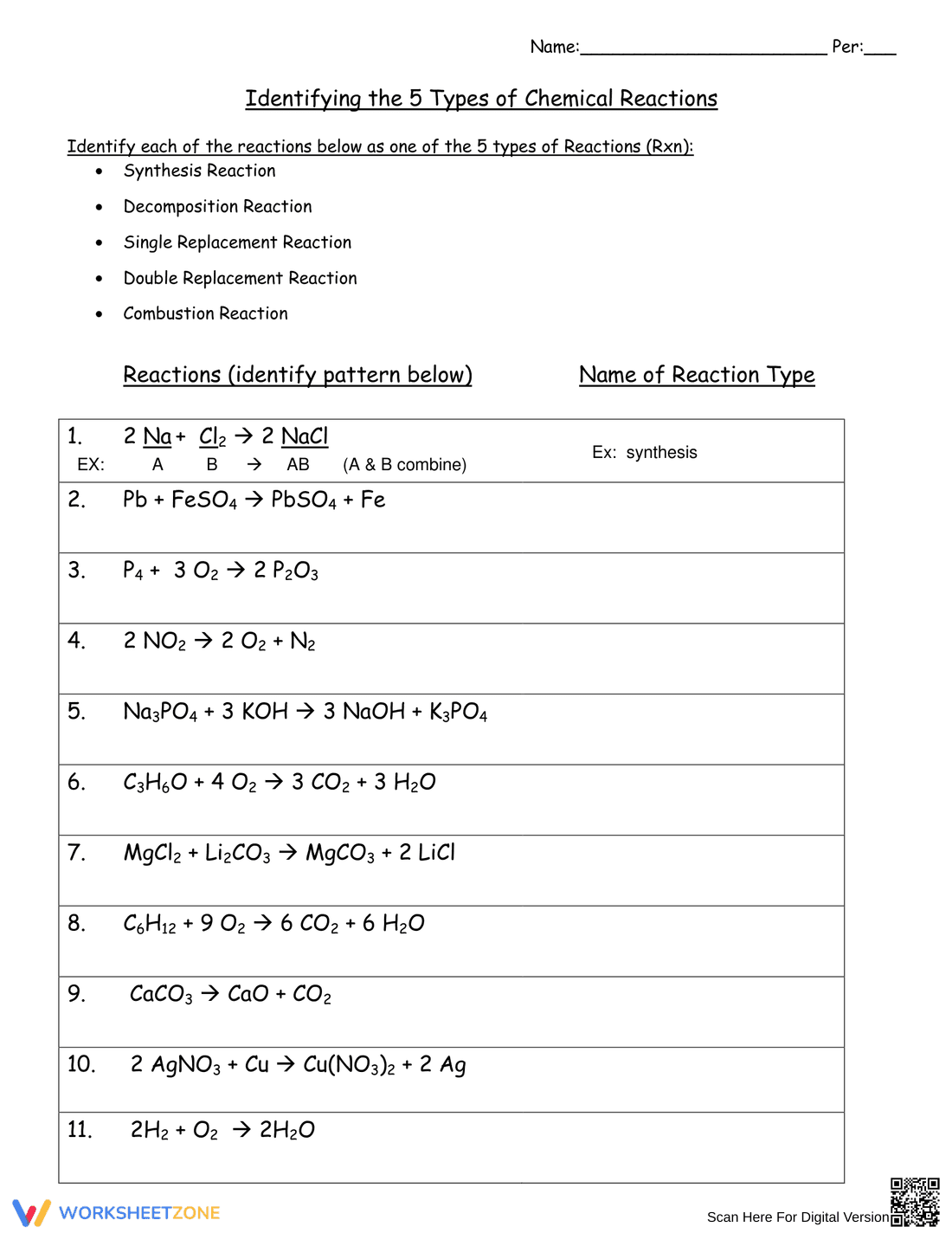
This is a chemistry worksheet focused on identifying different types of chemical reactions. It lists the five types of reactions: Synthesis, Decomposition, Single Replacement, Double Replacement, and Combustion. The worksheet then presents 11 chemical equations and asks the student to identify the type of reaction each represents. An example is provided showing how to identify a synthesis reaction.
Grade Level Suitability:
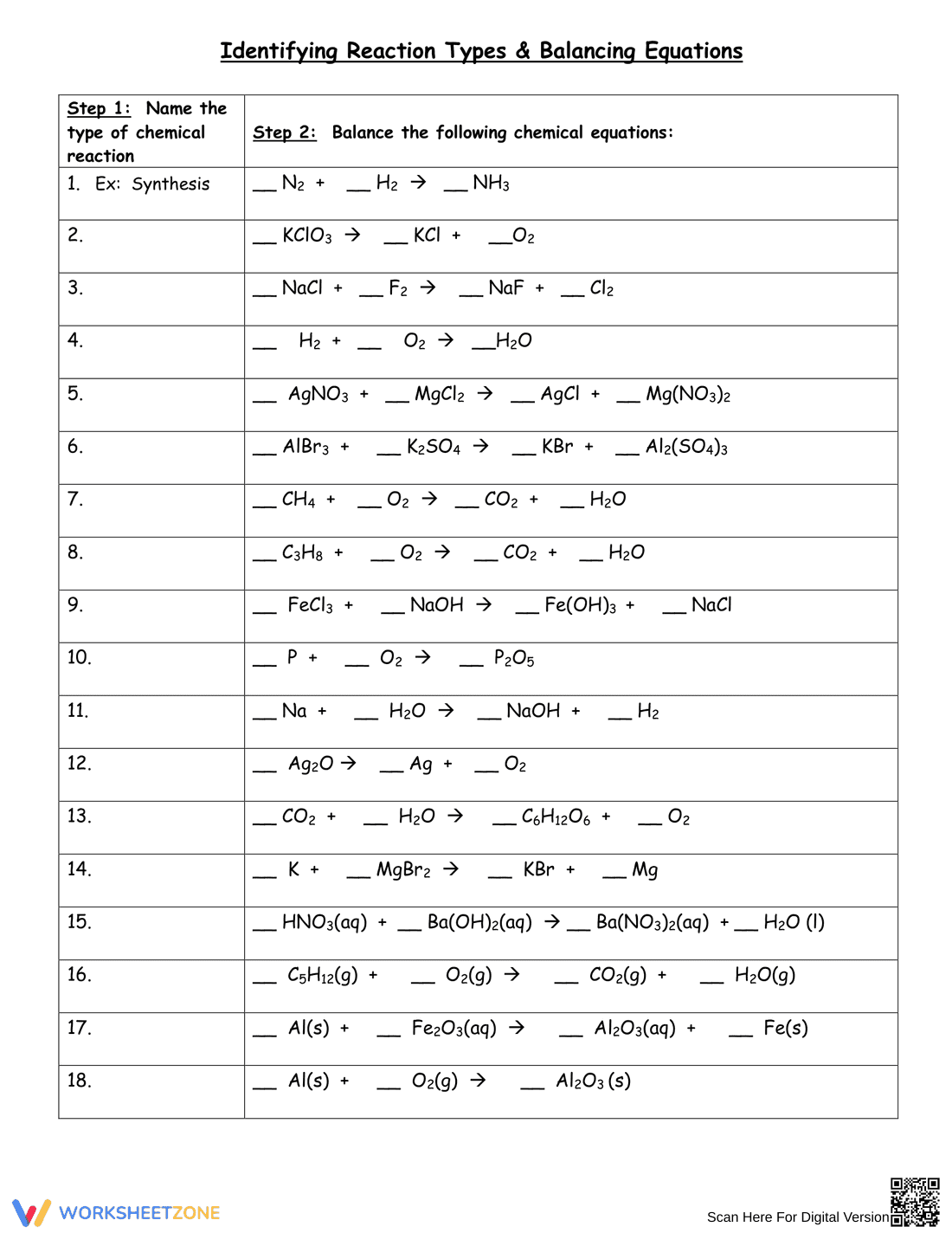
This worksheet is suitable for high school chemistry, specifically grades 9-12. It requires an understanding of chemical formulas, balancing equations, and the general patterns of different reaction types, which are typically covered in high school level chemistry courses.
Why Use It:
This worksheet reinforces the student's ability to recognize and classify chemical reactions. It helps students connect the abstract definitions of reaction types to concrete examples, improving their understanding of chemical processes and problem-solving skills in chemistry.
How to Use It:
Students should first review the definitions of the five types of chemical reactions. Then, for each equation, they should analyze the reactants and products to determine which type of reaction is represented. They should write the name of the reaction type in the space provided next to each equation.
Target Users:
The target users are high school chemistry students, particularly those learning about chemical reactions and equation balancing. It is useful for homework assignments, classroom practice, or review exercises.
This is a chemistry worksheet focused on identifying different types of chemical reactions. It lists the five types of reactions: Synthesis, Decomposition, Single Replacement, Double Replacement, and Combustion. The worksheet then presents 11 chemical equations and asks the student to identify the type of reaction each represents. An example is provided showing how to identify a synthesis reaction.
Grade Level Suitability:
This worksheet is suitable for high school chemistry, specifically grades 9-12. It requires an understanding of chemical formulas, balancing equations, and the general patterns of different reaction types, which are typically covered in high school level chemistry courses.
Why Use It:
This worksheet reinforces the student's ability to recognize and classify chemical reactions. It helps students connect the abstract definitions of reaction types to concrete examples, improving their understanding of chemical processes and problem-solving skills in chemistry.
How to Use It:
Students should first review the definitions of the five types of chemical reactions. Then, for each equation, they should analyze the reactants and products to determine which type of reaction is represented. They should write the name of the reaction type in the space provided next to each equation.
Target Users:
The target users are high school chemistry students, particularly those learning about chemical reactions and equation balancing. It is useful for homework assignments, classroom practice, or review exercises.


