


























1 / 2
0
Views
0
Downloads

0.0
0
Save
0 Likes
Share
Practice Bohr Model Basics with Elements
0 Views
0 Downloads
Paste this activity's link or code into your existing LMS (Google Classroom, Canvas, Teams, Schoology, Moodle, etc.).
Students can open and work on the activity right away, with no student login required.
You'll still be able to track student progress and results from your teacher account.
Information
Description
What It Is:
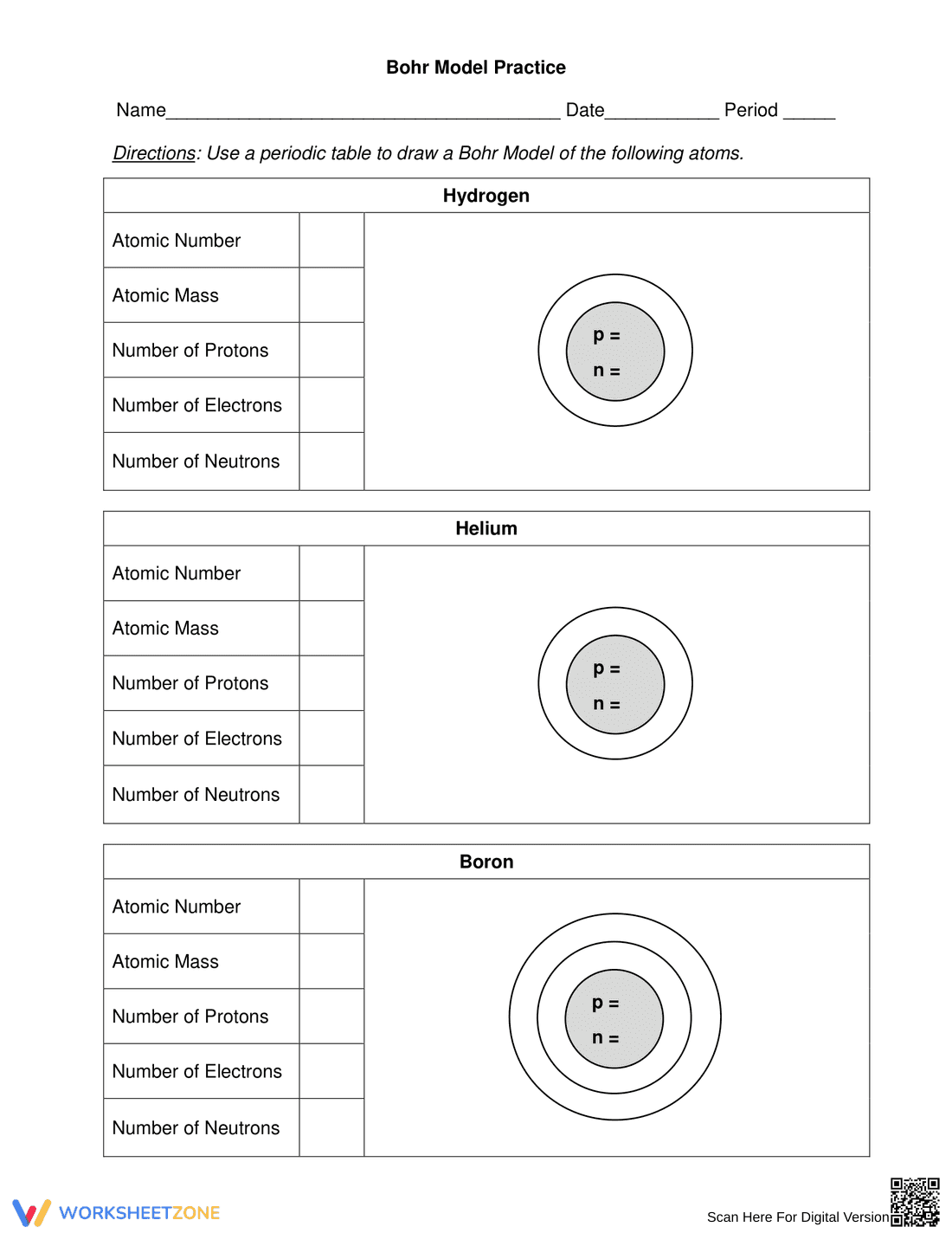
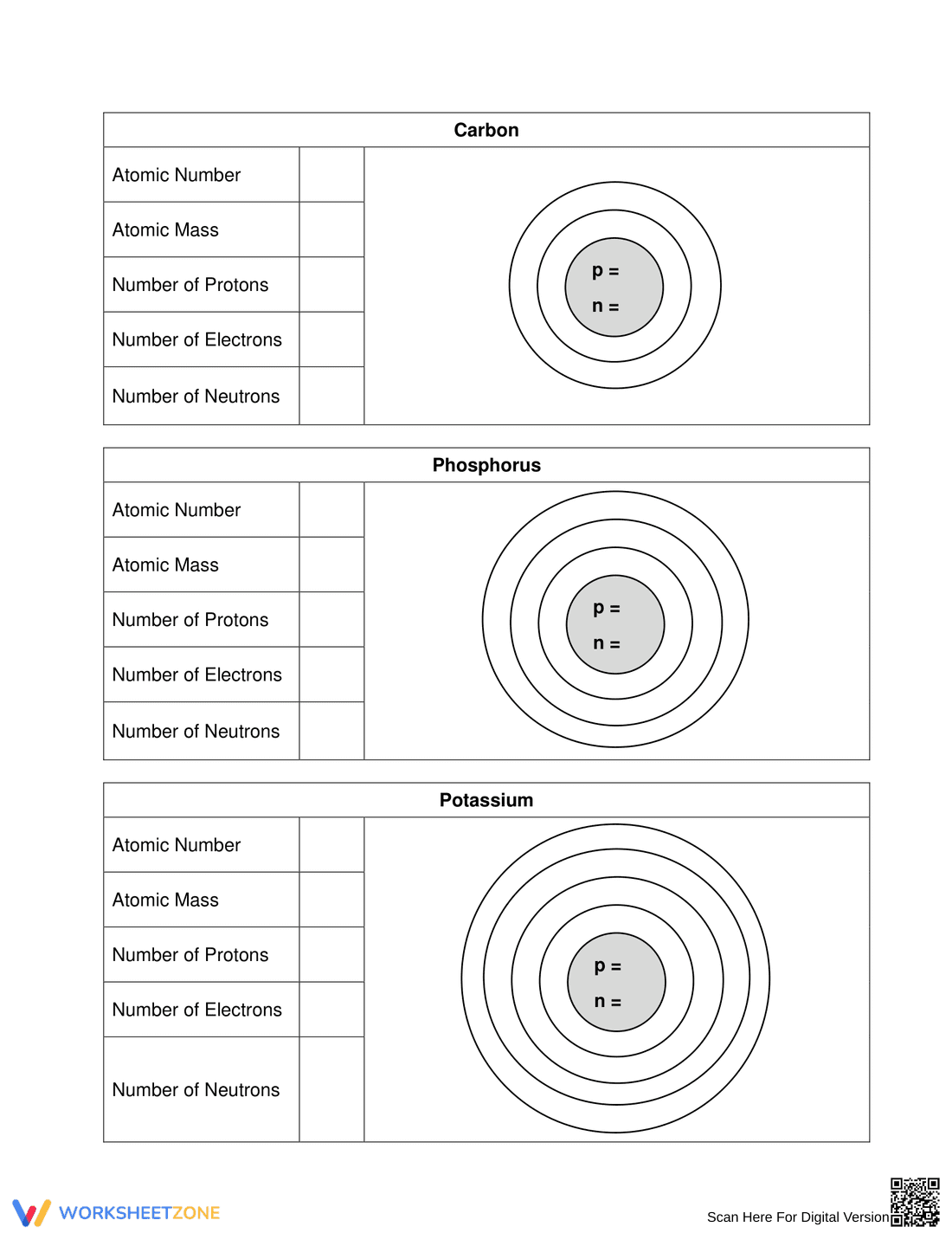
This is a chemistry worksheet focused on Bohr Model practice. Students use a periodic table to find the atomic number, atomic mass, number of protons, number of electrons, and number of neutrons for Hydrogen, Helium, and Boron. They then draw the Bohr model for each atom.
Grade Level Suitability:
Suitable for grades 9-12, specifically for high school chemistry students. The concepts of atomic structure, the periodic table, and Bohr models are typically covered in high school chemistry courses.
Why Use It:
This worksheet helps students understand atomic structure and how to represent atoms using the Bohr model. It reinforces the relationship between the periodic table and the number of protons, neutrons, and electrons in an atom. It provides practice in visualizing and drawing atomic models.
How to Use It:
Students should use a periodic table to find the atomic number and atomic mass of Hydrogen, Helium, and Boron. From this information, they should calculate the number of protons, electrons, and neutrons for each atom. Then, they should draw the Bohr model, placing the correct number of electrons in the appropriate energy levels around the nucleus.
Target Users:
High school chemistry students, teachers teaching atomic structure and Bohr models, and homeschool educators teaching chemistry.
This is a chemistry worksheet focused on Bohr Model practice. Students use a periodic table to find the atomic number, atomic mass, number of protons, number of electrons, and number of neutrons for Hydrogen, Helium, and Boron. They then draw the Bohr model for each atom.
Grade Level Suitability:
Suitable for grades 9-12, specifically for high school chemistry students. The concepts of atomic structure, the periodic table, and Bohr models are typically covered in high school chemistry courses.
Why Use It:
This worksheet helps students understand atomic structure and how to represent atoms using the Bohr model. It reinforces the relationship between the periodic table and the number of protons, neutrons, and electrons in an atom. It provides practice in visualizing and drawing atomic models.
How to Use It:
Students should use a periodic table to find the atomic number and atomic mass of Hydrogen, Helium, and Boron. From this information, they should calculate the number of protons, electrons, and neutrons for each atom. Then, they should draw the Bohr model, placing the correct number of electrons in the appropriate energy levels around the nucleus.
Target Users:
High school chemistry students, teachers teaching atomic structure and Bohr models, and homeschool educators teaching chemistry.


