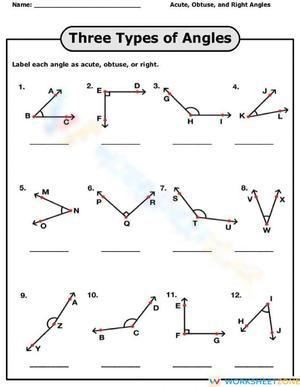
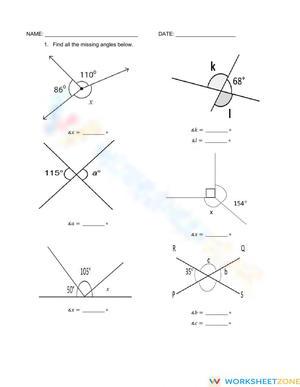
These angles worksheets for 6th grade cover the full skill progression from visual classification through protractor measurement to solving for unknown angle measures, giving teachers a printable set that holds up across classwork, targeted intervention, and unit review without rebuilding materials for each setting. The PDF format matters specifically here because protractor diagrams must hold their proportions — a shifted or compressed image makes it impossible for students to line up measurements correctly.
What Each Worksheet Targets
The set addresses the five skills that make up a complete sixth-grade angle unit. Each worksheet focuses on a single stage of the progression, which makes it easier to pinpoint exactly where a student's understanding breaks down rather than attributing confusion to the whole topic.
- Classifying angles by type: Students identify acute, right, obtuse, and straight angles from diagrams and from degree measures listed without a visual — both forms of the task matter because the mental model has to work both ways.
- Estimating angle size: Students judge whether a given angle is closer to 30°, 90°, or 150° before any measurement occurs, building the expectation they will later check against when they pick up a protractor.
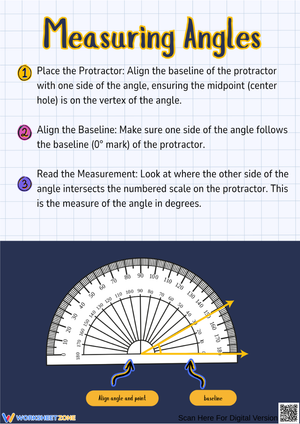
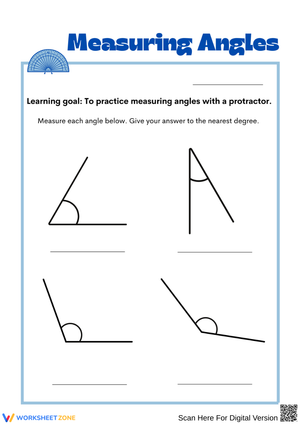
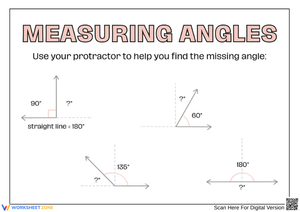
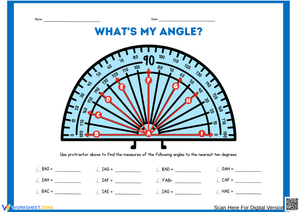
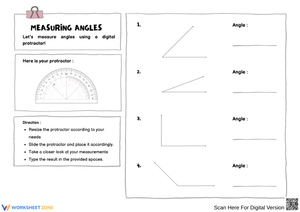
- Measuring with a protractor: Students read both scales on a standard protractor and record the measure of angles drawn at varied orientations, not only the familiar left-to-right position.
- Drawing angles to specification: Students place a protractor on a given ray and construct an angle at a target degree measure — a task that reinforces protractor control differently than reading an existing angle does.
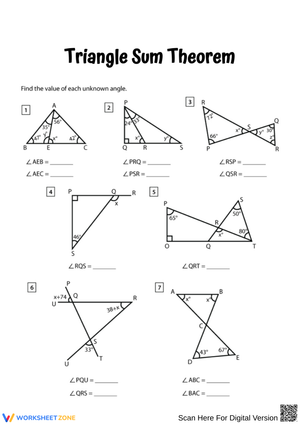
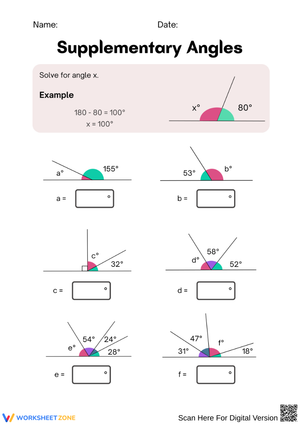
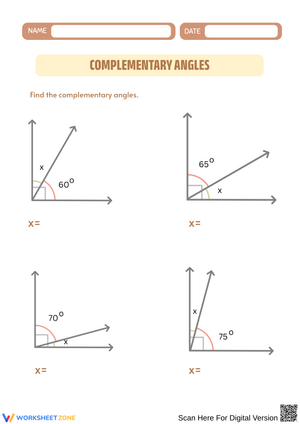
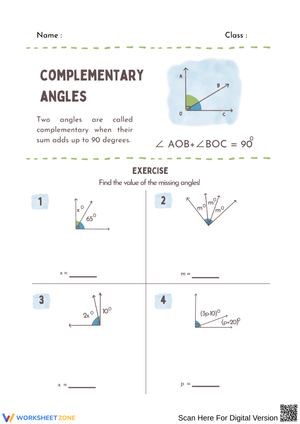
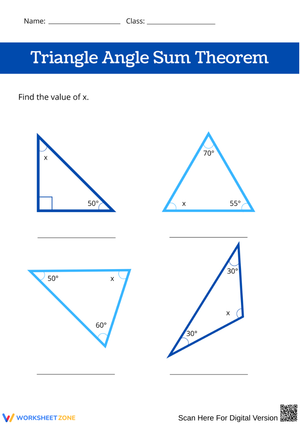
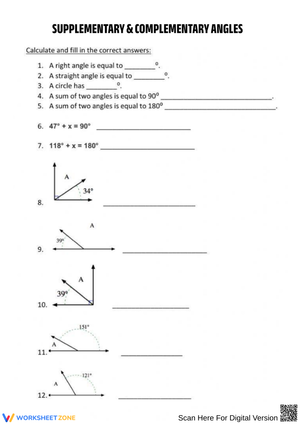
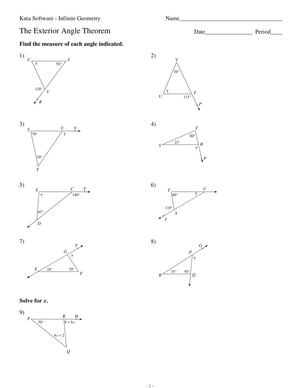
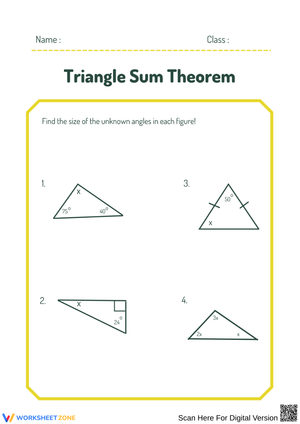
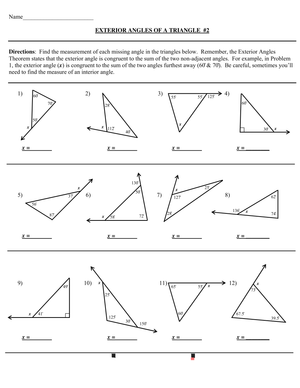
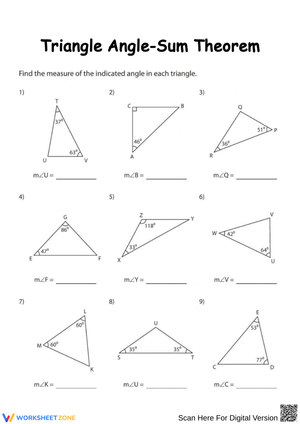
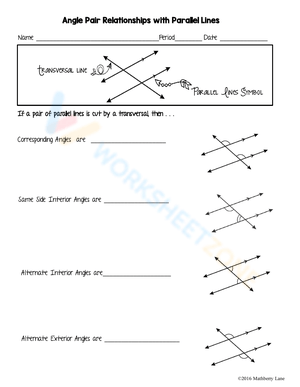
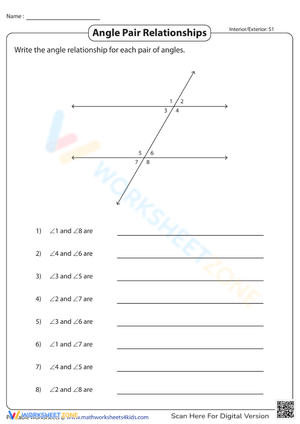
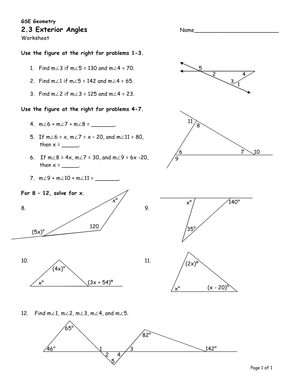
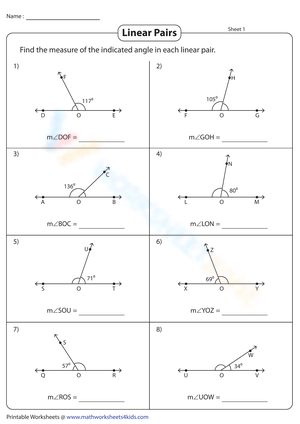
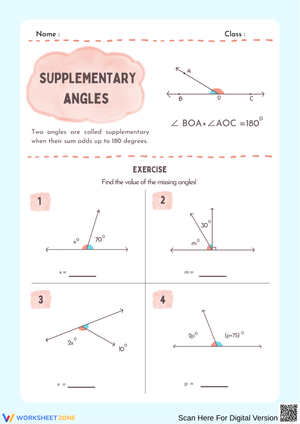
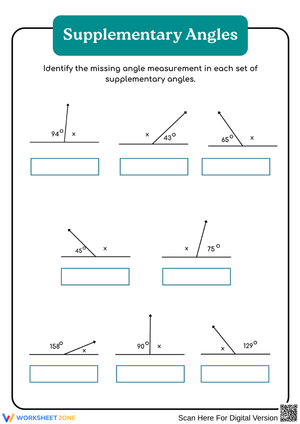
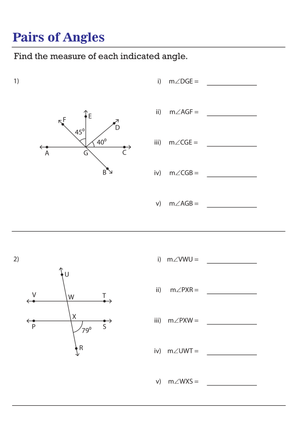
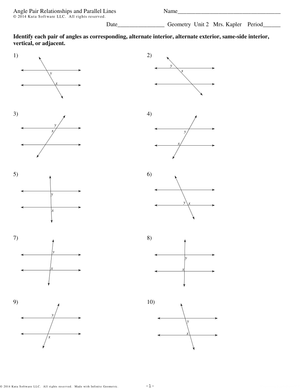
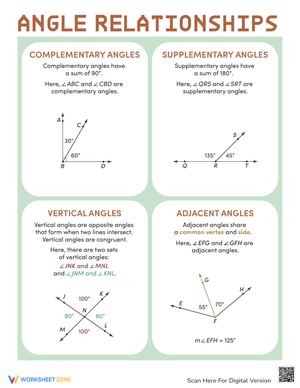
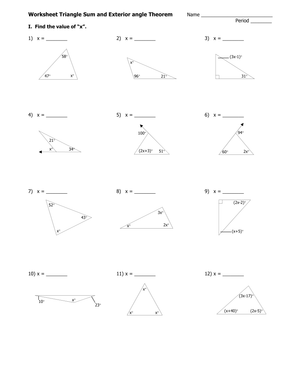
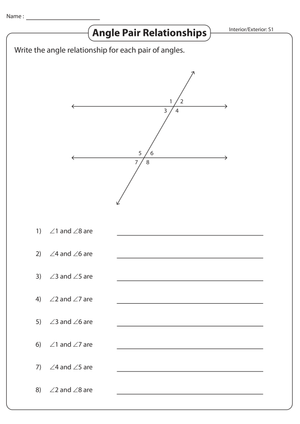
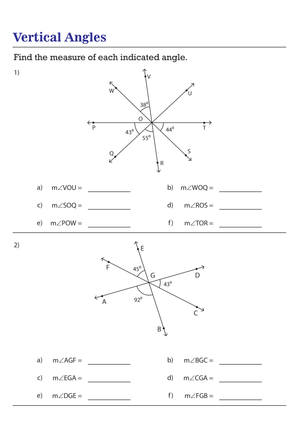
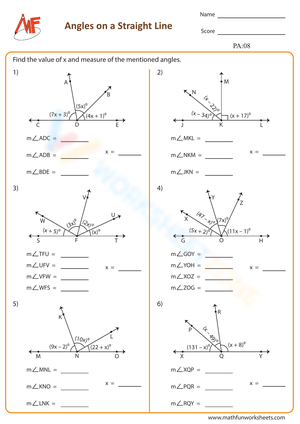
- Solving for unknown angles: Students find missing values in supplementary, complementary, and vertical angle relationships using labeled diagrams and write the equation used to arrive at their answer.
Mistakes Students Make That Teachers Should Anticipate
The most consistent error in sixth-grade angle work is reading the wrong scale on a dual-scale protractor. A student measuring an obtuse angle will often record 40° instead of 140°, selecting the smaller number by habit. The value is right there on the instrument — the student simply has not internalized which scale to use based on which direction the angle opens. Teaching estimation first is the most reliable fix: a student who already knows the angle is clearly obtuse will reject a reading of 40° before writing it down.
Drawing tasks reveal a different problem. When students construct an angle to a given measure, many mark the correct degree point on the arc but then draw the second ray toward the wrong side of the protractor, producing the supplement of the intended angle. Catching this requires students to look at what they drew and verify whether the type matches the target — if the assignment says 60° and the drawn angle is visibly obtuse, something went wrong. That check takes five seconds and prevents a whole category of rework.
Straight angles trip up a surprisingly large share of students, not because of protractor trouble but because many sixth graders do not accept that 180° qualifies as an angle at all. It looks like a line. A useful classroom move is to draw a straight angle beside a line segment and ask what makes them different — the angle has a visible vertex and two rays extending in opposite directions. Once students see that distinction, the classification sticks.
How to Build These Worksheets Into Your Lesson Plans
The strongest entry point is a short classification and estimation block before a protractor appears in the room — two or three class days is usually enough. Students who can look at a diagram and decide whether an angle is acute or obtuse approach measurement with a purpose-built expectation. Teachers who skip this front-loading often spend considerably more time correcting wrong answers that an estimation habit would have flagged on its own.
Once protractor work begins, a measuring worksheet works well as an in-period follow-up to direct instruction — not the next class day, but within the same period while the procedure is fresh. Ten or so minutes of immediate practice lets teachers circulate and catch placement errors before they become habits. Angles worksheets for 6th grade also fit naturally into the first five minutes of the following class as a warm-up, giving students a low-stakes second pass before the unit moves forward.
Drawing and unknown-angle worksheets belong later in the sequence, once measurement feels automatic. These work especially well in math centers, where students rotate through stations with a protractor available at each seat. Because each worksheet targets a single skill, pulling one for a small intervention group is straightforward — no trimming or selecting problems from a longer mixed resource.
Differentiating Across Readiness Levels in the Same Class
Sixth-grade geometry classes routinely hold students who still confuse obtuse and acute alongside students ready for multi-step angle problems. The most practical response is to assign the same worksheet to everyone but set different stopping points. Students who need more repetition work through the classifying and estimating items; students who are ready continue into measurement, drawing, and unknown-angle problems within the same class period.
Students who struggle specifically with protractor placement find the drawing worksheets useful as an entry-level task — each drawing worksheet provides a starting ray, which anchors the protractor center and removes one variable from an already-layered procedure. For students ready for more challenge, the unknown-angle worksheets extend naturally by asking them to write a justification alongside the numeric answer, explaining which angle relationship they applied and why.
When building a differentiated rotation around angles worksheets for 6th grade, color-coding which sections each group completes — rather than printing separate resources — keeps the whole class working on a shared topic so whole-group discussion remains possible at the end of the period.
Frequently Asked Questions
In what order should I teach the angle skills covered in this set?
Start with classification and estimation. Students should be able to name an angle type and approximate its size before they pick up a protractor. Measurement comes next, followed by drawing, then missing-angle problem solving. Each stage builds the conceptual grounding the next stage needs. Skipping ahead to measurement before students have a reliable sense of angle types is the most common pacing misstep in sixth-grade geometry, and it shows up immediately in protractor readings that produce implausible values no one catches.
My students keep reading the wrong protractor scale. What actually helps?
Require an estimate before every measurement, every time — not as an optional step but as the first recorded answer on each problem. When a student writes "this angle looks like about 120°" and then measures 60°, the mismatch flags itself before the wrong answer gets handed in. A parallel technique: ask students to determine which side of the 90° mark their angle falls on, then select the scale number on that side. That single rule eliminates most dual-scale errors without requiring students to memorize which scale is inner or outer.
Can these worksheets support students who missed initial instruction?
Each worksheet is self-contained enough for independent reteach without requiring a full re-teaching of the original lesson. The classification and estimation worksheets are especially accessible for students returning from an absence — they can work through the visual identification tasks on their own and then rejoin the class for guided protractor practice. If you have the angles worksheets for 6th grade stored as a class set, pulling one or two worksheets for a makeup session or pull-out group takes under a minute.













 Interactive Worksheet Maker
 Quiz Maker
 Word Search Maker
 Crossword Puzzle Maker
 Word Scramble Generator
 Sentence Scramble Generator
 Handwriting Worksheet Generator
 Name Tracing Generator
 Fill In The Blank Generator