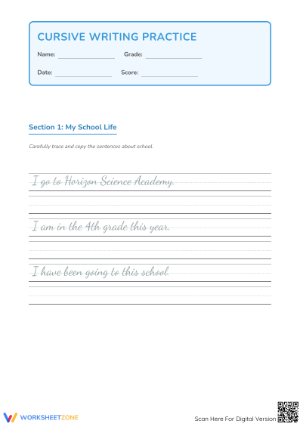
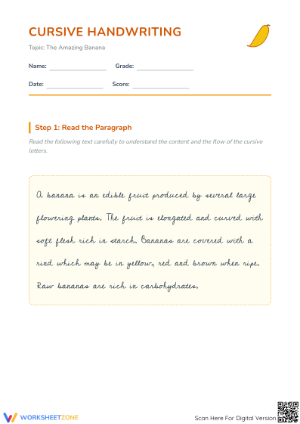
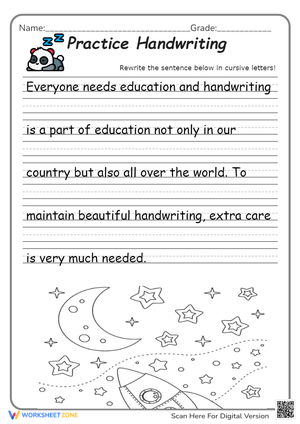
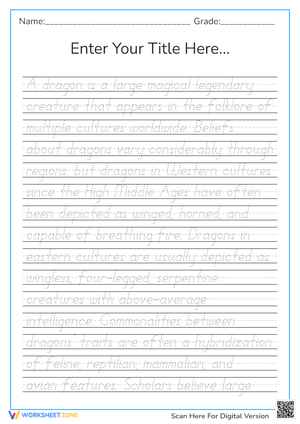
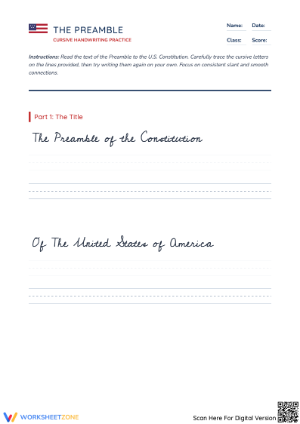
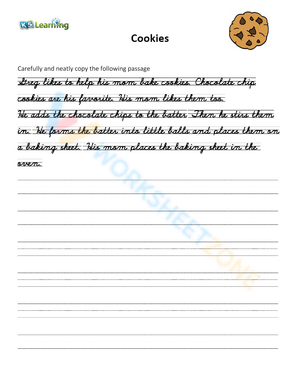
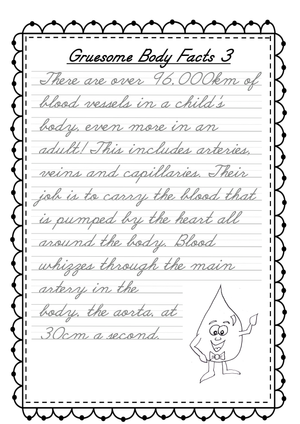
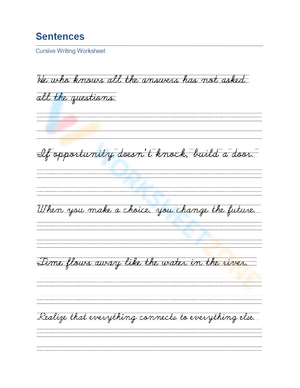
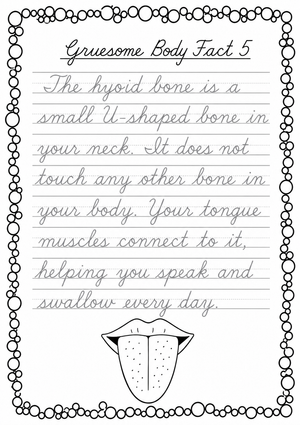
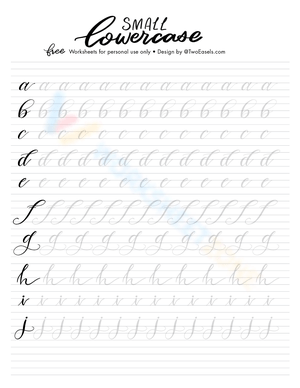
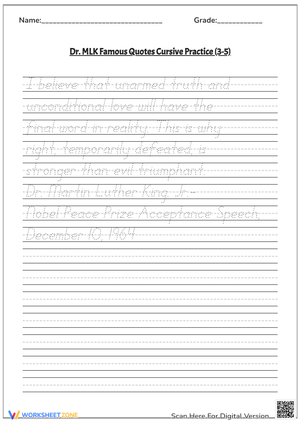
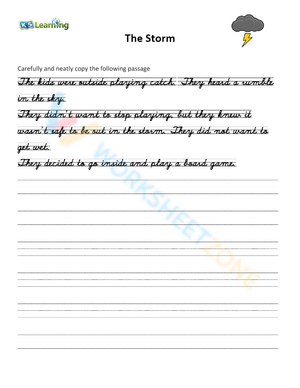
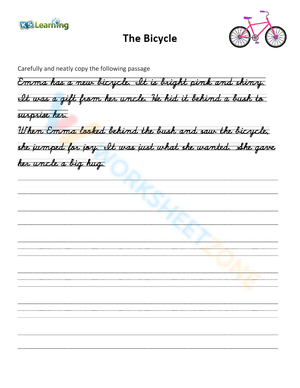
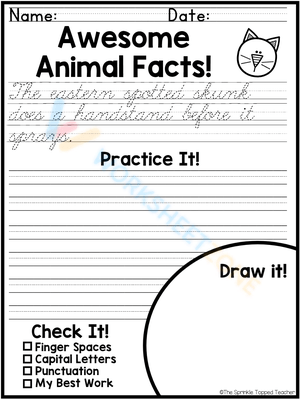
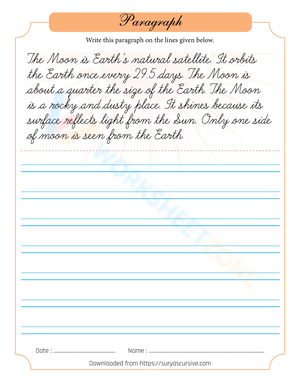
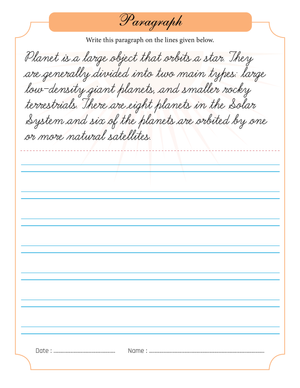
These 4th grade cursive handwriting printable worksheets resources target the specific gap that appears in most fourth-grade classrooms: students who were introduced to cursive in third grade but haven't yet developed the fluency to write without thinking about each individual stroke. The set covers letter joins, slant consistency, spacing, and sentence-level practice — the full range of skills fourth graders need before written output demands outpace their ability to keep up.
What Each Worksheet Targets
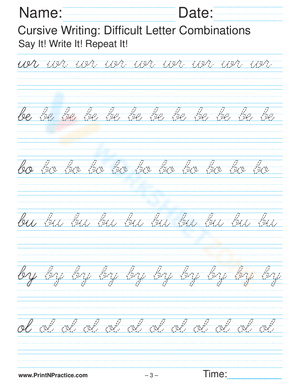
The most useful thing to understand about this set is that it focuses on the connection layer of cursive, not just letter formation in isolation. By 4th grade, tracing individual letters is rarely where the breakdown happens. The real problem is joins — particularly the oval-exit letters. When students write a lowercase b, o, v, or w, the exit stroke requires the pencil to reverse direction from where it entered, and that reversal is where fluency collapses. Each worksheet in the set gives these joins explicit, targeted practice rather than distributing them evenly across all letters as though every join is equally demanding.
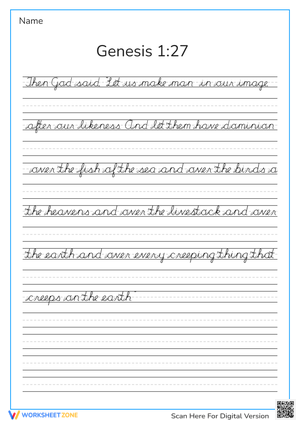
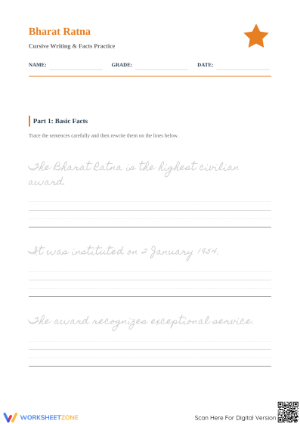
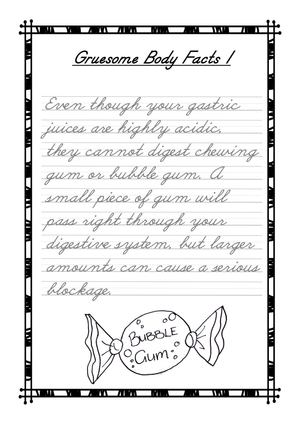
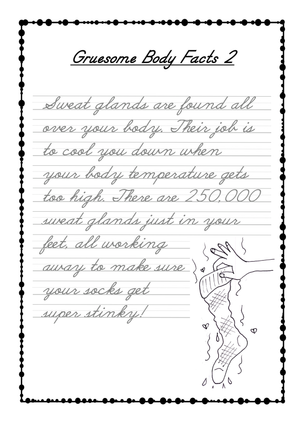
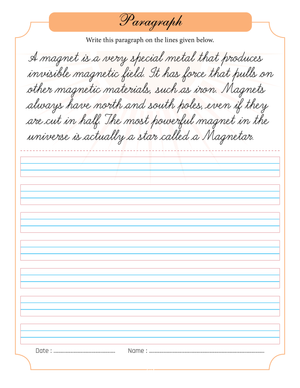
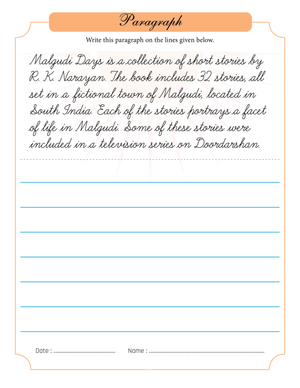
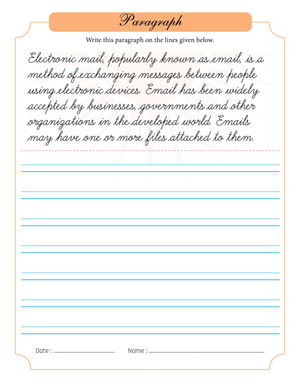
Beyond joins, the worksheets move students toward sentence-level and short-paragraph work. The copying exercises draw from 4th-grade science and social studies content — not generic filler text — so practice carries dual reinforcement. Spacing between words gets its own dedicated attention through baseline and midline guidelines that help students who crowd letters together or leave gaps wide enough to park a pencil.
Specific skills across the set include:
- Oval-exit letter connections — the b, o, v, and w families — with join-specific repetition before those letters appear inside words
- Uppercase letter formation, with emphasis on the letters students most often abandon for print versions: Q, Z, G, and F
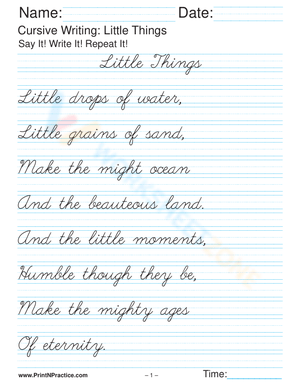
- Consistent slant, using angled guide lines that train the eye before the visual support is removed
- Sentence and paragraph copying using grade-level vocabulary rather than simplified text
- Timed fluency drills formatted for teacher administration, with space to record date and score across multiple sessions
Errors Students Make That These Worksheets Help You Catch
The most persistent error in fourth-grade cursive is slant collapse under speed. When students rush, letters snap upright — or tip past vertical — and the result looks like a seismograph reading rather than script. The slant guide lines on several worksheets make this visible to students during practice rather than afterward, which is where correction actually sticks.
The second recurring error is the floating loop. Students write a lowercase l or h with a loop that drifts above the midline, then can't close it cleanly on the descent. The worksheets address this by isolating loop letters before folding them into connected words. A related problem: the overhead-approach letters — r, s, and f — require a specific entry movement that most students handle by simply lifting the pencil instead. That pencil lift is the most common reason fourth-grade cursive looks like spaced-out print rather than connected script, and it's the kind of habit that goes unnoticed until you look at a week's worth of student work side by side.
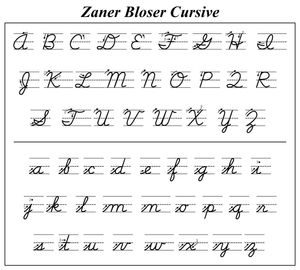
One distinction worth knowing: students who learned D'Nealian print in earlier grades transfer differently than Zaner-Bloser print writers. D'Nealian students already carry slanted letter habits and some built-in entry strokes, so their errors cluster around letter-size inconsistency rather than the slant shift. Zaner-Bloser print writers more often struggle with the slant itself. Knowing which background your students bring helps you direct them to the right worksheets in this set first.
How to Build These Worksheets Into Your Lesson Plans
Ten to twelve minutes is the practical ceiling for productive handwriting work in 4th grade before hand fatigue, mental drift, and rushing begin to undo what the early minutes built. The 4th grade cursive handwriting printable worksheets resources fit cleanly into three spots most fourth-grade teachers already have carved out: the eight-minute morning routine before whole-class instruction starts, the transition block after lunch when students need a quieting task that doesn't require fresh cognitive energy, and the Friday review window when you want something structured but low-stakes.
For the fluency drills specifically, run them every other Friday across a grading period and keep a simple chart where students record their own words-per-minute. Fourth graders respond well to visible personal progress — not comparison against classmates, but comparison against their own previous score. That habit of self-monitoring carries forward well into writing stamina work later in the year.
One sequencing note from classroom use: don't move to the paragraph-copying worksheets until students have had at least three or four focused sessions on the oval-exit joins. Moving to sentences too early embeds the connection errors rather than correcting them. The letter-level and word-level worksheets are the ones that pay forward most directly into sentence fluency.
Standard Alignment
The Common Core State Standards don't include explicit handwriting benchmarks past 3rd grade, but state-level standards fill that gap in a growing number of places. More than twenty states have passed legislation requiring cursive instruction, with several mandating measurable proficiency by the end of 4th grade. Alabama's Course of Study for English Language Arts specifies legible cursive writing as a standalone Grade 4 objective. California's updated ELA/ELD Framework reintroduces handwriting expectations that had been dropped in earlier revisions. Louisiana, Arkansas, and Georgia similarly include cursive within their elementary ELA standards at the 4th-grade level.
Within the writing production strand of most state ELA frameworks, the underlying expectation is that students write legibly enough that readers can engage with the content — not that they demonstrate penmanship as a separate subject. Fourth grade is the first year when written output volume makes handwriting automaticity genuinely consequential: students drafting multi-paragraph responses by hand need a cursive hand that keeps pace with their thinking.
Adjusting the Worksheets for a Range of Learners
For students who are still shaky on letter formation — including students who transfer in from schools where cursive was never introduced — start with the letter-family worksheets that group letters by entry stroke. The continuous-entry letters (a, c, d, g, q) form a natural first cluster, followed by the overhead-entry letters (r, s, f, b). Resequencing the set this way gives struggling writers a logical ramp-up without placing them on a separate track that signals they're behind.
For students who are already fairly fluid, move them directly to the paragraph-level and timed worksheets. A useful push-up task: have those students write the same paragraph twice in one session — once at their normal pace, once as fast as they can while keeping it legible — and compare the two. The gap between those two attempts shows exactly where fluency breaks under pressure, which is more diagnostic than any rubric check.
Students with fine motor challenges benefit from the worksheets with wider baseline spacing. Occupational therapists who consult in inclusive settings generally want to see consistent letter size and baseline adherence before worrying about slant — knowing that priority order lets you focus feedback where it matters most for those students, rather than correcting everything at once.
Frequently Asked Questions
Do these worksheets work with both Zaner-Bloser and D'Nealian letter styles?
The join practice, sentence copying, and fluency drills transfer across both styles. Letter formation models follow a traditional slant style closer to Zaner-Bloser, so if your school uses D'Nealian curriculum materials, the join-practice and sentence-level worksheets work well as supplemental practice rather than as your primary formation reference. The timed fluency drills are style-neutral and work regardless of which program your school follows.
My students learned cursive in 3rd grade but it looks like they forgot everything over summer. Where do I start?
Start with the oval-exit letter worksheets — the b, o, v, and w joins — along with the uppercase review worksheet, before anything else. What looks like forgotten cursive is almost always a letter-connection problem rather than true forgetting. Students retain the individual letter shapes over a summer but lose the joins. Two or three focused sessions on those joins typically restores legible writing far faster than going back to isolated letter formation from scratch. The 4th grade cursive handwriting printable worksheets set organizes the join-focused worksheets so they're easy to locate and assign without working through the full sequence first.
Can these worksheets function as assessment tools, not just practice?
The timed fluency drills work as formative assessments when administered consistently. Time the same paragraph at the beginning of a unit and again four weeks later; the words-per-minute gain, combined with a legibility check against a simple rubric, gives you the documentation most administrators and parents expect when cursive proficiency is a graded standard. Several 4th grade cursive handwriting printable worksheets resources in the set include a teacher-facing data box directly on the worksheet for recording date, elapsed time, and a legibility rating alongside the student's work.
How should I handle students who revert to print when they're writing quickly?
Reversion to print under time pressure is one of the most common patterns in 4th grade, and it usually signals that cursive hasn't reached automaticity yet — not that the student is being careless. The fluency drills address this directly by building speed gradually within a timed structure. In the short term, it helps to have those students practice writing their weekly spelling words entirely in cursive before any spelling test, since the repetition on familiar words accelerates the automaticity that slows down under pressure on unfamiliar text.