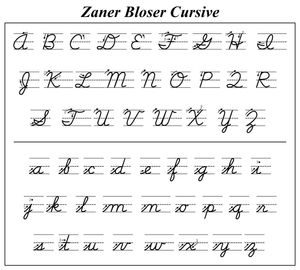
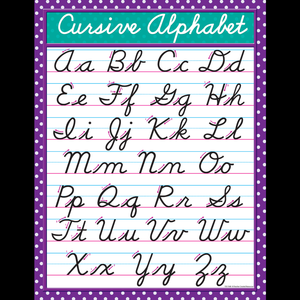
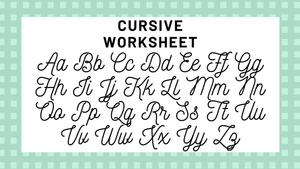
A 4th grade cursive letter chart gives you a single reference that students can glance at while they write, which frees you to work with small groups instead of re-teaching every connection at the board. It also gives students who changed districts or missed early instruction a fair way to catch up without feeling singled out in front of peers.
By this grade, handwriting practice competes with longer writing assignments, book responses, and content-area notes, so a chart works best as a support tool rather than a stand-alone lesson. When students can check the loop on a lowercase b or the entry stroke on a capital G on their own, cursive review folds into the writing you already assign instead of becoming one more thing to schedule. That efficiency is what makes a reference chart practical in a packed fourth grade day.
Where Cursive Instruction Stands Today
Cursive nearly disappeared from many classrooms after it was left out of widely adopted standards around 2010, but state requirements have swung back over the last decade. That reversal is why so many fourth grade teachers now find themselves reviewing a skill their students may have covered unevenly, depending on when and where they attended earlier grades.
According to EdWeek, at least 21 states now require some form of cursive handwriting instruction, up from 14 states in 2016 and 19 states in the 2018-2019 school year. A January 2026 EdWeek Research Center survey of 1,163 early educators found 70 percent reported declining student fine motor skills, a trend pushing structured letter-formation practice back into upper elementary classrooms.
Classroom Implementation
Put the chart to work in three settings: a large wall display for whole-class modeling, a desk-sized copy for individual reference, and a laminated version at a handwriting station. The wall copy anchors your think-alouds when you model a letter; the desk copy lets students self-correct during independent writing without raising a hand; and the station copy keeps a rotation group productive while you pull a small group.
Start each cursive block by naming the stroke family you are targeting that day, then have students trace, copy, and write from memory in that order. Keep the chart visible during authentic writing too, such as journal entries or exit tickets, so students transfer the shapes into real work instead of only practicing them in isolation. Transfer is the step most routines skip, and it is the one that turns practice into a habit.
- Model two or three letters from one stroke family, not the whole alphabet at once
- Have students underline their best-formed letter in each line to build self-assessment
- Use the chart for quick peer checks, where partners compare a word against the reference
Common Fourth Grade Cursive Trouble Spots
Knowing where fourth graders stumble helps you point them to the right part of the chart quickly. The letters themselves are rarely the whole problem by this age; spacing, slant consistency, and the joins between letters cause most of the messiness teachers see in student writing, especially once assignments get longer.
- Connections after o, v, w, and b, where the exit stroke sits high
- Uppercase letters like Q, G, and F that look nothing like their print forms
- Inconsistent slant when students speed up during longer assignments
- Uneven spacing between words, which hurts legibility more than any single letter shape
Point students to the connection examples on the chart for these cases rather than asking them to reform whole letters. A targeted fix on one join often cleans up an entire line of writing and gives students a quick, visible win.
Frequently Asked Questions
1. Is cursive still required to be taught in 4th grade in most states?
Requirements vary by state. At least 21 states now mandate some cursive instruction, but the specific grade is usually set locally, and many districts concentrate formal teaching in second or third grade. By fourth grade, most teachers are reviewing and reinforcing rather than introducing cursive, which is exactly where a reference chart earns its place.
2. What is the best way to use a cursive letter chart for review versus first-time instruction?
For review, use the chart as a quick self-check students consult only when a connection breaks down. For first-time instruction, model directly from it, one stroke family at a time, and pair it with tracing before independent writing. The same chart supports both jobs when the task around it changes.
3. How much daily time should 4th grade teachers spend on cursive practice?
Short and consistent beats long and occasional. Five to ten minutes a day is enough to build fluency at this stage, especially when practice is tied to writing students already do, such as journals, exit tickets, or copying the morning message.
4. Does teaching cursive in 4th grade improve reading or spelling skills?
Research reviewed by EdWeek links cursive handwriting instruction to gains in legibility, writing length, spelling accuracy, and some reading skills. The connection is strongest when handwriting practice is regular and tied to real writing rather than isolated drills.