


























Views
Downloads

Cursive Paragraph Practice | Grade 4-5 Printable
Paste this activity's link or code into your existing LMS (Google Classroom, Canvas, Teams, Schoology, Moodle, etc.).
Students can open and work on the activity right away, with no student login required.
You'll still be able to track student progress and results from your teacher account.
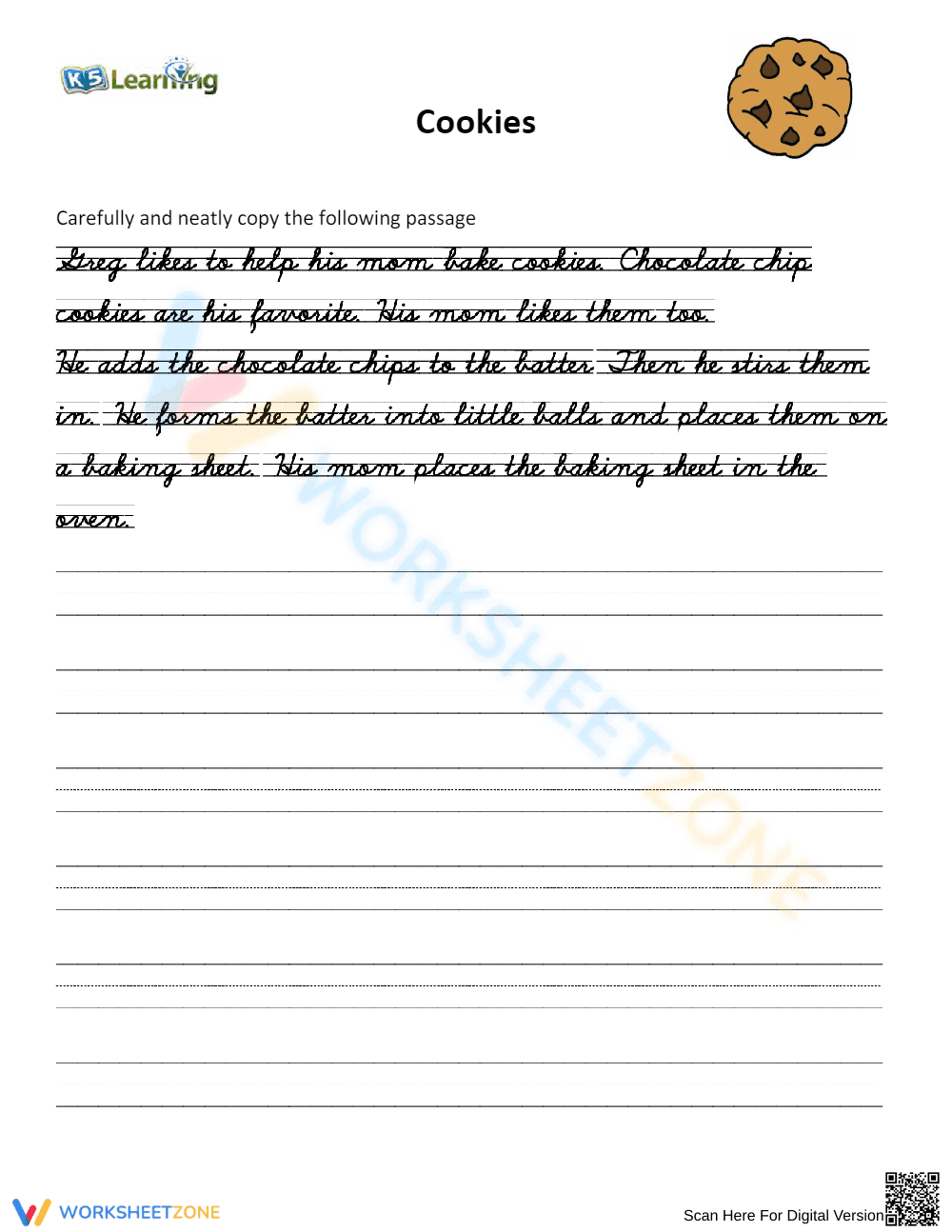
This Grade 4 and Grade 5 cursive handwriting worksheet provides a structured environment for students to refine their penmanship through paragraph transcription. By copying a cohesive narrative about baking cookies, learners transition from isolated letter formation to fluid, connected writing. This exercise strengthens fine motor control and reading comprehension simultaneously.
At a Glance
- Grade: 4-5 · Subject: Handwriting
- Standard:
CCSS.ELA-LITERACY.L.4.1— Demonstrate command of the conventions of standard English when writing- Skill Focus: Cursive Paragraph Transcription
- Format: 1 page · 1 paragraph task · No answer key required · PDF
- Best For: Morning work or independent literacy centers
- Time: 15–20 minutes
The worksheet features a single-page layout containing a 7-sentence paragraph written in clear, traditional cursive script. Below the model text, students are provided with ample lined space, including midline dashes to guide letter height and slant. The "Cookies" theme offers a high-interest, relatable context that encourages students to focus on the aesthetic quality of their writing without the cognitive load of generating original content.
The zero-prep design allows for immediate classroom implementation. First, print the single-page PDF (30 seconds). Second, distribute the sheets to students during a transition period or as a quiet-time activity (1 minute). Third, review the completed work by checking for proper letter connections and consistent slant (under 1 minute per student). This workflow requires less than two minutes of total teacher preparation time, making it an ideal resource for substitute folders or unexpected schedule gaps.
This resource aligns with CCSS.ELA-LITERACY.L.4.1, which requires students to demonstrate command of the conventions of standard English grammar and usage when writing. While cursive is often a state-specific requirement, this worksheet supports the broader goal of legible, fluent communication. Both standard codes can be copied directly into lesson plans, IEP goals, or district curriculum mapping tools.
Use this worksheet during the independent practice phase of a handwriting lesson. After a brief demonstration of specific letter joins, such as the 'b' to 'a' in "batter," assign the paragraph for quiet work. It also serves as an effective formative assessment tool; observe students' grip and posture as they work to identify those needing additional ergonomic support. Expect completion within 15 to 20 minutes depending on individual student speed.
This resource is designed for upper elementary students in Grades 4 and 5 who have already mastered individual cursive letters and are ready for connected text. It is particularly helpful for students requiring extra fine-motor intervention or those who benefit from the calming rhythm of transcription. Pair this with a cursive anchor chart or a short reading passage about kitchen safety to create a thematic literacy block.
According to the RAND AIRS 2024 report, the physical act of handwriting, particularly in cursive, engages neural pathways associated with memory and language processing more effectively than typing alone. This Grade 4-5 worksheet facilitates these cognitive benefits by requiring students to process a full paragraph of text while maintaining the discipline of cursive conventions. By focusing on CCSS.ELA-LITERACY.L.4.1, the activity ensures that students are not merely drawing shapes but are internalizing the structural flow of English sentences. Research from Fisher & Frey (2014) emphasizes that purposeful transcription tasks serve as a bridge between decoding and fluent production. This printable resource provides the necessary scaffolding for students to achieve legibility and speed, which are critical components of academic success in the middle grades. The 15-minute task duration aligns with best practices for sustained attention in upper elementary learners.


