


























Views
Downloads
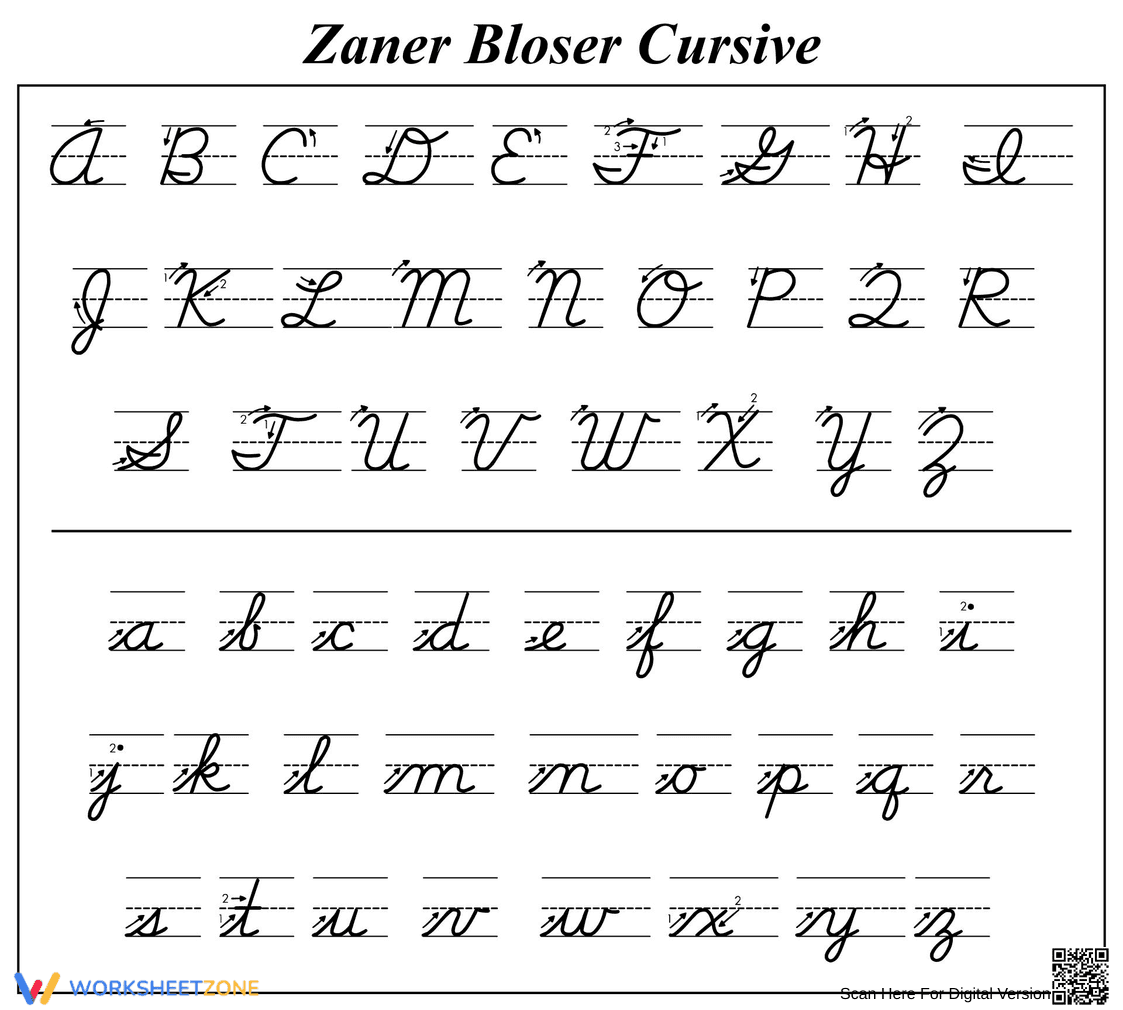

Zaner-Bloser Cursive Alphabet Chart | Essential Grade 3-4
Paste this activity's link or code into your existing LMS (Google Classroom, Canvas, Teams, Schoology, Moodle, etc.).
Students can open and work on the activity right away, with no student login required.
You'll still be able to track student progress and results from your teacher account.
This Grade 3 and 4 cursive alphabet chart provides a clear, visual reference for students learning the Zaner-Bloser handwriting style. By offering precise models for both uppercase and lowercase letters, it ensures students develop the muscle memory and stroke sequence necessary for fluid, legible penmanship. It is an ideal tool for daily writing support.
At a Glance
- Grade: 3-4 · Subject: English Handwriting
- Standard:
CCSS.ELA-LITERACY.L.3.1.j— Write legibly in cursive or joined italics- Skill Focus: Cursive letter formation
- Format: 1 page · 52 letters · Reference chart · PDF
- Best For: Desk reference or writing center support
- Time: 5–10 minutes
What's Inside
This single-page PDF features 52 distinct letter models, including the full A-Z alphabet in both uppercase and lowercase cursive. Each letter includes directional arrows and numbered stroke sequences to guide student hands. The layout uses standard three-line handwriting guides (top, middle, bottom) to demonstrate proper letter height and descender placement.
Zero-Prep Workflow
- Print: Select the "Fit to Page" option and print enough copies for your class in under 1 minute.
- Distribute: Hand out the charts or tape them to student desks for immediate use in 30 seconds.
- Review: Spend 30 seconds pointing out specific tricky connections like 'br' or 'os' before students begin their independent writing tasks.
Standards Alignment
The primary standard addressed is CCSS.ELA-LITERACY.L.3.1.j, which requires students to write legibly in cursive or joined italics. This chart provides the foundational visual scaffolding needed to meet this requirement. Both standard codes can be copied directly into lesson plans, IEP goals, or district curriculum mapping tools.
How to Use It
Use this chart as a desk reference during the "during" phase of writing instruction, allowing students to self-correct their letter forms without interrupting the flow of their composition. For formative assessment, observe students as they transition from the chart to their paper; if a student frequently checks the chart for the letter 'f', provide targeted tracing practice for that specific character. Completion time for a full alphabet review is 10 minutes.
Who It's For
This resource is designed for third and fourth-grade students transitioning from manuscript to cursive. It is particularly helpful for English Language Learners and students with dysgraphia who benefit from constant visual modeling. Pair this chart with a cursive tracing passage or a laminated practice mat for a comprehensive handwriting station.
Handwriting instruction remains a critical component of literacy development, as noted in the RAND AIRS 2024 report, which emphasizes that fluent letter formation reduces cognitive load during the drafting process. This Zaner-Bloser Cursive Alphabet Chart aligns with CCSS.ELA-LITERACY.L.3.1.j by providing the explicit visual models required for students to write legibly in joined italics. Research from Fisher & Frey (2014) suggests that environmental print and accessible reference tools like this chart support the gradual release of responsibility, moving students from guided observation to independent mastery. By utilizing the 52 uppercase and lowercase models provided, educators can ensure that students develop the fine motor precision necessary for academic success. This printable resource serves as a high-leverage instructional aid that bridges the gap between direct handwriting instruction and functional writing applications in the upper elementary classroom.


