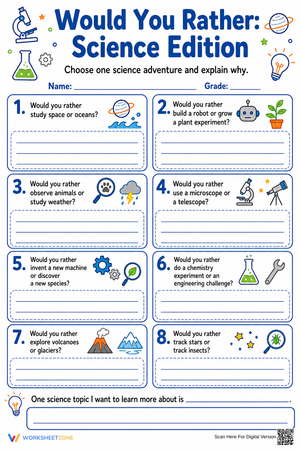
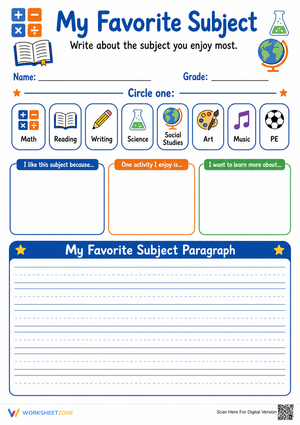
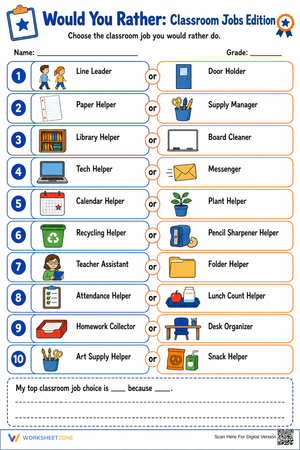
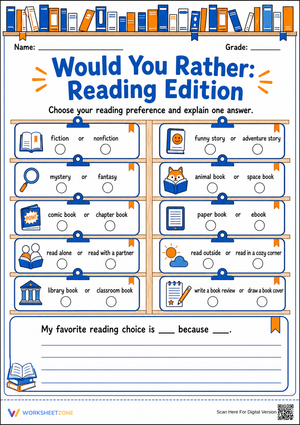
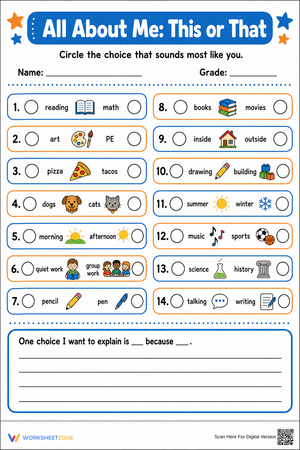
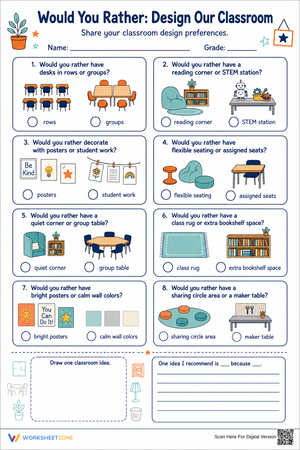
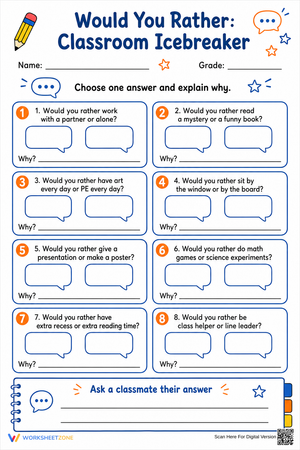
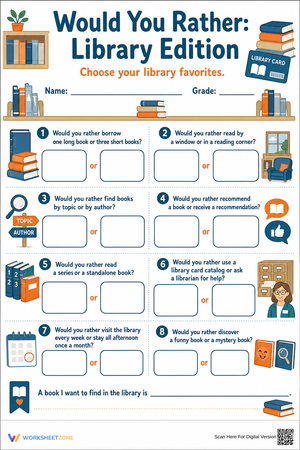
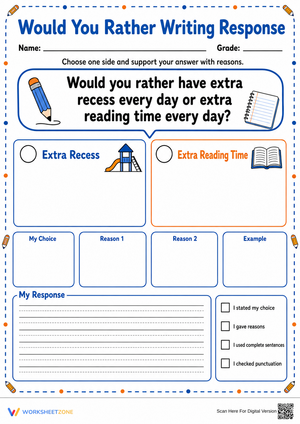
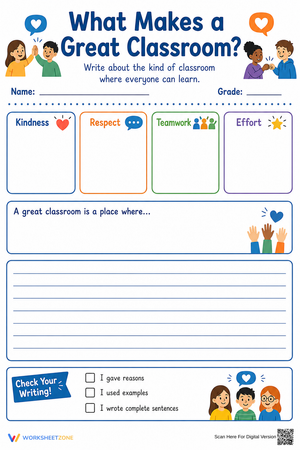
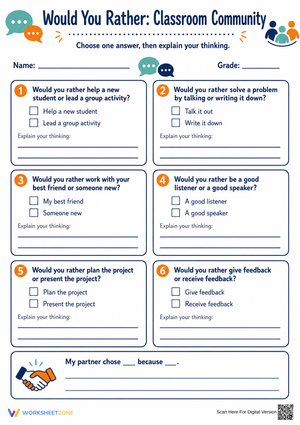
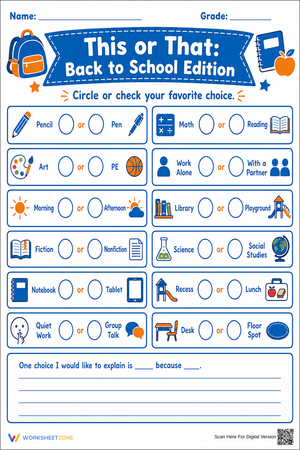
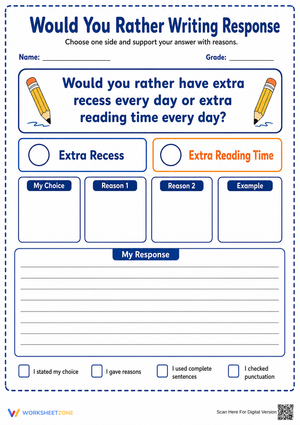
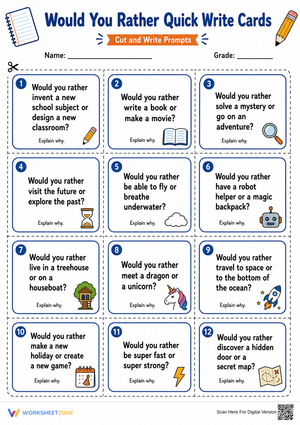
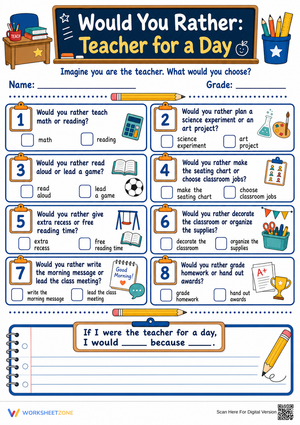
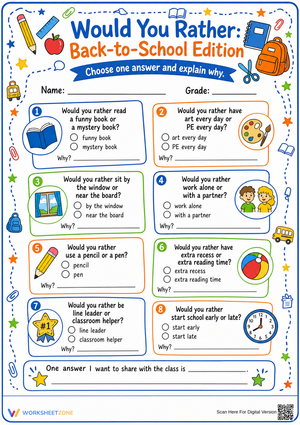
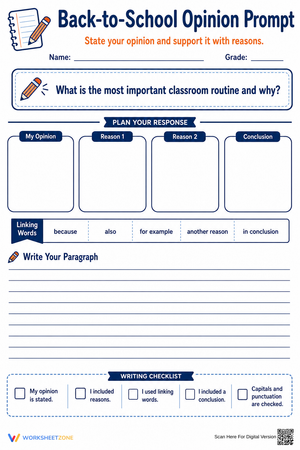
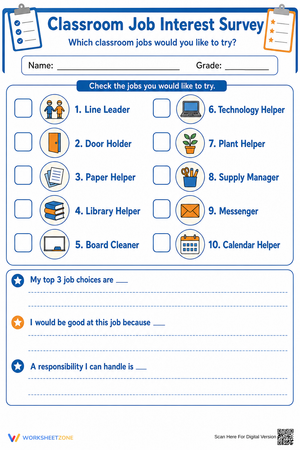
These opinion writing worksheets for 4th grade give teachers a structured progression from a single opinion statement through a multi-paragraph argument — a jump that fourth graders need real support to make, since CCSS W.4.1 raises the bar considerably from what students handled in third grade. Each worksheet targets one component of that structure, so teachers can deploy the set across a unit rather than front-loading every skill on the same day.
What Students Practice Across the Set
The worksheets walk students through the full architecture of a written argument. That starts with the opinion statement itself — not just having an opinion, but writing one that is debatable rather than factual. From there, students move to generating reasons, gathering and evaluating evidence, and writing conclusions that do something different from the introduction rather than restating it word for word.
The OREO framework (Opinion, Reason, Evidence, Opinion) anchors several worksheets in the set. Students who have encountered OREO as a paragraph tool in third grade now apply it at the essay level: an opening opinion paragraph, two or three body paragraphs built around distinct reasons and supporting facts, and a closing paragraph that circles back to the central claim. Dedicated boxes for each OREO element prevent students from merging their reasons and evidence into one undifferentiated block — a move that shows up in the first round of drafts far more often than teachers expect until they grade that stack.
- Distinguishing a debatable opinion from a statement of fact
- Writing reasons that explain why rather than restating the claim in different words
- Identifying textual evidence versus personal feeling or testimony
- Selecting and using linking words: for instance, furthermore, specifically, consequently
- Drafting introductory and concluding paragraphs that serve different structural purposes
Frequent Student Errors Worth Watching For
The most common problem at this grade is circular reasoning — students write a reason that is just the opinion restated in different words. Given the prompt "Should schools have longer recess?", a student will write: We should have longer recess because recess needs to be longer. They genuinely do not notice that they have gone nowhere. This is not a comprehension failure; it is a metacognitive gap. Students don't yet have an internal test for whether a reason actually explains anything, and the worksheets prompt them to ask "why does that matter?" before moving on to evidence.
A second pattern shows up consistently in the evidence sections: students cite what a friend thinks, what their parents said, or what "everyone knows" as if those constitute facts. Teaching the difference between personal testimony and verifiable information — and pairing a prompt with a short article to mine for actual statistics — makes that distinction far clearer than any direct-instruction explanation alone.
Conclusions are a third trouble spot. Most fourth graders, left to their own devices, copy their introduction nearly verbatim. The conclusion worksheet addresses this by separating the box visually from the introduction and prompting students to check whether they have added something new — a call to action, a broader implication — rather than simply repeating the opening paragraph.
Standard Alignment
These worksheets address CCSS.ELA-LITERACY.W.4.1 across all four sub-strands. W.4.1a covers introducing a topic, stating an opinion, and building an organizational structure — the graphic organizer worksheets handle that directly. W.4.1b asks students to support reasons with facts and details, which the evidence-identification activities address. W.4.1c targets linking words and phrases, covered through a dedicated word bank and several rewriting exercises. W.4.1d requires a concluding statement tied to the stated opinion, addressed in the conclusion-writing worksheet.
The developmental placement matters here. Third grade (W.3.1) asks students to state an opinion, list reasons, and use linking words. Fourth grade layers in the requirement to group related ideas into an organized structure — which is the real cognitive leap. The shift is from a loosely connected list of reasons to a built argument, and that is precisely the transition these worksheets train.
How to Build These Worksheets Into Your Writing Unit
Used as a complete unit arc, the opinion writing worksheets for 4th grade move students from a single-sentence opinion to a fully structured multi-paragraph argument over two or three weeks. The most effective opening move is a whole-class run-through before sending students off independently: project the opinion-statement worksheet and fill it out together using a low-stakes prompt. Whether the cafeteria should serve pizza every day works reliably for most fourth-grade groups — investment is immediate, disagreement is guaranteed, and the debate structure of the exercise becomes obvious without any explanation.
The jury-sorting activity earns its twenty minutes. Give students the evidence-evaluation worksheet pre-filled with a mix of fact-based statements and purely emotional ones — statistics about exercise and attention span alongside "my best friend agrees with me" and "it just feels right." Students cut the strips apart and sort them into what would hold up in court (verifiable) versus what would be thrown out (feeling-based). Having to defend their sorting decisions to a partner sharpens their ability to evaluate their own evidence in later drafts more than a checklist approach does on its own.
Individual worksheets on linking words fit naturally into the ten-minute independent practice window after a grammar-focused mini-lesson. The Monday warm-up slot works well for an opinion-statement worksheet at the start of a new unit — five minutes of focused practice before the week's direct instruction grounds students in what they are working toward before the lesson begins.
Adjusting These Worksheets for a Range of Writers
For students still building sentence fluency, the graphic organizer worksheets reduce the writing demand without reducing the thinking demand. A student who struggles to write three connected sentences about a reason can still sort evidence strips, mark which facts are strongest, and articulate their thinking orally. Pair those students with a partner during the drafting phase so oral rehearsal happens before writing does — the structure is still theirs, just spoken first.
Strong writers who move through the opinion writing worksheets for 4th grade quickly benefit from an added layer: ask them to draft a counter-argument paragraph before the conclusion. The standard doesn't require it at this grade, but fourth graders who can name the opposing position and address it with evidence are well ahead of the curve by fifth grade, when counter-argument enters the formal CCSS expectations. The worksheets leave room in the body section to add this paragraph without redesigning the structure.
For English language learners, the linking word bank on each worksheet is especially useful, but pre-teaching three or four of those phrases in context before the lesson makes a noticeable difference. Pull a sentence from a mentor text and substitute different transition words in front of the class — that shows function more clearly than a definition does, and students remember the examples when they sit down to draft.
Frequently Asked Questions
How do Grade 4 opinion writing expectations differ from what students did in Grade 3?
Third grade asks students to state an opinion, list reasons, and use a few linking words. Fourth grade requires something structurally different: students must now group related ideas into an organized argument rather than a list, and they must support their reasons with facts and details rather than restatements of personal feeling. The opinion writing worksheets for 4th grade address that structural leap directly, walking students through the difference between a paragraph of connected ideas and a bulleted list reformatted as an essay.
What transition words are most useful to teach at this grade level?
The most productive phrases for fourth graders are ones that signal purpose and addition rather than simple sequence. For instance and specifically teach students to flag that evidence is coming. Furthermore and in addition help them stack reasons without repeating themselves. In order to and as a result are worth introducing once students are comfortable with the simpler connectors, since they require articulating cause-and-effect relationships — which is where argument writing gets genuinely interesting. Keeping the word bank directly on the worksheet lets students focus on argument structure rather than vocabulary retrieval during drafting.
How can I help students find factual evidence when the prompt doesn't come with a provided text?
Supply a curated short article or fact sheet alongside the prompt rather than asking students to research independently. At this age, open-ended research pulls cognitive attention away from the argument-building task, and students typically return with loosely related information they aren't sure how to use. A focused handout with four or five relevant facts gives students enough material to evaluate and select from without overwhelming them. The evidence-gathering worksheet asks students to record two or three facts and mark which one they'll actually use — which is itself a judgment skill worth practicing explicitly rather than assuming students can make that call on their own.
Can these worksheets serve as formative assessment rather than just practice?
Each worksheet stands on its own as a formative check. The opinion-statement worksheet reveals whether a student can identify a genuinely debatable claim. The evidence-sorting activity shows whether they can distinguish factual support from personal testimony. Used across a unit, the set gives a teacher a running record of where each student's argument writing is developing and where it is stalling — which is more diagnostic than a single end-of-unit essay score.












 Interactive Worksheet Maker
 Quiz Maker
 Word Search Maker
 Crossword Puzzle Maker
 Word Scramble Generator
 Sentence Scramble Generator
 Handwriting Worksheet Generator
 Name Tracing Generator
 Fill In The Blank Generator




 BACK TOSCHOOL