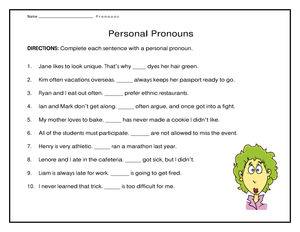
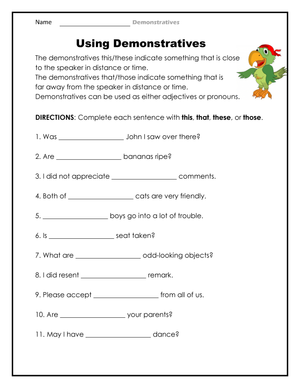
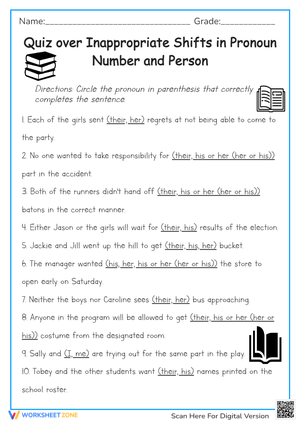
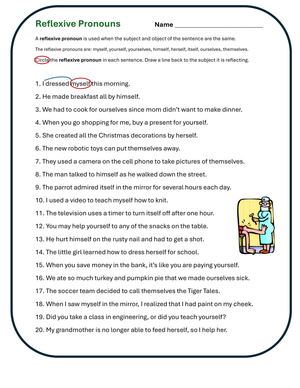
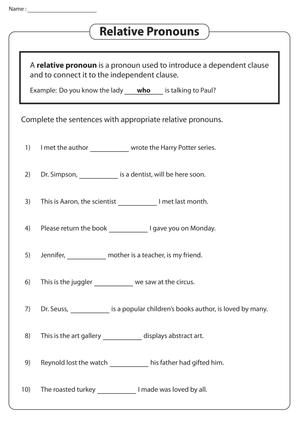
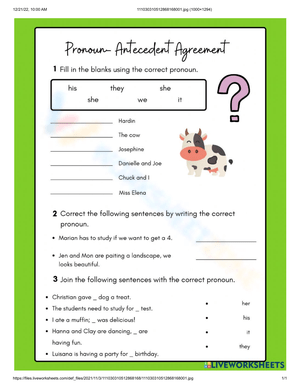
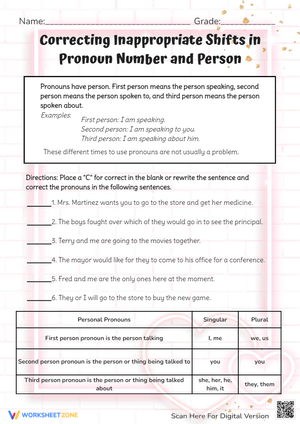
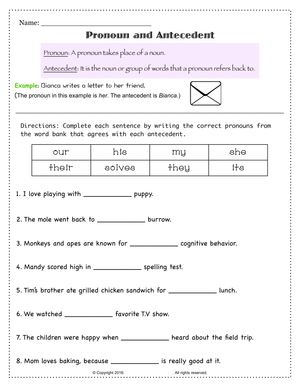
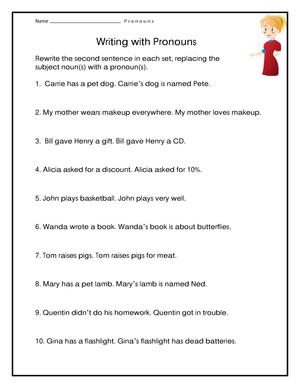
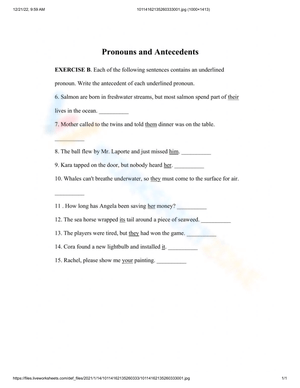
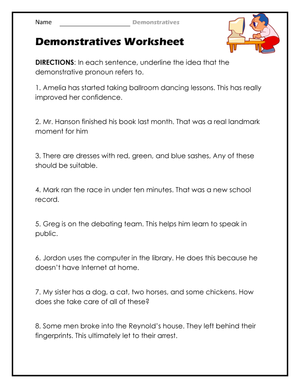
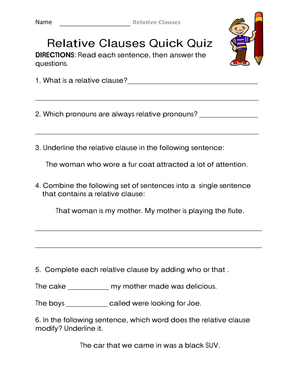
These 4th grade pronouns and antecedents pdf worksheets give teachers a structured set of exercises for one of the grammar skills fourth graders get wrong most often — not identifying a pronoun on a word list, but tracking which noun it actually replaces when sentences get complicated. Each worksheet targets a specific layer of the skill, moving from close-referent examples to sentences where the antecedent sits two clauses back from the pronoun.
Where Pronoun Agreement Actually Breaks Down in Student Writing
The error teachers see most consistently is the ambiguous antecedent. Students write sentences like "Mark and Leo went to the store, and he bought a snack," and they genuinely do not notice the problem — the sentence sounds right to a nine-year-old because the writer already knows who "he" is. The confusion belongs entirely to the reader, which means students need repeated practice seeing their own sentences from outside their own perspective.
Collective nouns create a separate category of difficulty. When a student writes about the school team or the whole class, they will frequently default to "they" — "The team forgot their jerseys" — because it feels natural. The correct choice often depends on whether the group is acting together or as separate individuals, and students need to see that distinction demonstrated in context before a written exercise produces any real understanding.
A third pattern involves singular indefinite pronouns. "Everyone," "someone," and "nobody" consistently attract plural pronoun agreement in student writing: "Everyone brought their own pencil" is how most fourth graders will write it, which reflects a genuine shift in English usage but still falls outside what Grade 4 standards currently expect. These worksheets address all three error patterns with explicit identification and rewriting tasks rather than treating them as a single undifferentiated problem.
What Each Worksheet Targets
The set covers the following skills across individual exercises:
- Identifying the antecedent for an underlined pronoun in a given sentence
- Drawing a reference line — sometimes called the Arrow Method — from a pronoun back to the noun it replaces, which makes number and gender mismatches immediately visible on the page
- Choosing the correct pronoun to complete a sentence based on the gender and number of the antecedent
- Rewriting sentences with ambiguous antecedents to eliminate reader confusion
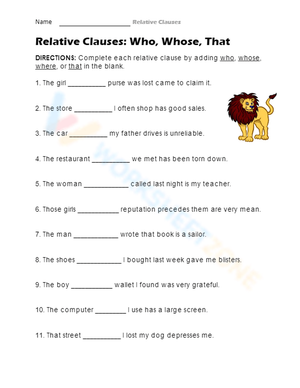
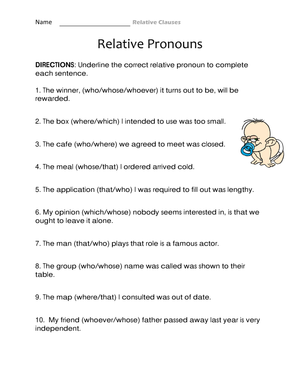
- Identifying and using relative pronouns — who, whose, whom, which, that — in sentences where the relative clause modifies the antecedent noun
- Correcting pronoun-antecedent agreement errors within short paragraphs
These 4th grade pronouns and antecedents pdf worksheets treat pronoun identification and agreement as two distinct skills, because a student can underline every pronoun in a passage correctly and still not understand that "it" in the third sentence refers to a noun introduced four sentences earlier. The Arrow Method exercises make that tracking work visible — and correctable — before the same error surfaces in the student's own writing.
How to Build These Worksheets Into Your Lesson Plans
The exercises work well as Monday warm-ups — five minutes at the start of the ELA block to reconnect students with the concept after a weekend away from formal writing. The format costs almost no instructional time and keeps pronoun-antecedent tracking in working memory between lessons. Because students write short answers rather than circle options, teachers can collect these worksheets and quickly see which students are still guessing at the antecedent versus those who are tracking it accurately.
Small-group instruction is where the rewriting tasks do their best work. Gathering four or five students who produce unclear pronoun references in their own writing, then working through the ambiguous antecedent exercises at the table, generates exactly the conversation that transfers back to independent writing. Students hear each other's reasoning — "I thought 'he' meant Leo, not Mark" — and that peer clarification accomplishes something a completed worksheet alone cannot.
One honest limitation: the paragraph-editing exercises frustrate students who have difficulty holding longer text in mind while simultaneously tracking noun-pronoun relationships. For those students, returning to sentence-level identification work reduces the cognitive load to a manageable level before the paragraph format gets reintroduced.
Teachers running ELA centers will find that 4th grade pronouns and antecedents pdf worksheets fit cleanly into a grammar rotation — the exercises are self-contained enough for students to complete them without teacher presence, and the rewriting tasks produce written responses teachers can review afterward rather than answers that are simply marked right or wrong.
Standard Alignment
Pronoun-antecedent agreement is formally addressed in CCSS.ELA-LITERACY.L.3.1f, which requires students to "ensure subject-verb and pronoun-antecedent agreement." Fourth grade instruction extends this expectation through CCSS.ELA-LITERACY.L.4.1a, which adds relative pronouns — who, whose, whom, which, that — to the requirements. In classroom terms, Grade 4 teachers are simultaneously reinforcing an expectation from the previous year while layering in the relative pronoun work that L.4.1a introduces. This matters especially for teachers supporting students who did not solidify pronoun-antecedent agreement in third grade — a gap that shows up in student writing far more often than end-of-year assessments reveal.
Adjusting the Set for a Range of Writers
For students who are still working to identify what a pronoun replaces at the most basic level, each worksheet in the set includes sentence-level exercises where the antecedent appears immediately before the pronoun in the same clause. These 4th grade pronouns and antecedents pdf worksheets use close-referent examples as an entry point — useful for students who freeze when they encounter longer, denser text — and build outward from there as students gain confidence with the basic identification task.
Students who have already mastered one-to-one identification are ready for the ambiguous antecedent correction exercises, which require revision rather than selection. Instead of choosing from given options, these students must rewrite the sentence to make the referent unambiguous — a task that connects directly to the editing decisions they face in their own drafts. For the strongest writers, pairing these exercises with a passage from independent reading — asking them to locate every pronoun and trace each one back to its antecedent — extends the skill beyond any printed exercise and pushes the tracking work toward genuine automaticity.
Frequently Asked Questions
Can these worksheets serve as formative assessment?
Yes. The identification and rewriting exercises work well as informal checks — collect them after independent work and look specifically for students who correctly identify a pronoun's form but connect it to the wrong noun. That pattern, right identification but wrong referent, tells you the student understands what a pronoun is but needs more practice tracking antecedents across clause boundaries. That distinction shapes the next instructional move.
Do the worksheets cover relative pronouns in addition to personal pronouns?
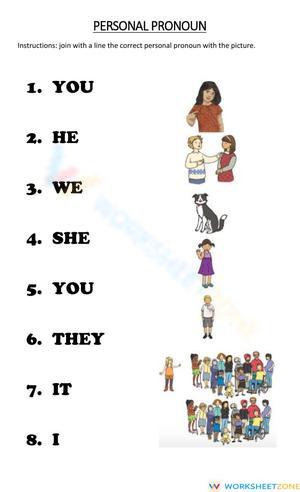
Both types appear in the set. Personal pronouns and their antecedents are the primary focus, but the exercises also address relative pronouns — who, whose, whom, which, that — in keeping with the L.4.1a standard. Students practice selecting the correct relative pronoun to complete a sentence and identifying which noun the relative clause modifies.
What is the difference between a vague antecedent and a missing antecedent?
A vague antecedent exists in the sentence but could refer to more than one noun — as in "Maria told Sofia that she won the award," where "she" could mean either person. A missing antecedent simply is not there — a student writes "They said school starts late tomorrow" without establishing who "they" refers to. Fourth graders produce both types of errors regularly, and the worksheets address each type in separate correction tasks before combining them in the paragraph-editing exercises.












 Interactive Worksheet Maker
 Quiz Maker
 Word Search Maker
 Crossword Puzzle Maker
 Word Scramble Generator
 Sentence Scramble Generator
 Handwriting Worksheet Generator
 Name Tracing Generator
 Fill In The Blank Generator




 BACK TOSCHOOL