


























Views
Downloads


Essential Reflexive Pronouns Worksheet | Grades 2-5
Paste this activity's link or code into your existing LMS (Google Classroom, Canvas, Teams, Schoology, Moodle, etc.).
Students can open and work on the activity right away, with no student login required.
You'll still be able to track student progress and results from your teacher account.
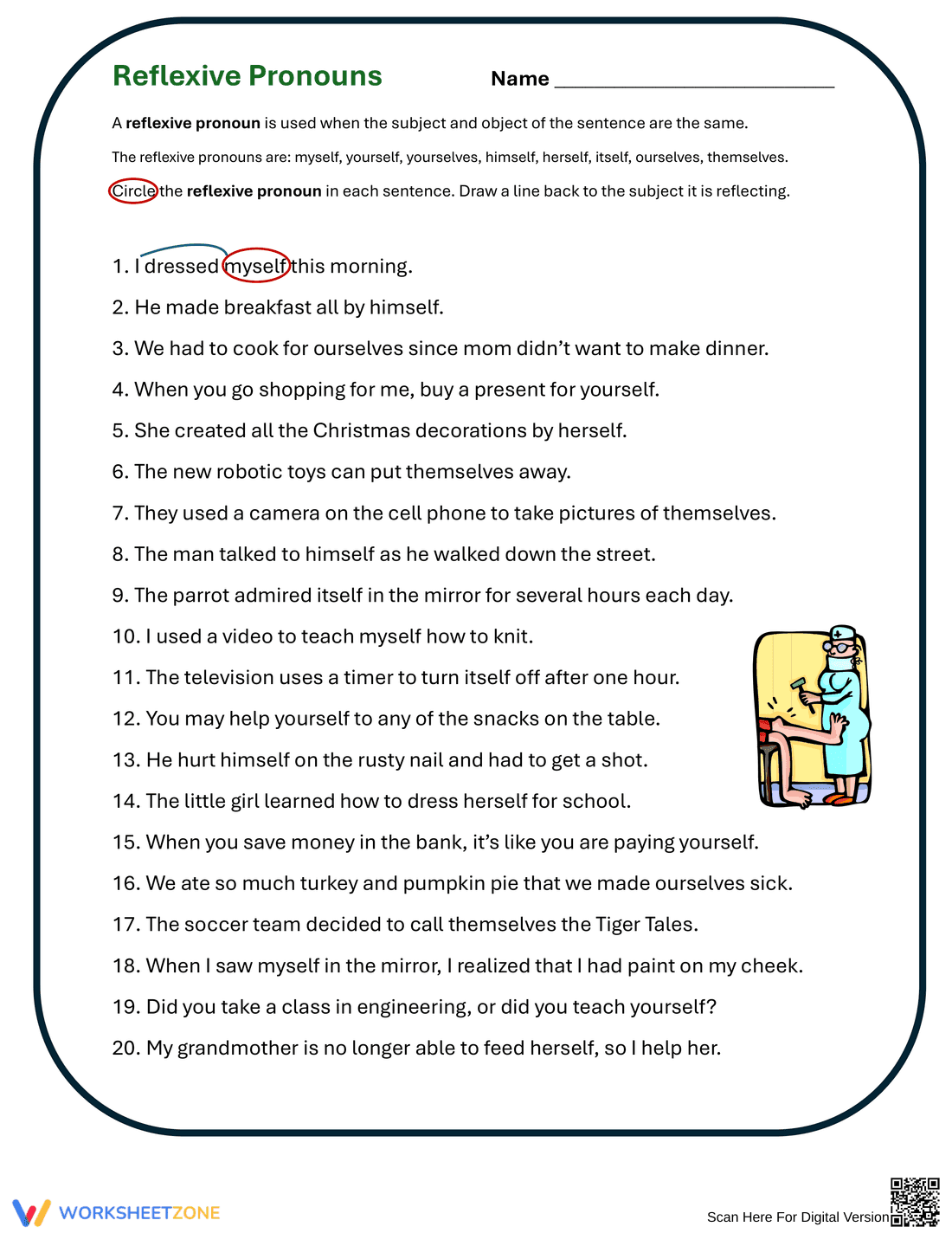
This reflexive pronouns worksheet provides comprehensive practice for students to master the identification and usage of pronouns like myself, yourself, and themselves. Students learn to recognize how these words reflect back to the subject of the sentence, reinforcing their understanding of sentence structure and essential grammar rules in a structured format.
At a Glance
- Grade: 2–5 · Subject: ELA
- Standard:
L.2.1.C— Use reflexive pronouns such as myself, yourself, himself, and themselves accurately.- Skill Focus: Identifying reflexive pronouns and antecedents
- Format: 1 page · 20 problems · Answer key included · PDF
- Best For: Grammar practice or independent seatwork
- Time: 15–20 minutes
What's Inside
This one-page PDF features a concise definition followed by common examples to support student learning. The main task consists of 20 practice sentences where students must circle the reflexive pronoun and draw a line back to the subject it reflects. The clean layout ensures students remain focused on the task without any unnecessary visual distractions.
Zero-Prep Workflow
- Step 1: Print the single-page handout in under 30 seconds for your entire class.
- Step 2: Distribute the worksheet for a 15-minute independent or guided practice session.
- Step 3: Review answers using the included key for a quick 2-minute check.
This self-contained resource requires zero teacher preparation time and is ideal for emergency sub plans.
Standards Alignment
The worksheet is explicitly aligned with CCSS.ELA-LITERACY.L.2.1.C, which requires students to use reflexive pronouns correctly in their writing. By identifying both the pronoun and the antecedent, students build the foundational knowledge necessary for more complex pronoun-antecedent agreement tasks. This standard code can be copied directly into lesson plans, IEP goals, or district curriculum mapping tools.
How to Use It
Use this worksheet as a formative assessment after an introductory grammar lesson. It is particularly effective during the independent practice phase of the gradual release model. Teachers should observe whether students correctly identify the reflecting relationship, as this indicates a deep understanding of the pronoun's function rather than simple rote memorization of the word list.
Who It's For
This practice sheet is perfect for 2nd through 5th-grade students refining their grammar skills. It offers excellent support for English Language Learners through its clear examples and repetitive task structure. Pair this handout with a mentor text that features dialogue, or use it alongside an anchor chart visualizing the mirroring effect of reflexive pronouns.
According to research from Fisher & Frey (2014), the use of targeted practice with immediate feedback, such as the tasks provided in this reflexive pronoun handout, is essential for student mastery of specific grammatical conventions. The L.2.1.C standard focuses on the student's ability to use reflexive pronouns like myself and ourselves, a skill that is critical for developing clear and cohesive writing styles. Systematic practice helps bridge the gap between recognizing a part of speech and applying it correctly in original compositions. By requiring students to link pronouns to their antecedents, this worksheet reinforces the cognitive connection between sentence components. This approach aligns with evidence-based instructional strategies that prioritize active engagement over passive identification. Educators can rely on this structured practice to ensure students meet grade-level expectations for language mechanics, providing a reliable data point for tracking progress toward CCSS goals.


