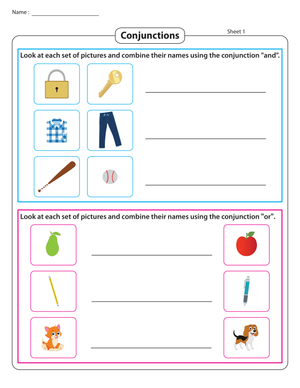
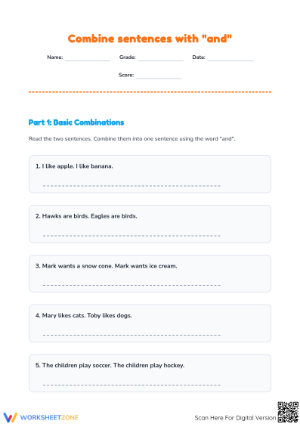
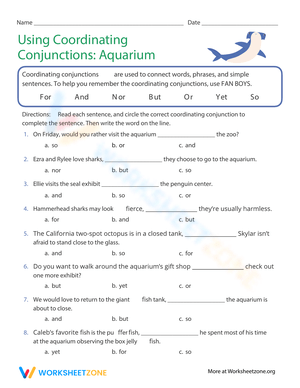
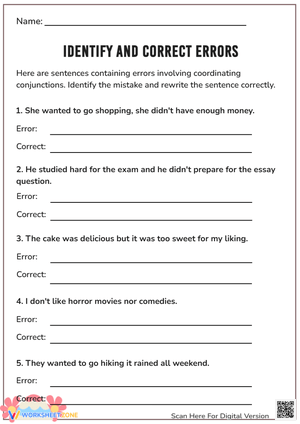
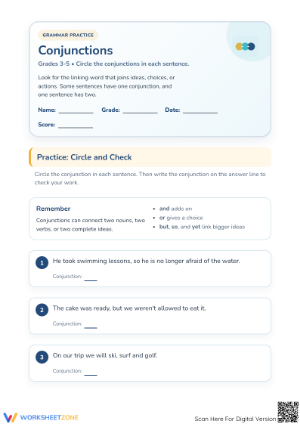
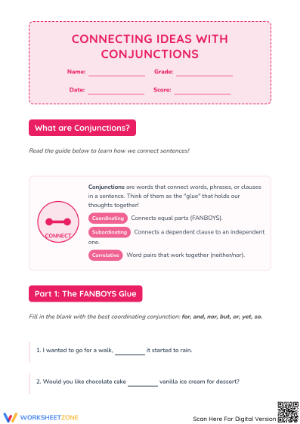
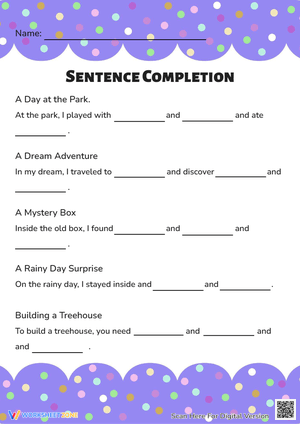
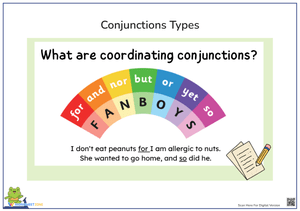
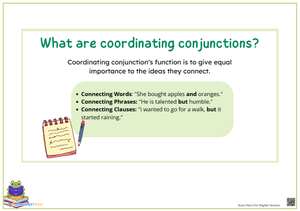
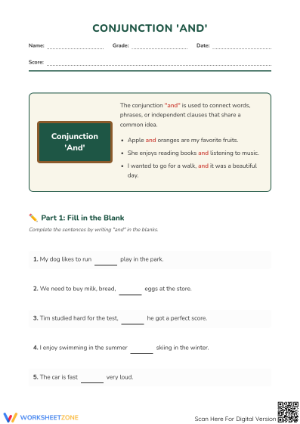
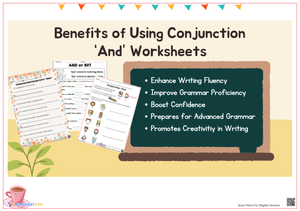
These 4th grade coordinating conjunctions worksheets resources give teachers a print-ready set that targets the grammar skills Grade 4 students need to write compound sentences and punctuate them correctly. The set covers FANBOYS identification, sentence combining, context-based fill-in-the-blank, and comma placement — each worksheet isolating a distinct skill so teachers can sequence them across a unit or pull individual ones to match what a class needs on a given day.
The Specific Skills Targeted
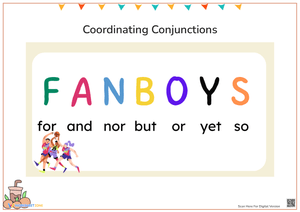
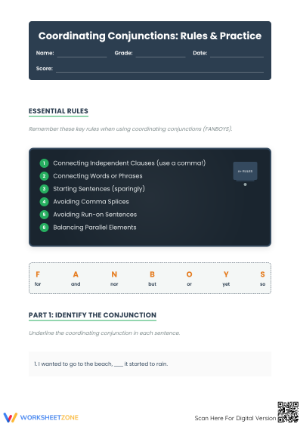
The FANBOYS acronym — For, And, Nor, But, Or, Yet, So — organizes all seven coordinating conjunctions into a checklist students can reference while working. Grade 4 curriculum moves students from recognizing the list to applying it, which means each worksheet presses on a different cognitive demand: recognition, selection, combination, or punctuation.
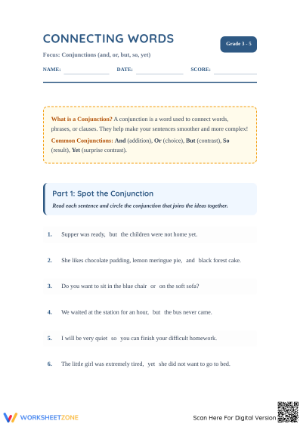
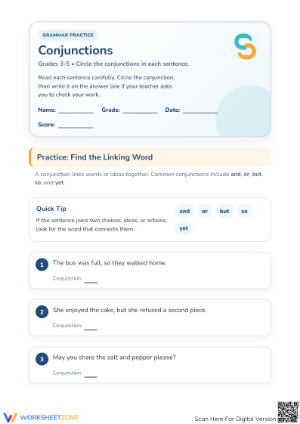
- FANBOYS identification: Students underline or circle the coordinating conjunction in context. Sentences include both compound constructions and cases where and joins two words or phrases rather than two independent clauses, so students learn that not every and triggers a comma.
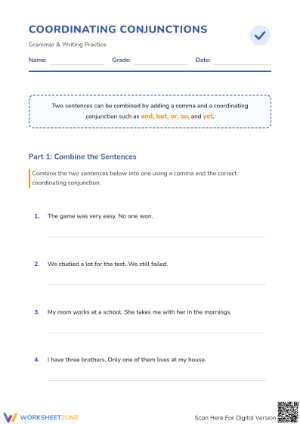
- Sentence combining: Two simple sentences are given; students merge them into one compound sentence using the conjunction that fits the logical relationship — contrast, addition, result, or alternative — and place the comma before it.
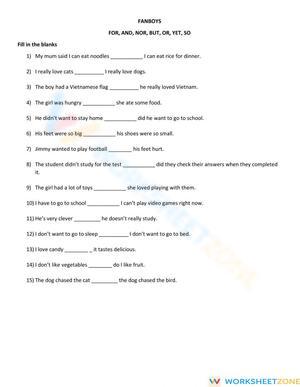
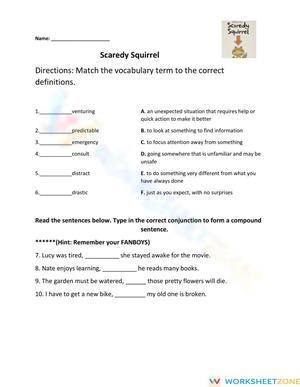
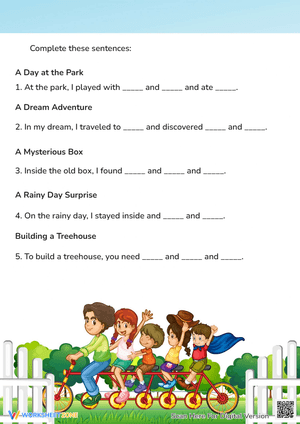
- Context-based fill-in-the-blank: Students choose between pairs like but and so, or or and yet, forcing them to think about the meaning relationship between clauses rather than defaulting to and for everything.
- Comma placement: Compound sentences arrive unpunctuated, and students mark exactly where the comma belongs. This isolates the punctuation decision from the vocabulary decision — useful when students recognize their conjunctions but still drop the comma.
The less-taught members of FANBOYS — for, nor, and yet — deserve focused attention. Grade 4 students almost never use nor in speech, so written practice in a 4th grade coordinating conjunctions worksheets set is often the first real instructional encounter they have with it.
Mistakes Students Make That These Worksheets Help You Catch
Comma omission is the most consistent error in Grade 4. A student who correctly identifies but and so will still write "She studied hard so she passed the test" without a comma — the conjunction is right, but the punctuation rule has not connected to it yet. The comma placement worksheet addresses that gap directly by stripping the exercise down to one decision: where does the comma go?
A second predictable problem is over-application. Once students learn that coordinating conjunctions in compound sentences require a comma, a fair number begin inserting commas before every and — including those that join two nouns or two verbs rather than two independent clauses. "I packed my lunch and my backpack" does not take a comma, but after a grammar lesson on compound sentences, students will add one confidently. The identification worksheet, because it includes both compound sentences and shorter constructions, gives students repeated practice distinguishing "conjunction joining two clauses" from "conjunction joining two words."
A third error, subtler than the first two: students default to and or but when the context calls for so or yet. Writing "I was hungry but I ate a snack" in place of "I was hungry, so I ate a snack" signals that the student treats consequence and contrast as interchangeable. The fill-in-the-blank exercises surface this misreading efficiently — far better to catch it on a worksheet than to find it embedded across a full writing draft.
Standard Alignment
CCSS.ELA-LITERACY.L.4.2.C requires Grade 4 students to use a comma before a coordinating conjunction when joining two independent clauses. That standard sits inside the Language strand's conventions cluster alongside capitalization, end punctuation, and spelling conventions for this grade level. In classroom sequencing terms, it belongs alongside the writing standards that ask Grade 4 students to produce varied sentence structures — which means the grammar instruction should land during writing, not in a separate unit that students mentally file away and forget.
Teachers who fold comma-before-conjunction practice into the revision phase of an early narrative or informational writing unit see stronger transfer than those who save it for a standalone grammar block in the spring. A 4th grade coordinating conjunctions worksheets set supports both approaches: the worksheets function as pre-writing skill builders or as tools for a revision lesson where students search their own drafts and mark every compound sentence they've written.
Fitting These Worksheets Into Your Weekly ELA Block
The five-minute window before class transitions to specials, the Monday morning warm-up after a weekend writing assignment, or the last ten minutes of a Friday ELA block are all realistic spots for one of these worksheets. Sentence-combining practice takes eight to ten minutes for most Grade 4 students — substantive enough to matter, short enough not to crowd out the rest of the lesson. The identification worksheet works particularly well as a quick check-in during a read-aloud: pause on a compound sentence from the text, have students mark it on their worksheet, and spend two minutes discussing the conjunction choice before continuing.
After students complete a sentence-combining worksheet, having pairs swap and read each other's sentences aloud catches comma errors that silent rereading misses. When a student hears a compound sentence with no punctuation pause, the missing comma becomes noticeable in a way it almost never does when rereading their own writing. A sticky-note exit ticket — one original compound sentence, conjunction underlined, comma placed — takes ninety seconds to collect and gives a clear picture of who is ready for the full FANBOYS set and who still needs to consolidate and, but, and so before moving on.
Adjusting the Work for Different Levels in the Same Room
Students who are still building fluency with compound sentences do well starting with the identification worksheet before any combining or fill-in-the-blank work. Narrowing the initial focus to three conjunctions — and, but, and or — reduces the decision load and lets those students build accuracy before expanding their repertoire. A classroom anchor chart with FANBOYS posted where students can see it during independent work removes the retrieval burden without removing the thinking.
Students who are ready for a challenge can take the sentence-combining worksheet further by rewriting each combined sentence a second time using a different conjunction and explaining in a short note how the meaning shifts. Writing "I wanted to play outside, but it was raining" and then "I wanted to play outside, so I waited for the rain to stop" is a higher-order move that turns a grammar exercise into a meaning-making one. The 4th grade coordinating conjunctions worksheets set also works well during writing conferences: rather than verbally correcting a student's compound sentences, hand the student the fill-in-the-blank worksheet and return the editing decision to them.
Frequently Asked Questions
What are the seven coordinating conjunctions, and which ones does Grade 4 actually emphasize?
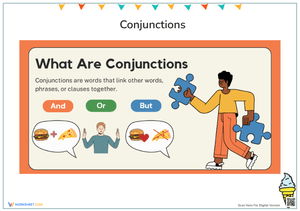
The seven are For, And, Nor, But, Or, Yet, and So — FANBOYS. Grade 4 instruction typically begins with the four most common in student writing: and, but, or, and so. Lessons then extend to yet, for, and nor once students are solid on the core four. Many students reach the end of fourth grade having used nor only in a grammar exercise, which is exactly why explicit written practice with the full seven is worth the time.
Where exactly does the comma go in a compound sentence?
The comma goes before the coordinating conjunction, not after it. She studied hard, so she passed the test. Both parts need to be independent clauses — each able to stand alone as a complete sentence — for this rule to apply. When and joins two nouns rather than two independent clauses, no comma is used: "She packed her lunch and her backpack" is correct without one.
How do I help students tell coordinating conjunctions apart from subordinating ones like because or although?
A reliable classroom test: cover everything before the conjunction and read only what follows. If what follows can stand alone as a complete sentence, it is a coordinating conjunction joining two independent clauses. If what follows sounds incomplete — "because she was tired," for example — it is a subordinating conjunction introducing a dependent clause. Sentence-combining practice makes this distinction concrete because students work with both clause types side by side before they join them.
Do these worksheets connect to standardized test content?
CCSS.ELA-LITERACY.L.4.2.C appears on state ELA assessments aligned to Common Core standards, so comma placement with coordinating conjunctions does show up on standardized tests. The sentence-combining and comma placement exercises mirror the editing and revising question types students encounter in those assessments. That said, the goal of this practice is genuine understanding — students who know why a comma goes before but in a compound sentence answer the test question without needing to think of it as test strategy.












 Interactive Worksheet Maker
 Quiz Maker
 Word Search Maker
 Crossword Puzzle Maker
 Word Scramble Generator
 Sentence Scramble Generator
 Handwriting Worksheet Generator
 Name Tracing Generator
 Fill In The Blank Generator




 BACK TOSCHOOL