




























Views
Downloads

Essential Grade 3 Coordinating Conjunctions Practice

Paste this activity's link or code into your existing LMS (Google Classroom, Canvas, Teams, Schoology, Moodle, etc.).
Students can open and work on the activity right away, with no student login required.
You'll still be able to track student progress and results from your teacher account.
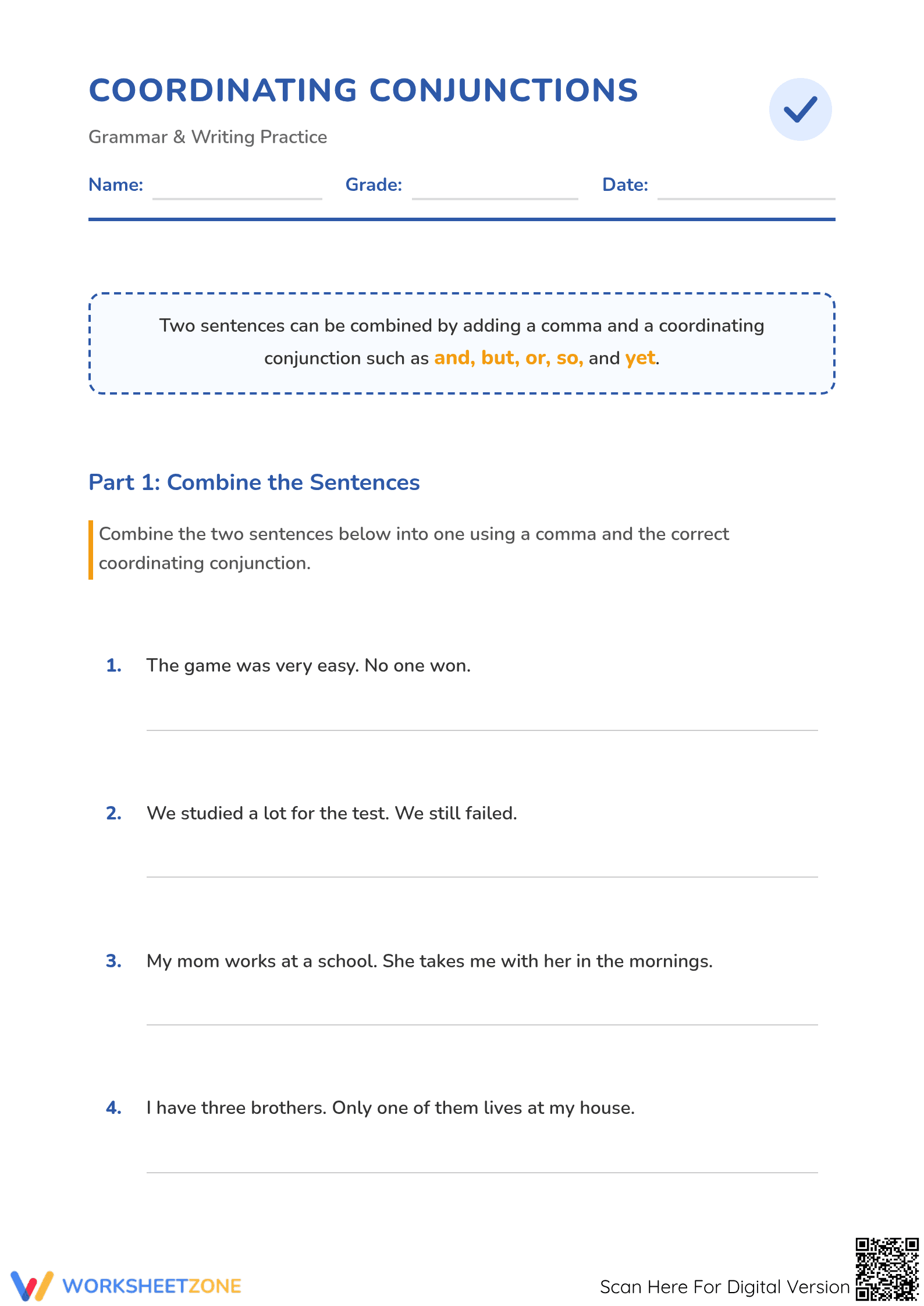
This Grade 3 coordinating conjunctions worksheet helps students master the art of sentence combining using "and," "but," "or," "so," and "yet." By practicing these essential connectors, learners improve their writing fluency and syntactic complexity. Students will transition from writing simple, choppy sentences to creating cohesive compound structures that clearly express relationships between ideas.
At a Glance
- Grade: Grade 3 · Subject: ELA
- Standard:
CCSS.ELA-LITERACY.L.3.1.H— Use coordinating and subordinating conjunctions to produce simple, compound, and complex sentences- Skill Focus: Coordinating Conjunctions
- Format: 3 pages · 15 problems · Answer key included · PDF
- Best For: Independent practice and grammar review
- Time: 20–30 minutes
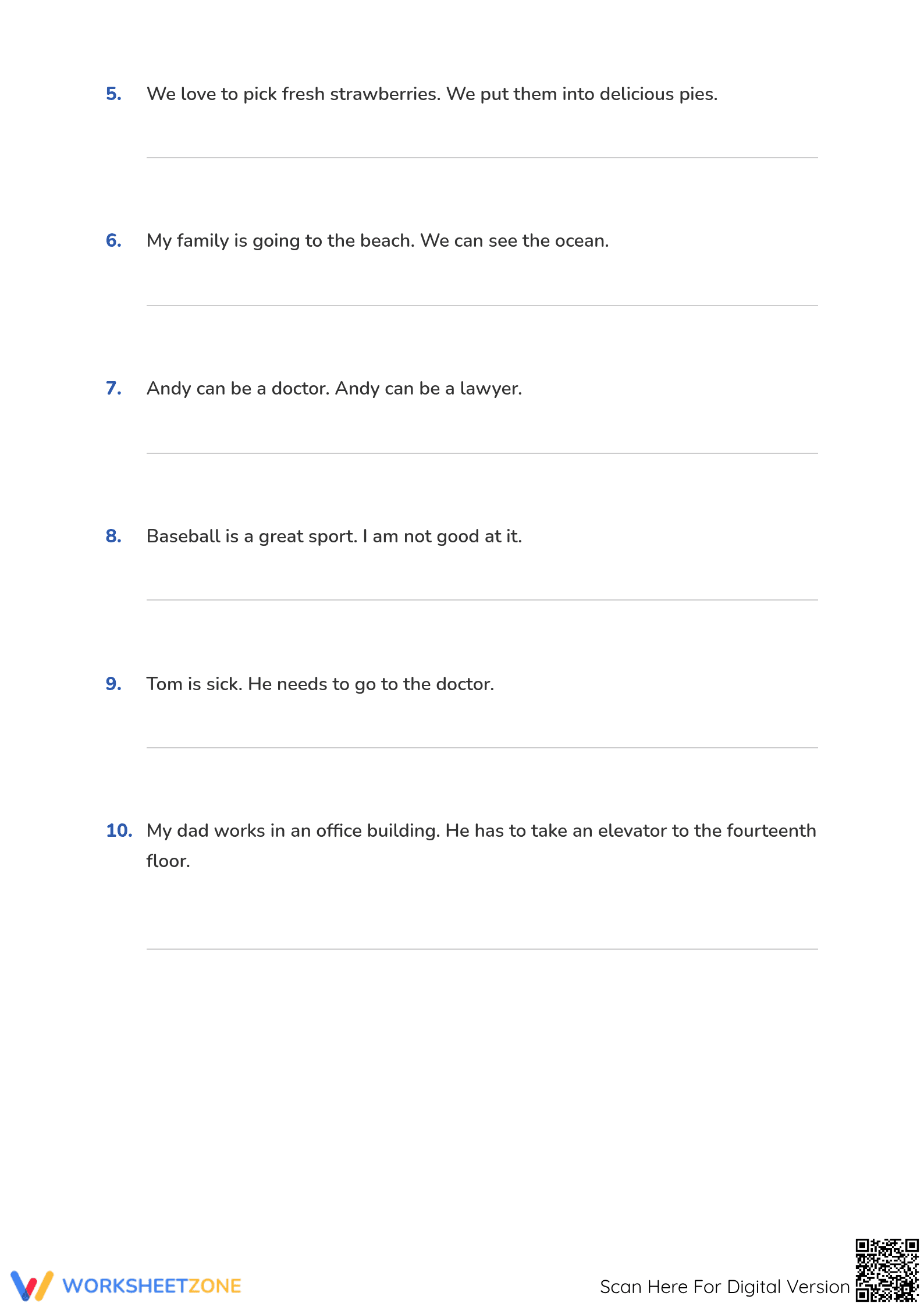
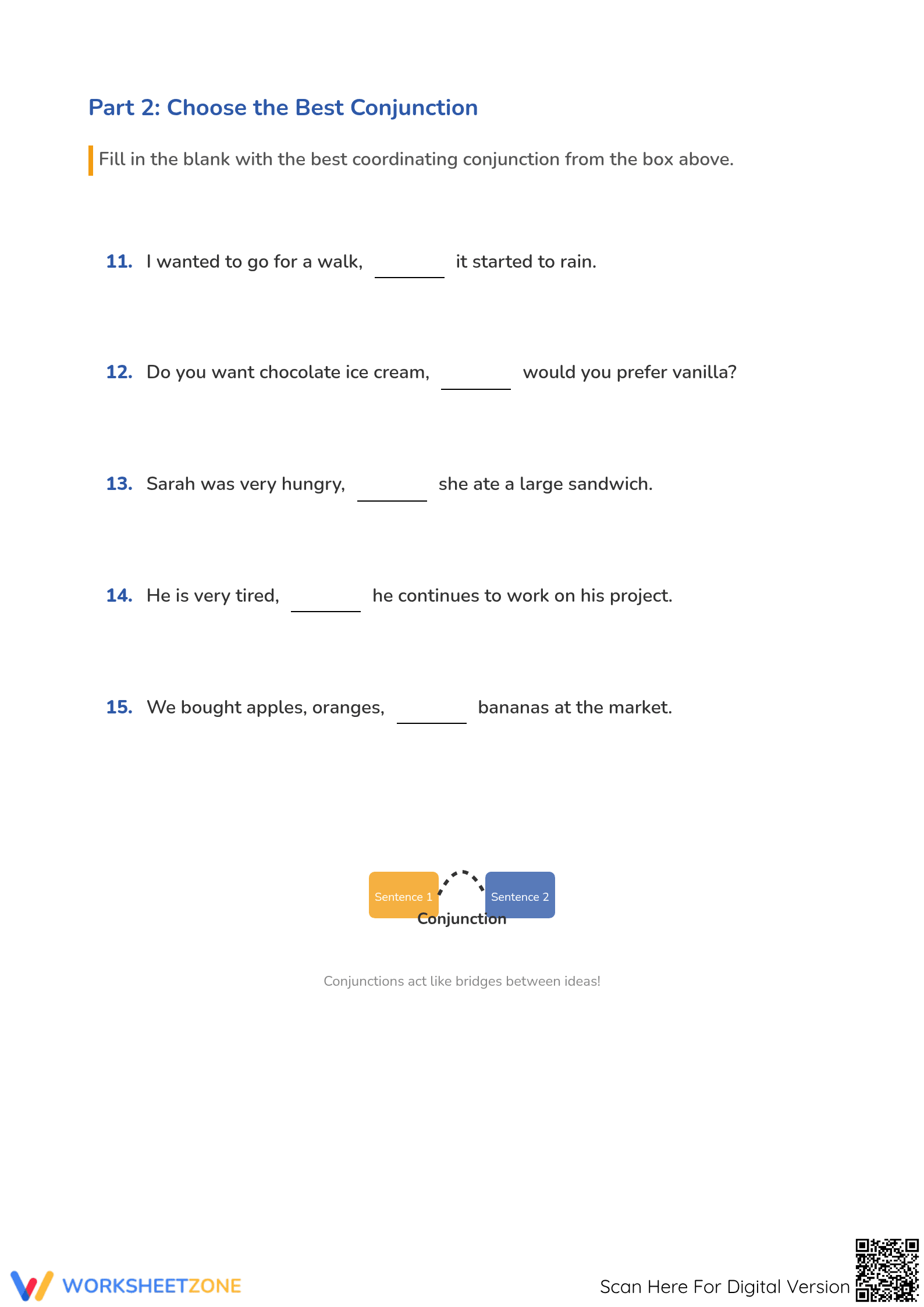
This comprehensive 3-page PDF includes 15 targeted practice items designed for third-grade learners. The first section features 10 sentence-combining tasks where students must rewrite two independent clauses as a single compound sentence using a comma and the appropriate conjunction. The second section provides 5 fill-in-the-blank sentences to reinforce context-based selection. A complete answer key is provided for rapid grading and immediate student feedback.
The zero-prep workflow for this resource is designed for maximum efficiency in busy classrooms. First, print the three practice pages and the answer key in under 30 seconds. Second, distribute the packets to students for independent work, literacy center rotations, or morning work. Third, use the included answer key to provide immediate feedback or allow for student self-correction. Total teacher preparation time is under 2 minutes, making this an ideal solution for sub plans.
This resource is specifically aligned to `CCSS.ELA-LITERACY.L.3.1.H`, which requires students to "use coordinating and subordinating conjunctions." While this worksheet focuses specifically on the coordinating variety (FANBOYS), it serves as a foundational step toward producing the compound sentences required by the standard. This standard code can be copied directly into lesson plans, IEP goals, or district curriculum mapping tools to track student progress toward mastery.
Use this worksheet during the independent practice phase of a gradual release lesson on sentence structure. After modeling how to use a comma before a conjunction, assign the first page as a formative assessment to check for understanding. It also works well as a post-instruction review or homework assignment. Teachers should observe if students remember to place the comma before the conjunction, which is a common area for correction during this instructional moment.
This resource is designed for Grade 3 students but is also appropriate for Grade 4 students needing a grammar refresher or English Language Learners (ELLs) practicing sentence construction. It pairs naturally with a mentor text passage where students can highlight conjunctions in professional writing before attempting their own combinations on this worksheet. The clear layout ensures that students with diverse learning needs can focus on the linguistic task without distraction.
Effective grammar instruction requires moving beyond isolated identification to active application in writing. This worksheet aligns with the Fisher & Frey (2014) model of gradual release, providing the structured practice necessary for students to internalize the use of CCSS.ELA-LITERACY.L.3.1.H. Research from the RAND AIRS 2024 report suggests that explicit instruction in sentence combining significantly improves overall writing quality and reading comprehension by helping students recognize logical relationships between ideas. By focusing on coordinating conjunctions like "and," "but," and "so," this resource addresses a critical developmental milestone in third-grade literacy. The 15 included tasks provide sufficient repetition to move the skill from short-term memory to functional writing application. Educators can utilize this tool to bridge the gap between simple sentence production and the complex syntactic structures required for upper-elementary success. This evidence-based approach ensures that students develop the linguistic glue needed for sophisticated communication.


