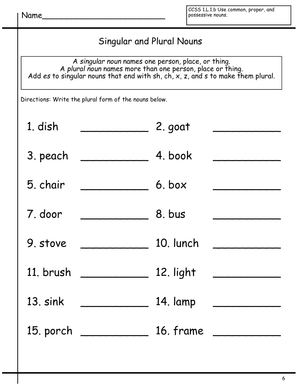
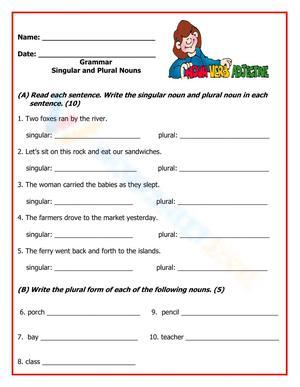
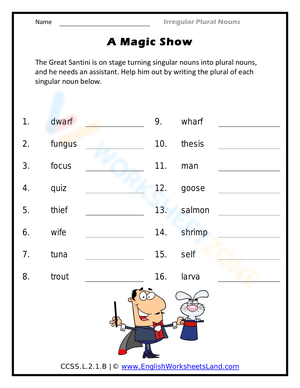
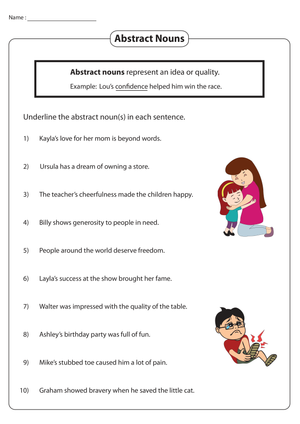
These 4th grade nouns printable worksheets give teachers a targeted way to address the noun skills fourth graders are expected to apply — not just identify — by the end of the year. The set covers concrete and abstract nouns, singular and plural possessives, and irregular plural forms: the exact territory where student writing starts to break down when grammar instruction has been too broad.
What the Set Covers
The 4th grade nouns printable worksheets in this set each target a distinct noun skill rather than mixing several concepts on the same worksheet. That narrow focus matters at this grade level because the noun work fourth graders need is not introductory — it builds on what students should have consolidated in third grade and applies those forms under the pressure of real writing tasks. Each worksheet gives students repeated exposure to one pattern in varied sentence contexts, which is how a rule moves from something a student can recite to something a student uses.
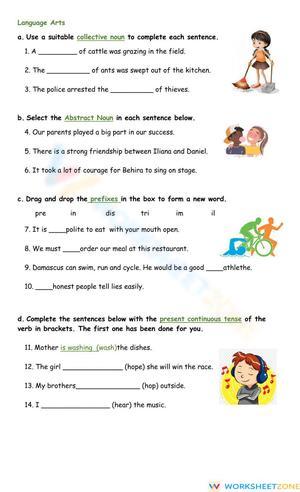
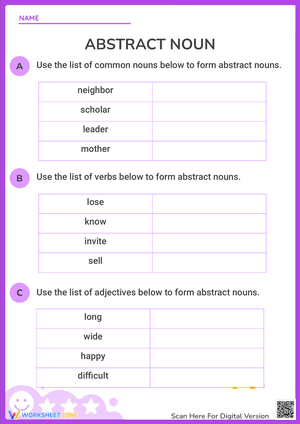
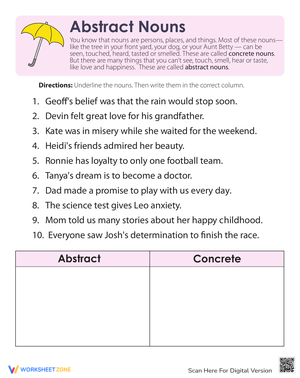
- Sorting concrete nouns from abstract nouns — first in isolated word lists, then inside sentences where context changes how the noun feels
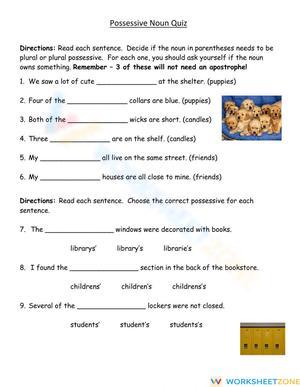
- Forming singular possessives (the principal's office) and plural possessives when the base noun already ends in -s (the players' bench)
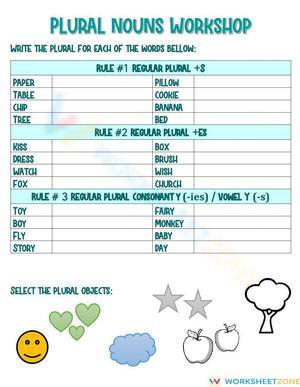
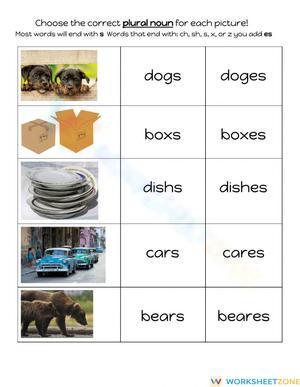
- Distinguishing possessive nouns from plural nouns, which students conflate well past fourth grade if the distinction is not addressed directly
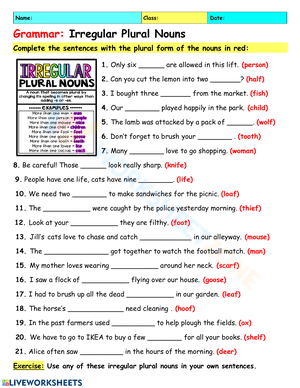
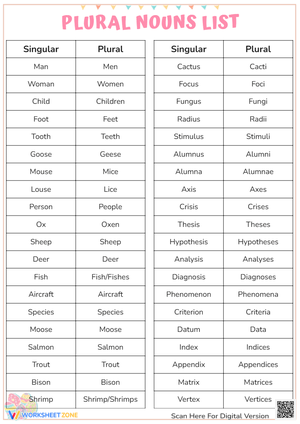
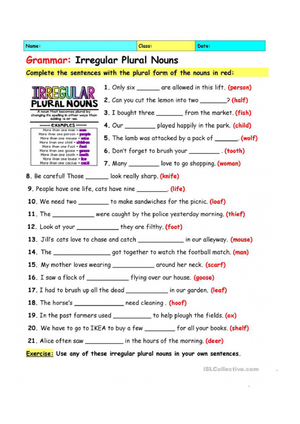
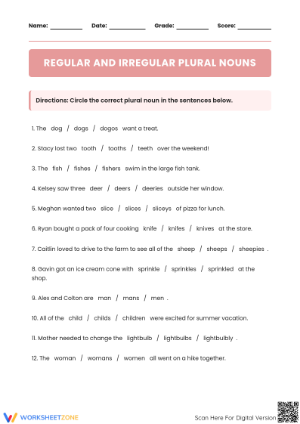
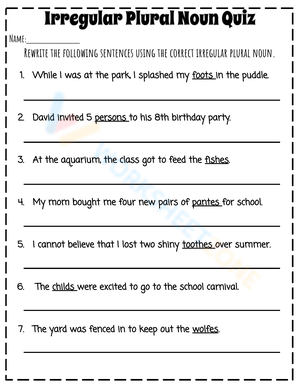
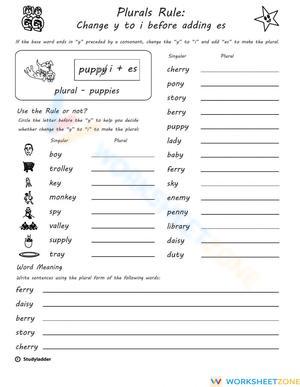
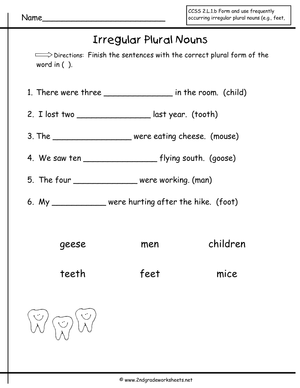
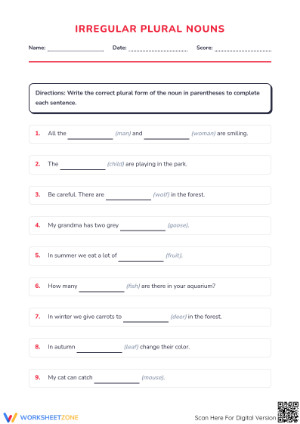
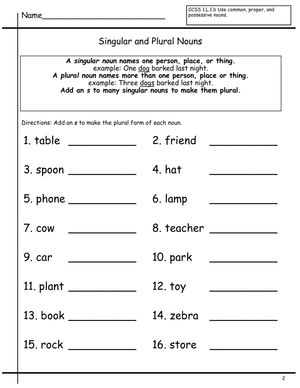
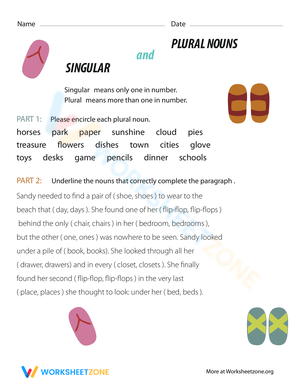
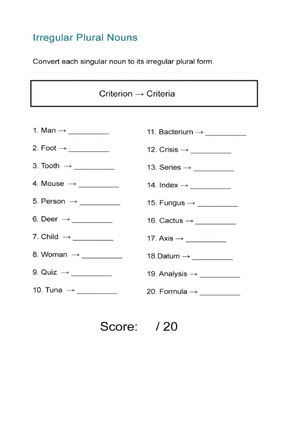
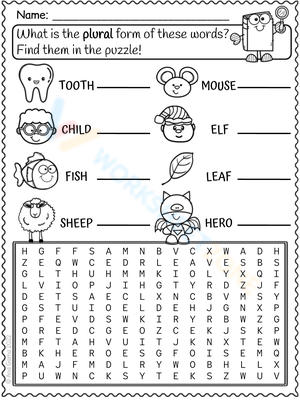
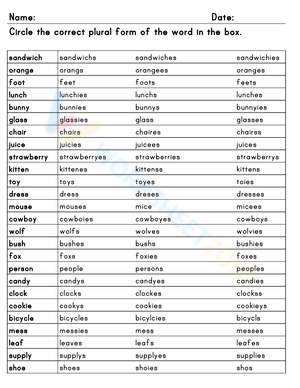
- Spelling irregular plural forms, including the vowel-change group (goose → geese, mouse → mice) and the -ves pattern (leaf → leaves, wolf → wolves)
- Identifying proper nouns and applying capitalization rules when those nouns appear in the middle of a sentence — not just at the start, where students apply the rule automatically
Frequent Student Errors Worth Catching Before They Calcify
The most persistent error at this level is not a spelling mistake or a capitalization lapse. It is the confusion between plural nouns and possessive nouns. Students write cat's when they mean "more than one cat" and cats when they mean "belonging to the cat." These two forms look almost identical on paper, and students who can state the apostrophe rule aloud will still get them wrong inside a rewrite exercise. Each worksheet that addresses possessives places both forms in the same task, forcing students to actively choose rather than apply one rule in isolation.
Abstract nouns present a different problem. A student who correctly labels bravery as abstract on a sorting activity will often pause when the same noun appears in the phrase the bravery of the soldier — because the soldier is physical and visible, the noun suddenly feels grounded. That hesitation is developmental, not careless, and it surfaces only when abstract nouns appear inside longer phrases rather than in isolation. The irregular plural section has its own reliable trouble spot: the -ves pattern. Students applying the standard -s rule to everything will write leafs and wolfs without a second thought. Focused repetition with those specific words is the only reliable fix.
Standard Alignment
The possessive noun exercises connect to CCSS L.3.2d, which is formally introduced in third grade but spirals into fourth-grade writing expectations — most classes need significant re-teaching in September, particularly around plural possessives. Irregular plural noun work ties to CCSS L.3.1b on the same timeline. The concrete and abstract noun distinction connects to CCSS L.4.5, the vocabulary standard that asks students to demonstrate understanding of word relationships and nuances in meaning; recognizing the difference between a word that names something perceivable and one that names a concept is foundational to that standard. Proper noun capitalization is addressed across the conventions strand throughout the elementary grades, with CCSS L.4.2 serving as the operative benchmark in fourth grade.
Fitting These Worksheets Into Your Week
These resources work well as Monday morning warm-ups — five minutes with a possessive noun rewrite before the first read-aloud resets student attention and quickly surfaces where the class left off before the weekend. They also hold up in the Friday review block: a short irregular plural sort in the final ten minutes gives a clean read of who still needs the -ves pattern before the week ends. For homework, each worksheet travels reliably because the directions are self-contained and a parent can follow the task without needing the lesson context.
A classroom move worth building in: once students finish a concrete-versus-abstract sorting worksheet, ask them to locate one more example of each type in whatever chapter they are currently reading independently. That five-minute follow-up to the 4th grade nouns printable worksheets takes almost no class time and anchors the noun vocabulary in text students already care about. Teachers who use this combination consistently report that the abstract noun distinction sticks longer when students find the example themselves rather than receiving it on a list.
Adjusting the Set for a Range of Learners
Students who are still consolidating the basic noun definition benefit from beginning with the concrete noun worksheets, where every item has a sensory anchor. Moving to abstract nouns before a student can reliably sort concrete examples adds confusion without adding value. For students working above grade level, the possessive noun exercises become more demanding when the expectation shifts from rewriting a provided phrase to generating original sentences using each possessive form — a different cognitive task that reveals whether understanding is genuinely flexible or just pattern-matching on familiar examples.
Small-group instruction works especially well with the irregular plural worksheets because errors are immediate and visible on the page; a teacher circulating during independent work can step in right then rather than collecting papers and following up the next day. Students who continue to struggle with the abstract noun concept respond to a simple physical check: if you can touch or see it, it is concrete; if you only feel it or think it, it is abstract. That is not a rigorous definition, but it holds during independent work and gives students a decision point when they are uncertain.
Frequently Asked Questions
Can these worksheets double as formative assessments?
Yes. Because each worksheet targets a narrow skill, it functions as a clean formative tool. A possessive noun worksheet completed at the end of a lesson tells you exactly which students are still conflating the plural and possessive forms — specific enough information to regroup before the next class. The 4th grade nouns printable worksheets in this set are direct enough to use as exit tickets without any extra preparation: collect, scan for the apostrophe pattern, and sort students accordingly.
How are the concrete and abstract noun worksheets sequenced?
The exercises move from isolated word sorts toward sentence-level identification and then into context-based tasks where abstract nouns appear inside full phrases. That progression reflects how the skill actually develops: students who handle isolated vocabulary lists smoothly often run into real trouble the moment an abstract noun appears next to something concrete in the same sentence.
Do the worksheets treat the plural-versus-possessive distinction as its own skill?
That distinction gets its own focused exercises rather than a footnote inside a broader possessives lesson. Students rewrite phrases using the correct form and mark errors in sample sentences that include both plural and possessive nouns side by side — because reading the rule in a grammar book almost never transfers to the writing habit without that kind of deliberate, comparative practice.












 Interactive Worksheet Maker
 Quiz Maker
 Word Search Maker
 Crossword Puzzle Maker
 Word Scramble Generator
 Sentence Scramble Generator
 Handwriting Worksheet Generator
 Name Tracing Generator
 Fill In The Blank Generator