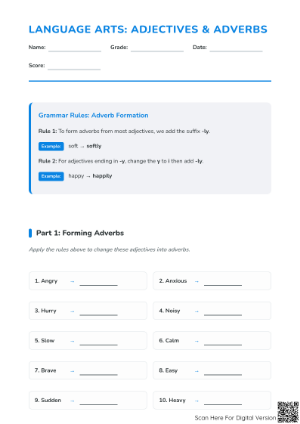
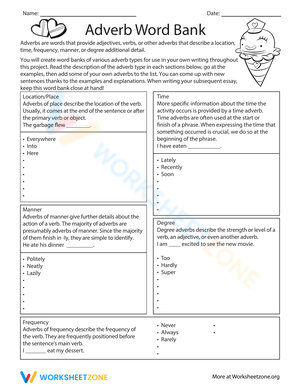
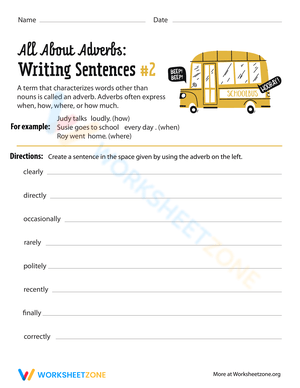
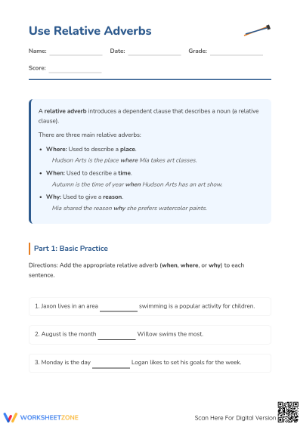
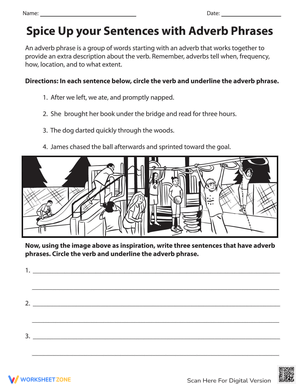
These adverbs printable worksheets for 4th grade target the modifier skills that actually challenge students at this level — not just the familiar -ly words they recognize from third grade, but relative adverbs, irregular forms, and the adjective/adverb distinction that generates consistent errors in student writing. The set addresses adverbs of manner, time, place, and degree alongside the relative adverbs (where, when, why) required under CCSS L.4.1.a. Teachers get resources they can move directly into warm-ups, writing conferences, small-group lessons, and grammar centers.
The Specific Skills in Each Worksheet
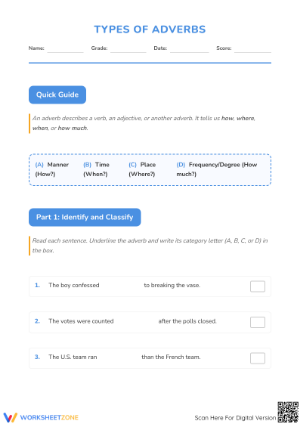
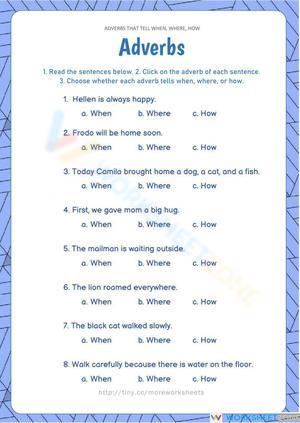
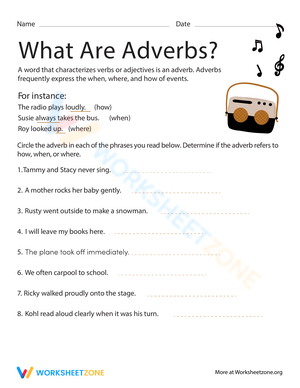
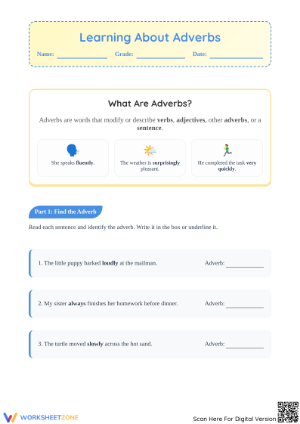
Rather than treating all adverbs as a single category, the worksheets work through adverb functions one at a time. Students identify adverbs by the questions they answer — How?, When?, Where?, To what extent? — which holds up better in student writing than the -ly test alone. Each worksheet keeps a tight focus so students aren't sorting through multiple modifier types simultaneously.
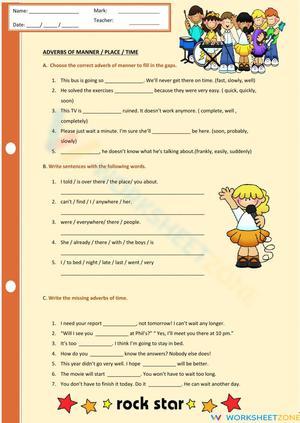
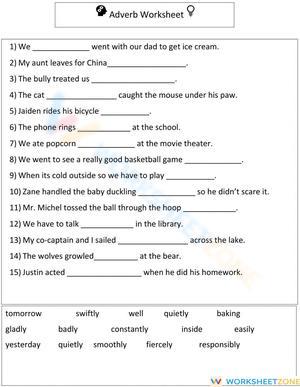
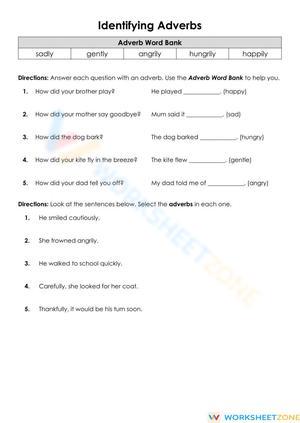
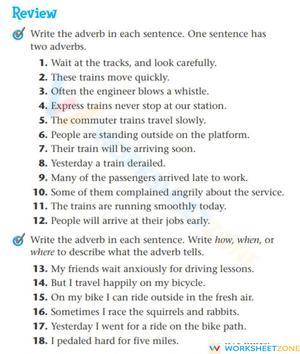
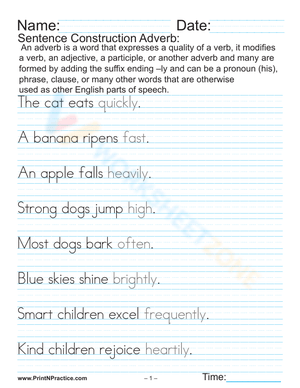
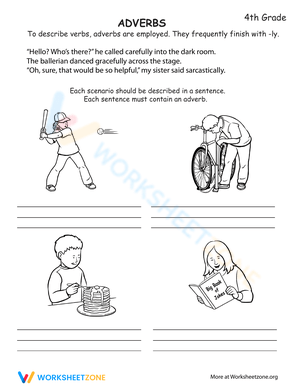
- Adverbs of manner: Students rewrite sentences by choosing between close synonyms — quietly versus silently, quickly versus hastily — which requires attention to connotation, not just part of speech.
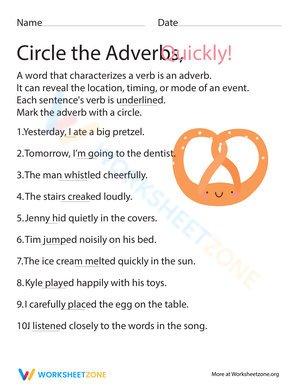
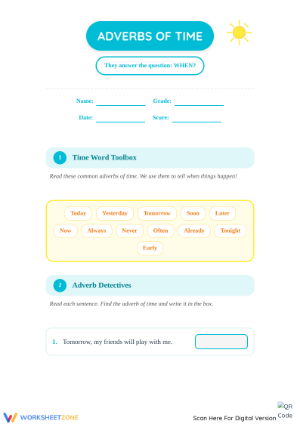
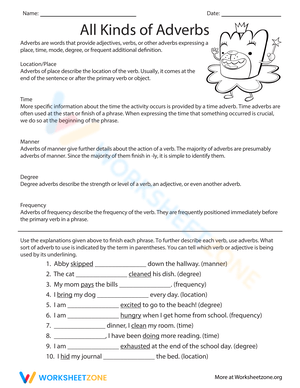
- Adverbs of time and place: Students underline and label these in context, then rewrite a short paragraph swapping in alternatives to see how meaning shifts.
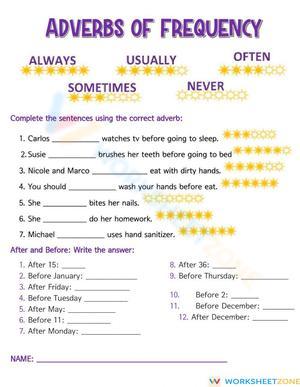
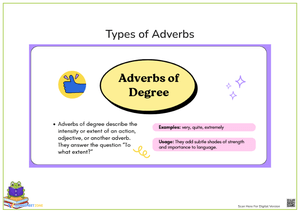
- Adverbs of degree: Students insert degree adverbs (very, quite, almost, barely) to adjust intensity, then rank the resulting sentences from weakest to strongest claim.
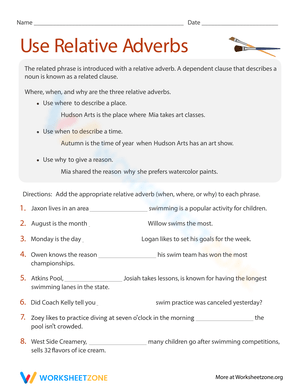
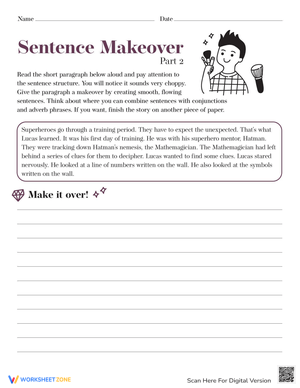
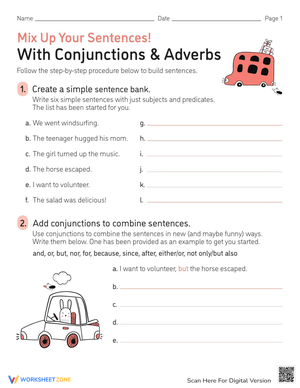
- Relative adverbs: Students combine two short sentences using where, when, or why to form a complex sentence with a relative clause, then underline the noun each relative adverb modifies.
- Irregular adverbs: Focused practice on words like fast, hard, late, and well that function as either adjectives or adverbs depending on position in the sentence.
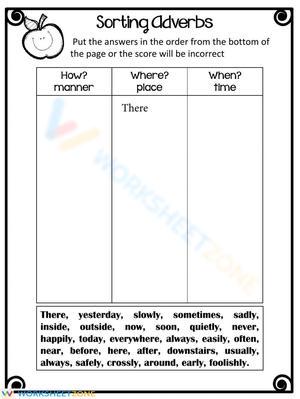
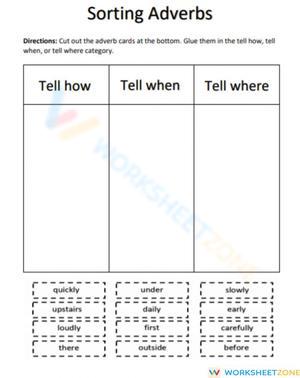
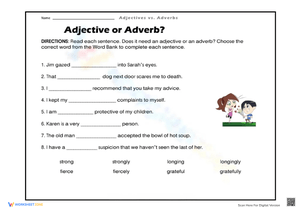
- Adverb vs. adjective sorting: Students sort underlined words from context sentences into two columns and write a brief justification — "this word answers How?" — for each choice.
Student Errors Worth Watching For — and Addressing Directly
The -ly rule is the first thing students internalize about adverbs, and it becomes a liability. Students who correctly flag carefully and loudly will look right past soon, here, and very — none of which end in -ly — and misclassify them without hesitation. The degree adverb and time/place worksheets surface this gap quickly, usually within the first few minutes of review.
The good/well confusion runs deeper than students realize. "She draws good" sounds fine to a fourth grader because they hear it constantly in conversation. The most direct fix is the question test: good answers "What kind?" — adjective territory — and well answers "How?" A sentence like "She draws well" passes the "How does she draw?" test; "She draws good" does not. Several sentences in the irregular adverb worksheet are written to trigger exactly this error so teachers can use student work as evidence during the follow-up discussion.
Relative adverbs create a third confusion point. Because where, when, and why also function as question words, students who learned them as interrogative adverbs in third grade will mark them incorrectly in declarative sentences. "This is the park where we practiced" gets tagged as a question word, or students treat where as a conjunction. The sentence-combining exercises put both uses side by side, which is the clearest way to make the distinction visible.
Standard Alignment
The adverbs printable worksheets for 4th grade align to CCSS.ELA-LITERACY.L.4.1, with the primary focus on substandard L.4.1.a: using relative adverbs (where, when, why) and distinguishing adverbs from adjectives in context. In most fourth-grade classrooms, L.4.1.a falls early in the year — typically the first trimester — before the curriculum moves into prepositional phrases and more complex sentence construction. The relative adverb and sentence-combining exercises address the standard's clause-level requirement directly, not just word-level recognition, which is where most of the standard's instructional weight sits.
Where These Worksheets Fit in the Teaching Week
The most effective placement depends on where students are in a writing unit. During narrative writing, the manner adverb worksheet pairs directly with revision work: students practice identification on the worksheet first, then take one paragraph from their own draft and add or swap in manner adverbs. That two-step sequence — identify, then apply in their own writing — closes the gap that isolated drill work leaves open between grammar exercises and actual writing quality.
For Monday morning work after a weekend gap, the time and place worksheet functions well as a five-minute retrieval warm-up. Students usually retain the concept but benefit from re-exposure before the lesson moves forward. The degree adverb worksheet works well as an exit task — it takes roughly five minutes, shows clearly whether students can manipulate intensity in context, and gives teachers a fast read on who needs more time before advancing.
- Small-group instruction: The adverb vs. adjective sorting worksheet is the right pull-out resource for students still mixing up modifier types after whole-class instruction.
- Writing conferences: Keep the irregular adverb worksheet within reach. When a student's draft reads "He played good," hand them that worksheet as a targeted correction tool rather than just marking the paper.
- Literacy centers: The sorting worksheet runs independently or in pairs without teacher facilitation.
- Test prep: The sentence-combining exercise mirrors sentence-revision formats common on standardized grammar assessments at this grade level.
Adjusting the Set for Different Learner Readiness Levels
For students still consolidating basic identification, the manner and time/place worksheets are the right entry point. Keep the work at the underlining and labeling stage before asking students to generate their own examples. Reducing the number of sentences per exercise is a straightforward adjustment — students who freeze when faced with a dense set of unfamiliar sentences produce more usable work when they complete eight items carefully than when they rush through twenty.
Students who have the basics solid benefit from the degree and relative adverb work, where the task requires judgment rather than recognition. A strong extension for these students: ask them to find one example of each adverb type in a chapter of their independent reading book and annotate why each word qualifies. That task moves adverb knowledge out of the exercise and into authentic text.
These adverbs printable worksheets for 4th grade reach across a wider readiness range than most grammar materials because the core skill — asking what question a word answers — stays consistent across every exercise. Students working below grade level use the same question-based framework as on-level students; the difference is in how many sentences they attempt and whether they generate their own examples or stay with identification tasks.
Frequently Asked Questions
What is the difference between a relative adverb and an interrogative adverb?
Both use the same words — where, when, and why — but they do different jobs in a sentence. An interrogative adverb opens a question: "Where did you go?" A relative adverb connects a clause to a specific noun in a declarative sentence: "I know the park where you practiced." The noun the relative clause modifies is the key difference. The sentence-combining exercises put both uses side by side, which is the most direct way to make the contrast visible to students.
When in the school year do these worksheets fit best?
L.4.1.a typically appears in the first trimester of fourth grade, before the curriculum shifts to prepositional phrases. The manner and time/place worksheets work best early as initial structured practice. The relative adverb worksheets should come after students are already comfortable identifying basic adverbs — introducing relative clauses before that foundation is in place creates more confusion than the lesson resolves.
How do these worksheets support the move from grammar practice to independent writing?
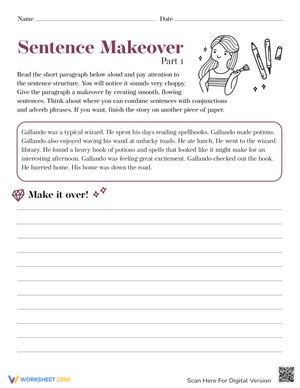
The exercises are built around tasks — sentence rewriting, clause combining, synonym swapping — that students can connect immediately to their own drafts. The transition from "identifying adverbs on a worksheet" to "using adverbs in original writing" happens fastest when students practice application right after identification, ideally with their writing in front of them. These adverbs printable worksheets for 4th grade make that connection short enough to cross in a single lesson block.
Do these worksheets work for students receiving intervention support?
Yes. The question-based identification method — does this word answer How?, When?, Where?, or To what extent? — gives students a concrete checking strategy that doesn't depend on memorizing word lists or formal grammar vocabulary. Pairing each worksheet with a brief anchor chart showing the four adverb questions lets students work more independently, which reduces frustration during intervention sessions.












 Interactive Worksheet Maker
 Quiz Maker
 Word Search Maker
 Crossword Puzzle Maker
 Word Scramble Generator
 Sentence Scramble Generator
 Handwriting Worksheet Generator
 Name Tracing Generator
 Fill In The Blank Generator