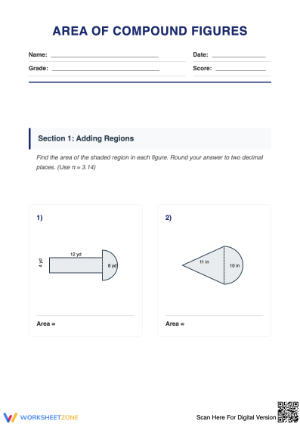
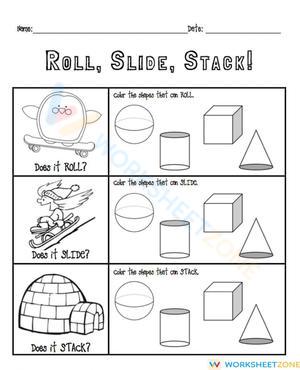
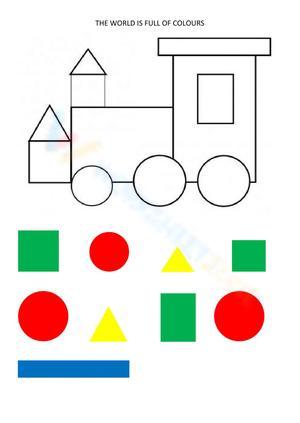
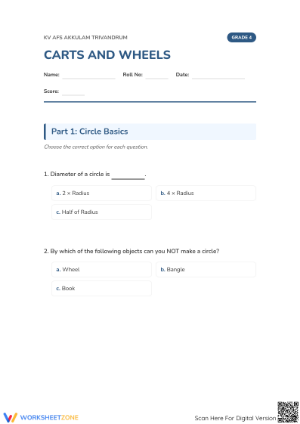
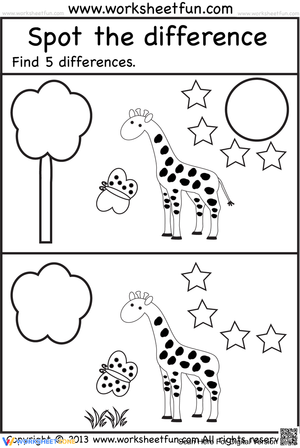
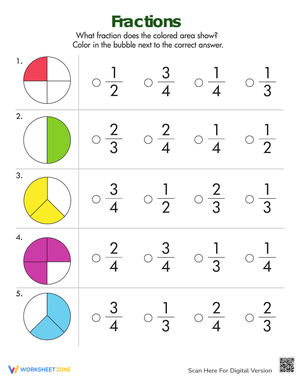
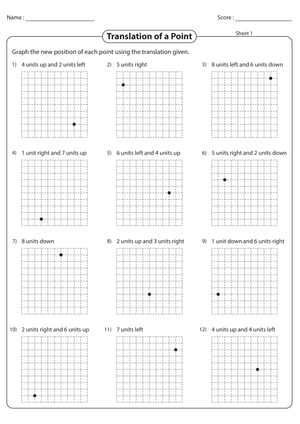
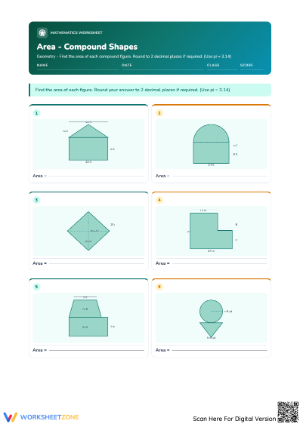
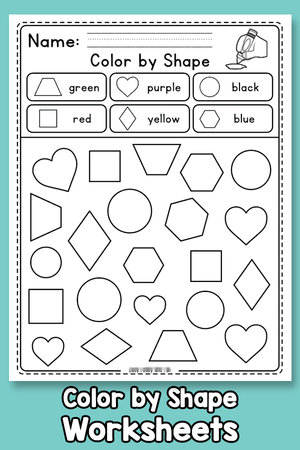
These geometry printable worksheets for 3rd grade cover the two skills at the center of the grade-level standard: classifying quadrilaterals by their measurable attributes and partitioning shapes into equal-area parts that connect directly to unit fractions. Third grade is when those two ideas converge — a student who can divide a rectangle into thirds is building fraction sense through geometry, not alongside it.
What Students Practice Across the Set
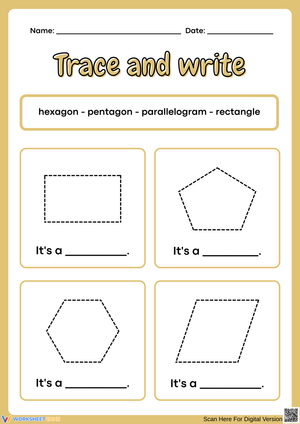
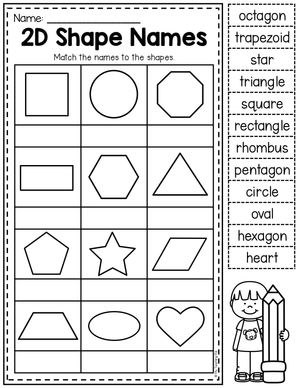
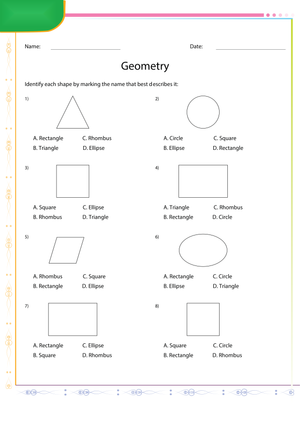
On the classification side, students sort rhombuses, rectangles, and squares based on side lengths and angle types rather than visual impression. They mark right angles, compare side measurements, and record which category or categories a shape belongs to — including cases where one shape fits multiple categories simultaneously. Several worksheets include non-examples: a four-sided figure with only two right angles placed deliberately among rectangles, or a rhombus without right angles placed beside a group of squares. Without non-examples, students match shapes to mental pictures rather than definitions, which is a fundamentally different cognitive task.
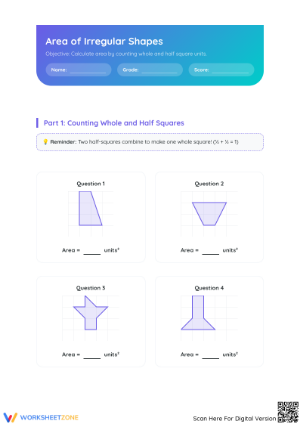
Across the full set of geometry printable worksheets for 3rd grade, partitioning exercises ask students to draw dividing lines that create two, three, four, six, or eight equal areas on circles, rectangles, and other polygons, then label each part with the correct unit fraction. Some exercises present pre-partitioned shapes and ask whether the areas are actually equal — a harder task than partitioning from scratch because it requires analysis rather than production.
Predictable Errors to Address Before They Solidify
Orientation trips up more students than teachers expect. A student who correctly identifies a square on its base will often write "diamond" when that same square is rotated 45 degrees — the visual impression has shifted even though no property has changed. The same confusion appears with non-square rhombuses shown in unfamiliar positions. Repeated exposure to shapes drawn at different angles is the most direct fix, and it matters more here than on almost any other concept at this level.
The rectangle-square hierarchy produces resistance that is partly semantic and partly prototype-based. Students accept that a square has four equal sides and four right angles, and they accept the same criteria for a rectangle with equal sides — but they push back against the conclusion that the square therefore qualifies as a rectangle. The argument is usually "they have different names." Worksheets that ask students to write a justification rather than just mark a box surface this confusion faster than any sorting exercise alone.
In partitioning, the area-versus-shape distinction takes time to settle. Many third graders accept that two equal-width vertical strips are halves of a rectangle but will argue that dividing the same rectangle diagonally into two triangles does not produce halves because "they're triangles." The defining criterion is area, not appearance. Exercises that show both partition types side by side give teachers a natural moment to press that comparison out loud with the whole class.
How to Work These Worksheets Into Your Lesson Flow
The most productive sequencing treats these worksheets as the consolidation step, not the instruction. Start a lesson with pattern blocks or geoboards — let students physically build shapes, test whether rotating a square changes its properties, fold a rectangle in half. Then move to the worksheet as the place where students write down and formalize what they discovered. The paper task is not where the learning happens; it's where the learning gets recorded and sharpened.
For small group rotations, geometry printable worksheets for 3rd grade work well at an independent station while the teacher pulls a small group to work through hierarchical classification with physical shape cards. The sorting exercises are self-contained enough that most students can work without interruption, and the non-example problems generate questions worth revisiting during the full-group discussion that follows.
Exit tickets are where these resources pay off most clearly. A single partitioning problem — "Divide this rectangle into thirds two different ways" — tells you immediately which students understand that equal area does not require identical shape, and which students are still treating "equal" as "identical." That data reshapes the next morning's warm-up more effectively than any end-of-unit check.
Standard Alignment
The classification worksheets align with CCSS.MATH.CONTENT.3.G.A.1, which requires students to understand that shapes in different categories can share attributes and that shared attributes define a broader category. At the classroom level, this standard represents a specific shift in expectation: a student who can say "this is a rectangle because it has four sides and four right angles" is meeting it; a student who says "it looks like a rectangle" is not. The attribute-based reasoning that 3.G.A.1 demands is the same reasoning that carries forward into 4th grade geometry and beyond.
The partitioning worksheets address CCSS.MATH.CONTENT.3.G.A.2, which explicitly bridges geometry and fractions by requiring students to express partitioned areas as unit fractions of the whole. This standard is placed at Grade 3 strategically — it builds the visual foundation students need before they begin operating with fractions in 3.NF. Teachers who treat shape partitioning as supplemental geometry practice are passing over one of the most direct bridges to fraction understanding in the entire grade-level curriculum.
Making These Worksheets Work Across Ability Levels
Students who are still consolidating basic shape recognition benefit from working alongside an attribute reference card — a printed list of the defining properties for each quadrilateral type. This removes vocabulary retrieval from the task and keeps the focus on applying definitions to new cases. For partitioning, beginning students do better when the shapes are large and the work starts with halves and fourths before thirds and sixths are introduced.
Students who have the classification logic in place can move to "always, sometimes, never" statements: A rectangle is sometimes a square. A rhombus is always a quadrilateral. Requiring a written justification for each — not just a circled answer — pushes them toward deductive reasoning that anticipates middle school geometry. For partitioning, the natural extension is finding all distinct ways to divide a given shape into a specified number of equal-area parts, which surfaces the area-versus-shape distinction in a more open-ended format than any fill-in exercise can.
Frequently Asked Questions
Do these worksheets cover 3D shapes?
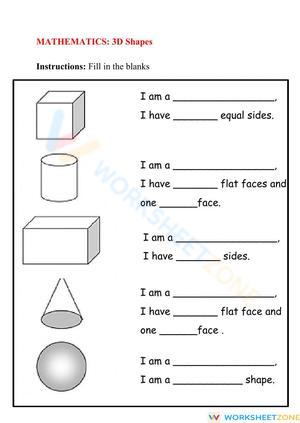
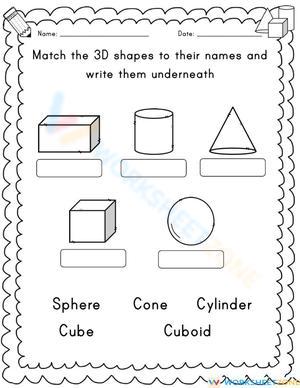
No — and deliberately so. CCSS 3.G focuses entirely on 2D shapes, their attributes, and the connection between partitioning and fractions. Students typically revisit 3D shapes in Grade 4 with greater precision. If students want to explore that territory, those conversations can happen orally or as extensions, but each worksheet stays within the Grade 3 standard scope.
How is the rectangle-square hierarchy typically addressed before third grade?
In most K–2 programs, squares and rectangles are taught as separate named shapes without any examination of hierarchical relationships. Third grade is usually the first time students encounter the idea that one shape category can be a subset of another. That context explains why the resistance is so consistent — students are not confused about shapes they already know; they are encountering a new type of geometric question for the first time.
Can I use these at the start of 4th grade for review?
Yes, particularly the classification exercises. Before 4th graders work on CCSS 4.G — which adds angle classification and line concepts — many need a reset on what distinguishes one quadrilateral type from another. The geometry printable worksheets for 3rd grade in this set cover exactly the attribute-reasoning skills that 4th grade geometry builds on, and running a few of them in the first week of school takes about fifteen minutes while giving you a clear picture of where students actually are.
What do I do when a student freezes on a shape they don't recognize?
Have them list the properties they can observe — count the sides, check for right angles, compare side lengths — before naming anything. The goal is to move the student from "I don't know this shape" to "this shape has these features." That process works with any polygon, regardless of whether it matches a prototype they've memorized. Students who practice attribute-listing as a habit stop depending on recognition as their primary strategy, which is ultimately the transfer the standard is asking for.













 Interactive Worksheet Maker
 Quiz Maker
 Word Search Maker
 Crossword Puzzle Maker
 Word Scramble Generator
 Sentence Scramble Generator
 Handwriting Worksheet Generator
 Name Tracing Generator
 Fill In The Blank Generator