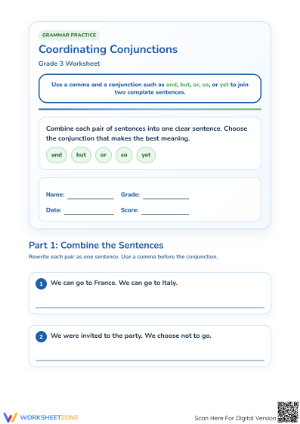
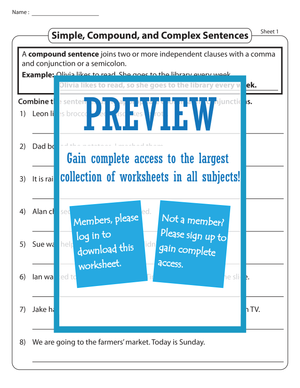
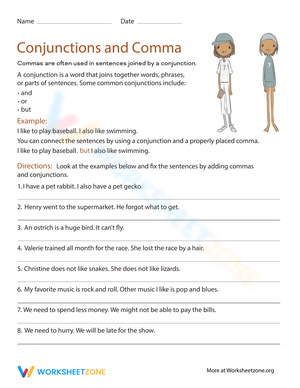
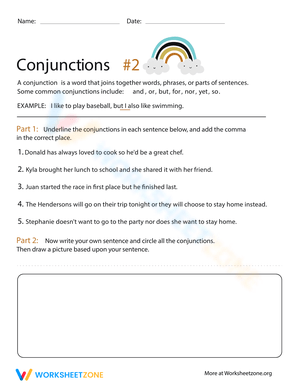
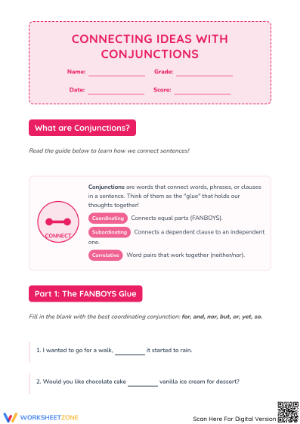
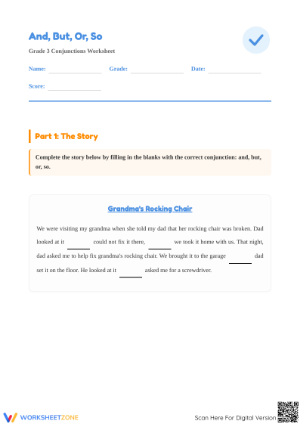
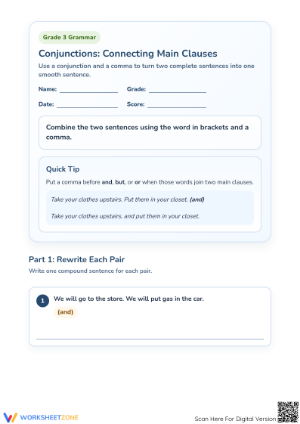
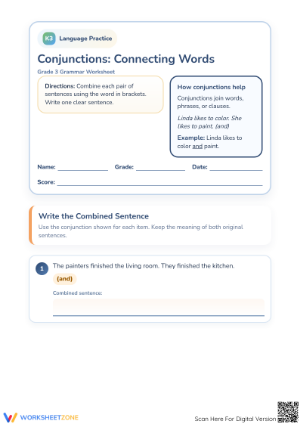
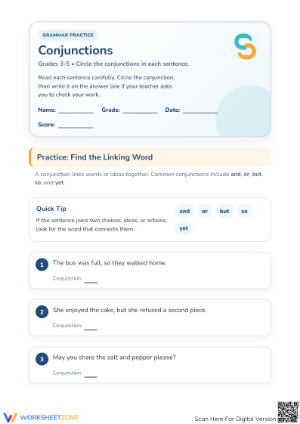
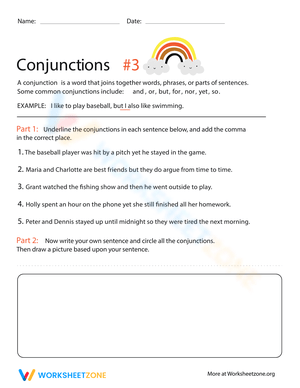
These coordinating conjunctions printable worksheets for 3rd grade give teachers a direct path into one of the most consequential grammar transitions in elementary writing — moving students from strings of short, disconnected sentences to fluid compound constructions. Each worksheet targets a specific skill: sentence combining, conjunction selection, comma placement, or independent clause identification. Teachers get print-ready resources that slot into a grammar block, a warm-up routine, or a targeted review session without any additional prep.
The Specific Skills Each Worksheet Builds
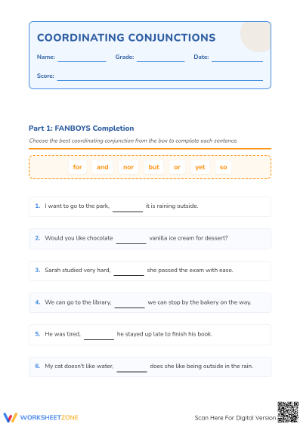
Third grade is when FANBOYS — For, And, Nor, But, Or, Yet, and So — enters the curriculum explicitly. While all seven coordinating conjunctions matter, classroom instruction at this level centers on and, but, and or first, then expands to so once students handle the basics. The worksheets in this set move through several distinct skill areas:
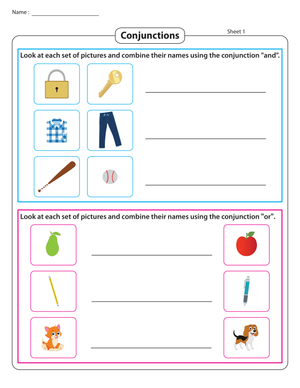
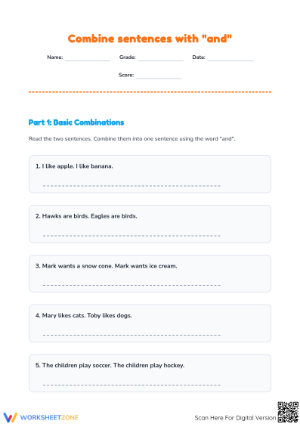
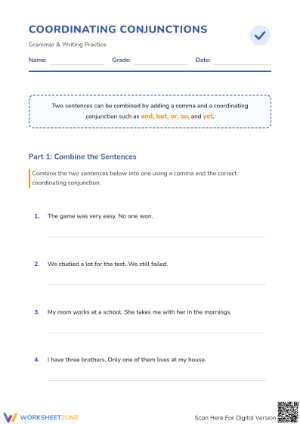
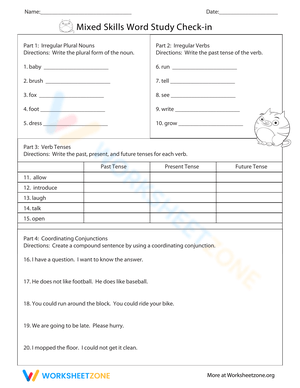
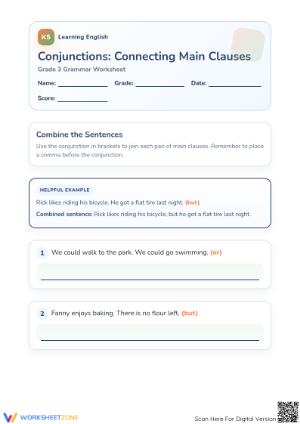
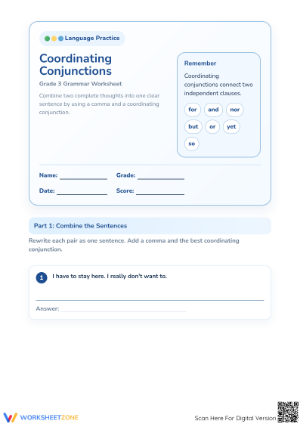
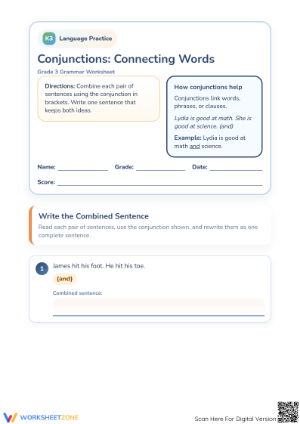
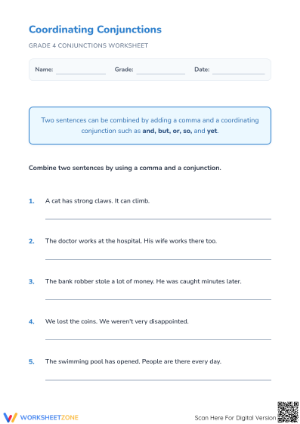
- Sentence combining: Students receive two short sentences and rewrite them as a single compound sentence. This directly builds writing fluency by giving students a concrete model before they apply the skill independently.
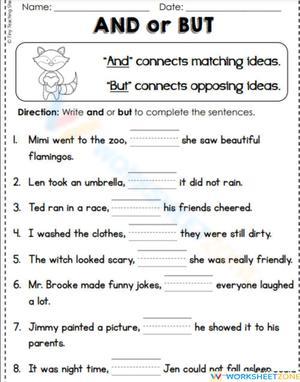
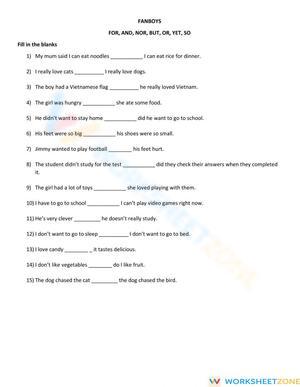
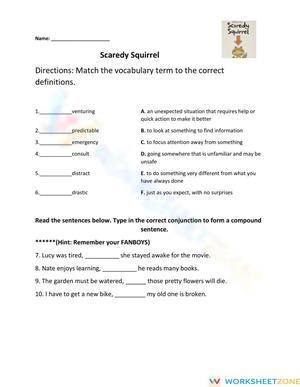
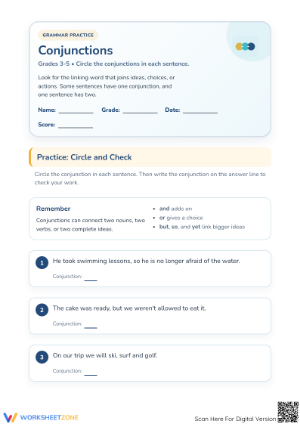
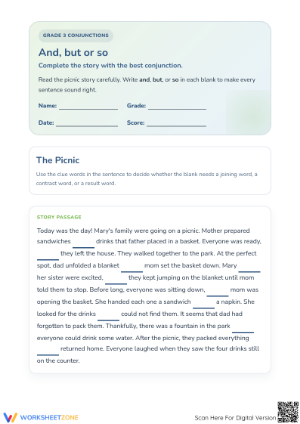
- Conjunction selection: Fill-in-the-blank items ask students to read both clauses, identify the relationship between them, and choose the conjunction that makes the sentence logically coherent — not just grammatically possible.
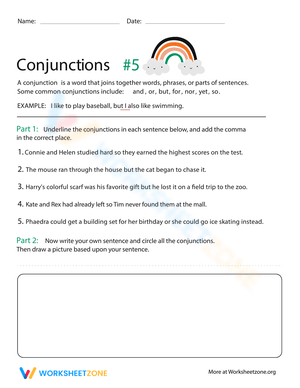
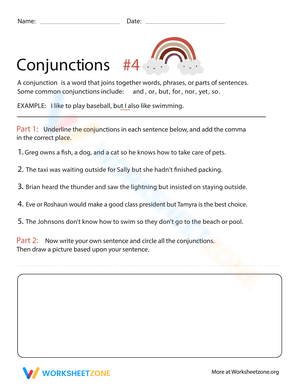
- Comma placement: Each worksheet that involves compound sentences requires students to mark comma placement before the conjunction. Students practice this separately from conjunction choice so they aren't managing two decisions at once.
- Open-ended sentence completion: Students receive the first clause and the conjunction, then write their own second clause. This format reveals whether students actually understand the function of each conjunction or are just pattern-matching from earlier exercises.
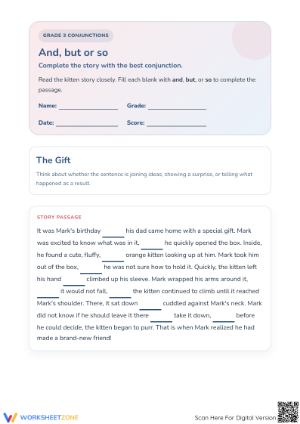
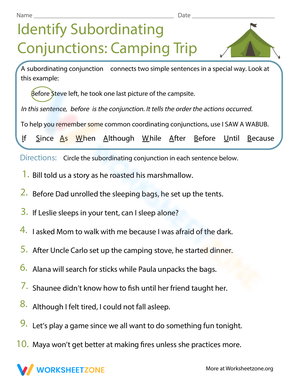
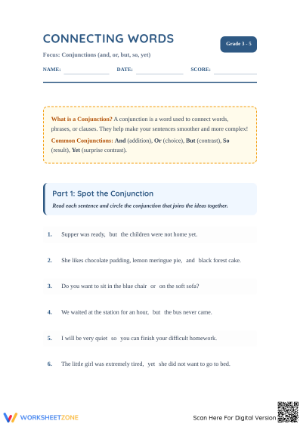
The set also includes passage-level work where students underline or annotate coordinating conjunctions within short paragraphs — a different cognitive task than producing them, and a more honest measure of whether students recognize these structures in context. The passage-level exercises are often the most telling: students who sail through fill-in-the-blank items sometimes pause unexpectedly when the conjunction appears mid-paragraph without a prompt directing their attention to it.
Mistakes Students Make That These Worksheets Help You Catch
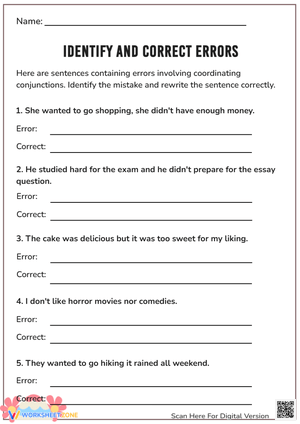
The comma rule produces the most consistent errors in student work. Third graders who understand that a comma goes "before the conjunction" often apply that rule indiscriminately — they'll write "I like pizza, and cake" with a comma even though "and cake" is not an independent clause. The distinction between joining two independent clauses versus joining two nouns or verb phrases is genuinely difficult for eight-year-olds, and the worksheets build toward it gradually rather than expecting students to apply it correctly on the first encounter.
Conjunction confusion between but and or appears less often than teachers expect. The more common confusion is between but and so. Students frequently write sentences like "I was tired, but I went to bed early" when they mean "I was tired, so I went to bed early." The first sentence creates a false contrast where the writer actually intends cause and effect. Projecting a student-produced example of this error on the board — without identifying the student — tends to fix it faster than any single exercise can.
Building These Worksheets Into Your Weekly Grammar Plan
The most effective use of these resources isn't a single dedicated grammar lesson — it's a three-to-four-day sequence. On day one, model sentence combining on the board using two student-generated sentences, then release students to the first combining worksheet. On day two, address conjunction selection in a brief whole-group discussion before students work through the fill-in-the-blank items independently. The comma rule works best introduced on day three, after students are already comfortable choosing the right conjunction, so they aren't splitting attention between two unfamiliar decisions at once. That's a basic cognitive load management move: separate the decisions until each one is automatic.
These coordinating conjunctions printable worksheets for 3rd grade also fit naturally into a morning warm-up cycle. A sentence-combining item projected on the board takes about five minutes to discuss and requires no additional materials. By mid-October, most classes can work through one item and a brief discussion before the official lesson begins. Completed worksheets function as a formative check — not a grade, but a quick scan that shows which students are still applying the comma rule incorrectly and which ones are ready for sentence expansion work.
Standard Alignment
These worksheets address Common Core standard L.3.1.h, which requires third graders to use coordinating and subordinating conjunctions as part of demonstrating command of standard English grammar and usage. In classroom terms, L.3.1.h sits within the third-grade grammar progression as a bridge skill — students move from subject-verb agreement and basic sentence structure into the compound and complex sentences that anchor fourth-grade writing expectations. Teachers using standards-based reporting can map each worksheet directly to this standard, which makes progress documentation straightforward and surfaces early which students need additional targeted practice before the skill appears in a written response context.
Differentiating These Worksheets Across Ability Levels
Students who need more support do well starting with conjunction selection in isolation — single sentences where they choose from two options printed directly below the blank. That constrained format removes the memory load of recalling all seven FANBOYS and keeps the focus on understanding the relationship between clauses. Once students choose correctly when given two options, move them to items where they select from all seven without any printed list.
For students who finish quickly and correctly, the open-ended sentence completion items are worth revisiting with an added constraint: require them to rewrite the sentence using a conjunction from a different category than the one they chose initially. A student who defaulted to and throughout should try joining the same clause pair with but or so, then explain in one sentence why the meaning shifted. That kind of metalinguistic reflection — thinking about how the conjunction changes the relationship between ideas — is genuinely challenging and rarely available in a standard drill format. For classrooms with a wide ability spread, coordinating conjunctions printable worksheets for 3rd grade that pair open-ended extension tasks with basic drills give every student the same starting point while still differentiating the ceiling.
Frequently Asked Questions
Which conjunctions should third graders learn first?
Start with and, but, and or. These three cover addition, contrast, and choice — the relationships that appear most often in early elementary writing. Once students use all three reliably in their own sentences, introduce so for cause-and-effect. The remaining conjunctions — for, yet, and nor — appear infrequently enough in third-grade writing that formal instruction can wait until the other four are solid.
Do students need to memorize the FANBOYS acronym, or just the words?
The acronym is a memory aid, not the goal. Some students latch onto it immediately and find it useful as a checklist when combining sentences. Others find it confusing because the acronym order doesn't match the frequency order they encounter in reading and writing. What matters is whether a student can choose the right conjunction in context. Posting FANBOYS in the room as a reference during worksheet practice costs nothing and helps the students who rely on it — but a student who can't recite the acronym yet still chooses conjunctions correctly is doing exactly what the instruction aims for.
When does the comma rule become a tested skill?
The comma-before-a-coordinating-conjunction rule appears in standardized editing tasks as early as fourth grade, but the foundational work happens in third. Students who have practiced it consistently in the context of coordinating conjunctions printable worksheets for 3rd grade recognize the pattern quickly when it reappears in an editing item. The students who struggle most in fourth and fifth grade are typically those who learned conjunction use in third grade but never had dedicated comma-placement practice — so skipping that component of the worksheets is a real instructional cost, not just a gap in coverage.
How long does a typical worksheet session take?
A sentence-combining worksheet runs about twelve to fifteen minutes for most third graders working independently — longer if it includes a passage-annotation component. Fill-in-the-blank conjunction selection items tend to go faster, closer to eight to ten minutes. Build in a three-to-five-minute whole-class debrief where at least one student-produced sentence gets reviewed publicly, because that discussion is usually where the actual misconceptions surface.












 Interactive Worksheet Maker
 Quiz Maker
 Word Search Maker
 Crossword Puzzle Maker
 Word Scramble Generator
 Sentence Scramble Generator
 Handwriting Worksheet Generator
 Name Tracing Generator
 Fill In The Blank Generator