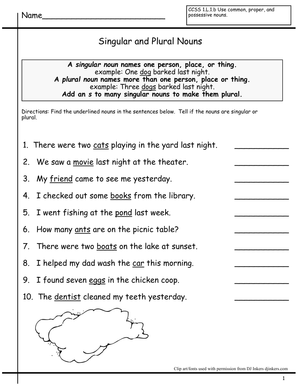
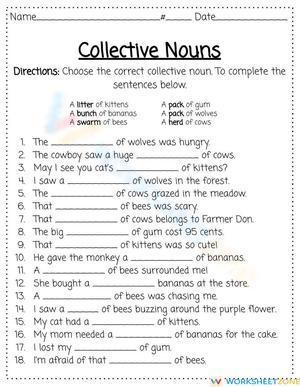
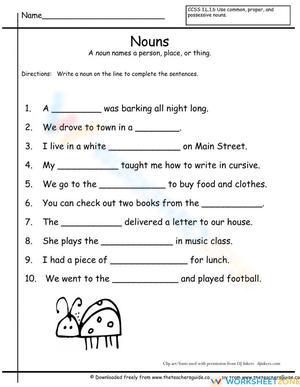
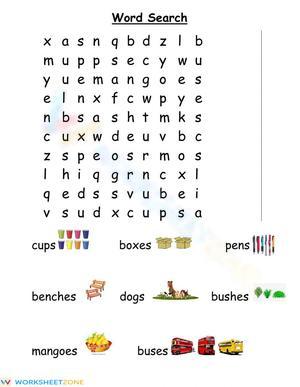
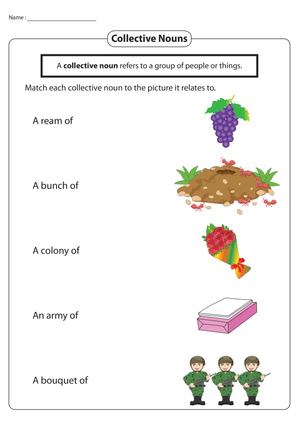
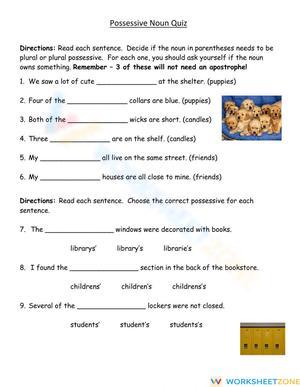
These nouns printable worksheets for 3rd grade target the four noun categories that define the language arts curriculum at this level — common and proper nouns, regular and irregular plural forms, abstract nouns, and possessive constructions. Teachers get focused, print-ready practice that moves students beyond labeling and into the sentence-level analysis and editing the grade actually requires.
The Four Noun Skills the Set Addresses
Third grade is where noun instruction stops being introductory. Students already know that nouns name people, places, and things; now they have to handle what happens to those nouns inside sentences — how they change form, when they take apostrophes, and whether they name something they can touch or only think about.
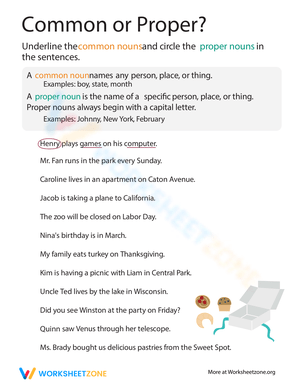
- Common and proper nouns: Students sort, identify, and rewrite words and phrases, applying capitalization rules for specific names, places, and titles.
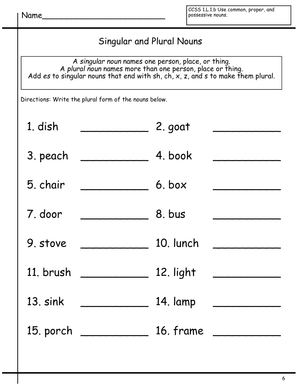
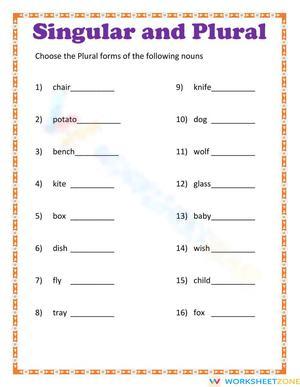
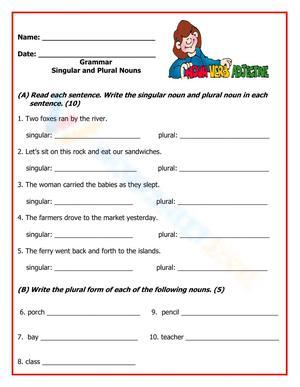
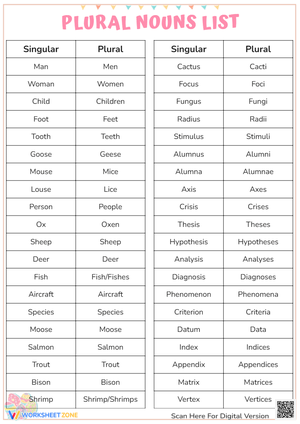
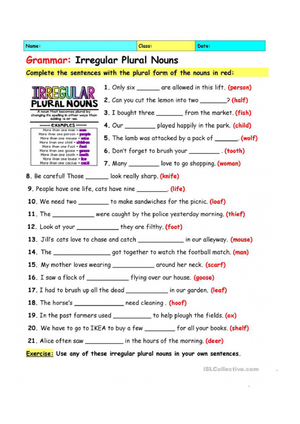
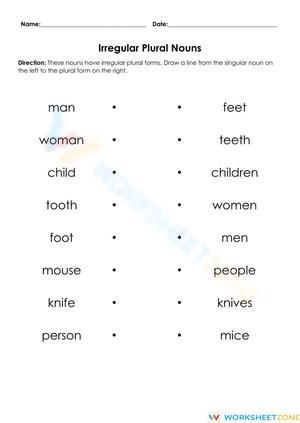
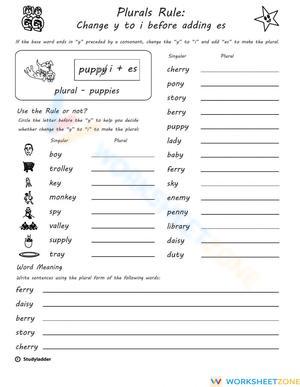
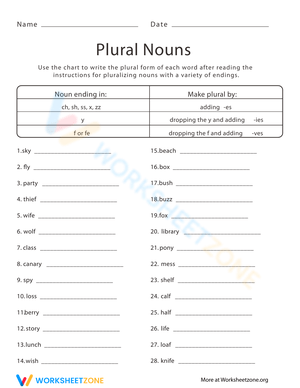
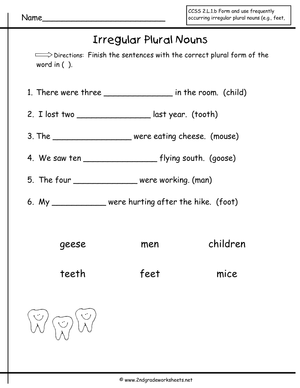
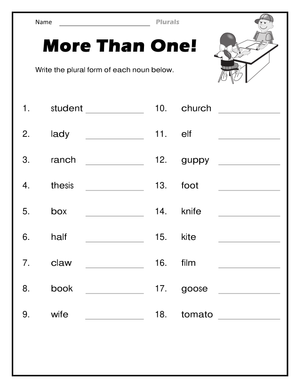
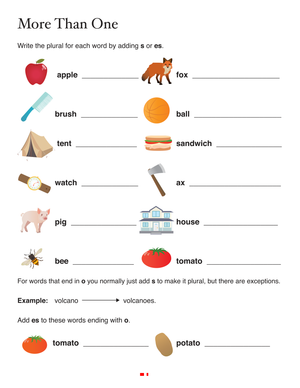
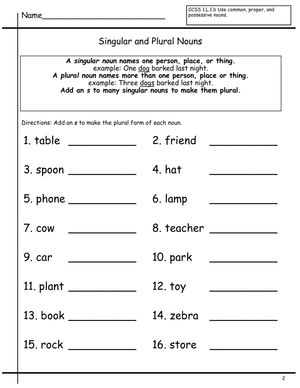
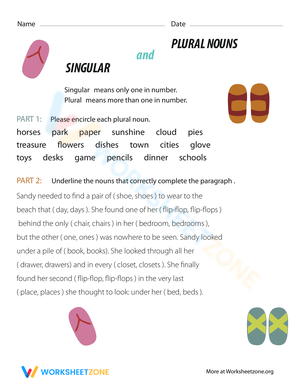
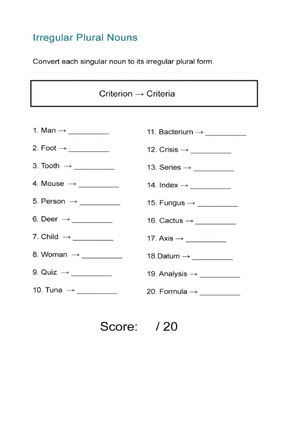
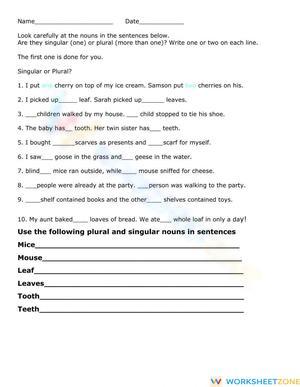
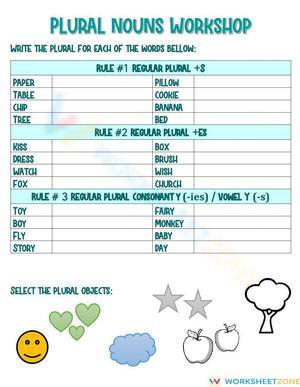
- Regular and irregular plural nouns: Exercises move from straightforward s and es endings into irregular forms — child/children, foot/feet, mouse/mice — and the no-change words like sheep and deer.
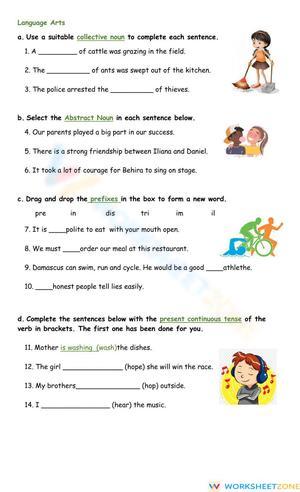
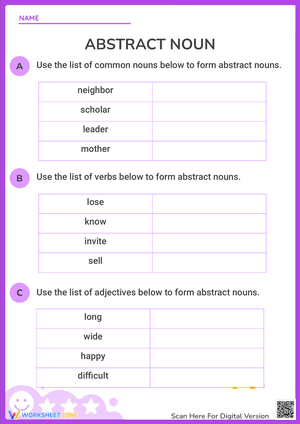
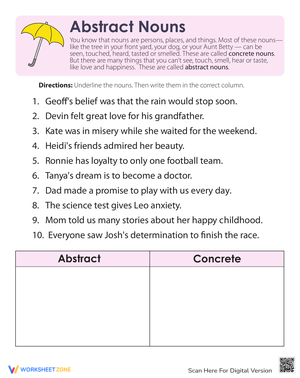
- Abstract nouns: Students identify and use nouns like courage, honesty, and friendship — words they can discuss but cannot point to on a shelf.
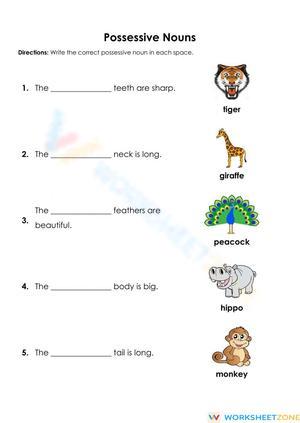
- Possessive nouns: Each worksheet practices both singular possessives (the dog's collar) and plural possessives (the dogs' collars), with exercises that require students to determine form before placing the apostrophe.
Where Students Reliably Go Wrong
The apostrophe errors in this unit are predictable, and it is worth anticipating them before students reach the possessive noun work. Once third graders learn that possessive nouns take apostrophes, many apply that rule to every word ending in s — producing sentences like "The cat's are sleeping" right alongside correct ones. What makes this set useful for catching that error is that possessive noun exercises mix plural and possessive forms inside the same passage. Students have to read each sentence carefully and decide whether the s marks quantity or ownership before writing anything down.
Abstract nouns present a different problem entirely. Students do not write them incorrectly — they simply do not process freedom or patience as nouns at all. When asked to underline every noun in a paragraph, most third graders skip abstract nouns and circle only the objects they could draw. A "five senses test" helps: if you cannot see, hear, smell, taste, or touch it but it still names a thing or idea, it is abstract. Giving students that self-check to use during independent practice catches more errors than re-explaining the definition does.
Irregular plurals produce a third error type — confident overgeneralization. Students who have mastered adding s will write mouses, childs, and tooths without hesitation. These are not careless mistakes; they are the result of a rule working exactly as taught and running straight into an exception. Each worksheet that groups irregular plurals by internal pattern — vowel-change words together, full-stem-change words together, no-change words together — helps students recognize that irregular forms have their own logic rather than being arbitrary.
Standard Alignment
CCSS.ELA-LITERACY.L.3.1.B requires students to form and use regular and irregular plural nouns. This standard sits in the language strand at third grade because plural formation is one of the first morphological rules students actually run into in their own writing — the errors show up in journal entries and story drafts, not just on grammar exercises. CCSS.ELA-LITERACY.L.3.1.C addresses abstract nouns directly. That standard exists at this grade partly because the vocabulary students encounter in third-grade informational reading — justice in social studies, responsibility in character education — demands that they treat these words grammatically, not just thematically. Possessive noun practice connects to CCSS.ELA-LITERACY.L.3.2, which covers punctuation conventions in standard English writing.
Working These Worksheets Into Your Teaching Week
The most practical use is as a Monday warm-up after introducing a noun category the previous week. Students spend six to eight minutes completing the worksheet independently, which gives the teacher a quick read on retention before the next concept arrives. Exit tickets work equally well — a short possessive noun exercise at the end of a lesson tells you immediately which students have separated the -s/-'s distinction and which still need a small-group session before Friday.
For small-group instruction, these nouns printable worksheets for 3rd grade work well when students complete the exercise together while the teacher annotates a shared copy under a document camera. Hearing a student explain out loud why they placed an apostrophe where they did surfaces reasoning errors that a completed worksheet alone would hide. The debrief — not just the practice — is where the real correction happens.
Adjusting the Work Across a Range of Writers
In a mixed-ability class, these nouns printable worksheets for 3rd grade hold up across levels when teachers adjust the support, not the content. Students who are still building basic noun identification skills benefit from having an anchor chart visible while they work — a posted list of confirmed irregular plurals removes the retrieval burden enough that these students can focus on applying the forms correctly in sentences rather than guessing from memory.
For students ready to go further, adding a writing-application step deepens the practice without requiring a different resource. After identifying abstract nouns in a list, those students write two sentences of their own using a word like confidence or grief — one where it functions as the subject, one where it functions as the object. That single additional task shifts the exercise from recognition to production, which is where advanced writers actually need the stretch. Students who are struggling, on the other hand, benefit from versions where choices are provided and the task is sorting or matching rather than open recall.
Frequently Asked Questions
How do I explain abstract nouns to a third grader who keeps insisting they don't make sense?
Start with contrast. Show students a picture of a dog alongside the word dog, then ask them to draw a picture of loyalty. When they cannot, that is the entry point: abstract nouns name things that are real to us but impossible to photograph. Most students find it easier once they hear that abstract nouns live in your mind or chest — feelings, ideas, qualities — rather than on a table or in a room. These nouns printable worksheets for 3rd grade include sentences that place abstract nouns in familiar, age-appropriate contexts, giving students examples to return to when they are uncertain during independent work.
What is the best sequence for teaching these four noun types?
Common and proper nouns first — most students arrive with partial knowledge of them, and the capitalization rule provides immediate, visible feedback on whether they are right. Plural nouns second, starting with regular forms as a quick review before moving into irregular ones as new instruction. Possessive nouns third, so students have already separated "more than one" from "belonging to" in their mental model before the apostrophe enters the picture. Abstract nouns can run alongside the others or stand alone as a separate unit, depending on how much conceptual support the class needs with intangible naming words.
How do these worksheets connect back to students' actual writing?
The connection will not transfer on its own — it has to be made deliberately. After completing a possessive noun exercise, a short peer-editing session where students hunt for apostrophe errors in each other's writing journals applies the rule in a real writing context. After abstract noun work, asking students to find one abstract noun in their current independent reading book grounds the concept in authentic text. Grammar practice that ends at the worksheet tends to stay there. Practice that loops back into reading and writing becomes part of how students edit their own work — which is the actual goal.












 Interactive Worksheet Maker
 Quiz Maker
 Word Search Maker
 Crossword Puzzle Maker
 Word Scramble Generator
 Sentence Scramble Generator
 Handwriting Worksheet Generator
 Name Tracing Generator
 Fill In The Blank Generator