


























Views
Downloads

More & Most Adjectives Worksheet | Grade 2 ELA Printable
Paste this activity's link or code into your existing LMS (Google Classroom, Canvas, Teams, Schoology, Moodle, etc.).
Students can open and work on the activity right away, with no student login required.
You'll still be able to track student progress and results from your teacher account.
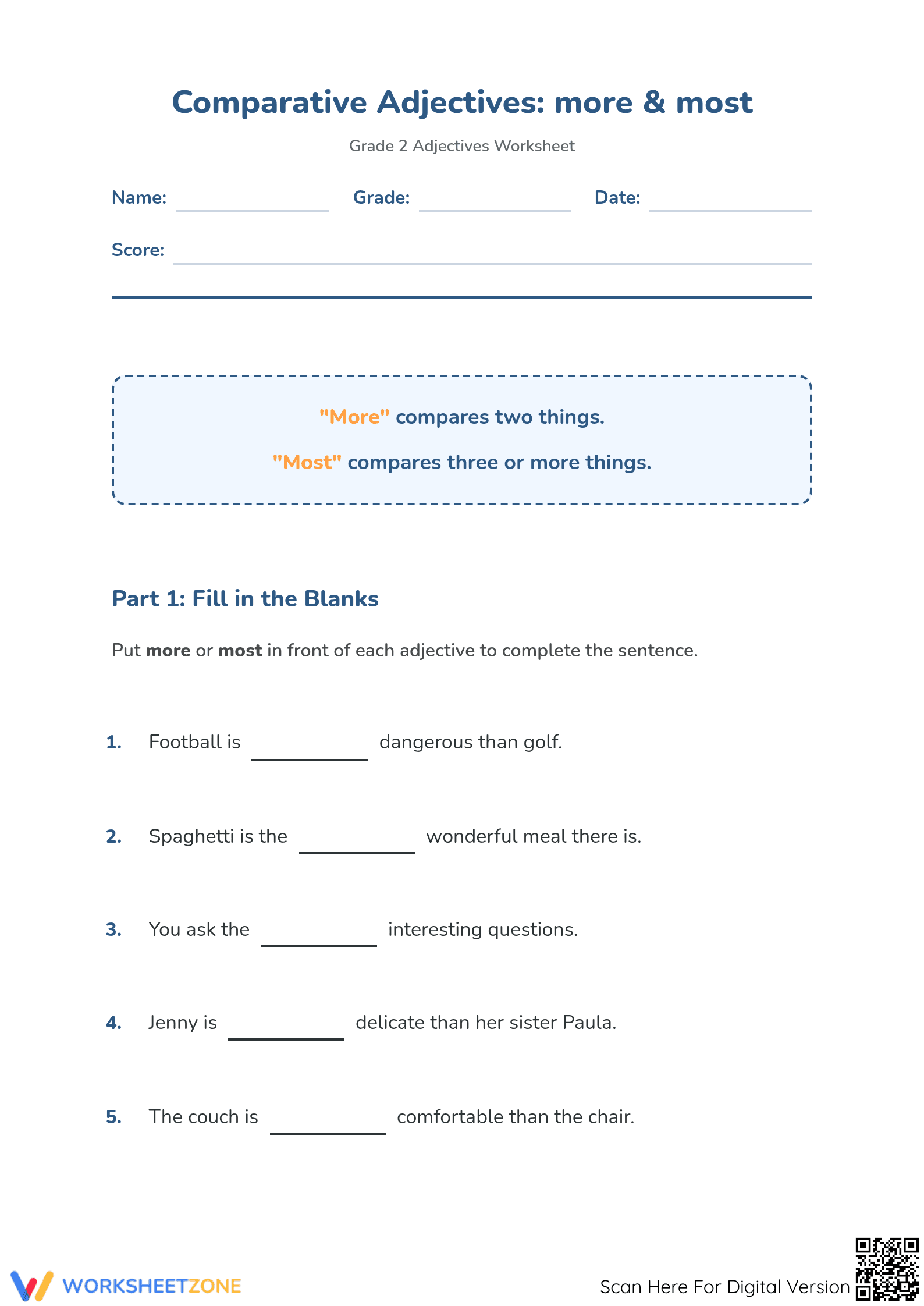
This focused grammar worksheet helps second-grade students master comparative and superlative adjectives using "more" and "most." By completing these targeted exercises, learners will confidently compare two or more nouns, improving their descriptive writing and everyday communication skills with clear, structured practice.
At a Glance
- Grade: 2 · Subject: ELA
- Standard:
CCSS.ELA-LITERACY.L.2.1.E— Use adjectives to modify nouns correctly- Skill Focus: Comparative and superlative adjectives (more/most)
- Format: 3 pages · 20 problems · Answer key included · PDF
- Best For: Independent practice and grammar review
- Time: 15–20 minutes
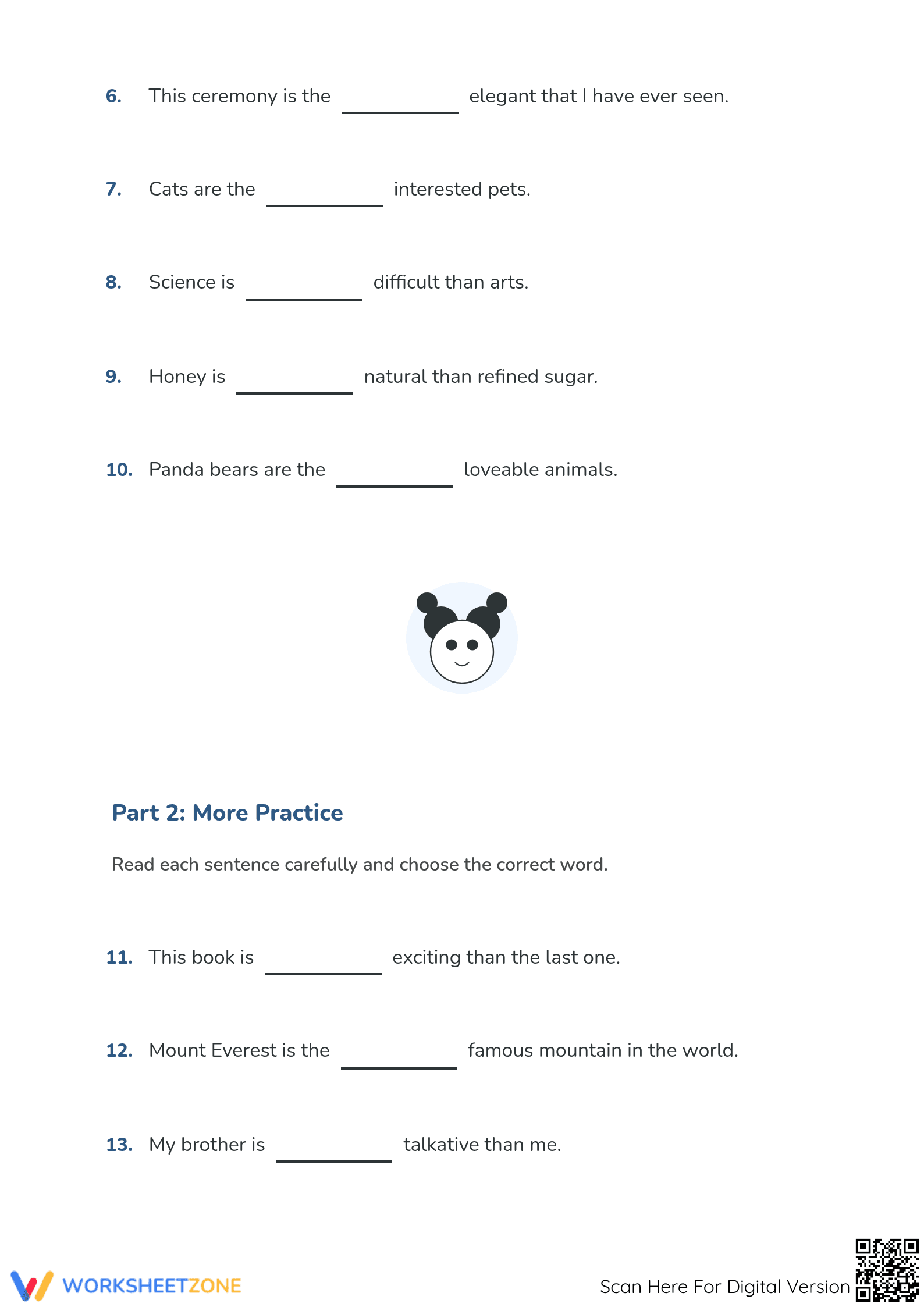
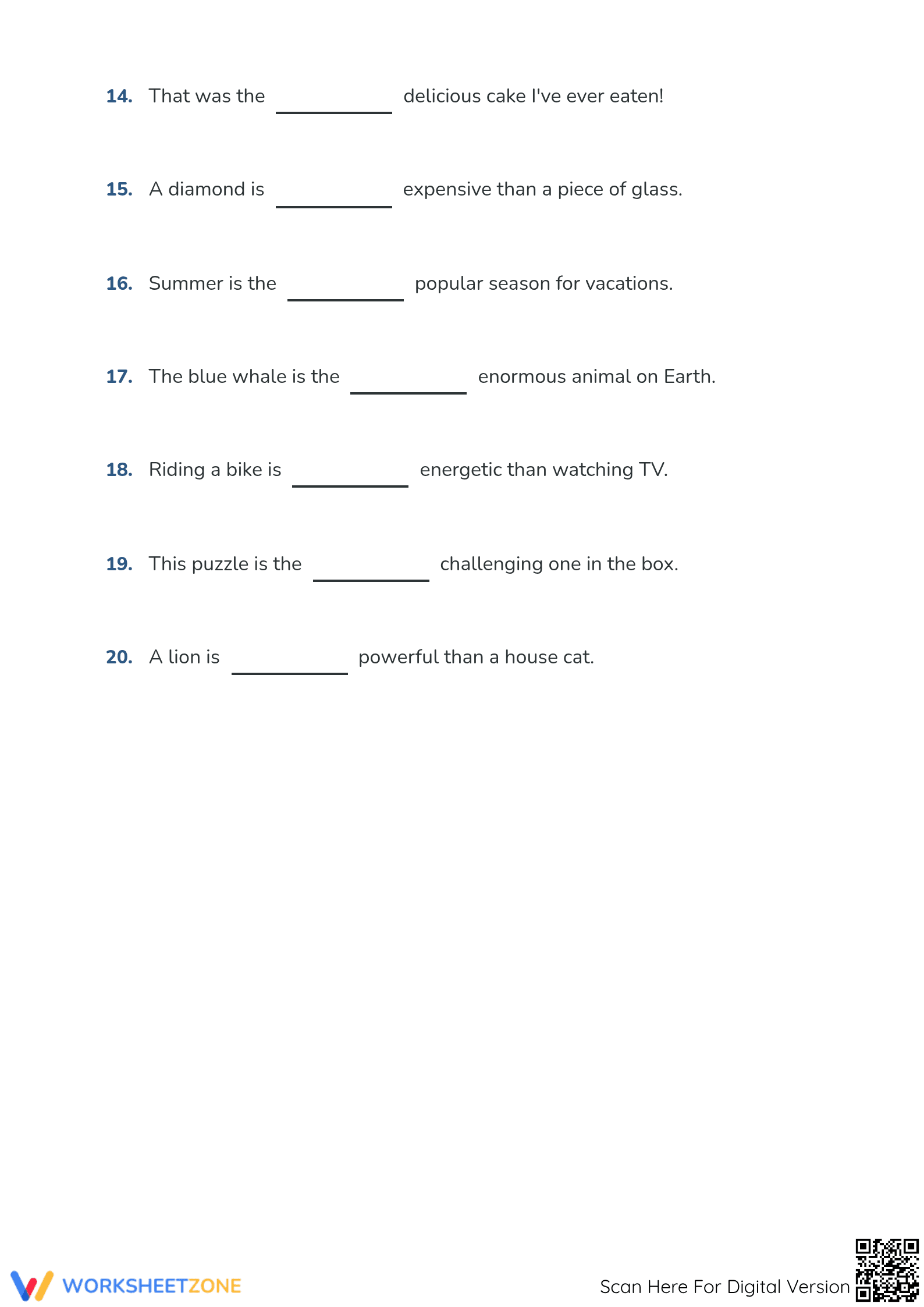
This comprehensive resource features three pages of focused grammar exercises. The worksheet begins with a clear instructional box explaining the rules for using "more" (comparing two things) and "most" (comparing three or more things). Students then apply these rules across 20 fill-in-the-blank sentences, choosing the correct modifier for each context. A complete answer key is provided to ensure quick and accurate grading for educators.
- Guided practice: The activity opens with a clear rule definition, providing a reliable reference point for students as they begin the exercises.
- Supported practice: The first 10 questions prompt students to explicitly choose between "more" and "most" based on clear contextual clues in the sentence.
- Independent practice: The final 10 questions offer additional repetition to solidify mastery, requiring students to read carefully and determine the correct comparative word independently.
This gradual-release approach ensures students build confidence as they move from reviewing the rule to applying it in varied contexts.
Aligned to CCSS.ELA-LITERACY.L.2.1.E, this resource requires students to use adjectives and adverbs, and choose between them depending on what is to be modified. By focusing specifically on comparative and superlative forms, the worksheet builds foundational language skills necessary for clear expression. Both standard codes can be copied directly into lesson plans, IEP goals, or district curriculum mapping tools.
This worksheet is highly versatile for classroom instruction. Use it as an independent practice activity immediately following a mini-lesson on comparative adjectives. Alternatively, assign it as morning work or a homework task to reinforce previously taught grammar concepts. As a formative assessment tip, observe whether students struggle more with identifying the number of items being compared (two vs. three or more) or with reading comprehension of the sentence itself. Expected completion time is 15 to 20 minutes.
This resource is designed for second-grade students developing their foundational grammar skills. It is also appropriate for third graders needing a refresher on comparative modifiers or English Language Learners (ELLs) practicing English adjective rules. For optimal results, pair this worksheet with a visual anchor chart displaying examples of "more" and "most" used in everyday sentences.
Mastering foundational grammar rules like CCSS.ELA-LITERACY.L.2.1.E, where students use adjectives to modify nouns correctly, is essential for developing strong written and oral communication. Explicit instruction in comparative and superlative forms allows young writers to add precision and detail to their work, moving beyond basic descriptions. According to Fisher & Frey (2014), providing students with clear, targeted practice opportunities significantly improves their ability to transfer isolated grammar skills into their independent writing and reading comprehension. This worksheet supports that critical transition by offering 20 structured repetitions, helping learners internalize the distinct rules for comparing two items versus comparing three or more items. By isolating this specific language convention in a low-stakes format, educators can efficiently identify student misconceptions and provide immediate corrective feedback, ensuring long-term retention of the skill for future academic success.


