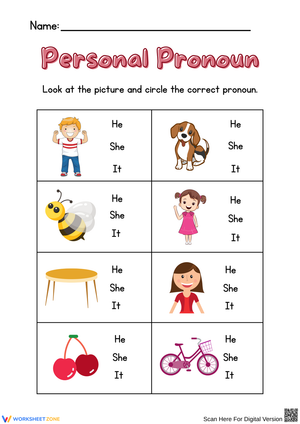
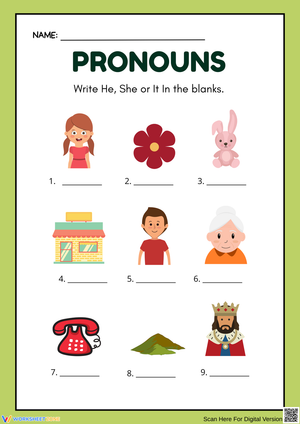
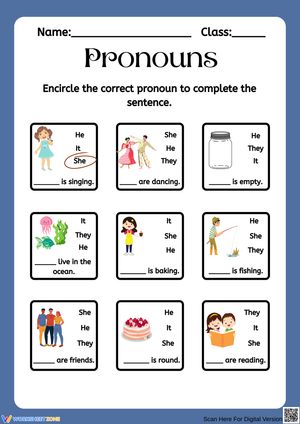
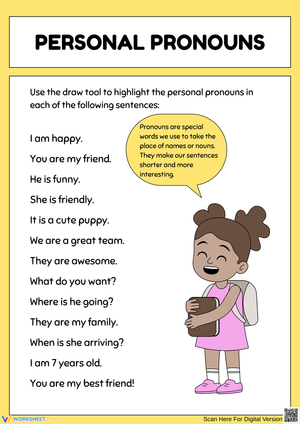
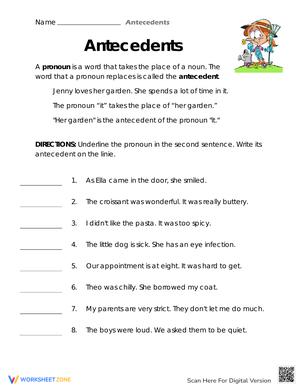
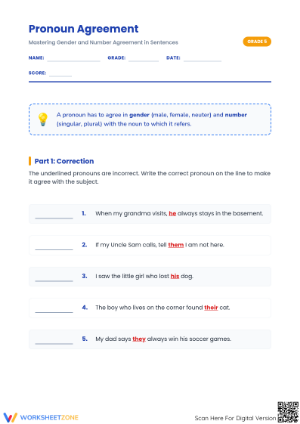
These pronouns printable worksheets for 3rd grade give teachers a set of ready-to-use resources for one of the trickier grammar transitions in elementary school — the point where students need to stop leaning on nouns and start choosing pronouns deliberately, with attention to form, agreement, and context. Each worksheet focuses on a specific skill, and task formats shift across the set: sentence completion, error correction, pronoun-antecedent matching, and paragraph rewriting. That range matters because pronoun mastery at this grade involves several related but distinct skills, and each one needs its own direct practice.
What Each Worksheet Targets
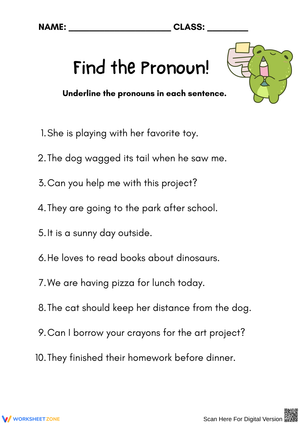
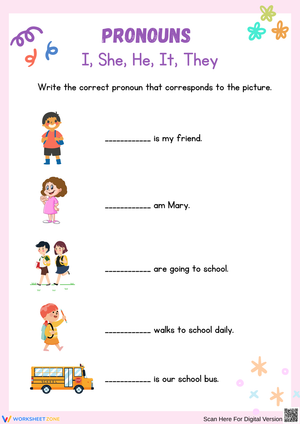
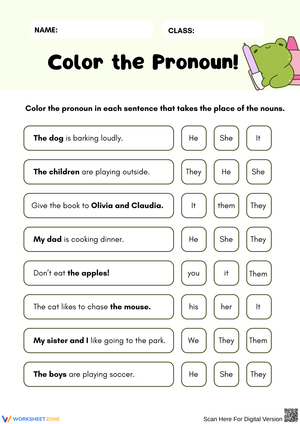
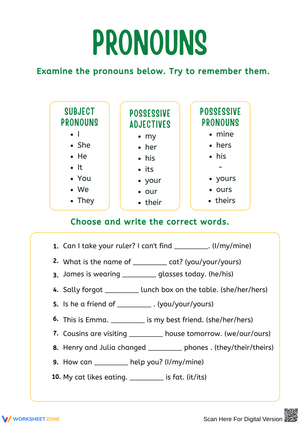
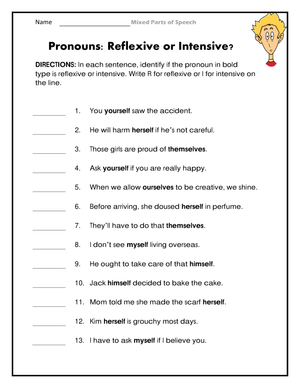
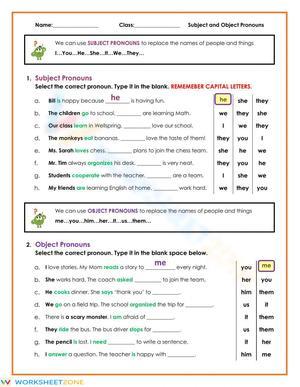
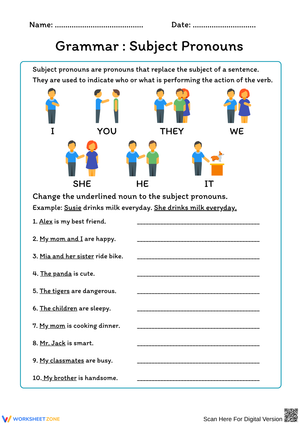
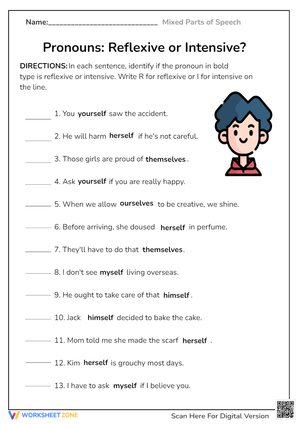
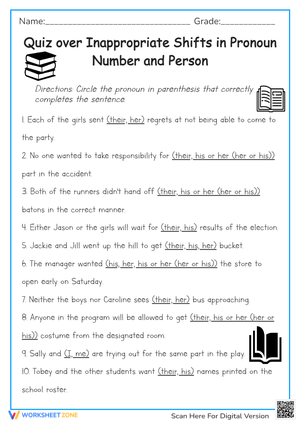
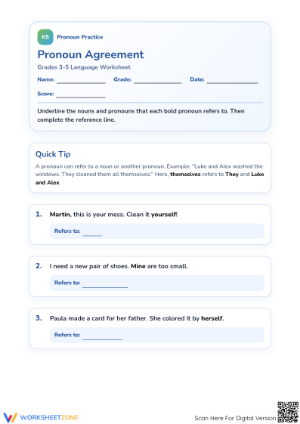
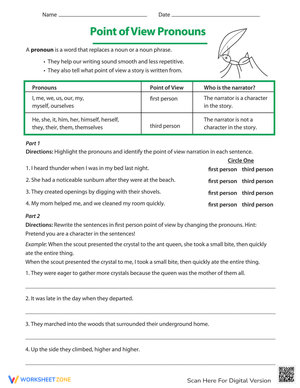
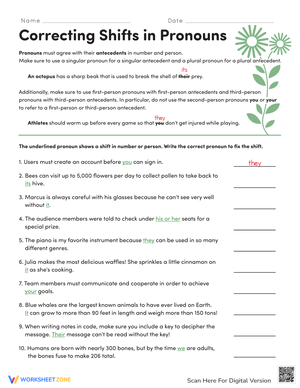
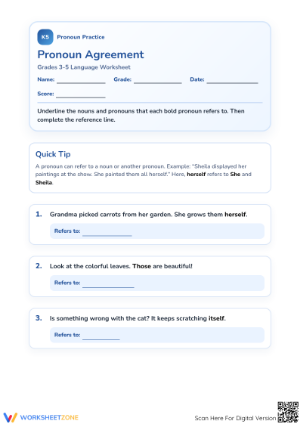
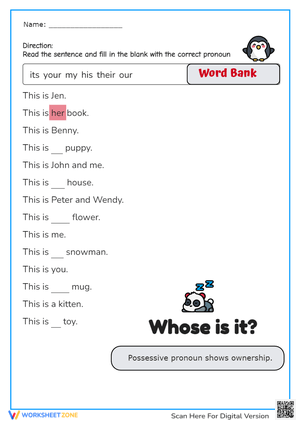
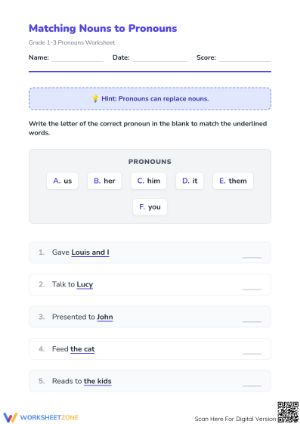
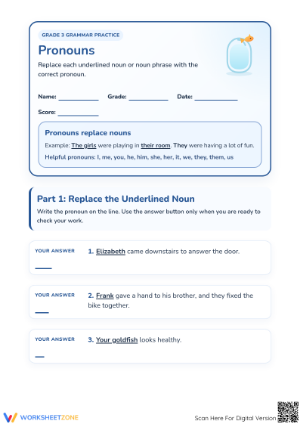
The set moves through the pronoun categories third graders are expected to control by the end of the year. Subject and object pronouns come first — students underline the noun being replaced, then choose the correct pronoun form and rewrite the sentence. From there, the worksheets shift to possessive pronouns, where students convert possessive noun phrases ("the dog's collar" becomes "its collar") and learn that possessive pronouns never take apostrophes, which contradicts everything they know about possessive nouns. Reflexive pronouns get their own dedicated worksheets because third grade is typically the first formal introduction to this category — students match reflexive forms to their subjects, then use them in original sentences to demonstrate they understand what makes the relationship reflexive. Pronoun-antecedent agreement tasks close out the sequence, asking students to draw lines from pronouns back to the nouns they replace, then correct sentences where agreement breaks down in number or gender.
Mistakes Students Make That These Worksheets Help Surface
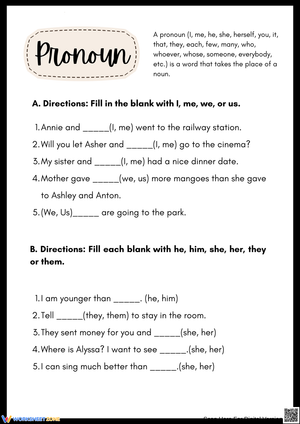
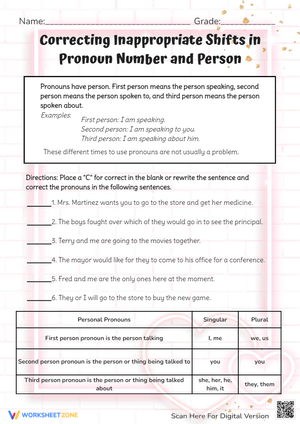
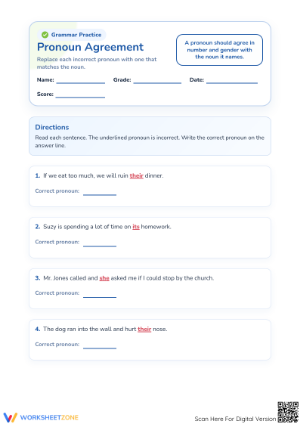
The compound subject problem shows up constantly in actual student writing: "Me and Jordan played at recess" instead of "Jordan and I played at recess." Students who know that "I" is a subject pronoun will still reach for "me" in a compound subject because the compound structure masks the error. The fix — drop the other person and read the sentence alone ("Me played at recess" sounds obviously wrong; "I played at recess" sounds right) — is clear once students know to apply it, but they won't apply it automatically. Error-correction worksheets that push students to test each pronoun in isolation build exactly that habit.
Possessive pronoun and contraction confusion creates a different kind of persistent error. A student who correctly writes "The cat licked its paw" on a grammar drill will write "it's paw" in a writing assignment three days later. The no-apostrophe rule for possessive pronouns runs directly against the apostrophe rule for possessive nouns, so the interference is real. Students also swap "their" and "they're" across drafts without noticing. Targeted practice that presents both forms in close proximity — asking students to mark the correct one and explain why — is more durable than treating the two forms as separate lessons weeks apart.
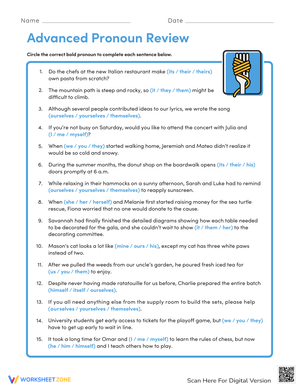
Reflexive pronoun overreach is worth anticipating by late third grade. Some students start substituting "myself" where "me" belongs — "Please hand the paper to myself" — because they've heard this usage from adults and assume it sounds more formal. A worksheet that pairs correct and incorrect reflexive pronoun sentences and asks students to explain the difference addresses this before it calcifies into a writing habit.
Fitting These Into the Week Without Extra Planning
The most efficient use is a five-minute warm-up at the start of language arts. One worksheet — say, five sentences where students identify the pronoun and circle its antecedent — takes roughly as long as attendance and morning meeting wrap-up. Because each worksheet covers one skill at a narrow scope, the task is clear enough for students to start immediately without a lengthy explanation, which makes it genuinely usable in the compressed minutes before the first lesson transition rather than something that requires its own setup time.
The error-correction worksheets work particularly well as formative checkpoints. After direct instruction on subject and object pronouns, hand each student one of the error-correction worksheets and scan the responses before the next day's lesson. Reading thirty completed worksheets in ten minutes gives you a clear enough picture to decide whether to reteach the whole class, pull a small group, or move on. That's a faster turnaround than most exit tickets and gives you something concrete to act on the following morning.
For literacy centers, sorting the pronouns printable worksheets for 3rd grade by task type rather than by the sequence in which skills were taught gives students appropriate choice while keeping the center manageable. One group works on antecedent matching while another does paragraph rewriting — neither task requires the same materials, and neither group is waiting on the other before switching stations.
Standard Alignment
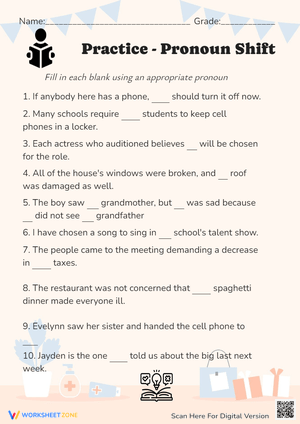
The worksheets address two specific CCSS ELA standards for third grade. L.3.1.A asks students to explain the function of pronouns in general and in particular sentences — not just locate them, but articulate why a pronoun works in a given context. The skill-explanation tasks in several worksheets push toward that standard directly. L.3.1.F requires students to ensure pronoun-antecedent agreement. This is where the pronouns printable worksheets for 3rd grade do their most concentrated work, particularly through the antecedent-matching and paragraph-rewriting tasks that require students to maintain correct agreement across several sentences in sequence rather than in one-off fill-in-the-blank items. That distinction matters: L.3.1.F is not fully addressed by isolated drills — it requires students to track pronouns across a longer stretch of text, which is what the paragraph-level tasks demand.
Adjusting the Worksheets for a Range of Third-Grade Learners
For students still building confidence with basic pronoun identification, add a word bank to the sentence-completion worksheets and keep the focus on sentence-level tasks before moving to paragraph work. Color-coding during direct instruction — one color for subject pronouns, another for object pronouns — gives students a visual anchor that carries into independent practice. These adjustments don't change what the worksheet is asking; they reduce the working-memory load enough that the grammar itself gets the attention it needs rather than being crowded out by too many unfamiliar variables at once.
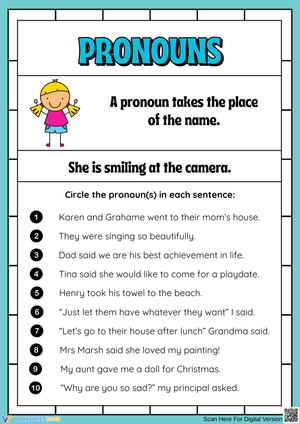
Students ready for extension benefit most from the paragraph-rewriting format. Give them a short passage that uses the same noun repeatedly — something deliberately flat — and ask them to revise it using a range of pronouns while keeping every antecedent reference clear to a reader. This moves the skill from recognition into application, and the revision process shows whether students understand pronoun function or have only memorized forms. A productive follow-up is asking them to mark every pronoun in a paragraph from their independent reading book and identify the antecedent for each one. Students who find a pronoun with an unclear or missing antecedent in published text are noticing something real about how grammar shapes a reader's experience — which is the underlying point of the whole unit.
Frequently Asked Questions
Which pronoun categories are included in the set?
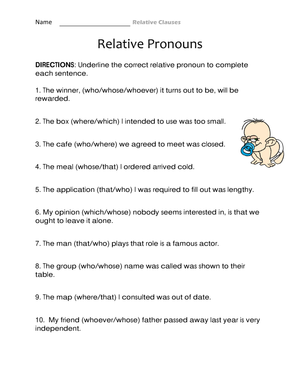
The worksheets address subject pronouns (I, he, she, we, they), object pronouns (me, him, her, us, them), possessive pronouns (my, mine, his, her, hers, its, our, ours, their, theirs), and reflexive pronouns (myself, yourself, himself, herself, itself, ourselves, themselves). Pronoun-antecedent agreement runs through multiple worksheets because it's the skill that connects all four categories in actual writing use, not just in isolated grammar drills.
How do I teach pronoun-antecedent agreement to eight-year-olds without losing them?
Concrete paired examples move faster than definitions at this age. Write two versions of the same sentence on the board — one with clear agreement, one with a broken agreement — and ask students to read both aloud. Students almost always hear the wrong one as strange before they can explain why it's wrong. Once they hear the problem, the rule becomes a description of something they already know instinctively. The antecedent-matching worksheets extend that intuition into written practice, which transfers to independent writing better than working through the concept verbally in the abstract.
Can any of these worksheets go home as homework?
Several can. The sentence-completion and error-correction worksheets are clear enough in their instructions that students can work through them independently without a parent needing to explain the task. The paragraph-rewriting worksheets are better kept in class, where you can observe what choices students are making and step in when someone is substituting pronouns randomly rather than purposefully. Sending rewriting tasks home tends to produce work that looks complete on the surface but doesn't show whether the student understood what they were doing.
Is there enough variety in the set to use some worksheets for instruction and others for assessment?
Yes. The pronouns printable worksheets for 3rd grade cover each skill category across multiple task formats and difficulty levels, so you have at least one option that works as guided practice and another that works as an individual check, without reusing the same material twice. That separation keeps assessment results cleaner — students who saw the exact same format during practice are not simply recalling what the worksheet looked like.












 Interactive Worksheet Maker
 Quiz Maker
 Word Search Maker
 Crossword Puzzle Maker
 Word Scramble Generator
 Sentence Scramble Generator
 Handwriting Worksheet Generator
 Name Tracing Generator
 Fill In The Blank Generator