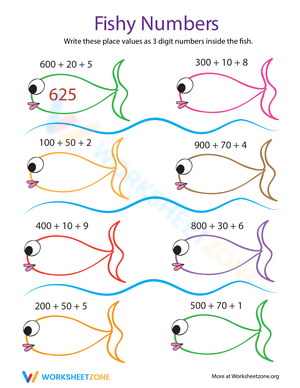
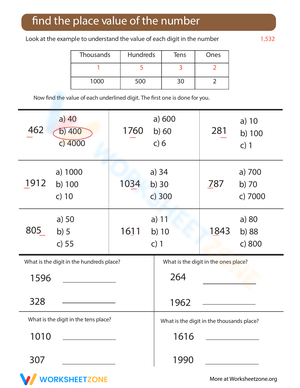
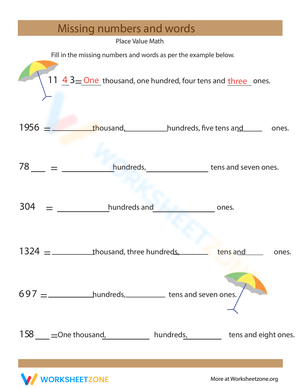
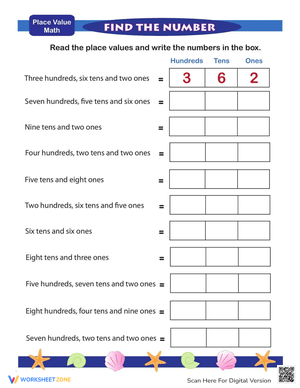
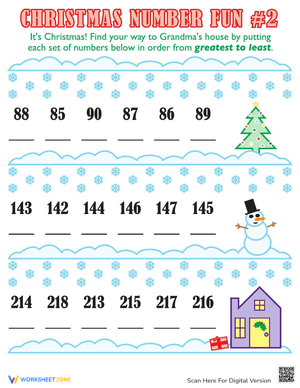
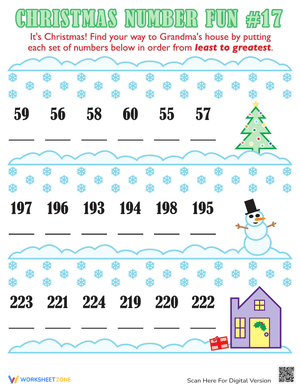
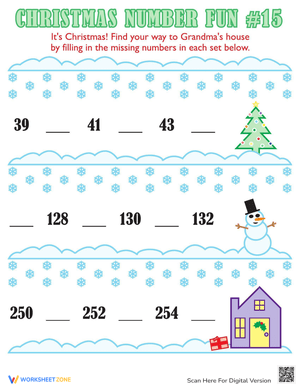
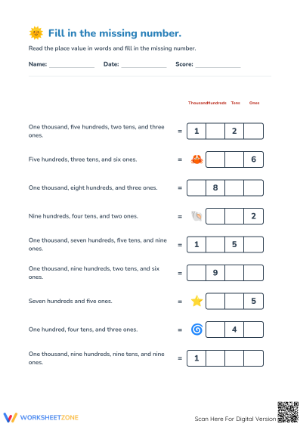
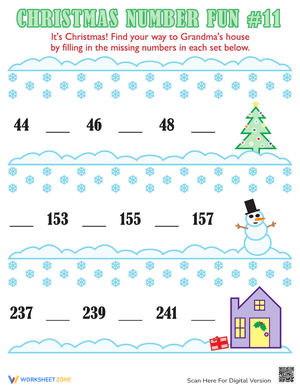
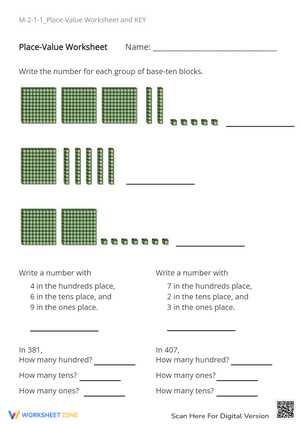
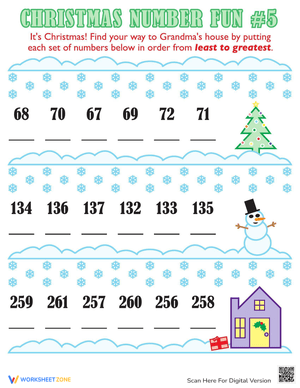
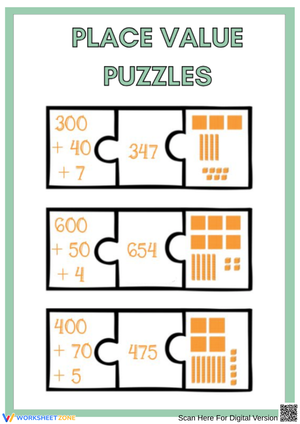
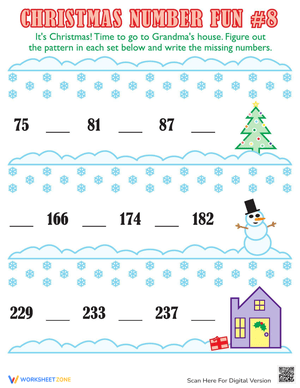
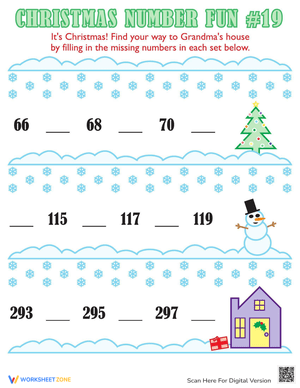
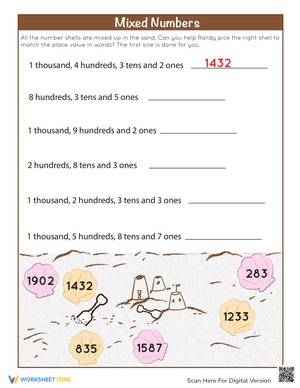
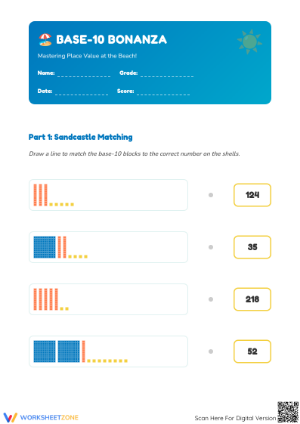
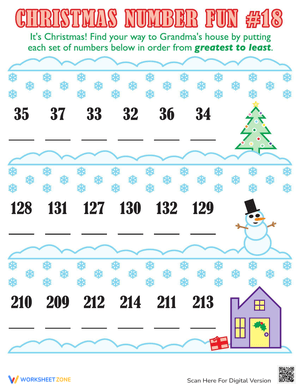
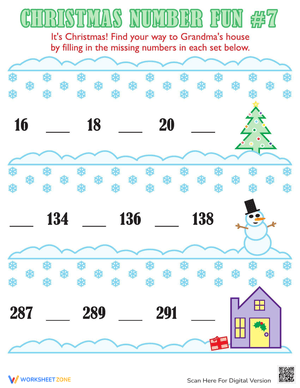
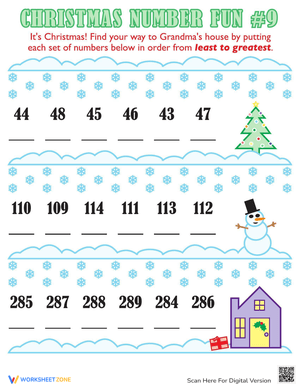
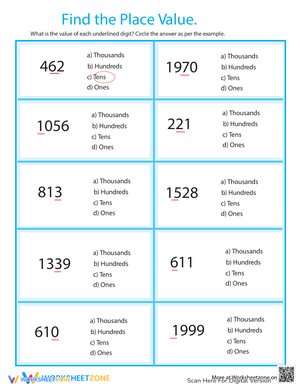
These identifying three digit numbers worksheets for 2nd grade give teachers a ready set of targeted place value tasks — base-ten block identification, place value chart sorting, numeral-to-word matching, and expanded form — covering the representations students need before three-digit work becomes fluent. The jump from two-digit to three-digit numbers trips up more second graders than teachers expect, not because counting grows harder, but because the hundreds place introduces an abstraction that ones and tens do not: a single flat block now stands in for one hundred individual units, and that shift takes repeated exposure across multiple formats to settle.
The Specific Skills Targeted
Each worksheet in the set homes in on one or two representations rather than piling everything onto a single task. That focused structure lets teachers assign exactly what a student needs after a quick look at where the confusion lives — whether that is reading a numeral, interpreting a model, or translating to expanded form.
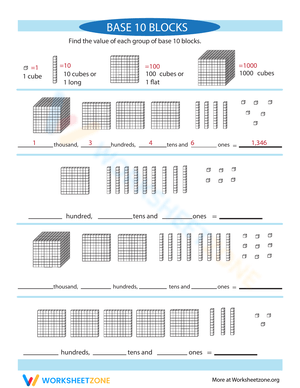
- Base-ten block identification: Students look at hundreds flats, tens rods, and ones cubes arranged in a printed picture and write the numeral the model represents.
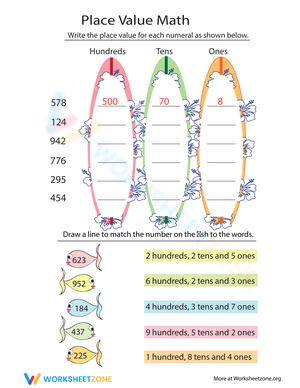
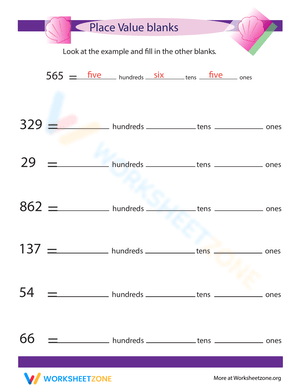
- Place value chart tasks: Students sort each digit of a three-digit number into its correct column — hundreds, tens, ones — and record the value that column holds.
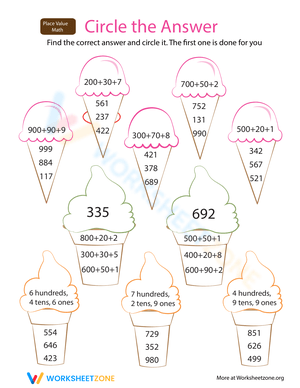
- Number word and numeral matching: Students connect written forms like three hundred forty-seven to the digits 347 and to its expanded expression.
- Expanded form writing: Students break apart numbers such as 583 into 500 + 80 + 3, reinforcing that each digit carries positional weight, not just its face value.
- Mixed review: Later worksheets combine all four representations so students must recognize 406 from a block model, from its word form, and from its expanded form in the same sitting.
Student Mistakes Worth Catching Early
Three-digit place value work produces a handful of predictable errors, and good worksheet design surfaces them quickly. The most persistent is positional confusion — a student who reads 352 as 325 is not guessing randomly; she is reading digits left to right but attaching the wrong label to each position. That error rarely corrects itself through more of the same practice; it needs targeted work with a place value chart where the hundreds, tens, and ones columns are made explicit before the student attempts numeral-only tasks.
Zero-placeholder numbers cause separate trouble. Students who handle 374 cleanly will write 406 as 46 or read 470 as 47 because they do not register what the zero is holding. Worksheets that distribute these numbers throughout — not tucked away only as challenge problems — help teachers see how persistent that gap is. A related error surfaces in expanded form: a student who can write 300 + 70 + 4 for 374 may still write 300 + 7 + 4, collapsing the tens digit to its face value. The patterns we see in student work at this stage show that digit-position confusion and zero-placeholder confusion are often separate problems that benefit from separate attention.
Working These Worksheets Into Your Weekly Math Block
The most useful starting move with identifying three digit numbers worksheets for 2nd grade is to sort by representation rather than by difficulty alone. A student can identify numerals accurately and still stumble on base-ten block pictures; another might decode block models quickly but fall apart on expanded form. Grouping the worksheets by format first lets you assign the missing piece rather than another general review.
Within a standard Grade 2 math block, these worksheets slot into several natural spots. One worksheet works as a Monday warm-up to reset place value thinking after the weekend. A base-ten block task fits a math center when the rest of the class works independently — physical blocks can sit nearby as a reference without requiring teacher supervision. For the last eight minutes before a transition, five items drawn from a mixed-review worksheet tell you more than a longer assignment would: ask students to identify one number from blocks, one from expanded form, and one from a word, and the pattern of wrong answers shows where to start the following day. For homework, choose worksheets with familiar item types and enough white space that a family member can support practice without needing to reteach the lesson.
Standard Alignment
CCSS.MATH.CONTENT.2.NBT.A.1 requires second graders to understand that the three digits of a three-digit number represent amounts of hundreds, tens, and ones. The base-ten block and place value chart tasks in this set address the standard's core expectation directly — including the harder cases like 700, which students must read as seven hundreds, zero tens, and zero ones rather than as a string of digits. CCSS.MATH.CONTENT.2.NBT.A.3 extends that by asking students to read and write numbers to 1000 in numeral, word, and expanded form, which the matching and expanded form worksheets cover. Both standards typically appear together in the first place value unit of second grade, so this set fits best at the start of the year when the hundreds concept is new — not as end-of-year review once understanding is assumed.
Adjusting the Set for a Range of Second-Grade Learners
For students still uncertain with two-digit numbers, begin with worksheets that keep hundreds, tens, and ones columns color-coded and avoid zeros in any position. That removes two sources of confusion at once and lets the student focus on reading a number correctly before confronting what a zero placeholder means. Numbers like 213, 341, and 125 are a reasonable starting range before 406 or 470 enter the rotation.
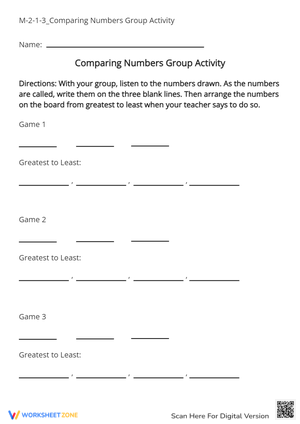
Students working at grade level handle mixed-representation worksheets — one item shows blocks, the next gives expanded form, the next gives a word — because that variation demands flexible thinking rather than pattern-matching. For students who finish that work quickly, identifying three digit numbers worksheets for 2nd grade that add a straightforward comparison prompt (which is greater than, 354 or 435?) extend the skill without switching to a different concept. The comparison reinforces identification: students must correctly read both numbers before they can order them, so the core practice continues rather than disappears.
Frequently Asked Questions
What readiness skills should second graders have before starting three-digit number work?
Students need solid two-digit number reading, an understanding that a digit's position determines its value, and basic skip-counting by tens. If a student cannot reliably read 47 as four tens and seven ones, three-digit work will carry more confusion than it needs to. A quick check with a two-digit place value chart — two minutes at most — tells you whether the prerequisite is in place before assigning these worksheets.
How many worksheets from this set should I assign at once?
One worksheet per session is enough for most students. Each worksheet focuses tightly enough that assigning two or three at once rarely speeds up understanding — it mostly produces fatigue and surface-level completion. For identifying three digit numbers worksheets for 2nd grade, the benefit comes from spaced practice across several days, not from covering every representation in a single sitting. A five-day sequence — blocks on Monday, place value charts on Tuesday, number words on Wednesday, expanded form on Thursday, mixed review on Friday — gives steady exposure without repeating the exact same task.
Can these worksheets serve both initial instruction and review?
Yes. Worksheets with base-ten block models and place value charts work well during initial instruction when students need visual grounding. Mixed-representation worksheets work better as review once students have seen each format separately. The set carries enough variety to fill both roles without requiring entirely different materials at each stage of instruction.
What should I do when a student answers correctly but cannot explain their thinking?
That gap shows up regularly at this grade level. Students often arrive at the right digit on a place value chart through a procedural move — fill in the column — without attaching meaning to what the column represents. After a student completes a worksheet, ask them to point to the hundreds digit and say how much it is worth, not just name the digit itself. If a student writes 4 in the hundreds column for 487 and says "four" instead of "four hundred," the worksheet has already done the diagnostic work — now you know exactly where to focus the next conversation.













 Interactive Worksheet Maker
 Quiz Maker
 Word Search Maker
 Crossword Puzzle Maker
 Word Scramble Generator
 Sentence Scramble Generator
 Handwriting Worksheet Generator
 Name Tracing Generator
 Fill In The Blank Generator