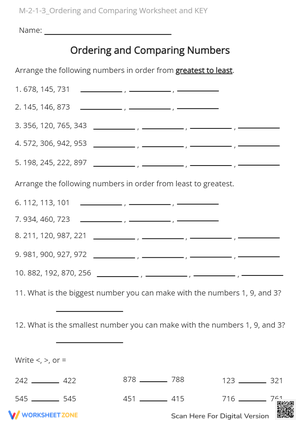
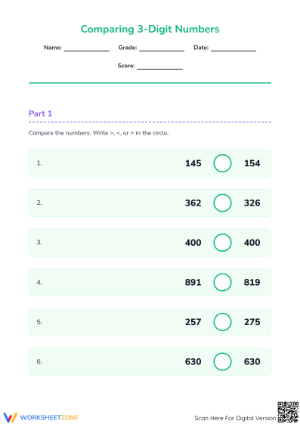
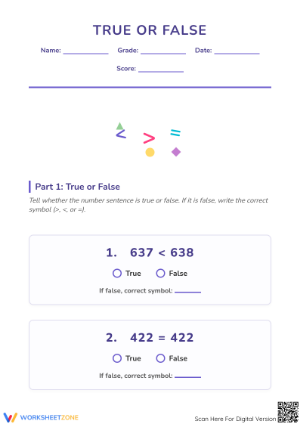
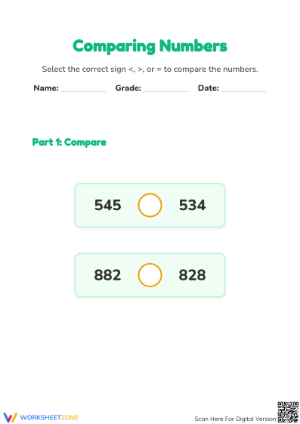
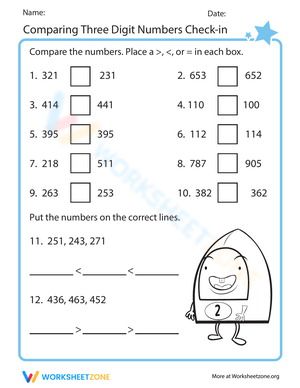
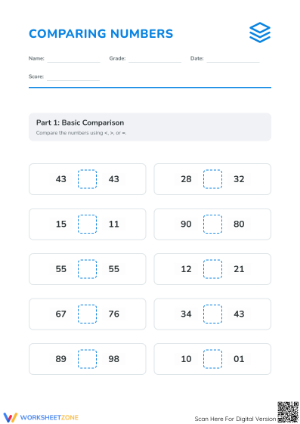
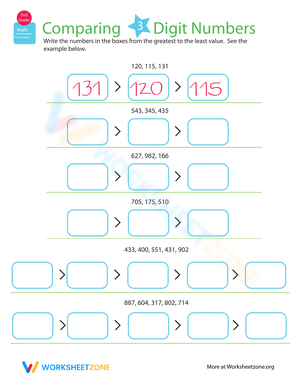
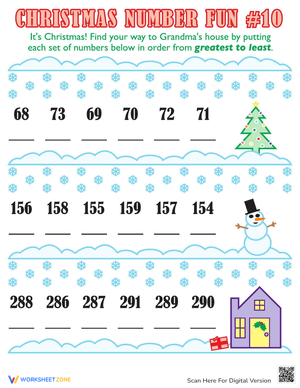
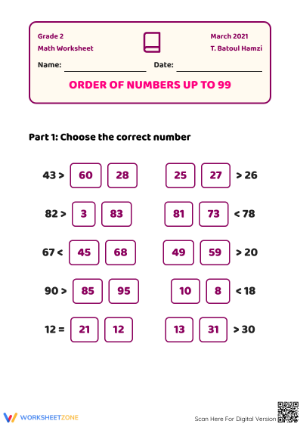
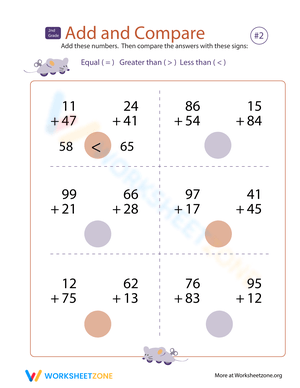
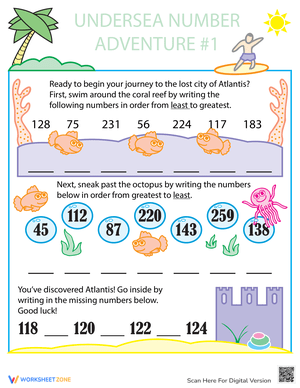
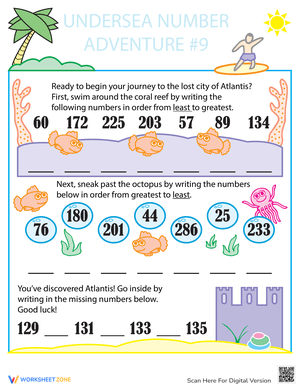
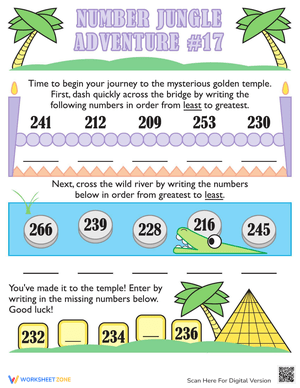
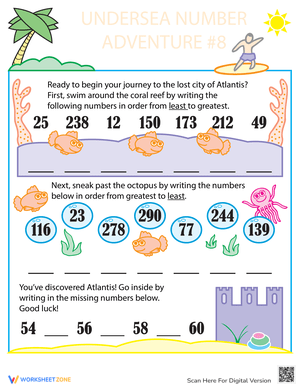
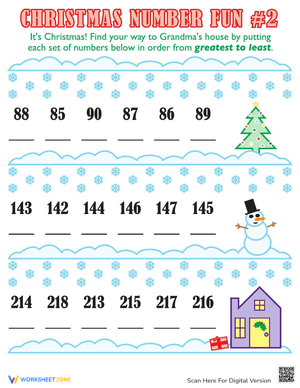
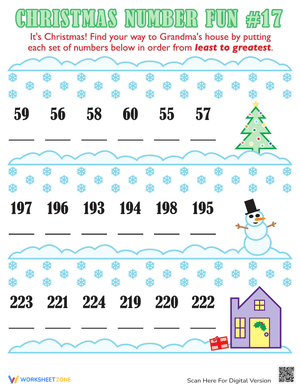
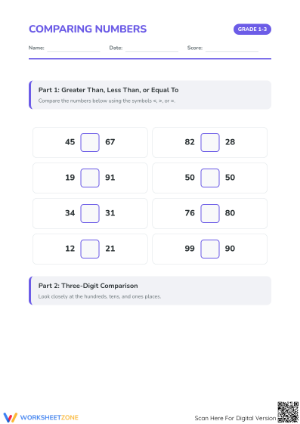
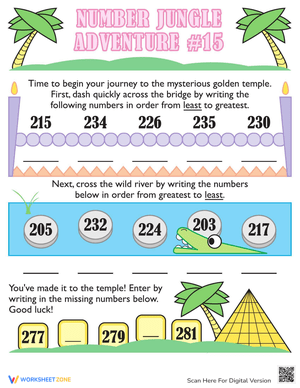
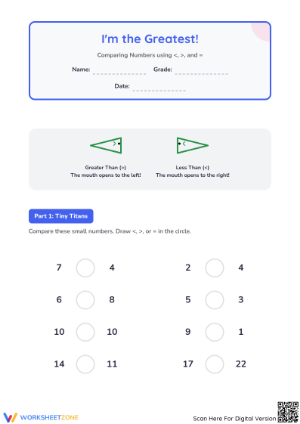
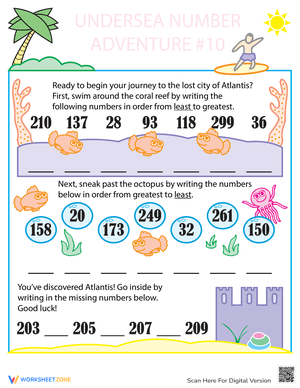
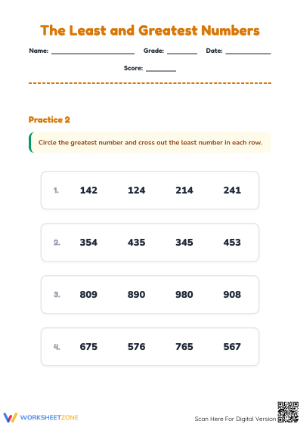
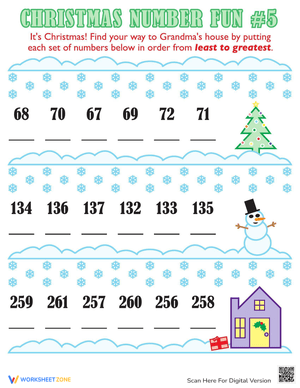
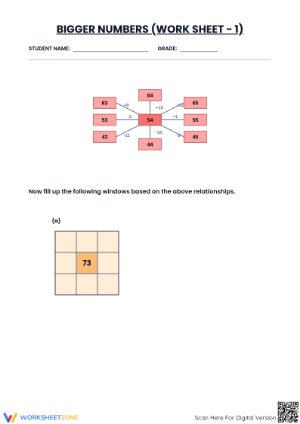
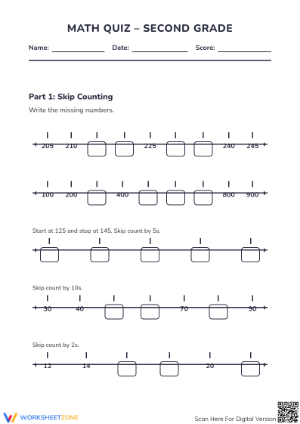
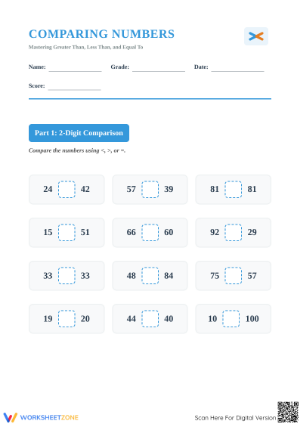
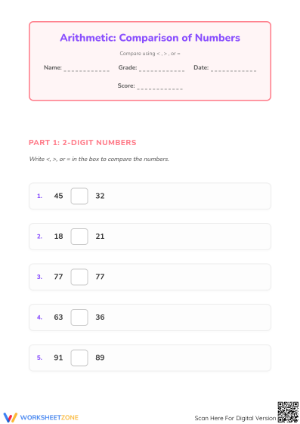
These comparing three digit numbers printable worksheets for 2nd grade arrive at the right moment in a math unit — after students have built solid two-digit fluency but before multi-digit addition demands that they trust place value automatically. Each worksheet focuses on a specific comparison task: identifying which of two three-digit numbers is greater, which is less, or whether they are equal, always working from the highest place value down to the lowest.
The Specific Skills Covered in the Set
Each worksheet in the set targets a distinct piece of the comparison process rather than collapsing all the skills into a single undifferentiated practice. The progression moves students from understanding digit position to applying that understanding through symbol-based comparison statements.
- Identifying the value each digit holds based on its position in a three-digit number
- Applying a left-to-right comparison sequence — hundreds first, then tens, then ones
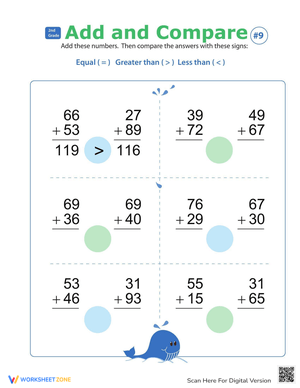
- Writing greater than, less than, and equal to symbols between number pairs
- Reading comparison statements aloud in full place value language ("four hundred twelve is greater than three hundred ninety-eight")
- Constructing original true comparison statements given a target number
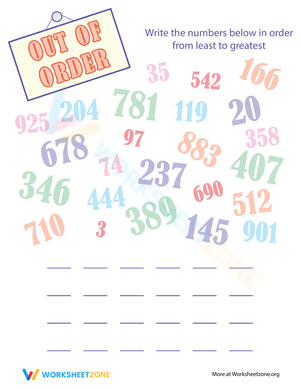
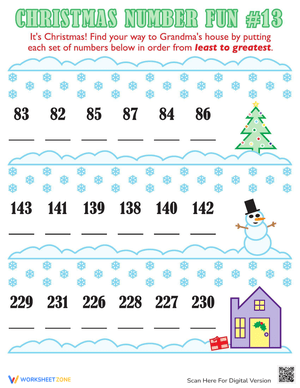
- Ordering a short list of three-digit numbers from least to greatest
Mistakes Students Make That These Worksheets Help You Catch
The most persistent error at this level is what you might call "biggest digit wins." A student looks at 189 and 201, spots the 9 in the ones place of 189, and calls it the larger number — completely bypassing the hundreds comparison. The error shows up again and again in early comparison work, and it signals that the student is still reading three-digit numbers as a string of separate digits rather than as a quantity built from place value groups. The worksheets surface this pattern quickly: any exercise that pairs a number with a large ones digit against a number with a higher hundreds digit will expose it within the first few problems.
A second common mistake involves symbol reversal at the exact moment students hit two numbers with identical hundreds digits. Students who correctly handle 347 versus 219 — because the hundreds differ and the answer is obvious — start to slip when they see 347 versus 341. They identify the right comparison (seven ones is greater than one) but draw the symbol pointing the wrong direction, as if tracking through two matched place values exhausts their working memory before they get to writing. Circling the column being compared before touching the symbol reduces this specific error dramatically.
Building These Worksheets Into Your Weekly Math Routine
The most efficient use of comparing three digit numbers printable worksheets for 2nd grade is as a warm-up in the ten minutes after morning meeting, before moving into the main lesson block. Four to six comparison problems give students an immediate task, keep the skill fresh during a unit that often stretches two weeks, and give you a quick read on who retained the previous day's logic. Students who stall on a problem where the hundreds match are telling you something specific — they need another round with tens-place comparison before you move on.
During math workshop, individual worksheets work well at a comparison center alongside base-ten block sets. Requiring students to build both numbers before writing the symbol is not an extra step — it is the step that makes the symbol meaningful. Students who skip the blocks and write the symbol first are guessing. The ones who build first are reasoning. You can tell the difference in thirty seconds of observation.
For exit assessment purposes, one worksheet with six to eight problems — two where hundreds differ, two where hundreds match but tens differ, two where both hundreds and tens match — gives enough range to determine whether a student can handle all three scenarios or only the easiest one. That distinction drives the next day's small-group planning.
Standard Alignment
Common Core State Standards: 2.NBT.A.4 calls on second graders to compare two three-digit numbers based on the meanings of the hundreds, tens, and ones digits, using the symbols greater than, less than, and equal to. The comparing three digit numbers printable worksheets for 2nd grade in this set address that standard directly, with exercises that require place value reasoning — not visual estimation or single-digit pattern matching — to reach a comparison. This standard sits within the Number and Operations in Base Ten domain and typically falls mid-unit, after students have had time to build and decompose three-digit numbers using base-ten representations. It lands naturally before the addition and subtraction work that requires students to regroup, where place value understanding becomes non-negotiable.
Adjusting the Worksheets Across Ability Levels
For students who are still building place value confidence, limit the first several practice sessions to number pairs where the hundreds digits differ. These problems deliver an immediate, decisive result without requiring students to track through two matched place values. Pairing each worksheet with a laminated hundreds-tens-ones mat — where students write each digit into the correct column before comparing — gives them a concrete support structure without reducing the mathematical demand of the task itself.
Students who move through the core exercises quickly benefit from a more demanding version of the same skill. The comparing three digit numbers printable worksheets for 2nd grade that include numbers with identical hundreds and tens digits push these students hardest, and extending further by asking them to generate all three-digit numbers that make a given comparison statement true adds genuine challenge. Writing "find five numbers greater than 460 but less than 500" is a fundamentally different cognitive task from circling a symbol — it pushes toward number sense rather than procedural execution.
Frequently Asked Questions
When in the unit should these worksheets come in?
Start comparison work after students can reliably identify the value of each digit in a three-digit number — meaning they understand that the 4 in 456 represents four hundreds, not simply the numeral 4. Introducing symbol practice before that understanding is solid leads directly to the "biggest digit wins" error. One solid session on place value decomposition first makes the comparison logic click considerably faster.
Do students need to know the greater than and less than symbols before using these worksheets?
They do not need symbol fluency as a prerequisite — the worksheets build it. The most practical approach is to introduce both symbols briefly through direct instruction, provide a reference card for the first two or three sessions, and then phase it out. Most students stop reaching for the card within a week. The ones who keep using it beyond that point are usually still uncertain about which number is actually larger, not just about which way the symbol faces.
How do I handle students who get the comparison right verbally but reverse the symbol on paper?
Have them write the comparison as a full sentence first: "Three hundred forty-seven is greater than three hundred forty-one." Then ask them to point to which number appears on the left side of that sentence. The symbol always narrows toward whichever number sits on the right in a greater than statement. This sentence-first habit slows the process just enough for students to think about direction before committing it to paper, and it builds the expectation that comparison statements carry real mathematical meaning rather than just a visual trick.
Can these worksheets extend into four-digit number work?
The left-to-right comparison logic transfers directly to four-digit numbers with very little additional instruction. Students who have internalized the process at three digits — check the highest place value first, move right only when digits match — apply it to a fourth column without needing a new conceptual framework. Using a familiar worksheet format with four-digit numbers is a low-resistance way to introduce that extension, because the task structure stays the same even as the numbers grow.













 Interactive Worksheet Maker
 Quiz Maker
 Word Search Maker
 Crossword Puzzle Maker
 Word Scramble Generator
 Sentence Scramble Generator
 Handwriting Worksheet Generator
 Name Tracing Generator
 Fill In The Blank Generator