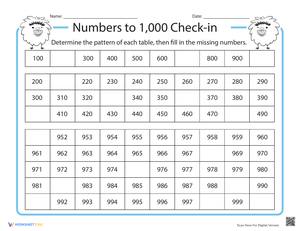
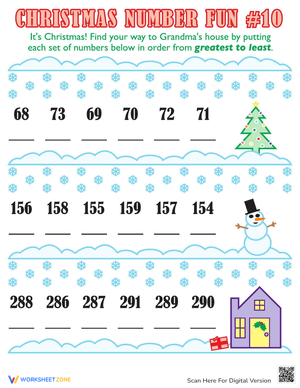
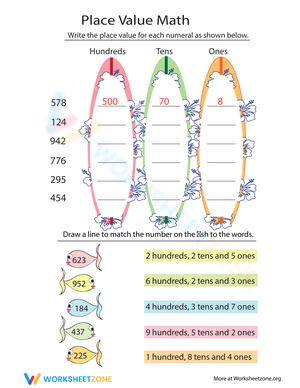
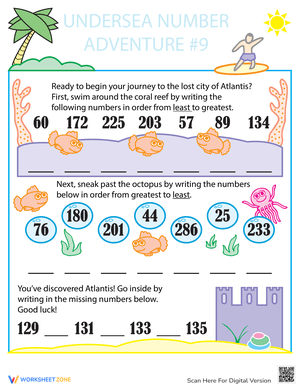
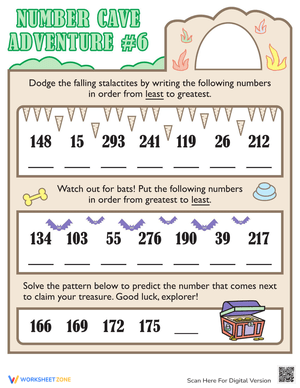
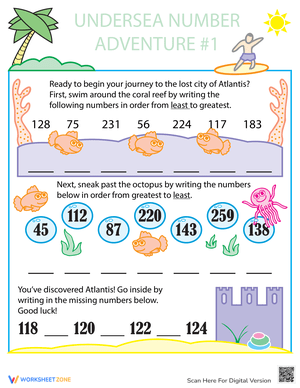
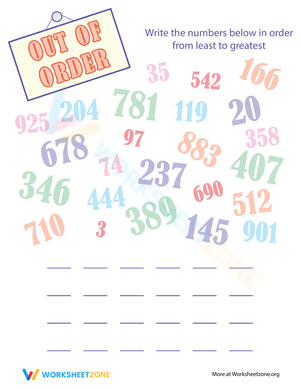
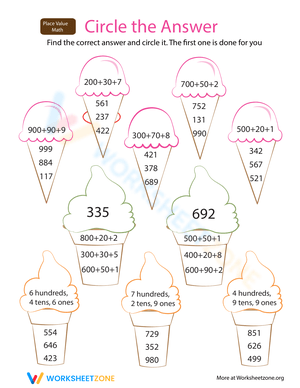
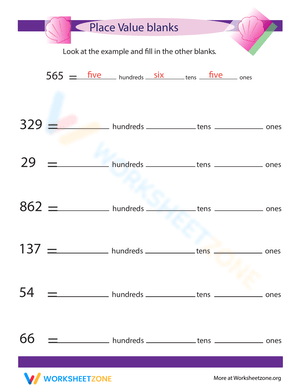
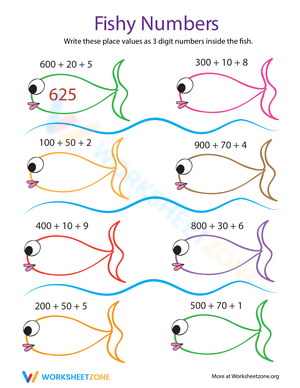
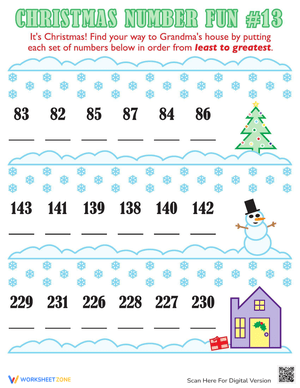
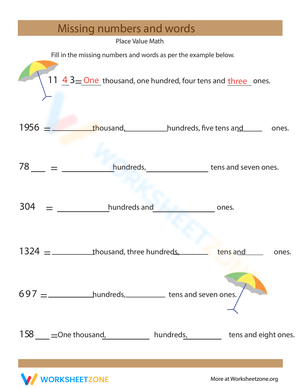
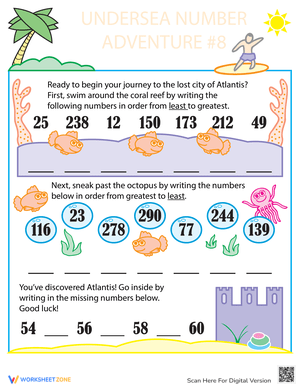
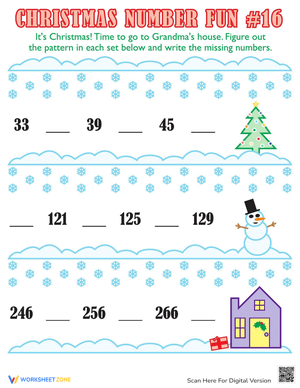
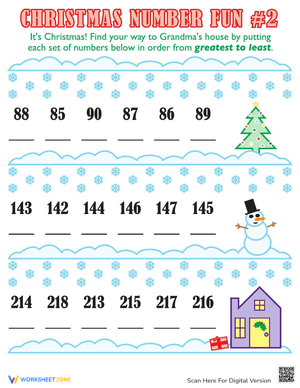
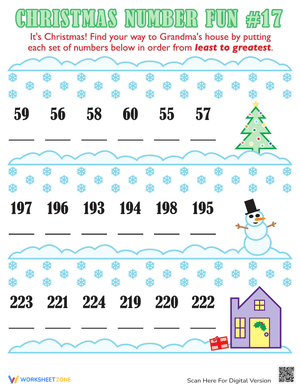
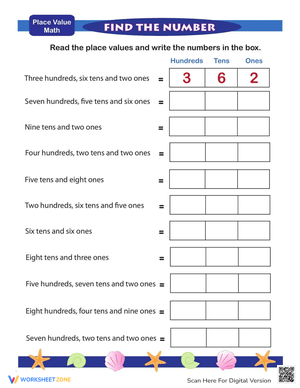
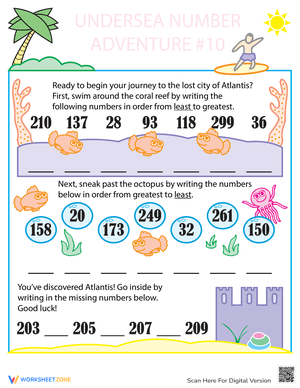
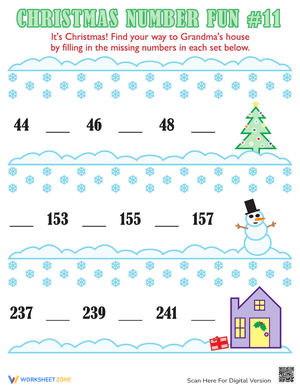
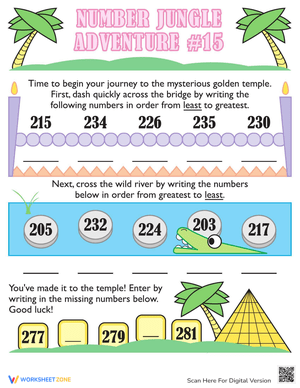
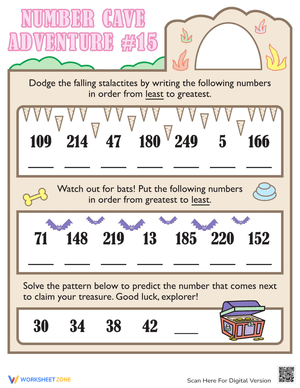
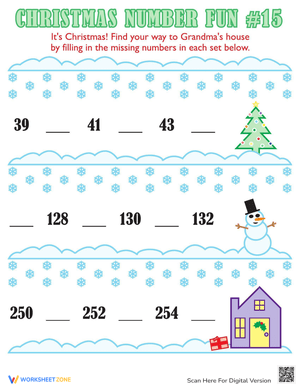
These writing three digit numbers printable worksheets for 2nd grade give teachers a targeted set of resources for one of the year's most significant mathematical transitions: moving students past 99 into hundreds-place thinking. The set addresses all three required representations — standard form, word form, and expanded form — along with the specific challenge of zero as a placeholder, which is where student errors cluster most predictably across second-grade classrooms.
Three Forms, One Number: What Students Practice
Each worksheet targets at least one of the three representations required by second-grade number standards, and the set builds across all three with enough variety that teachers can assign worksheets selectively or sequence them as a unit.
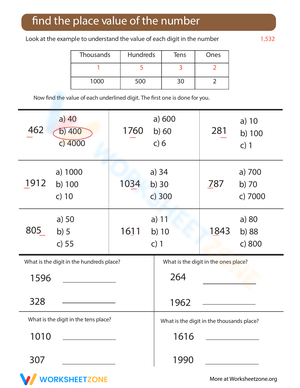
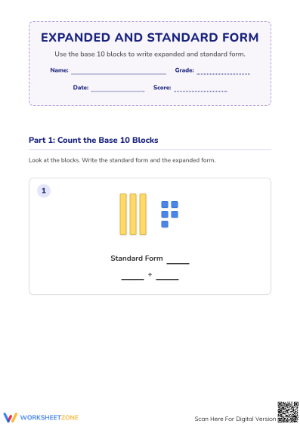
- Standard form: Students convert place value charts, base-ten block images, or verbal descriptions into a three-digit numeral. The work looks straightforward until a place value is zero — that's where the errors appear.
- Word form: Students write number names in full (e.g., four hundred fifty-six) and convert written number names back into numerals. Spelling adds a second layer of difficulty: forty trips up many second graders who want to write fourty, and twelve catches students who expect a pattern they don't find.
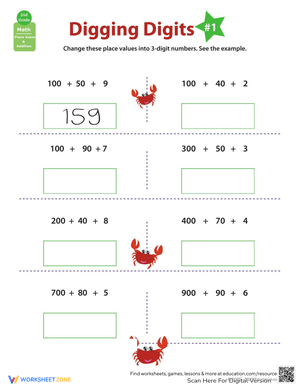
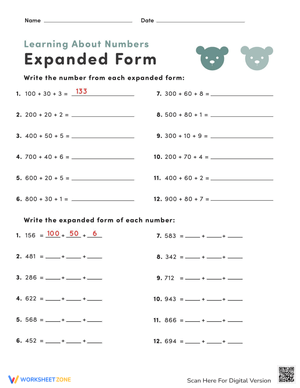
- Expanded form: Students break numbers into their place value parts (400 + 50 + 6) and reassemble expanded expressions back into standard form. Several worksheets present the parts out of sequence — 50 + 400 + 6 instead of 400 + 50 + 6 — which pushes students to reason about value rather than copy a left-to-right pattern.
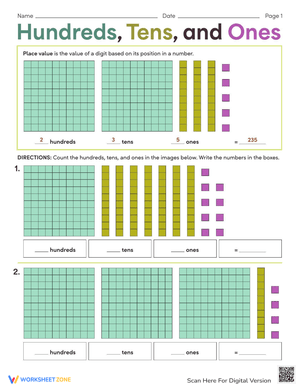
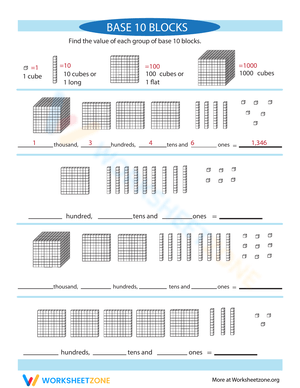
A portion of the worksheets use base-ten block images: large flat squares for hundreds, rods for tens, unit cubes for ones. Students count the blocks and record the number. This connects the concrete manipulative work from whole-group instruction to independent practice, and it surfaces a specific second-grade confusion — students who count individual unit cubes past nine without regrouping, which can make a two-hundred-something number look like a very large one-hundred-something on paper.
Student Mistakes Worth Anticipating Before You Teach This Unit
The most consistent error is the dropped zero. Tell a student to write "four hundred five" and there's a good chance they write 45 — not because they've forgotten the number, but because they haven't yet committed to tracking three digit positions before putting pencil to paper. A labeled H-T-O chart helps immediately: when students see an empty tens column, most recognize that something belongs there. What the chart doesn't fix on its own is the habit of skipping the check entirely, which is why short daily warm-ups with these exact number types build more automaticity over a few weeks than a single targeted lesson does.
The word form worksheets expose a second problem: the word "and." Most adults naturally say "four hundred and fifty-six," inserting a pause that feels grammatical. Students absorb that phrasing and reproduce it on their worksheets without questioning it. In math, "and" signals a decimal point — "four hundred and fifty-six" technically represents a value with a decimal component, not the whole number 456. This is a low-stakes moment to correct in second grade, before decimals enter the picture, and the worksheets reinforce clean number language throughout. Having the standard written explicitly on a classroom anchor chart alongside the worksheets makes the expectation concrete for students who otherwise hear one thing during instruction and see another on the resource.
Fitting These Worksheets Into Your Weekly Math Block
The most reliable entry point is the morning warm-up. A single base-ten block conversion or H-T-O chart completion takes about four minutes and puts students in place value mode before the lesson proper begins. Because the tasks don't require reading a paragraph or holding a multi-step process in memory, they work during the transitional window after morning meeting — when attention is still settling and something low-stakes but genuinely mathematical is useful.
For small group time, the expanded form worksheets function as strong formative tools. A student who writes 300 + 0 + 7 for the number 307 is tracking zero as an actual placeholder. A student who writes 300 + 7 has the mental model but not the written convention. That's a different instructional move than a student who writes 370, which suggests a genuine confusion about which place the seven occupies. Writing three digit numbers printable worksheets for 2nd grade in this set cover enough number variety — including numbers like 305, 430, and 600 — that you can pull different worksheets for different groups without recycling the same numbers across rotations.
The word form worksheets work best near the end of a unit, once students have standard and expanded form stable. Three numbers as an exit ticket — write each in word form — takes under five minutes and gives you a clear read on each student before you move into three-digit addition and subtraction.
Standard Alignment
These worksheets align with CCSS.MATH.CONTENT.2.NBT.A.3, which requires students to read and write numbers to 1,000 using base-ten numerals, number names, and expanded form. This standard anchors the beginning of the Number and Operations in Base Ten cluster in second grade because subsequent standards — comparing three-digit numbers (2.NBT.A.4) and adding and subtracting within 1,000 (2.NBT.B.7) — assume students can read and write those numbers without friction. Teachers who address 2.NBT.A.3 directly before introducing computation give students the number fluency they need to focus on the operation rather than decode the numerals themselves.
How to Use the Set With Students at Different Readiness Levels
Students still building confidence with three-digit numbers benefit from worksheets that include pre-labeled H-T-O columns and base-ten block images. Start them with numbers that have no zeros in any position — 347, 582, 916 — so they can practice the three-form structure without the added layer of the placeholder. Once those numbers feel automatic, introduce one zero at a time: zero in the ones place first (420), then zero in the tens place (304), then both zeros (500). Moving through these in order gives students a clear ramp rather than presenting all the difficulty at once.
Students who have the core skills down benefit most from the out-of-sequence expanded form work and from writing a three-digit number in all three forms from a verbal description alone, without any chart or image. The writing three digit numbers printable worksheets for 2nd grade that present expanded form parts out of order are particularly useful here — they reveal whether a student genuinely understands place value or is relying on the visual layout to produce the correct answer.
Frequently Asked Questions
My students keep writing "45" when I say "four hundred five." What's the most direct fix?
Before writing, have students hold up three fingers and label them aloud: "hundreds, tens, ones." Then ask: "How many hundreds? Four. How many tens? Zero. How many ones? Five." Write each digit as they name it. This slows down the automatic response and forces all three positions into view before the pencil touches the paper. After a week or two of this routine at the start of place value work, most students internalize the three-position check without needing the physical prompt.
Should I introduce all three forms at the same time?
Standard form first, almost always. Students need to be comfortable identifying and writing a three-digit numeral before they decompose it. Expanded form comes next because it directly articulates what each digit means — a student who can write 400 + 30 + 8 understands why 438 looks the way it does. Word form belongs last, because it layers spelling and language on top of the math concept, and students who are still uncertain about place value will struggle to carry both demands simultaneously. That sequence also mirrors how most second-grade curriculum maps order these representations.
How do I know when students are ready to move on to three-digit addition?
Run a formative check rather than counting worksheets: read five numbers aloud — include at least one with a zero in the tens place and one with a zero in the ones place — and ask students to write each in standard form and expanded form. If a student gets both zero-placeholder numbers right, they're ready. One error on those specific numbers is a signal to build in a few more targeted practice sessions before adding computation on top. The number types that break three-digit addition most reliably (like 400 + 273) are exactly the ones that reveal place value gaps here.
Can students with limited reading fluency access these worksheets?
The base-ten block and place value chart worksheets need almost no reading, making them accessible regardless of where students are in their literacy development. The word form worksheets do require reading number names, but posting a classroom anchor chart with key words spelled out — forty, fifty, sixty, seventy, eighty, ninety — removes most of the decoding barrier without removing the math. Writing three digit numbers printable worksheets for 2nd grade that center on visual representations rather than text-heavy prompts are also strong options in inclusion settings and for English language learners building number vocabulary alongside their English language development.













 Interactive Worksheet Maker
 Quiz Maker
 Word Search Maker
 Crossword Puzzle Maker
 Word Scramble Generator
 Sentence Scramble Generator
 Handwriting Worksheet Generator
 Name Tracing Generator
 Fill In The Blank Generator