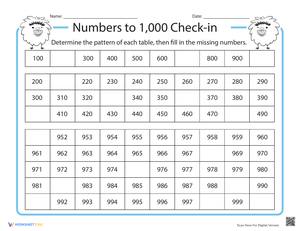
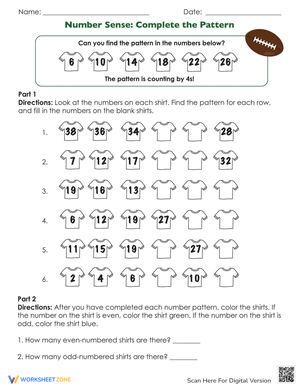
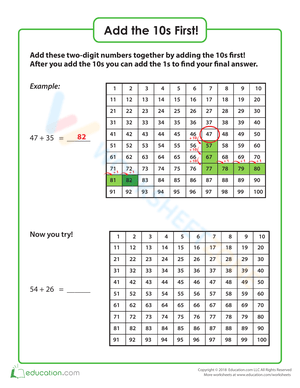
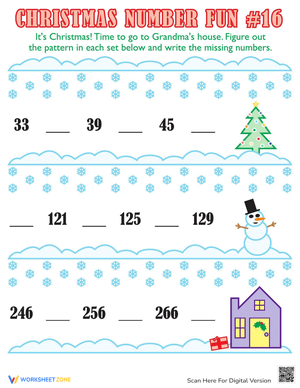
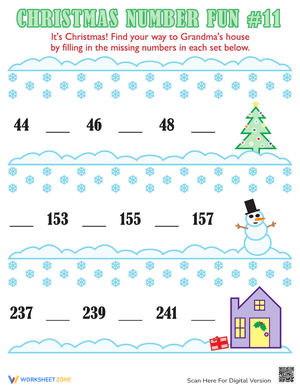
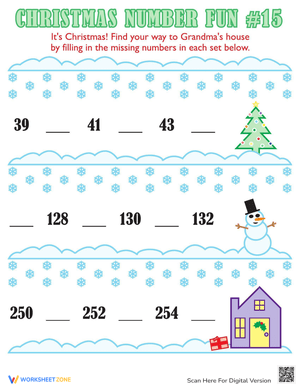
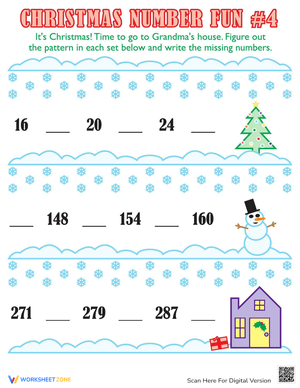
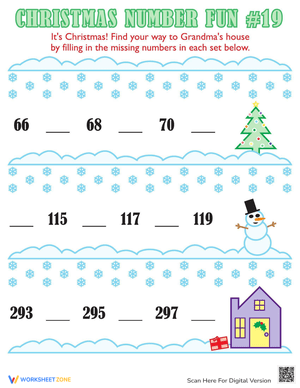
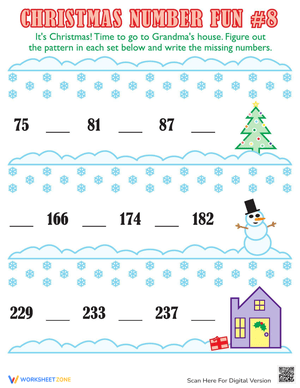
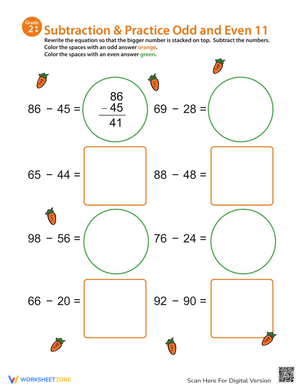
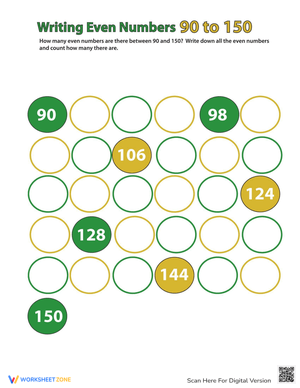
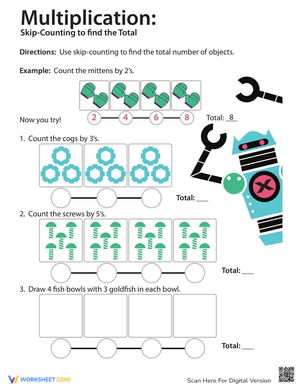
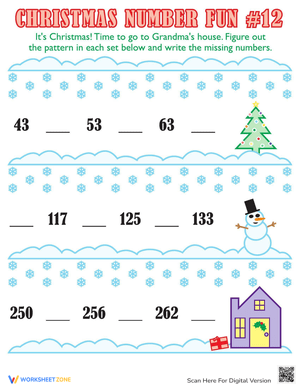
The patterns in three digit numbers worksheets for 2nd grade in this set give teachers ready-to-use, targeted practice for one of the more demanding transitions in second-grade math: learning how skip-counting behaves when the hundreds digit is involved. Each worksheet focuses on sequences that count by 5s, 10s, or 100s, with starting numbers chosen deliberately to route students through the spots where counting gets hard — boundary crossings, non-round starting points, and decreasing sequences. The set includes fill-in-the-blank tasks, rule-identification problems, and sequences with one intentional error that students must locate and correct.
The Specific Skills Targeted
The central skill across these worksheets is place value independence — the understanding that in any three-digit number, the hundreds, tens, and ones places each stay constant or change depending on what the counting rule demands. When students count by 100s from 234 (producing 234, 334, 434), only the hundreds digit moves. When they count by 10s from 342 (producing 342, 352, 362), only the tens digit moves and the 2 in the ones place stays locked. Getting students to identify which digit is doing the work — not just produce the next number — is the conceptual goal these worksheets push toward.
Sequences run in both increasing and decreasing directions. Students subtract to count backward by 10s or 100s, which surfaces different errors than forward counting does. A student can produce 450, 460, 470 without thinking about place value — they have simply memorized a chant — but counting backward from 470 requires actual reasoning about the tens place. Rule-identification tasks ask students to examine a completed string and write the skip-counting rule in their own words. Error-detection tasks embed one wrong number in an otherwise correct sequence; students must find it, fix it, and be able to say why the replacement is right.
Frequent Student Errors Worth Watching For
The most persistent error we see in student work involves crossing the hundred boundary. A student who counts steadily through 270, 280, 290 will often write 20010 for the next term. That answer is not careless — it reflects a genuine belief that the hundreds and tens places operate as two independent counters. The student knows nine tens plus one more ten is "ten" tens, but hasn't connected that ten groups of ten require a trade into the hundreds column. Patterns in three digit numbers worksheets for 2nd grade address this directly by distributing boundary-crossing sequences throughout each worksheet rather than clustering them at the end, so students hit hard transitions inside sequences that otherwise look ordinary.
A second predictable error shows up on rule-identification tasks. Students check only the first two numbers in a sequence, declare the rule, and write it down without verifying against the remaining pairs. A sequence like 300, 400, 510 fools a student who only examines the first gap. These worksheets include sequences where the first gap or two suggest one rule and a later gap breaks it — training students to check every adjacent pair before committing to an answer rather than pattern-matching off the first comparison they find.
Standard Alignment
These worksheets address CCSS.MATH.CONTENT.2.NBT.A.2, which requires second graders to skip-count by 5s, 10s, and 100s within 1,000. In classroom terms, this standard sits at the intersection of two distinct demands: the procedural fluency of producing a count sequence and the conceptual understanding of why that sequence follows a predictable rule. Most teachers cover the procedural side through morning routines — counting by tens off the hundreds chart, calendar math — but the conceptual side, asking students to identify a rule, verify it, and explain why it holds, tends to get less consistent practice time. These worksheets put both demands inside the same task, so the procedural and conceptual work reinforce each other rather than sitting in separate lesson structures.
How to Build These Worksheets Into Your Lesson Plans
The most reliable placement is the first 8–10 minutes of the math block, before any new instruction begins. Students retrieve what they practiced last time; teachers collect a quick formative read on who retained it. After scanning a handful of completed worksheets, a same-day decision about small-group reteaching becomes possible — something much harder to arrange when the only data is a whole-class chant on the carpet. Patterns in three digit numbers worksheets for 2nd grade work especially well when assigned on Tuesday or Wednesday, one or two days after a Monday lesson on place value. That gap gives new information time to settle before students apply it independently, and retention is measurably stronger than back-to-back repetition of the same material.
Math centers are another strong fit. Place each worksheet inside a dry-erase sleeve and students write, check, and erase through multiple rotations without burning through copies. One worksheet per sleeve, swapped out weekly, keeps the center running without constant prep. During small group instruction, ask students to verbalize their reasoning as they fill in each term — "the tens digit changes each time, so I keep the 3 in the ones place and add one ten" — which surfaces the mental process in a way that a completed worksheet alone cannot show you.
Adjusting the Worksheets for a Range of Learners
Students still developing confidence with two-digit numbers can begin with counting-by-100s sequences, where only the hundreds digit changes and the tens and ones stay fixed. This limits working memory demand while keeping students engaged with three-digit numbers rather than stepping back to simpler material. From there, move them toward counting by 10s from round numbers (200, 210, 220) before introducing non-round starting points, which require holding a non-zero ones digit constant while incrementing the tens — a meaningfully harder task that requires genuine place value thinking rather than a memorized pattern.
For students who move through the standard tasks quickly, use patterns in three digit numbers worksheets for 2nd grade as a starting point by asking them to extend any sequence ten terms beyond what's printed and write a sentence predicting what will happen when the pattern crosses the next hundred. A student who writes "when we reach 490 the next jump will make a new hundred because ten tens trade up" demonstrates something more durable than reciting the sequence aloud. Another strong extension: provide a completed sequence with one wrong number embedded and ask the student to find the error, correct it, and explain in writing why the replacement is right.
Frequently Asked Questions
How do I help a student who writes "20010" when counting by 10s through a hundred boundary?
That answer points to a gap in base-ten bundling, not a simple counting mistake. Before returning to the worksheet, have the student build 290 on a place value mat using base-ten blocks — two hundreds, nine tens, zero ones. Then add one more ten-rod to the tens column. When ten rods accumulate, make the physical trade: exchange them for one hundreds flat. What remains is 300 with nothing in the tens or ones columns. Doing this trade at the exact moment the sequence crosses a boundary, then having the student record what happened, gives them a concrete reference that carries forward into later practice in a way that verbal correction rarely does.
Which tools pair best with these worksheets?
Base-ten blocks give the most direct connection to what's happening in a sequence — students build each term and physically see which column changes. Place value disks work well for students ready to move toward more abstract representation; they preserve the relational structure without the bulk of individual unit cubes. Open number lines, either printed or drawn by the student, let them mark each jump and confirm visually that all jumps are equal — useful when a student is uncertain whether a sequence is counting by 10s or 100s. Whichever tool you choose, keep it active alongside the worksheet rather than setting it aside after the lesson introduction ends.
What do I do when a student completes a worksheet correctly but cannot describe the rule?
Procedural accuracy without language is a common early-stage pattern in second grade, not a red flag — but it is a signal to push one level further. Ask the student to point to the digit that changes with each term while reading through the sequence aloud. Then ask what would happen to that digit if the sequence continued past the last term on the worksheet. The goal is to get them naming hundreds, tens, or ones place explicitly rather than just performing the count. A two-minute conversation during center time, with the completed worksheet in front of them, typically accomplishes more than scheduling a separate reteach session for this specific gap.













 Interactive Worksheet Maker
 Quiz Maker
 Word Search Maker
 Crossword Puzzle Maker
 Word Scramble Generator
 Sentence Scramble Generator
 Handwriting Worksheet Generator
 Name Tracing Generator
 Fill In The Blank Generator