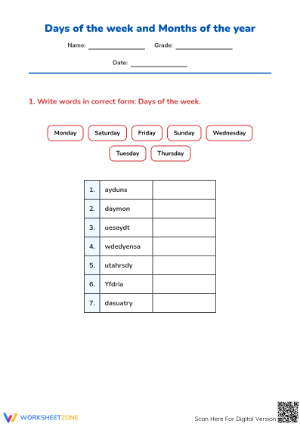
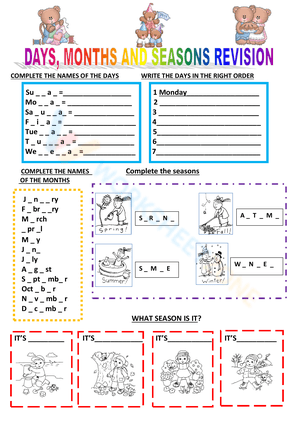
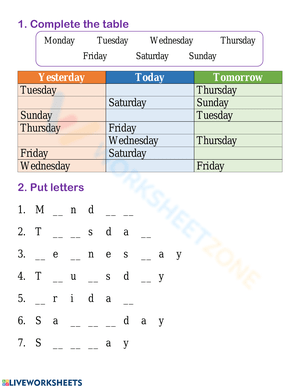
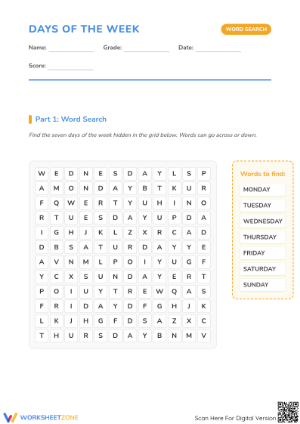
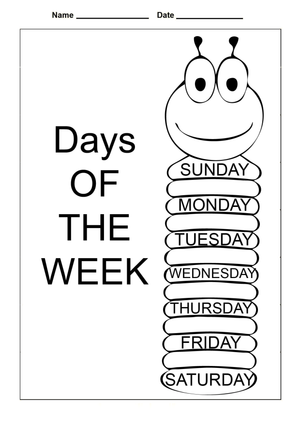
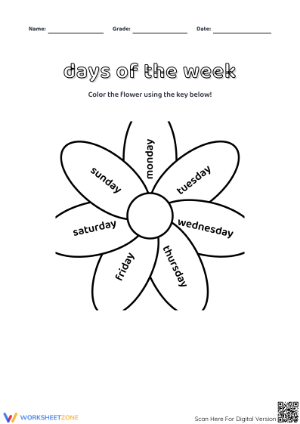
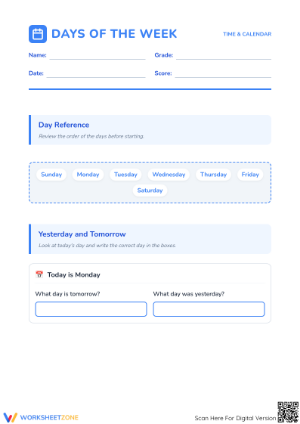
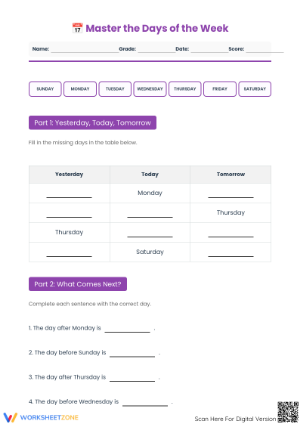
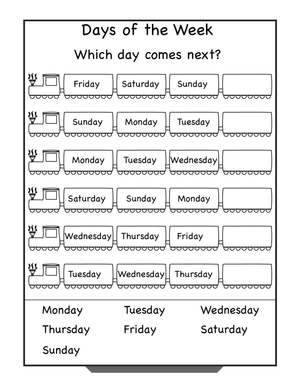
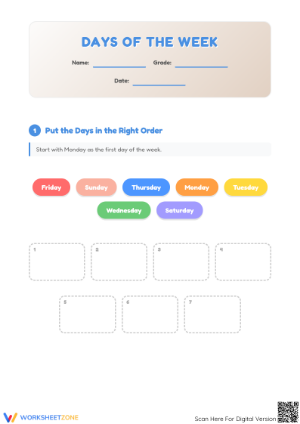
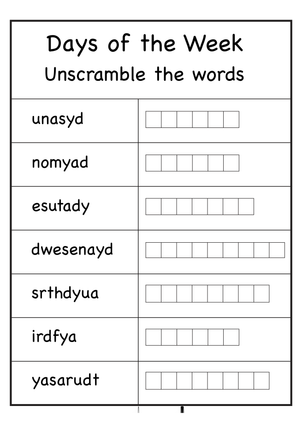
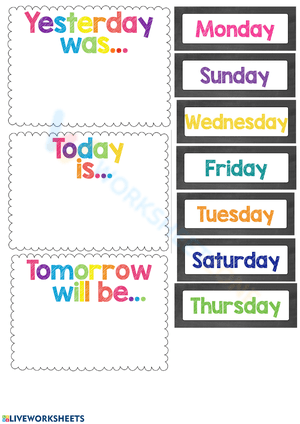
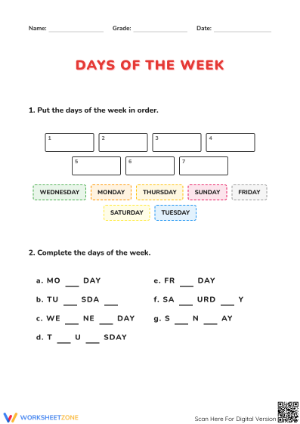
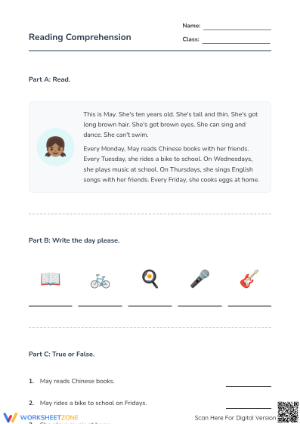
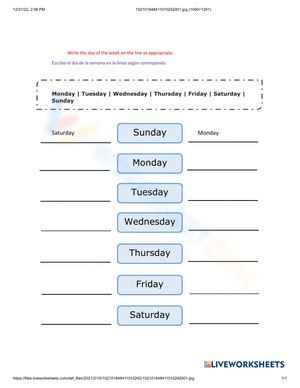
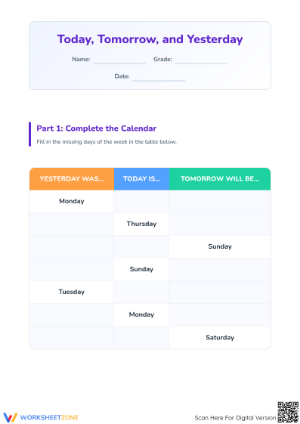
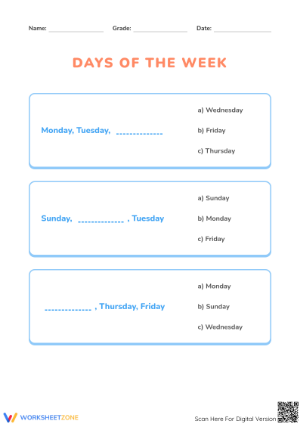
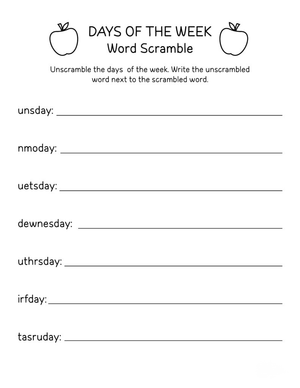
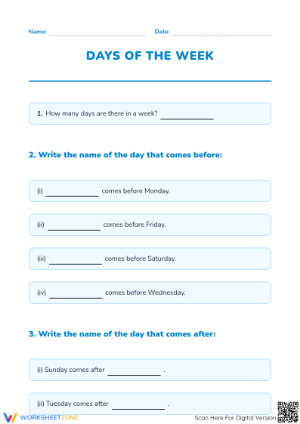
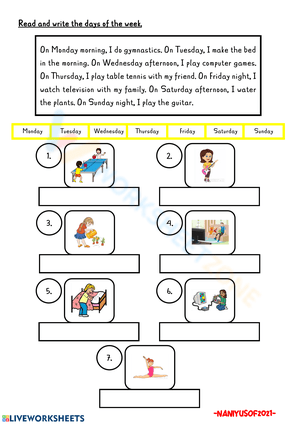
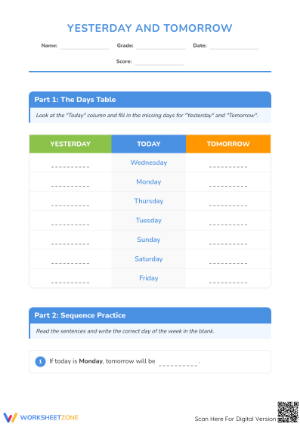
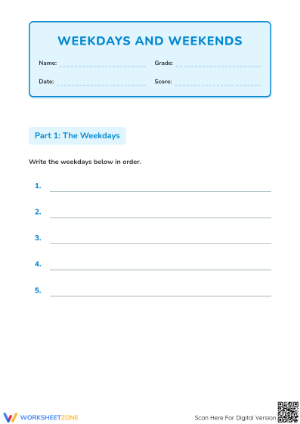
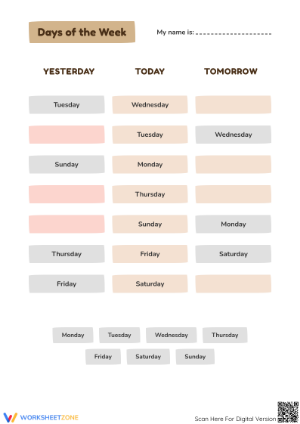
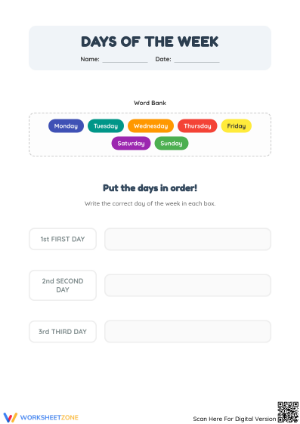
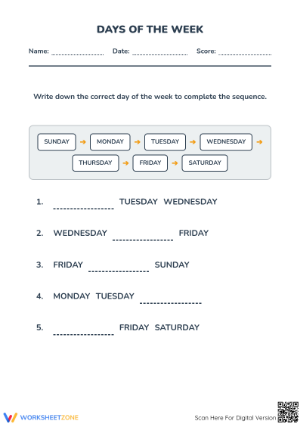
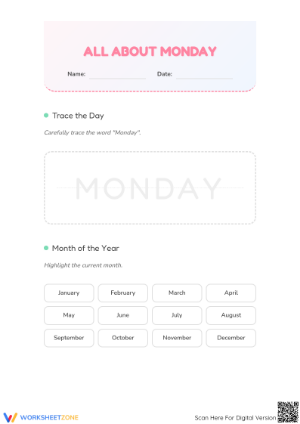
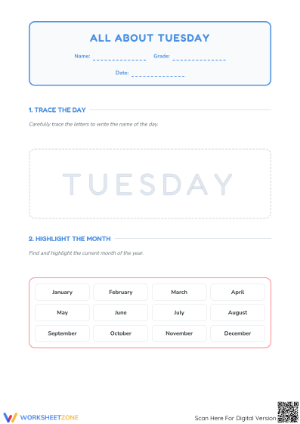
These on weekdays pdf worksheets for 2nd grade address a grammar pattern that looks simple but trips up most seven-year-olds: when English uses "on" with days of the week rather than "in" or "at." That prepositional distinction is the spine of the set, and it runs through vocabulary work, sentence-building exercises, and chronological sequencing tasks that use the school week as their organizing frame.
Skills These Worksheets Build
The on weekdays pdf worksheets for 2nd grade set pairs each grammar target with the kind of meaningful context that helps students retain what they practice. Rather than abstract exercises, students work within the familiar structure of Monday through Friday — a sequence they live every week — which keeps the cognitive focus on the language itself instead of decoding an unfamiliar scenario.
Across the worksheets, students:
- Write weekday names correctly — spelling and capitalization both — in sentence contexts rather than in isolation
- Complete sentence frames with the correct preposition: "I have art on Wednesday" versus "I go to bed at eight" versus "I do homework in the evening"
- Sort school-day events into chronological order, identifying what happens first, next, and last
- Use adverbs of frequency (always, usually, sometimes, never) to add precision to sentences about weekday habits
- Distinguish "weekdays" from "weekends" in paired reading and matching tasks
Errors Worth Watching For and Correcting Early
The dominant mistake is preposition substitution. Because students hear and practice "in the morning" and "at noon" constantly, they generalize those prepositions to day names too. A student will write "I have PE in Monday" or "We eat lunch at Tuesday" without flagging it as wrong. The error isn't a gap in vocabulary — they know what Monday is — it's a false generalization of an overlapping rule. These worksheets create enough repetition with "on" plus a day name that the correct pairing starts to feel automatic rather than retrieved.
A second pattern worth catching: students reliably capitalize "Monday" and "Friday" but drop the capital on "Wednesday" and "Thursday" mid-sentence. Those spellings take more working memory to produce, and when students are concentrating hard on getting "Wednesday" right, the capitalization rule slips. A quick specific reminder before the first sentence-writing worksheet in the set heads this off.
Sequencing tasks surface a third error. Students anchor their ordering around the most memorable event — usually lunch or recess — and place everything else relative to that, rather than tracing time from morning forward. The result is a sequence that's partially correct but inverted on one end. Spotting this pattern in student work points directly to who needs more clock-based time practice before the sequencing exercises land.
Getting the Most From These Worksheets Each Week
The simplest high-return use is Monday morning warm-up. Put a sentence-building worksheet in front of students while the room is still settling — the five minutes before morning meeting — and ask them to write two sentences about what happens "on" that day. By Friday, students have written the pattern five times in one week without a single dedicated grammar lesson consuming class time. The repetition does the work.
For the sequencing worksheets, a brief shared charting of the school day on the board before students work independently makes a real difference. When students have co-constructed the sequence together first, they're not holding the full problem in their heads while also trying to write. That reduces errors that come from memory load rather than conceptual confusion, and it keeps frustration lower for students who freeze when asked to recall and order simultaneously.
The vocabulary-focused worksheets — days of the week spelling, adverbs of frequency — fit well at the end of a word study block or as an early-finisher extension during guided reading rotations. Each worksheet is self-contained enough that a student can move through it without needing teacher direction mid-task.
Standard Alignment
The grammar and conventions work here aligns with CCSS.ELA-LITERACY.L.2.1, which addresses standard English grammar and usage in writing. Capitalization of days of the week is called out explicitly in the grade 2 conventions standards. The preposition exercises connect to the broader expectation that students apply language conventions in context — not just identify rules in isolation. At the 2nd grade level, the standard asks students to use these conventions in their own writing, which is exactly what the sentence-building exercises require rather than recognition-only tasks.
Adjusting These Worksheets for Different Learners in the Same Room
When using on weekdays pdf worksheets for 2nd grade with a mixed-readiness class, the most useful adaptation is controlling how much language support students receive during independent practice. Students still building fluency with the days of the week benefit from a reference strip — the five days listed in order at the top of the worksheet — so they can focus on the grammatical choice rather than the spelling. For fill-in-the-blank exercises, a word bank removes the spelling barrier without removing the thinking about which preposition belongs.
On the other end, students who move quickly through the sentence frames need a task that requires generation rather than selection. Ask them to write a short paragraph describing a full school day, using "on," "in," and "at" each at least once. That task immediately shows who has internalized the prepositional distinctions and who has been pattern-matching without real understanding — and it takes no extra preparation beyond the prompt itself.
Frequently Asked Questions
Do these worksheets work for ELL students learning English daily-routine vocabulary?
Yes. The school-week context is one of the most reliable frames for English language learners at this level because students already know the sequence from living it — they're not learning the topic and the language simultaneously. The worksheets give ELL students repeated, structured exposure to the "on" plus day-name pattern in the same context where they're already using English, which accelerates retention more than vocabulary drills presented in isolation.
What if students can't spell "Wednesday" correctly yet?
That's normal at the start of second grade and doesn't need to block the grammar work. Use a reference strip with all five weekdays spelled out, or present the day name in the sentence frame so students are completing "on ____day" and filling in just the prefix. Spelling of individual days develops through repeated writing practice over several weeks — it doesn't need to be mastered before preposition work begins.
How do the sequencing worksheets connect to narrative writing standards?
Second-grade narrative writing standards require students to recount events in sequence and use transitional words such as first, then, next, and finally. The sequencing worksheets in this set build that same skill using the school day as a rehearsal frame. Students who practice ordering "wake up, eat breakfast, ride the bus, arrive at school" are practicing the identical logical structure they'll use when organizing events in a personal narrative — the same cognitive move, in a more familiar context.
Can these be sent home for extra practice?
The PDF format makes that straightforward. The on weekdays pdf worksheets for 2nd grade are clear enough for a student to work through at home with a parent or independently after the concepts have been introduced in class. They fit well as homework during a unit on time and daily routines, or as review material over school breaks when maintaining routine-related vocabulary is worth the effort.












 Interactive Worksheet Maker
 Quiz Maker
 Word Search Maker
 Crossword Puzzle Maker
 Word Scramble Generator
 Sentence Scramble Generator
 Handwriting Worksheet Generator
 Name Tracing Generator
 Fill In The Blank Generator