


























Views
Downloads

Weekdays and Weekends Worksheet | Grade 2 Essential
Paste this activity's link or code into your existing LMS (Google Classroom, Canvas, Teams, Schoology, Moodle, etc.).
Students can open and work on the activity right away, with no student login required.
You'll still be able to track student progress and results from your teacher account.
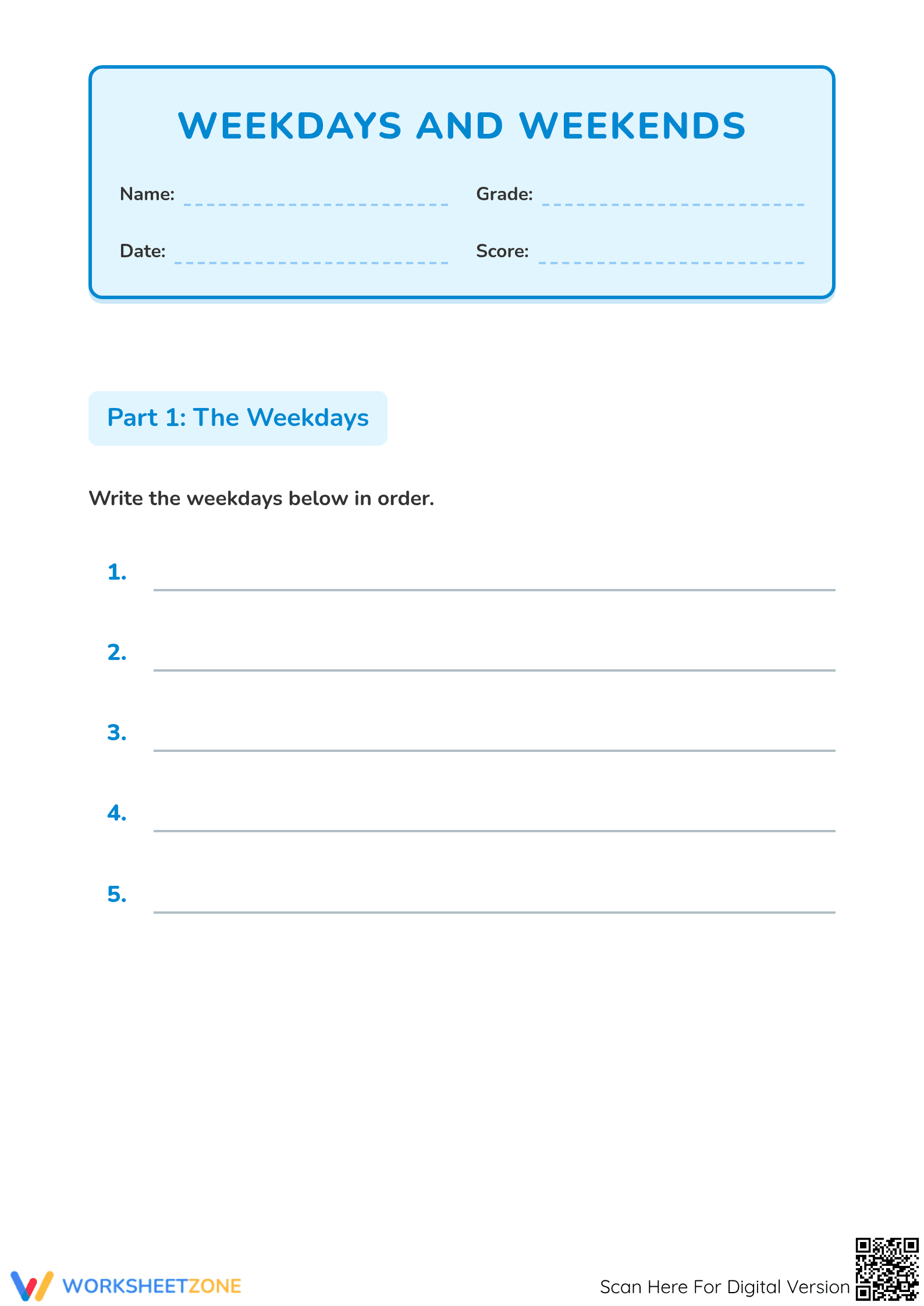
This Weekdays and Weekends worksheet helps Grade 2 students master time-sequencing vocabulary by ordering the five weekdays and identifying the weekend. Students apply their knowledge by connecting specific personal events to different parts of the week. This foundational exercise ensures learners can accurately categorize their schedules and communicate about time with clarity and precision.
At a Glance
- Grade: 2 · Subject: English Language Arts
- Standard:
CCSS.ELA-LITERACY.L.2.6— Use words and phrases acquired through reading and responding to time-based texts- Skill Focus: Weekday sequencing and weekend identification
- Format: 2 pages · 11 tasks · Answer key included · PDF
- Best For: Morning work or foundational time lessons
- Time: 10–15 minutes
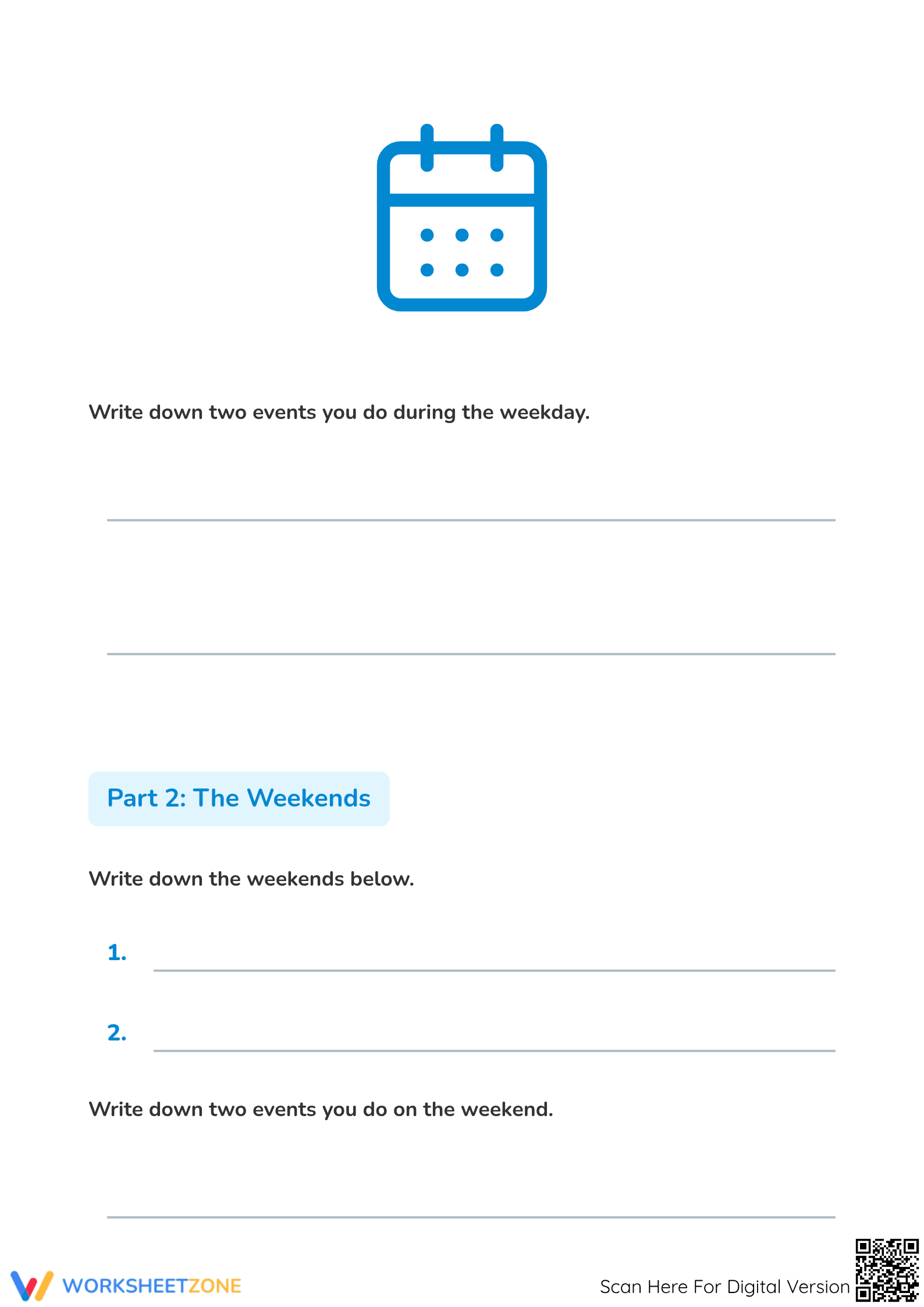
This comprehensive 2-page PDF features a clear, structured layout designed for independent student work. Part 1 focuses on the sequential ordering of the five weekdays, providing numbered lines to guide handwriting. Part 2 shifts the focus to the weekend, requiring students to identify Saturday and Sunday while prompting them to reflect on two specific activities they enjoy during both periods. A complete answer key is provided to facilitate rapid grading or student self-correction.
Zero-Prep Workflow
The Zero-Prep Workflow for this resource is designed to integrate easily into a busy classroom schedule with less than two minutes of total teacher preparation. First, print the 2-page document (30 seconds). Next, distribute the worksheets to students and provide a brief verbal prompt about the current day of the week (30 seconds). Finally, review the completed responses using the provided answer key to identify any sequencing errors or spelling needs (60 seconds). This efficiency makes it an ideal choice for substitute plans or unexpected schedule gaps.
Standards Alignment
This resource is aligned to `CCSS.ELA-LITERACY.L.2.6`, which requires students to use words and phrases acquired through conversations, reading, and responding to texts, including using adjectives and adverbs to describe. By mastering the specific names of the days and their sequence, students build the Tier 2 vocabulary necessary for complex reading comprehension. This standard code can be copied directly into lesson plans, IEP goals, or district curriculum mapping tools.
How to Use It
Use this worksheet as a formative assessment during a unit on calendars or time management. After direct instruction on the Gregorian calendar, assign the worksheet to observe which students struggle with the spelling or sequence of mid-week days like Wednesday or Thursday. Alternatively, use the event-writing prompts as a "Weekend News" Monday morning activity to bridge personal experiences with academic writing skills. Completion usually takes between 10 and 15 minutes.
Who It's For
This activity is specifically tailored for Grade 2 learners but serves as an excellent remedial tool for Grade 3 or 4 students who require additional support with time-based sequencing. It pairs naturally with an anchor chart displaying the full week or a shared reading passage about weekly routines. The visual cues and numbered lines provide necessary scaffolding for English Language Learners and students with processing delays.
The acquisition of temporal vocabulary is a critical predictor of success in informational text comprehension and logical sequencing. This worksheet helps students apply time concepts by requiring them to name specific events associated with weekdays versus weekends, reinforcing the semantic boundaries between work and leisure time. This standard-aligned approach ensures students integrate these concepts into their broader communicative framework, enabling them to better navigate multi-step instructions and narrative timelines in more complex literary works.


