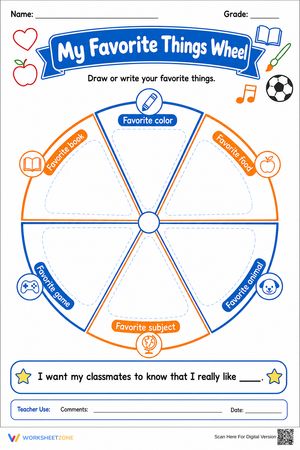
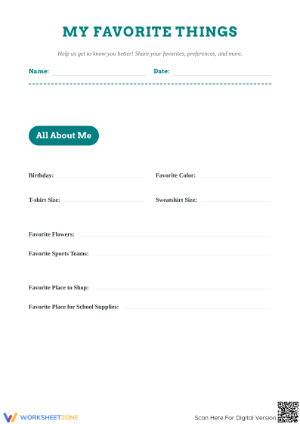
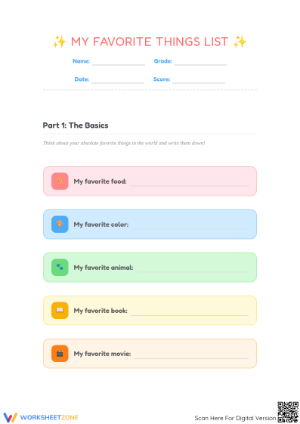
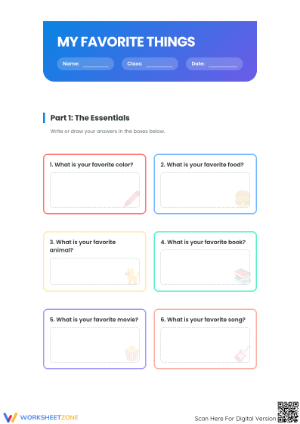
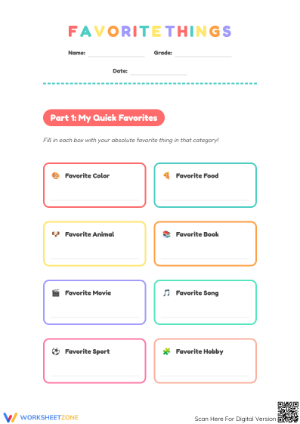
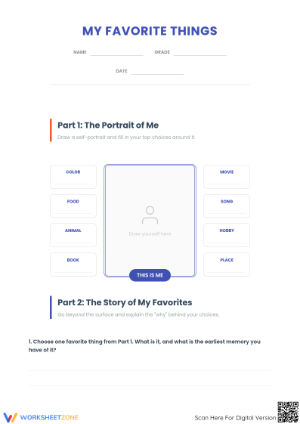
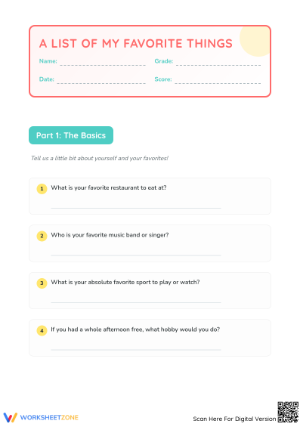
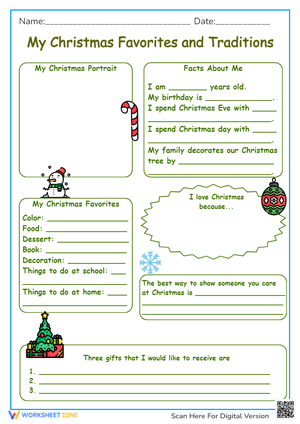
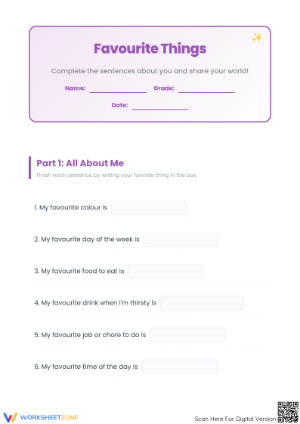
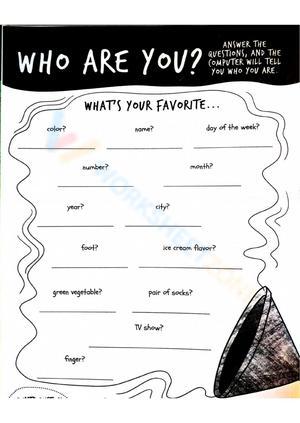
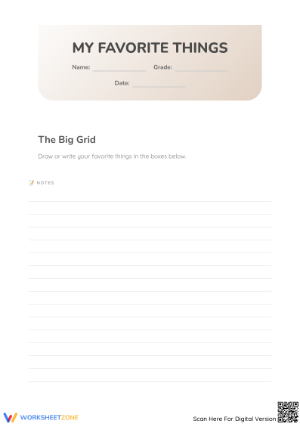
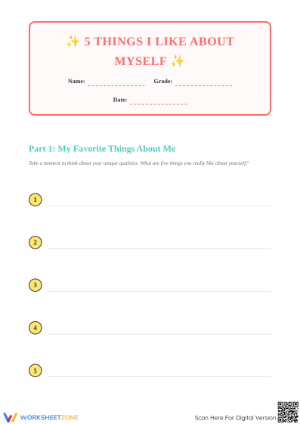
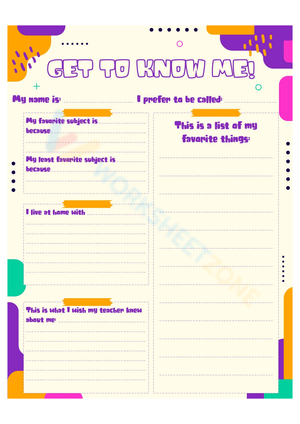
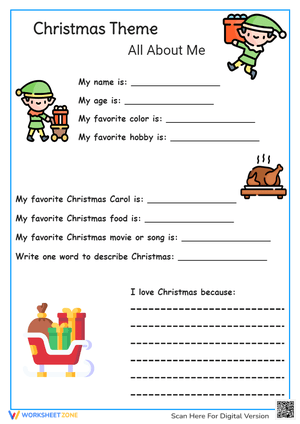
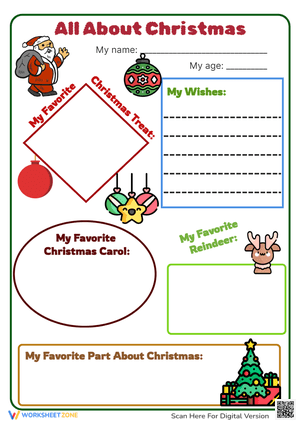
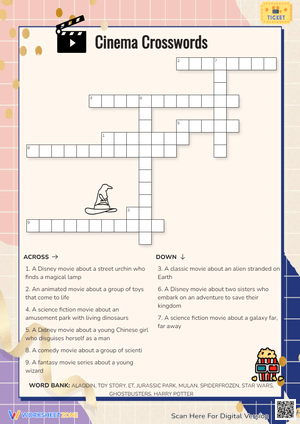
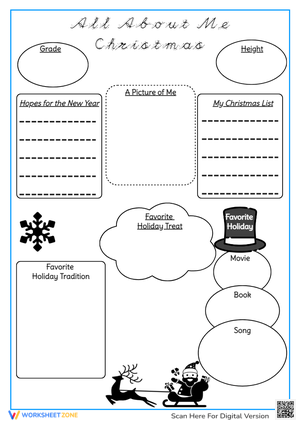
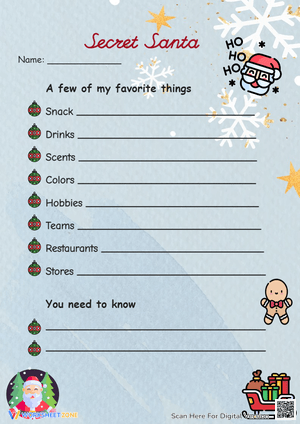
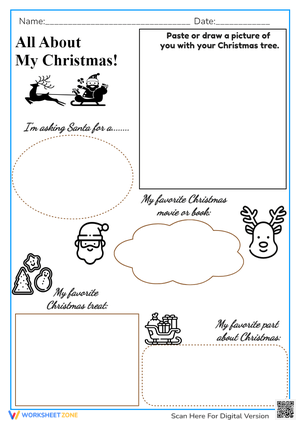
My favorite things printable worksheets for 2nd grade give teachers a reliable entry point into personal writing at exactly the right developmental moment — when seven-year-olds have enough sentence control to say something specific but still default to "I like it" as a complete thought. The set covers favorites across categories: foods, animals, books, colors, games, seasons, and weekend activities. Students write, draw, and in several worksheets supply a reason for their choice.
What Students Practice Across the Set
The core writing task on each worksheet is narrow enough that second graders can succeed quickly and then push further. Students move from single-word answers toward complete sentences, then toward sentences with at least one descriptive adjective. That progression matters at this grade — most seven-year-olds can write My favorite animal is a dog without much effort, but asking them to write My favorite animal is a golden retriever because it is soft and loyal requires reaching for a more specific word. That reach is where the writing growth actually happens.
Beyond sentence elaboration, the worksheets consistently reinforce two grammar skills that are live in second-grade ELA: proper noun capitalization and ending punctuation. When a student lists a specific book title or the name of a movie character, the question of whether to capitalize is immediate and concrete rather than abstract. Several prompts ask students to write a question they would ask their favorite character, which gives the question mark a function rather than just a rule to copy down.
Where Student Writing Gets Stuck and What It Reveals
The most consistent pattern in student work on these worksheets is adjective defaulting. Students write "good" for almost everything — the favorite food is good, the favorite game is good, the favorite book is good. They have broader vocabulary; they just reach for the safe word under mild pressure. An anchor chart with sensory and emotion adjectives posted before students begin shifts the writing noticeably. Words like crunchy, hilarious, peaceful, and electric make specific language feel accessible rather than risky, and students use the chart heavily during the first few minutes of work time.
Proper noun capitalization is a second consistent trouble spot. Students who reliably capitalize the first word of a sentence will still write my favorite book is charlotte's web within the same worksheet. The rule about capitalizing specific titles and names has not yet transferred to independent writing, which makes these worksheets a natural, low-stakes place to catch and correct it in real time. Circulating during work time and quietly asking "Is Charlotte's Web a specific title or a general word?" prompts self-correction more effectively than marking it in red after the fact.
Finding the Right Spot for These Worksheets in Your Teaching Week
The most natural home for these worksheets is the first two weeks of school, when community-building and writing baseline assessment can happen simultaneously. A completed worksheet tells a teacher at a glance which students write in full sentences, which use adjectives independently, and which are still working at the "one word per blank" stage — informal data gathered without any student feeling evaluated.
Later in the year, the worksheets shift function. A single worksheet dropped into a writing center gives students meaningful independent practice while the teacher pulls a small group. The drawing space helps students who freeze in front of blank lines — sketching their favorite thing first gives them something concrete to describe, so the writing that follows tends to be more specific than writing produced cold. Teachers who use these mid-year often pair one worksheet with a brief share-out: two or three minutes at the end of the block where students read their sentences aloud. Knowing someone will hear what you wrote raises the quality of word choice on the worksheet itself.
One extension worth building in: once students have completed a worksheet about a favorite book or story, use their written reason as the seed for a short opinion paragraph. The worksheet becomes a prewriting tool, and the transition to third-grade opinion writing feels less like a jump and more like a continuation of something familiar.
Standard Alignment
These worksheets address CCSS.ELA-LITERACY.W.2.1, which asks second graders to write opinion pieces that introduce a topic, state an opinion, and supply reasons. While the tasks begin with personal preference rather than formal argument, the structure — name your favorite, explain why — maps directly onto the "topic plus reason" framework W.2.1 requires. Teachers selecting my favorite things printable worksheets for 2nd grade as an entry point into opinion writing often follow them with more structured paragraph formats; the worksheets establish the habit of supplying a reason before students have to manage a full paragraph frame. The set also reinforces CCSS.ELA-LITERACY.L.2.2 (capitalization conventions), which comes up organically whenever students write specific titles, character names, or book series.
Making These Worksheets Work Across Different Ability Levels
For students still building sentence fluency, the drawing space on each worksheet functions as genuine planning support, not decoration. Let those students draw first and then talk through what they drew with a partner before writing. That oral rehearsal — saying the sentence aloud before committing it to paper — reduces the working memory load of written language production and results in longer, more coherent sentences than students produce when writing in silence from a standing start.
Students writing well above grade level find the short-line format quickly limiting. Give those students a blank half-sheet and ask them to write three to five sentences defending their favorite choice as the best option — not just what they like, but why someone else should agree. That moves the task from personal preference into structured opinion writing and keeps advanced students engaged with something genuinely harder. My favorite things printable worksheets for 2nd grade work across that full range because the topic itself is universally accessible even when the writing demand varies significantly.
Frequently Asked Questions
Do these worksheets work for English Language Learners?
Yes, with one practical adjustment. The drawing space on each worksheet gives ELL students a way to identify their favorite thing before needing the English word. Pair the worksheet with a small picture-word bank in the relevant category — animals, foods, sports — so students have English labels available when they are ready to write. A sentence frame like My favorite ______ is ______ because it is ______ written on a sticky note next to the worksheet removes the barrier of English sentence structure without reducing the personal expression the task is built on.
How do I manage the balance between drawing time and writing time?
Set a hard timer. Give students four to five minutes to draw, then announce the switch to writing. Without a time boundary, many second graders spend the entire work period on the illustration and produce one rushed sentence at the end. The drawing genuinely supports idea generation — it is not wasted time — but it needs a limit. Some teachers assign the drawing as homework the night before so that class time is spent entirely on the writing portion.
Can I build these into a student spotlight display?
These worksheets work well as the centerpiece of a weekly bulletin board feature. The spotlighted student completes an expanded version, a photo gets added, and the display goes up. The move that makes it instructionally useful rather than just decorative: ask the rest of the class to read the display and write one sentence connecting their own experience to something on the worksheet — a shared favorite or a question they want to ask. That reading-and-response task gives the my favorite things printable worksheets for 2nd grade content ongoing instructional life rather than just bulletin board decoration.












 Interactive Worksheet Maker
 Quiz Maker
 Word Search Maker
 Crossword Puzzle Maker
 Word Scramble Generator
 Sentence Scramble Generator
 Handwriting Worksheet Generator
 Name Tracing Generator
 Fill In The Blank Generator